Insulin For Dogs: What Is It and How to Give Your Dog a Shot
SPONSORED BY


Gorica Poturak/E+ via Getty Images
If your dog has diabetes, you may have been told they need to take insulin. Insulin for dogs is used to regulate blood sugar levels and is typically administered via injection.
The thought of giving your dog an insulin shot may seem a little intimidating at first, and that’s perfectly normal. Using the proper tools, like UltiCare VetRX’s insulin syringes, and educating yourself on how to give a dog an insulin shot can help give you the confidence to successfully manage your pet’s condition.
Key Takeaways
- Insulin is a hormone that is normally produced by a dog’s pancreas. It helps move glucose (sugar) from the bloodstream into cells, where the body can use it for energy.
- Vets prescribe insulin to diabetic dogs to replace the insulin their body isn’t producing anymore and help control high blood sugar levels.
- Insulin for dogs is typically given as an injection under the skin. Follow your veterinarian’s instructions for your dog’s exact dose, timing, and injection technique.
- Always match the syringe to the insulin concentration to prevent dangerous dosing errors: Use U-40 syringes with U-40 insulin and U-100 syringes with U-100 insulin
What Is Insulin for Dogs?
Insulin is a hormone made naturally by the pancreas. It helps the body turn sugar from food into energy. Lack of insulin leads to high blood sugar levels and eventually diabetes.
Signs of diabetes in dogs include:
- Increased thirst
- Increased urination
- Increased appetite
- Weight loss
- Lethargy or weakness
Insulin administered to diabetic dogs is an injectable version of the hormone normally produced by your pet's pancreas. Insulin is generally synthesized using laboratory techniques or purified from animal sources, like pigs.
How Does Insulin for Dogs Work?
Insulin helps move sugar molecules, aka glucose, from the bloodstream and into the cells where it can be used to make energy.
Glucose comes from the food our pets eat. When they eat, their digestive system breaks the food down into simpler sugars, which are then absorbed into the bloodstream.
Insulin helps shift the sugar from the blood into the cells where it can be used to create energy, thereby lowering the level of glucose in the bloodstream.
Understanding Your Dog's Insulin Prescription
There are many kinds of insulin on the market. When treating a standard diabetic pet, your veterinarian typically selects an insulin based on efficacy in the species, duration of action, and concentration. They’ll also prescribe a specific dosage for your dog.
What Are the Different Dog Insulin Concentrations?
Dog insulin comes in two different concentrations:
- U-40: 40 units of insulin per milliliter (40 U/mL)
- U-100: 100 units of insulin per milliliter (100 U/mL)
The concentration is specific to the specific insulin. For example, ProZinc is a U-40 insulin, meaning the concentration is 40 units of insulin per 1 mL, whereas glargine is a U-100 insulin, meaning the concentration is 100 units of insulin per 1 mL.
It is critical that your insulin syringes match the concentration of the insulin prescribed for your dog. Using an incorrect syringe type will cause your dog not to receive the proper dose of insulin.
For example, UltiCare VetRX’s U-40 insulin syringes should only be used with U-40 (40 units per mL) insulin in pets with diabetes.
And UltiCare VetRX’s U-100 insulin syringes should only be used with U-100 (100 units per mL) insulin in pets with diabetes.
What Types of Insulin Are Used for Dogs?
Insulin for dogs is made from either purified pig insulin or human insulin produced in a laboratory. Both types replace the insulin a dog’s pancreas no longer makes.
Porcine (pig) based insulin: Since dog and pork insulin are essentially the same molecule, porcine-based insulins, like Vetsulin, are typically recommended for use in diabetic dogs.
Recombinant human insulin: Made in a laboratory using genetic engineering, this type of insulin is chemically the same—or very similar to—the insulin made by the human pancreas. ProZinc is one example of a recombinant human insulin approved for dogs.
While only Vetsulin and ProZinc are FDA-approved for use in diabetic dogs, others are readily utilized in the veterinary field, and veterinarians can legally prescribe certain human drugs in animals in certain circumstances. This is called extra-label or off-label use because this use isn’t described on the drug label.
How Long Does Insulin Last in Dogs?
If insulin will be given at home, most pets are prescribed intermediate or long-lasting insulin. Typically, these insulins last 12–24 hours depending on the specific insulin. Your vet will provide specific administration recommendations for your dog, but often insulin is given twice per day with meals.
Regular or short-acting insulins are mostly used only in a hospital. This is because these insulins need to be administered as frequently as every two hours or even on an intravenous (IV) drip.
How Are Insulin Doses Measured for Dogs?
Insulin doses are measured in units, which are marked on the syringe. For example, if the dosage is 5 units, you will draw the syringe back to the 5-unit mark on the syringe. Again, make sure to use the correct syringe type for the prescribed insulin concentration to avoid dangerous dosage errors; U-40 insulin goes with U-40 syringes and U-100 insulin goes with U-100 syringes.
If your dog is a newly diagnosed diabetic, your veterinarian will likely start them on insulin at a dosage determined by their weight, then monitor their blood sugar and adjust as needed.
Often monitoring involves a test called a glucose curve. Your veterinarian measures your dog’s blood sugar every two to four hours over an eight- to 12-hour period to determine the effect the insulin is having on your pet’s blood sugar throughout the day. Based on this curve, the veterinarian will likely adjust the insulin dosage until they find the best dosage for your pet.
Typically, once a newly diagnosed diabetic dog is stabilized and on the best dosage of insulin, they will remain on that dosage with periodic monitoring.
Insulin Needles and Syringe Sizes for Dogs
Syringes come in sizes that match the insulin concentrations U-40 and U-100. The syringes will be labeled U-40 or U-100. Remember, you must match the syringe with the insulin concentration.
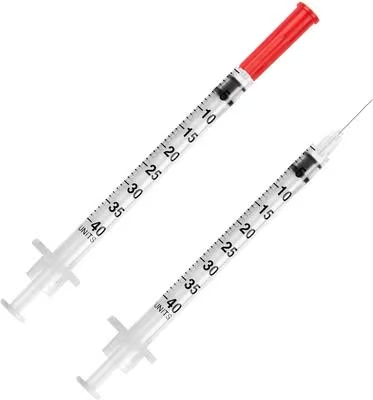
Let's look at a 1 cc U-40 syringe and a 1 cc U-100 syringe. (Note: Your vet will likely prescribe doses in mLs and 1 mL is equal to 1 cc.) Even though they are both the same size syringe, there are less marks on the U-40 syringe (only 40) and more marks (100 of them) on the U-100. That means the U-40 markings are more spread out and the U-100 marks are closer together.
U-40 syringes:
U-100 syringes:
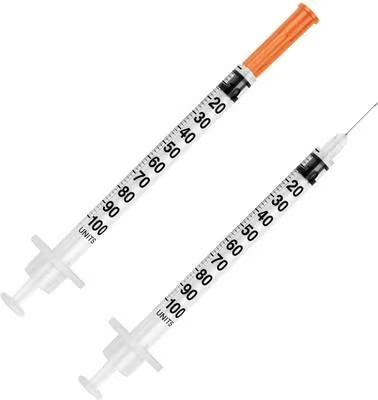
Giving a dosage of 5 units would look very different in each syringe; 5 units on a U-40 syringe would be a larger volume of insulin vs. 5 units on a U-100 syringe.
To help differentiate between the two types of insulin syringes, U-40 syringes typically have a red cap, and U-100 syringes typically have an orange cap.
How to Give a Dog an Insulin Shot
Dog insulin injections are given subcutaneously, meaning under the skin. Your veterinarian will show you appropriate dog insulin injection sites and demonstrate where and how to give the injection. Alternating injection locations helps to avoid soreness at the injection site.
Below are general recommendations for how to give a dog an insulin shot. However, it is very important that you follow the directions provided by your veterinarian.
Before you begin:
- Ensure that your dog has eaten sufficiently per your veterinarian’s instructions. (If your dog does not eat a full meal or does not eat at all, please contact your vet for instructions.)
- Wash your hands and gather the insulin, a new insulin syringe, an alcohol wipe, a sharps container, and a small, veterinarian-approved treat.
- Check that the syringe matches the insulin concentration. U-40 insulin requires a U-40 syringe, while U-100 insulin requires a U-100 syringe.
Step-by-step instructions on how to give a dog insulin from a vial:
- Mix the insulin according to the manufacturer’s instructions. Many require you to roll the vial in between your hands to mix until the insulin appears uniform in color/consistency. Never shake the vial.
- Clean the top of the insulin vial with an alcohol wipe. Let it dry before inserting the needle.
- Remove the needle cap without touching the needle tip. Fill it with air by pulling back the plunger until the top of plunger is even with the line for the prescribed dose.
- Insert the needle into the vial’s rubber stopper, push the plunger to release the air into the vial, and then draw up the prescribed amount of insulin. Ensure there are no air bubbles in the syringe and confirm you have the correct dose.
- Have someone help you hold your pet or distract them with a low-carb treat. (Opt for a low-carb treat, because carbohydrates are easily broken down into glucose, or sugar, and then quickly absorbed, which can cause blood sugar spikes.)
- Hold the syringe in one hand and with the other pinch a section of skin into a tent type shape.
- Insert the needle confidently into the center of the skin tent.
- Once the needle is under the skin, gently push the syringe plunger all the way down to dispense all the insulin.
- Carefully withdraw the needle from the skin and dispose of the pet syringe and needle into an appropriate sharps container (see more on that below).
- Pet the fur around the injection area to make sure the insulin went in and not on the fur.
Download this step-by-step guide on insulin injections for dogs.
For general recommendations for administration of canine insulin via an insulin pen, you should follow the manufacturer’s instructions and ask your vet.
Proper Disposal of Dog Insulin Needles
Place all needles in a sharps disposal container immediately after they have been used.
UltiCare VetRX’s UltiGuard SafePacks pull double duty by housing syringes to be used in one compartment and providing a storage container for the syringes after they are used.
Keep the container out of reach of children and pets.
Once full, dispose of the used needles and syringes in accordance with all federal, state and local environmental laws.
Understanding Insulin Side Effects in Dogs
The most common side effect of dog insulin is low blood sugar (hypoglycemia).
If a dog’s blood sugar levels drop too low, it can be a life-threatening emergency.
If you see any of the following symptoms, please contact your veterinarian immediately:
- Weakness/disorientation/stumbling
- Lack of energy/lethargy
- Lack of appetite
- Vomiting
- Shaking, tremors, or muscle twitching
- Collapse
- Seizure
- Coma
Additional symptoms related to general symptoms of diabetes in dogs are also possible.
Insulin Side Effects in Humans
If you accidentally inject yourself with this medication, call your physician or the national Poison Control Center hotline at 800-222-1222.
Dog Insulin Overdose
Signs of an overdose of insulin are generally a result of hypoglycemia, or a blood sugar level that has fallen too low. If you notice any of the symptoms of hypoglycemia listed above, please contact your veterinarian or local emergency clinic immediately.
Mild hypoglycemia may be treated by having your dog eat an additional meal. However, more serious symptoms should be treated in a hospital by a veterinarian.
If you suspect an overdose, or you accidentally gave your dog an extra dose, please immediately contact your veterinarian or an animal poison control center. Consultation fees often apply.
- Pet Poison Helpline: 855-764-7661
- ASPCA Animal Poison Control: 888-426-4435
What Happens if My Dog Misses an Insulin Dose?
A missed dose (or an inadequate dose) may cause temporary recurrence of signs of diabetes (like increased drinking and urination), but it is not life-threatening. Contact your vet as soon as possible for advice on your dog’s next dose.
If you can’t get in touch with your vet and your dog is eating and acting normally, give your dog the usual dose at the next regularly scheduled injection time.
Do not give extra or double doses—this can cause life-threatening side effects.
If you think you did not inject all of the insulin dose into the subcutaneous space under the skin or it seems that some of the insulin came back out, the safest option is to contact your veterinarian to have them advise you on next steps.
Monitoring Diabetic Dogs
Diabetic dogs should be closely monitored. This will include monitoring of symptoms, body weight, appetite, thirst, and the amount of urine excreted.
Your veterinarian will typically monitor glucose levels with blood tests when your dog has started treatment with insulin. They may also have you test your dog’s blood glucose at specific intervals at home to learn more about the trends and whether insulin dosage should be adjusted. This can be done using glucose monitors such as iPetPro.
Periodic monitoring throughout the life of a diabetic pet is important to ensure insulin dosing is effectively correcting patient hyperglycemia (high blood sugar levels). Your vet will recommend appropriate follow-up exams to ensure the dose of prescribed insulin is working, and provide dosing adjustments if needed.
Call your vet if:
- Severe side effects are seen (see above) or if you see or suspect an overdose
- Call your vet or pharmacist if you have additional questions or concerns about the use of insulin
How Should Insulin for Dogs Be Stored?
Follow the storage instructions for your dog’s specific insulin.
All unopened bottles of canine insulin should be stored in the refrigerator at consistent temperatures from 36 F to 46 F until the expiration date. Exposure to high temperatures over 86 F or freezing temperatures below 36 F can alter the insulin and lower its ability to work.
If you have left your insulin out of the refrigerator, contact your veterinarian, pharmacist, or the insulin manufacturer for specific product recommendations.
Insulin manufacturers generally recommend that the product be used within four to six weeks of first puncture. Contact your veterinarian for specific information and before starting your insulin.
Dog Insulin FAQs
How much does dog insulin treatment cost?
Dog insulin costs can vary greatly but typically range from $30–$300 per month depending on the type of insulin and dosage. If you have financial concerns, be sure to discuss those with your vet when determining the best insulin for your dog.
How long does it take for insulin to work in dogs?
For most diabetic dogs, improvement of clinical symptoms occurs quickly after insulin therapy has begun. However, it can take several weeks for a pet to fully adjust to insulin therapy.
Every dog responds to insulin therapy differently and frequent monitoring of glucose levels is required for all diabetic pets.
Will insulin make my dog sleepy?
Insulin should not make your dog sleepy; it is a naturally occurring hormone that their body produces to help them process sugar into energy.
However, having a dose of insulin that is too high for their current blood sugar levels may cause hypoglycemia (low blood sugar) and lethargy (fatigue).
How long after eating should you give a dog insulin?
Ideally, insulin shots for dogs should be given immediately after their meal, but be sure to follow the recommendation from your vet.
Where do you give insulin injections for dogs?
Dog insulin injections are given under the skin. Your veterinarian should show you appropriate injection sites and demonstrate how to give the injection. Rotating injection locations can help prevent soreness.
This article is sponsored by UltiCare VetRX. It is provided for educational purposes only and is not intended to be a substitute for professional and/or medical advice. For specific guidance on how to give an insulin injection to your dog, talk to your veterinarian.


