What Does It Mean When a Horse Is Lame?


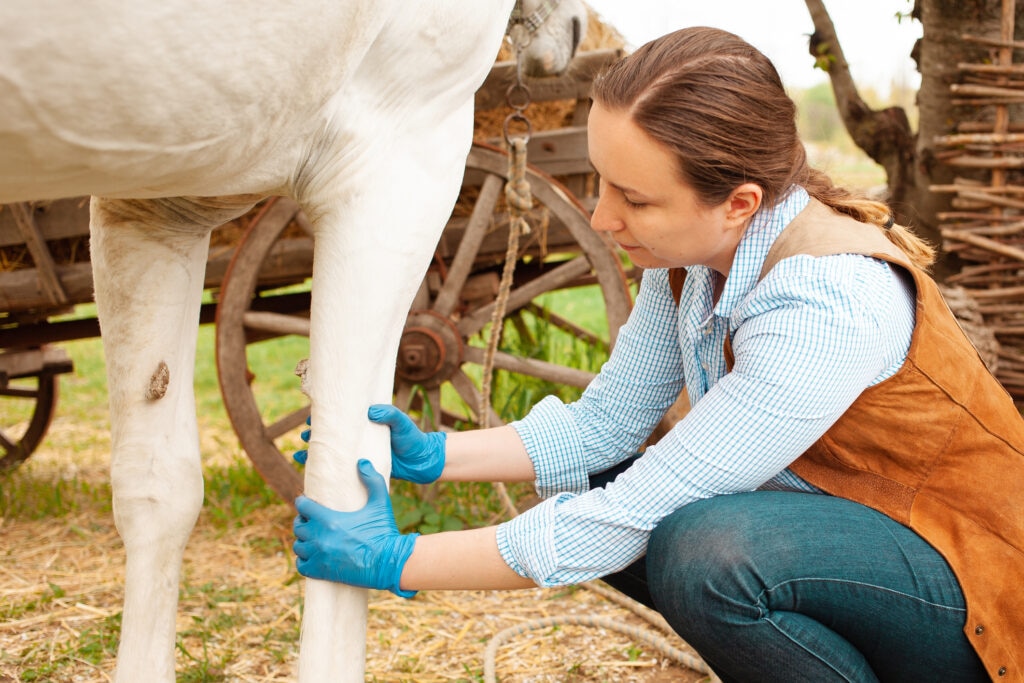
If your horse is limping, taking shorter steps, or simply seems “off,” they may be lame. Horse lameness can have many causes, from a hoof abscess to a joint or soft tissue injury. Here’s how to recognize the signs, when to call your veterinarian, and what to expect from diagnosis, treatment, and recovery.
Key Takeaways
- Lameness is any abnormal change in how a horse stands or moves, often caused by pain.
- Signs can include limping, swelling, stiffness, head bobbing, or reluctance to move.
- Contact your veterinarian promptly if your horse shows signs of lameness.
- Treatment and recovery depend on the cause and may include rest, medication, rehabilitation, or other therapies.
What Is Lameness in Horses?
Lameness in horses is a change in the way a horse normally stands or moves. A horse may look uneven, take shorter steps, favor one leg, or simply seem “off” when walking, trotting, or cantering.
There are several possible causes of lameness, including pain, mechanical problems, and neurologic conditions. Most often, lameness is caused by pain somewhere in the musculoskeletal system, such as the muscles, tendons, ligaments, bones, or joints.
Any horse can become lame, regardless of breed, age, or activity level. Depending on the cause and severity, lameness means it may be difficult or uncomfortable for a horse to exercise or perform their usual work.
If you notice a change in your horse’s movement or suspect your horse may be lame, contact your veterinarian as soon as possible.
Symptoms of Lameness in Horses
Equine lameness can range from very mild to severe. Symptoms may include:
- Inflammation/swelling
- Pain
- Stiffness
- Non-weight bearing on limb
- Toe pointing
- Reluctance/unwillingness to move
- Asymmetry of the limb
- Abnormal behavior
- Limping/inconsistent leg reach when moving
- Head bobbing
- Dragging of toe
- Poor performance
- Reluctance to stand
Causes of Lameness in Horse
You can define lameness as:
- Acute lameness: Lameness that occurred recently and often suddenly, such as from a hoof abscess
- Chronic lameness: Generally refers to lameness that has occurred for a longer period of time, such as arthritis
Lameness may be caused by several different factors including:
- Skin/penetrating wound
- Connective tissue injury
- Muscle pain
- Arthritis/degenerative joint disease
- Tendon sheath or bursal inflammation
- Tendon and ligament injury
- Bone injury
- Infections
- Trauma
- Nerve paralysis/damage
Specific lameness conditions are more commonly seen in particular breeds and riding disciplines due to their respective lifestyles. For example, Thoroughbred racehorses are more likely to have knee arthritis, while dressage horses are more likely to have hind limb suspensory lameness.
Forelimb lameness is generally easier to recognize because while the horse is trying to take weight off of the injured or painful limb, they move their weight toward the other side of their body with each stride, creating the appearance of a “head bob.” Hind limb lameness can be more difficult to visualize because they lack the visual cue of the head motion.
A large percentage of lameness originates from the hoof, however, it’s also important to note that a horse’s conformation (or structural build) directly affects the way a horse moves and can correlate with lameness conditions if they have poor conformation.
NSAIDs may cause digestive issues such as colic and gastric ulcers in horses if used over a long period of time. Always consult with your veterinarian to determine if a regimen of pain medications is right for your horse.
Joint injections may be a good alternative for horses with inflammation or pain in arthritic joints. In some cases, arthroscopic surgery may be recommended to help repair a joint surface in athletic horses.
A treatment plan will involve a complex approach, which may include regenerative and/or complementary therapies.
Regenerative therapies include:
- Shockwave: High energy sound waves stimulate healing.
- Stem cell injections: Stem cells are often collected from a horse’s own fat tissue and are used to help improve healing in tendon and ligament injuries.
- Platelet rich plasma (PRP): Platelets have large numbers of growth factors and can be harvested from a horse’s own blood sample to help with healing and decreasing inflammation.
- Autologous serum (IRAP): Autologous serum, also called IRAP (interleukin-1 receptor antagonist protein), is similar to PRP. It’s a product that’s often harvested from a horse's own blood sample and contains many components that can improve healing.
Complementary or alternative therapies may also be recommended, such as acupuncture, chiropractic adjustment, and massage.
- Flexion testing
- Hoof test exam
- Nerve and/or joint blocks
- Imaging such as X-rays, ultrasounds, MRI, and others
Your Horse’s History
To begin a lameness evaluation, your veterinarian will take a thorough history of the horse and their recent lameness issue. Your veterinarian may ask about your horse’s breed, age, lifestyle, and riding use.
Questions specific to the history of the lameness will likely be asked, such as:
- When was the lameness first noticed?
- Is there any swelling or heat?
- Is there any known any injury or trauma?
- What kind of riding or exercise do they perform?
Physical Exam
A standing or physical exam will be performed to evaluate the horse's general appearance. The veterinarian will examine the horse over their entire body to look for any swelling, heat, or pain.
Motion Exam
Following the physical exam, the veterinarian will want to see the horse moving. Depending on the severity of the lameness, horses are often evaluated at a trot.
For a thorough evaluation, horses are observed trotting in straight lines as well as circles going in both directions. Most often these evaluations are done with the handler on the ground and leading or lunging the horse, but in certain situations the veterinarian may want to see the horse under saddle with a rider as well.
Flexion Exam
Flexion exams may also be done to isolate the source of the lameness. A flexion exam involves placing stress on a specific joint or region of a limb for a specific amount of time and then asking the horse to trot-off to determine any change in the lameness.
If the prolonged flexion appears to make the horse more lame, further evaluation of the area is warranted.
Hoof Testing
Additional evaluation of a specific area may involve the use of hoof testers. Hoof testing involves the use of a tool that puts pressure in a specific area of the hoof to check for a pain response.
Nerve/Joint Block Testing
Nerve and joint blocks are another method to pinpoint a specific area of pain by process of elimination. Blocks consist of a local anesthetic agent that is injected around specific nerves or joints of the horse.
The horse is then evaluated again, in motion, to see if the block has reduced the degree of lameness in the horse.
Imaging
After a specific area is identified as the source of the pain, diagnostic tools such as X-rays, ultrasound, MRI, nuclear scintigraphy, and CT scans can be used to look at the anatomical structure of the area.
Recovery and Management of Lameness in Horses
Recovery from lameness varies depending on diagnosis or underlying cause of the lameness. Some minor injuries can take just a few days to a week to heal, while more extensive injuries may take up to six months or more.
Along with a treatment plan, your veterinarian should help you to build a recovery plan to give your horse the best chance of success, like recommended daily exercise, and any changes to lifestyle (including stall rest or turnout).
Some injuries may require a horse to be placed on stall rest during initial stages of healing. As their injury heals, a recovery plan may consist of a slow progression into exercise until they are back to their normal routine.
While many injuries in horses may heal initially, they can cause arthritis later in the horse's life.
Other conditions lameness may lead to include:
- Arthritis
- Weight loss
- Muscle atrophy
- Contralateral limb laminitis
- Navicular syndrome
It’s important to work with your veterinarian to develop the best plan for your horse that fits their unique lifestyle during recovery.
Prevention of Lameness in Horses
Prevention of equine lameness can start with providing regular wellness care such as year-round hoof trimming and maintenance. Inspect your horse's hooves daily, and use a hoof pick to remove any stones, packed mud, or debris.
Horses should be housed in a safe environment away from anything that could pose danger, such as barbed wire.
During exercise, horses should always have at least 5 to 10 minutes to warm up and cool down. If a horse has had time off, they should have a slow reintroduction to exercise to prevent any injuries from reoccurring.
If you notice any changes in your horse including attitude toward being exercised or performance, it’s best to have your veterinarian do a thorough lameness evaluation to make sure these are not initial signs of discomfort.
Multivitamins and other muscle support supplements may be recommended by your veterinarian to help prevent any lameness issues as well.
Lameness in Horses FAQs
What is the most common cause of lameness in horses?
The most common cause of lameness in the horse is a hoof abscess. These generally happen acutely, and a horse can be mildly lame to non-weight bearing.
Can horses recover from being lame?
Yes. The recovery period for lameness will be dependent on the underlying cause of the lameness and the treatment and recovery plan provided after the injury. If a horse shows any sign of lameness–contact a veterinarian immediately.
What causes sudden lameness in horses?
Sudden lameness in horses can be due to a variety of reasons, but most commonly due to hoof abscesses. Other reasons may include a soft tissue injury, bone fracture, or foreign body.
What does lameness in horses unable to stand up mean?
A lame horse unable to stand up constitutes a medical emergency. This is called a “down horse” and means the horse may not be able to stand up again without assistance or medical intervention. If your horse is unable to stand on their own, contact your veterinarian immediately.
References
-
American College of Veterinary Surgeons. Lameness in Horses. ACVS.
-
Thal, D. Understanding Lameness. AAEP. 2016.


