How To Crate Train a Puppy



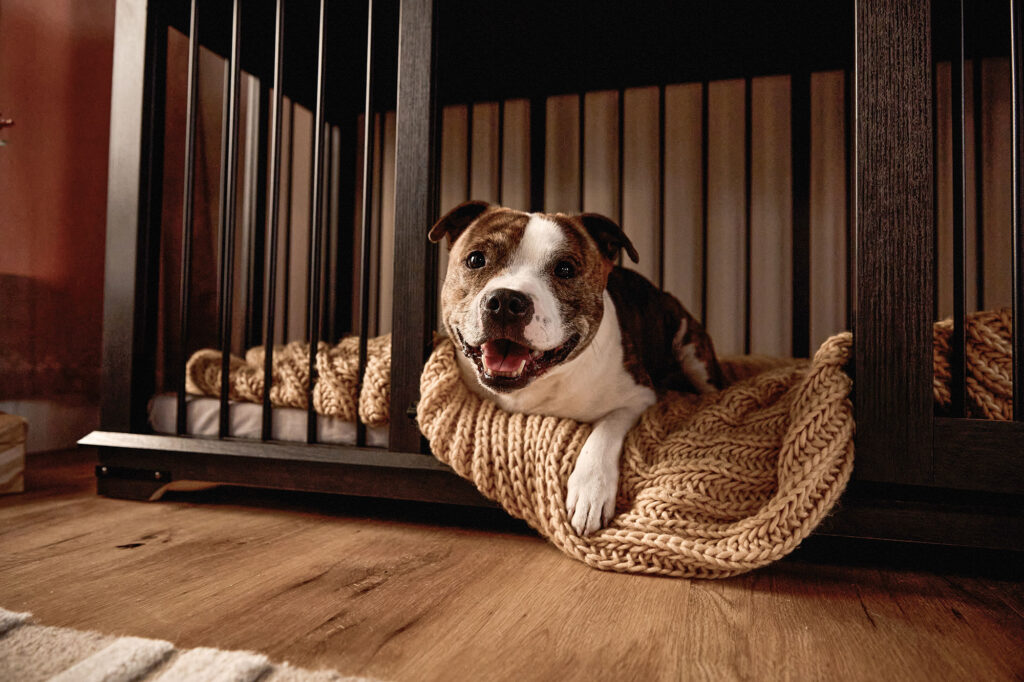
Chewy
Crate training is the process of acclimating your puppy to spending time in their dog crate—and it comes with many benefits, including security, safety, and extra motivation for potty training.
To crate train a puppy, make the crate a positive place, reward voluntary entry, feed meals inside, close the door for brief periods, and gradually increase time while you stay nearby. Practice leaving the room only after your puppy can relax with the door closed. Always provide potty breaks and never use the crate as punishment.
This guide explains how to choose and set up a crate, introduce it without force, build closed-door time, practice short absences, handle nighttime training, and recognize when your puppy needs more support.
Start with the steps below and let your puppy’s body language determine how quickly you progress.
Key Takeaways
- Crate training a puppy works best when you introduce the crate gradually, reward calm behavior, and never use it as punishment.
- Choose a crate that allows your puppy to stand, turn around, stretch, and lie down comfortably. Use a divider as your puppy grows.
- Begin with open-door exploration, then progress to short closed-door sessions and brief absences as your puppy becomes comfortable.
- Puppies need frequent potty breaks and reassurance. If your puppy shows signs of distress, stop the session and return to an easier training step.
How to Crate Train a Puppy Step-by-Step
Crate training is a gradual behavior-building process. Work through the stages below in order, but stay at each stage for as long as your puppy remains relaxed. If your puppy shows escalating distress, shorten the session and return to the previous successful step.
Crate training can take days or weeks depending on your dog’s age, temperament, and any previous experiences they’ve had. The most important thing when crate training a puppy is to always use the crate as a positive place; never use it for punishment.
1. Set Up a Safe Dog Crate
Choose a crate that lets your puppy stand up, turn around, lie down, and stretch comfortably—but not much larger than that. A crate that’s too big could give your puppy enough room to designate one corner as a potty area, undermining your potty-training efforts. For a growing pup, choose a crate with a divider so you're able to expand their space as they grow.
Make the crate feel like a welcoming and safe place by putting it where your family spends the most time, such as the family room. Placing a crate mat, soft blankets or a dog bed inside can help to make it feel more comfortable, too, though some dogs do prefer to lie on hard surfaces. Use comfortable bedding only if your puppy does not chew or shred it.
Keeping the door propped open and allowing your dog to explore the crate at their leisure can be helpful. Some dogs will even just naturally start sleeping in the crate right away.
2. Introduce Your Dog to the Crate
If your pup isn’t naturally inclined to go to the crate on their own, bring them over to the crate and talk to them in a positive and happy voice. Keep the crate door propped open so that it doesn’t accidentally hit your pup and frighten them.
Putting small dog treats near or just inside the crate’s door can also entice your pup to explore the area. Reward calm behavior such as standing, sitting, or lying down inside, and use a favorite toy if food is not motivating.
If your puppy refuses to go inside initially, don’t force them to go in! It’s critical that they never feel forced to use the crate.
As your pup gets more comfortable being near the crate, you can progressively put treats farther inside to get them to go all the way in. This positive reinforcement with treats should be repeated until they're comfortable walking in and out of the crate. Alternatively, if your pup is not food motivated, you can use their favorite toys as positive reinforcement.
Introducing your pup to the crate can take as little as a few minutes to as long as several days. It’s important that you be patient with them and don’t rush them as they get comfortable with the crate.
3. Feed Your Dog’s Meals in the Crate
Once your dog is comfortable with their new space, start to feed their regular meals near or inside the crate. This will help them create a positive association with it.
If your puppy is comfortable in the crate, you can place the food dish on the far end of the crate (farthest from the door). But if your puppy is still reluctant to go inside, only place the food as far as they feel comfortable entering the crate. Then, each time you feed them, progressively push the food farther and farther back into the crate.
4. Close the Door for Brief Periods
Once your puppy is comfortable standing fully inside the crate, try to close the door while they're eating. The first time you do this, you should open the crate door as soon as they're finished with their meal, or at the first sign of stress, whichever comes first.
Progressively leave the crate door closed for longer periods of time. Over several sessions, build from seconds to one minute and then to several minutes. If whining, panting, cowering, frantic scratching, or escape attempts begin, let your puppy out and shorten the next session rather than waiting for the behavior to intensify.
5. Practice Alone Time at Home
Once your dog seems comfortable with the crate and is regularly eating meals inside, start to confine them there for short periods of time while you’re home.
Start by using a treat to entice them to enter the crate and giving a training cue of your choosing, such as “Crate” or “House.” Once your puppy enters the crate, praise them and give them the treat, and then close the door.
Sit beside the crate while your puppy settles. Then stand up, move around the room, and briefly step out of sight. Return before your puppy becomes distressed.
When you return, sit quietly by the crate again for another minute or two, and then let your puppy out. Repeat this process while gradually increasing the amount of time your puppy is left alone. Over time, work toward about 30 minutes of calm crate time while you are home.
For safety, remove your dog’s collar, tag, and/or harness before leaving them unsupervised in their crate, because these accessories can catch on crate parts.
6. Practice Short Departures
Once your puppy can relax quietly in the crate for about 30 minutes, you can start to leave them alone in the crate while you’re gone for short periods of time.
To do this, put your dog in the crate (using the training cue that you have chosen and a treat). Try to vary when they go in the crate during your “getting ready to leave” process so that it doesn’t start to promote separation anxiety. This can be anywhere from 5-20 minutes prior to leaving, but try to keep the timeframe short.
The goal is to make leaving seem as insignificant as possible to your puppy. Praising them briefly and giving them a treat for entering the crate is enough, and then you can leave quietly.
Your return should be just as calm. As hard as this may be, it’s important that you aren’t overly enthusiastic if your puppy is showing excited behavior when you come back home. This will help to make them feel less anxious about when you will get home.
Once your puppy is fully crate trained, it’s important that you continue to crate them occasionally when you’re home so that they don't always associate the crate with you leaving.
7. Build a Calm Nighttime Routine
Once your puppy is comfortable with longer periods in the crate, you can start crating them overnight.
It’s important to remember that puppies often have to go to the bathroom in the middle of the night and will cry to tell you, so it can be helpful to put the crate in your bedroom at night so any bathroom cries can be heard. While puppies sometimes whine when they’re first put into the crate, these cries are typically associated with anxiety, whereas cries in the middle of the night typically indicate that they need to go to the bathroom.
Give your puppy a potty break before crating them for the night. If they need another break during the night, take them out calmly on leash for a quiet bathroom break, then return them to the crate without play.
Having the crate in your bedroom can also be helpful because your pup will be able to smell you and won’t feel so isolated. This can also be helpful for older dogs that are getting crate trained.
As your puppy gets more comfortable being in the crate overnight, you can gradually begin to move it to the preferred location in your home.
Dog Crate Training Supplies
Here's what you'll need to begin crate training.
- A correctly sized crate with a divider if needed
- A location for the crate where your puppy can be near people while resting
- Small treats or part of your puppy’s regular meal
- A safe, age-appropriate chew or food-stuffed toy that you have already tested under supervision
- A plan for potty breaks, play, meals, naps, and nighttime care
Benefits of Crate Training
Many people think of crate training solely as a way to keep your dog confined when you’re away from home. But the reality is that a crate offers many positives for your pup.
- Provides a safe, quiet space for dogs: Dogs are den animals, meaning they like to have their own space where they can go if they feel stressed or scared. Kennel training a puppy can provide them that den-like comfort.
- Aids in housetraining: Dogs don’t like to soil the area they sleep in, so a crate helps puppies learn to hold their bladder for longer periods of time. This is very handy when potty training a puppy.
- Emergency evacuation: If you need to evacuate due to a natural disaster, many shelters allow pets—as long as they are crate trained. Dogs that are crate trained are also less likely to be lost or run away in an emergency.
- Traveling: A crate helps keep your pet safe during travel and is generally required when flying.
- Prevents destructive behaviors: A crate helps prevent puppies from getting into things that could be dangerous when they can’t be supervised.
- Overnight stays at the veterinarian: When dogs are really sick, they sometimes need to stay overnight at the vet hospital. Being crate trained helps to make them feel more relaxed.
- Rest after an injury: Some dogs need strict rest after an injury or surgery, and the crate provides this space for them so they can’t hurt themselves further. Dogs that aren’t crate trained will sometimes feel stressed in the crate and will have a hard time relaxing after their procedure.
How To Choose a Dog Crate
When choosing a dog crate, ask yourself:
- How big is the pup expected to get?
- What will the crate be used for?
- Am I planning to travel with it?
- Is my pup a super chewer?
- What is my pup’s temperament?
- How much am I willing to spend?
- Do I want the crate to match my home decor?
How Big Should a Dog Crate Be?
The most important of these considerations is the crate’s size. It should be large enough for your dog to stand up, turn around, and lie down comfortably. This means when choosing a crate for a puppy, you need to estimate how big they're going to get (so you hopefully don’t need to upgrade as they grow). If you aren’t sure, your veterinarian can help provide a safe estimate of your pup’s adult size.
But having a crate that’s too big for your little puppy does have a drawback. When crates are too large, dogs will soil their crate because they can still lie far enough away from their mess. Ideally, get a divider for the crate—this lets you adjust the amount of space your pup has access to as they grow.
Here are a few other key features that make a good crate:
- Sturdy: While most dogs are perfectly content in their crate, some are a little more stressed and may try to chew. A sturdy crate helps prevent chewing and the damage it can cause.
- Multiple entries: This helps provide easier access to the crate for both pets and pet parents.
- Easy cleaning: Crates can get dirty quickly, especially when house training a puppy. Metal and plastic crates tend to be easier to clean than fabric crates.
- Rounded corners: Sharp corners can injure you or your pup, so it’s best to choose a dog crate with rounded corners.
- Transportable: Ideally, a crate should be small enough to carry, have wheels to roll it, or be collapsible so it can be easily transported to alternative locations.
Puppy Crate Training Schedule
These are general guidelines for puppies, but each dog is different. A puppy’s age, size, health, recent activity, food and water intake, sleep, and prior experience all affect how long they can comfortably remain in a crate. Never use a schedule to make a puppy hold it longer than they can manage.
- At 8 to 12 weeks: Use frequent potty breaks, short open-door games, meals near or inside the crate, and brief closed-door naps while you stay close.
- At 3 to 4 months: Continue frequent bathroom opportunities and practice calm crate time while you move around the home. Add very short departures only after your puppy can settle with you nearby.
- At 5 to 6 months and beyond: Gradually extend daytime intervals only if your puppy stays relaxed and remains accident-free. Break up crate time with exercise, play, training, social interaction, and bathroom breaks.
How Long Can a Puppy Stay in a Crate?
Puppies need more frequent breaks than adult dogs and should not be crated all day while a family is away. Plan for potty breaks, meals, exercise, enrichment, and social time.
If your puppy has an accident, shorten the next interval and review whether they were tired, active, recently fed, or left alone too long. Ask your veterinarian for individualized guidance, especially for very young puppies or puppies with medical concerns.
What to Do When Your Puppy Cries in the Crate
Brief vocalizing can happen during early training, but crying may also signal fear, loneliness, a potty need, pain, hunger, overheating, or a session that is too difficult.
Check the basics first. If your puppy settles after a few minutes, continue to observe them. However, if you see the following signs, stop the session, comfort your puppy, and return to an easier step.
- The crying persists
- The crying escalates
- Panting
- Drooling
- Frantic escape attempts
- Biting the crate
- Self-injury
Seek veterinary guidance if your puppy cannot relax or progress.
Tips on Crate Training a Puppy
To help make crate training your puppy go smoothly, here are some things to keep in mind:
- Ideally, keep the crate in your bedroom or a nearby hallway. This helps your puppy feel close to you, which can help them to feel more comfortable in the crate.
- During the day, it can be helpful to keep the crate in the room where you and your family spend the most time. Again, this helps your puppy feel close to you, even if they're in their crate.
- The most important thing with crate training is to never use it for punishment.
- It’s also critical that you train puppies in small steps and don’t go too fast. If you go too fast and they feel forced to use the crate, it may cause them to have negative associations with it.
- Creating a crate training schedule can help reduce the stress of kennel training for some puppies. Try to give them scheduled meals, potty breaks, playtime, and bedtime at the same time every day to help them ease into their routine.
FAQs About Crate Training a Puppy
How long does it take to crate train a puppy?
Every puppy is different. Some may learn within a week, while others may need several weeks or longer. Be patient with your pup and let them get comfortable at their own speed. Rushing the process can cause setbacks that could make the crate-training process take longer.
How long can a puppy stay in a crate?
Puppies can’t hold their bladders for long periods, so regular breaks from their crate are essential. Puppies under 8 weeks old will need potty breaks at least every hour, if not more often, and that time increases as the puppy gets older. Ask your veterinarian for advice about how long to crate your unique puppy.
Is it OK to let a puppy cry in their crate at night?
It’s important to comfort your puppy if they’re in distress. If your puppy is crying in their crate, they may need a potty break, or be experiencing fear or loneliness. Traumatic events like these early in a puppy’s life can make it harder for them to handle stress as an adult.
What if my puppy has an accident in the crate?
Clean the crate thoroughly without punishing your puppy. Increase potty-break frequency, check that the crate is not too large, and shorten the next crating interval. Frequent accidents, diarrhea, straining, or sudden changes in elimination should be discussed with a veterinarian.
Can crate training prevent separation anxiety?
A crate can be part of positive alone-time training, but it does not prevent or treat separation anxiety. A puppy who panics in a crate may need a different confinement setup and a behavior plan created with veterinary guidance.
Is crate training cruel?
Crate training can be a positive skill when the crate is comfortable, introduced gradually, never used as punishment, and balanced with exercise, interaction, rest outside the crate, and regular bathroom breaks. Extended confinement and forced exposure are never appropriate for dogs of any age.
Can an older dog be crate trained?
Older dogs can learn to use a crate, although the process may take longer if they have had a frightening or unpleasant experience with confinement. Use the same gradual, reward-based steps and seek professional help if the dog shows panic or aggression.


