How To Handle Matting in Dogs and Cats


RobertoDavid/iStock/Getty Images Plus via Getty Images
Matting happens when loose hair tangles, forming tight, dense clumps in your dog’s or cat’s coat. It’s especially common in pets with long or thick fur but can happen to any pet, especially if they aren’t regularly groomed.
While mats may seem like a cosmetic or appearance problem, they can pull on the skin, trap moisture and debris, hide skin problems, and cause pain. Understanding how mats form and how to prevent them can help you keep your pet’s coat healthy, comfortable, and easier to manage.
Key Takeaways
- Matted fur can be painful and lead to skin problems. Mats pull on the skin and can trap moisture, dirt, and debris, potentially causing irritation or infection.
- Never cut mats out with household scissors. Small, loose tangles may be gently worked out at home, but tight, large, painful, or sensitive-area mats should be removed by a professional groomer or veterinarian.
- Regular grooming is the best way to prevent matting. Brush your pet consistently, check high-friction areas, and follow a grooming schedule appropriate for their coat type and lifestyle.
Why Do Dogs and Cats Get Mats?
Mats form when loose hair tangles and clumps together. When a small tangle forms, it can collect more hair, dirt, and moisture, causing a tight, hard-to-remove mat.
What Are Common Causes of Matting?
Factors that can contribute to matting include:
- Infrequent brushing: Loose hair can build up, especially in pets with long or thick coats.
- Moisture: Bathing, swimming, rain, or dampness from licking can worsen tangles.
- Shedding: Loose undercoat can become trapped in the outer coat, creating mats.
- Friction: Mats often start in areas that rub against collars, harnesses, bedding, or even other parts of the body.
- Licking or scratching: Pets with itchy or irritated skin may groom repeatedly, leading to mats.
Which Pets Are Most at Risk?
Long-haired and thick-coated dogs and cats are naturally more prone to mats. In addition, cats who normally keep themselves well-groomed can get mats if illness, pain, arthritis, or other changes make grooming more difficult.
Why Do Mats Become Painful?
A small mat may seem harmless, but as it grows, it can pull the surrounding hair and skin. Every time your pet moves, the mat can tug, causing discomfort and making activities such as walking, lying down, or being touched painful.
Mats can also trap moisture, debris, and dirt close to the skin, which can lead to irritation and potentially a skin infection. The tighter and larger a mat grows, the more difficult it can be to safely remove.
How to Safely Remove Mats
If your pet has a few small, loose tangles, you may be able to work them out with gentle at-home grooming.
Start with your fingers to loosen the hair, teasing apart the individual strands. A wide-tooth comb or slicker brush can also help disentangle small knots.
In addition, pet-specific detangling products can make hair more slippery, helping knots to loosen more easily.
Work from the outermost part of the mat toward the skin, using short, gentle strokes. Take frequent breaks so your pet doesn’t get too stressed during the process.
Do not cut mats out with household scissors.
Mats can be surprisingly close to the skin, making it hard to tell where the hair ends and the skin begins.
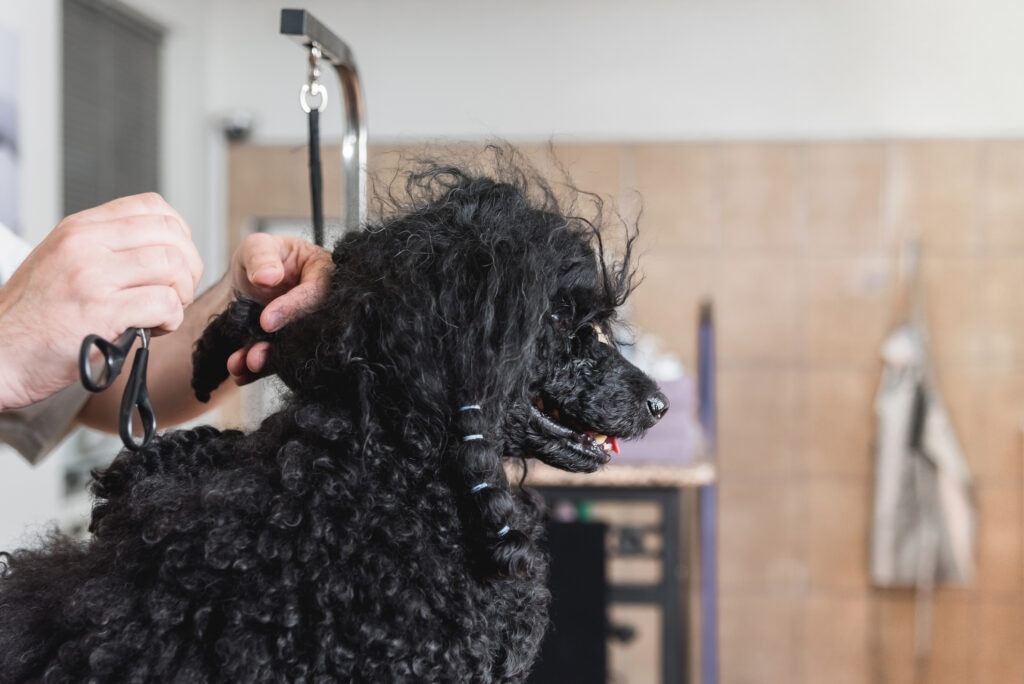
If your pet moves suddenly, you risk accidentally cutting them. Leave tight or stubborn mats to a professional groomer. They often use clippers rather than scissors to safely remove severe mats.
When To See a Groomer or Veterinarian
Some mats are too tight, big, or uncomfortable to safely take care of at home. Stop and seek professional help if the mat:
- Is tight against the skin
- Covers a significant portion of your pet’s body
- Won’t loosen with gentle brushing
- Causes your pet to cry, snap, or resist handling
- Is near sensitive areas such as the eyes, ears, genitals, or anus
- Has nearby redness, swelling, odor, moisture, or discharge
A veterinary exam is needed if your pet has extensive mats or you suspect the underlying skin is damaged. In some cases, your vet may recommend sedation or anesthesia to safely remove the mat without causing unnecessary stress or pain.
How To Prevent Matting
The best way to handle mats is to prevent them from forming. A consistent grooming routine keeps loose hair from building up and allows you to catch small tangles before they become tight, painful mats. How often they need grooming depends on your pet’s coat type, length, and lifestyle. Ask your groomer or veterinarian what grooming schedule would work best for your pet.
Professional grooming can be especially helpful for pets with coats that are difficult to keep neat at home. Regular appointments can keep the coat at a manageable length, remove excess undercoat, and catch developing mats before they become a bigger problem.
Bathing keeps your pet’s coat clean, but a damp, tangled coat can be more prone to matting. Brush out tangles before bathing when possible, use products made specifically for pets, and ensure the coat is thoroughly dried afterward.
Some areas are especially likely to get mats because hair is constantly rubbing against the skin, collars, harnesses, or other body parts.
Check these high-friction areas regularly:
- Behind the ears
- Under the legs and around the armpits
- Around the collar or harness (i.e., chest and neck)
- Between the toes
- Around the tail and hindquarters
Regular grooming is one of the simplest ways to keep your dog or cat comfortable and prevent small tangles from becoming painful mats.
Brush regularly, check high-friction areas, and get professional help when mats are tight, large, or causing discomfort. Consistent care can go a long way toward keeping your pet’s coat healthy and mat free.
How To Handle Matting in Dogs and Cats FAQs
Can I cut mats out with scissors?
No. Mats often form close to the skin, and you can easily cut your pet’s skin if you try to remove a mat with scissors.
Are mats painful for dogs and cats?
Mats can be painful for dogs and cats, especially if they are tight or near sensitive areas.
How often should I brush my pet?
It depends on your pet’s hair type and length. Ask your veterinarian or groomer how often your pet needs to be brushed and what grooming schedule would work best for them.
When is matting considered an emergency?
Matting is considered an emergency if the mat is causing pain or the underlying skin is red, raw, moist, or broken.


