Starfish Care Sheet


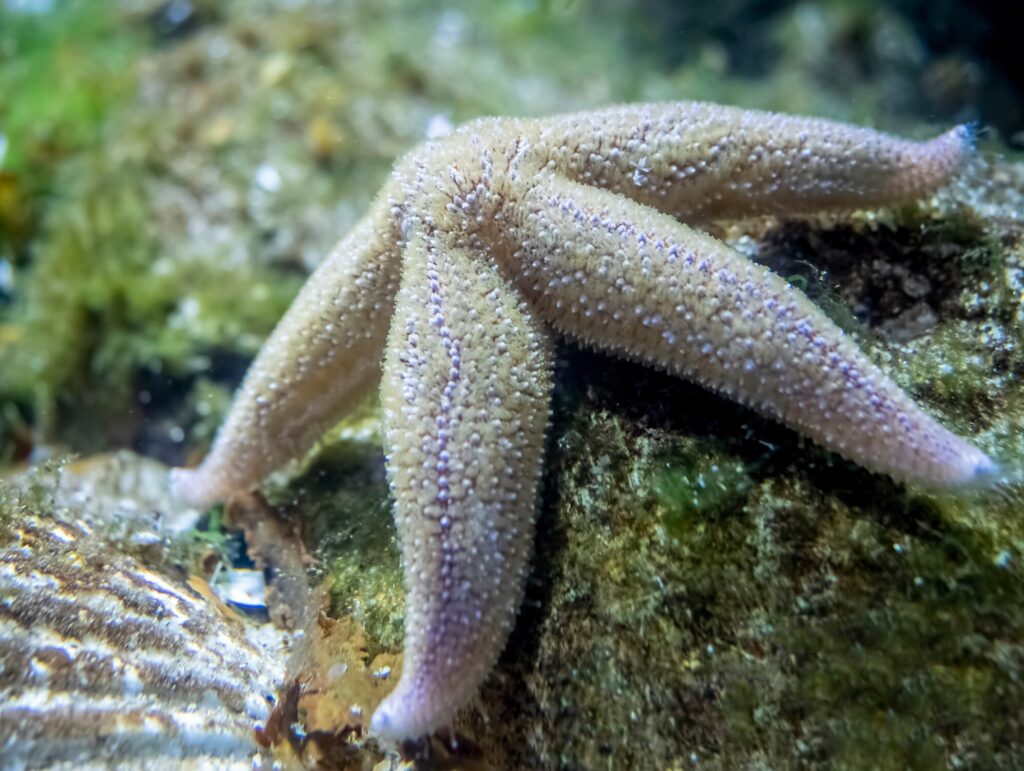
sfe-co2/iStock / Getty Images Plus via Getty Images
Starfish care requires stable saltwater conditions, proper filtration, and species-specific habitat setup to keep these sensitive marine invertebrates healthy.
This care sheet outlines the basic care needs for different types of starfish species, including:
- Chocolate chip starfish
- Sand-sifting starfish
- Red knob starfish
- Red Luzon starfish
- Blunt spined brittle starfish
- Red Linckia starfish
- Green brittle starfish
- Red marble starfish
Key Takeaways
- Starfish are marine invertebrates that require stable saltwater conditions.
- Most starfish species are highly sensitive to changes in temperature, salinity, and water quality.
- Starfish tanks should include soft substrate, live rock, and plenty of hiding places.
- Many starfish species are carnivorous and require meaty foods several times per week.
Species Overview
Starfish are a diverse group of marine invertebrates known for their star-shaped bodies and unique anatomy. Despite their common name, starfish are not actually fish.
Starfish are found in a variety of vivid colors, including yellow, red, and purple. While many species have five arms that create their characteristic appearance, some species can have many more.
Starfish can regenerate detached limbs, and in some species, a separated arm can even develop into an entirely new individual.
Unlike many animals, starfish do not have a heart or blood and instead rely on a water vascular system that circulates nutrients and seawater throughout the body.
Most starfish also have hundreds of tube feet on the underside of their body, often equipped with suction cups that help them move and anchor themselves to surfaces. Brittle stars are an exception and do not have suction cups on their tube feet.
Starfish Characteristics
|
Difficulty of Care |
Beginner to advanced, depending on the species |
|
Average Lifespan |
10 years up to 35 years with proper care, depending on the species |
|
Average Adult Size |
Can range from an inch in diameter to over 3 feet across, but on average the adult starfish is 8–12 inches |
|
Diet |
Omnivorous or carnivorous, depending on the species |
|
Minimum Habitat Size |
10+ gallons, depending on the species |
|
Water Temperature |
74–80 F |
|
Specific Gravity |
1.023–1.025 |
|
pH |
Varies depending on the species; starfish are highly sensitive to changes in their water’s pH value, so starfish keepers should do species-specific research for the type of starfish they’re caring for. |
Supply Checklist
Starfish require specialized saltwater aquarium equipment to maintain stable water conditions and habitat quality.
To keep a starfish healthy, aquarists should have the following supplies:
- Appropriate-sized aquarium
- Appropriate food (dry and frozen)
- Décor
- Marine aquarium salt
- Marine substrate
- Water conditioner
- Filter
- Water test kit
- Full-spectrum lighting
- Net
- Protein skimmer
- Thermometer
- Heater
- Refractometer
- Live plants
- Aquarium hood or cover
- Live rock
Habitat
Starfish Tank Size
Starfish care requires spacious aquariums with plenty of room to explore.
Smaller starfish species require tanks of at least 10 gallons, while larger species need significantly more space to move comfortably.
Whenever possible, provide the largest habitat available, as larger aquariums maintain more stable water conditions than smaller tanks.
Starfish Tankmates
Starfish can live in community aquariums with a variety of peaceful fish species, including:
- Dwarf and large angelfish
- Anthias
- Basslets
- Blennies
- Butterflyfish
- Cardinals
- Clownfish
- Damsels
- Dartfish
- Dragonets
- Filefish
- Foxface rabbitfish
- Gobies
- Hawkfish
- Pseudochromis
- Reef-safe wrasses
- Tangs
Do not house starfish with predatory species such as boxfish, puffer fish, or triggerfish, as they may attack or eat starfish.
Avoid overcrowding, as crowded aquariums can increase stress and disease risk.
Introduce new tankmates gradually. After adding new fish, invertebrates, or equipment, test water quality weekly for at least two months. Monitor pH, ammonia, nitrate, nitrite, carbonate hardness, and general hardness levels during this period.
If water conditions remain stable after two months, reduce testing frequency to once per month.
Starfish Filtration Requirements
Starfish care requires reliable filtration to maintain stable water quality and oxygen levels.
An aquarium filter helps keep the tank clean, removes toxins such as ammonia, and increases oxygen levels in the water.
Choose a filter capable of processing all the water in the aquarium at least four times per hour. For example, a 30-gallon tank should use a filter rated for at least 120 gallons per hour (GPH).
Make sure the filter also has an adjustable flow rate that creates slow to moderate water movement for starfish.
Power (“hang-on-back”) filters and external canister filters are recommended because they provide mechanical, biological, and chemical filtration without taking up space inside the aquarium.
Starfish Water Health and Salinity
Starfish care requires stable water quality and salinity because starfish are highly sensitive to changes in water quality.
Starfish should only be added to established aquariums with mature biological filtration and stable water chemistry.
Regularly test aquarium water to ensure pH, ammonia, nitrite, and nitrate levels remain within a safe range. Aquarium test kits can accurately monitor these parameters. Replace water test kits yearly, as they expire over time.
A protein skimmer may also help maintain water quality by removing excess organic waste from the aquarium and increasing dissolved oxygen levels.
As saltwater invertebrates, starfish require marine salt to survive.
Gradually add marine salt until the aquarium reaches a specific gravity of 1.023–1.025. Specific gravity should not fluctuate more than +/- 0.001 within a 24-hour period, as sudden changes can stress or harm starfish.
Use a hydrometer or refractometer to monitor salinity accurately.
Starfish Water Temperature
Starfish require stable water temperatures between 72 and 82 F to support long-term health.
Water temperature should not fluctuate more than +/- 2 degrees within a 24-hour period. Use an aquarium heater with a thermostat to help maintain stable temperatures, and check the tank daily using an aquarium thermometer.
When choosing an aquarium heater, keep the following in mind:
- Some heaters include built-in thermostats, while others require a separate thermostat.
- Aquarium heaters should provide approximately 2.5–5 watts per gallon of water.
- A 10-gallon tank typically requires a 25- to 50-watt heater.
- Aquariums larger than 50 gallons may require two heaters placed on opposite sides of the tank to prevent cold spots.
Starfish Tank Decor and Accessories
Starfish care includes providing varied surfaces, hiding places, and stable decor that encourage natural behavior and reduce stress.
The bottom of a starfish tank should include a variety of surfaces such as sand, rocks, and coral to encourage exploration and natural behavior.
Starfish Tank Substrate
Starfish tanks should contain at least 1–2 inches of substrate.
Aquariums typically need about 1.5 pounds of substrate per gallon of water. For example, a 10-gallon tank requires approximately 15 pounds of substrate for a 1–2 inch layer.
Certain species, such as sand-sifting starfish, require deeper layers of soft sand for foraging.
Always rinse substrate thoroughly with clean running water before adding it to the aquarium.
Hiding Places and Decor for Starfish
Starfish spend much of the day hiding in rocks and crevices when not searching for food. Provide plenty of rocks, coral, caves, and open hiding areas throughout the aquarium.
Arrange rocks carefully so the tank remains open enough for starfish to move comfortably.
Avoid decor containing copper, as copper is toxic to starfish.
Starfish do not require plants and may uproot them while searching for food. If adding live plants, choose sturdy species such as java fern or anubias.
Using Live Rock in a Starfish Tank
Live rock provides hiding places, supplemental food sources, and biological filtration for starfish tanks.
“Live” rock refers to the beneficial bacteria and microscopic organisms living on the rock, not the rock itself.
Before adding live rock to an aquarium, treat and inspect it for decaying material that may raise ammonia levels.
Always wear gloves when handling live rock or performing aquarium maintenance.
Cleaning & Maintenance
Starfish care requires routine tank maintenance and partial water changes to support stable water conditions.
Perform water changes of 10–25% every two to four weeks, depending on the size of the aquarium and the number of fish and invertebrates in the tank. Avoid replacing all the aquarium water at once, as this can disrupt beneficial bacteria and destabilize biological filtration.
Top off the aquarium as needed, and make sure newly added water matches the tank’s existing temperature and salinity. Treat all new water with a water conditioner to remove chlorine, chloramines, and heavy metals.
Aquariums also require regular cleaning of algae, substrate debris, and filtration equipment. Replace filter media monthly or rinse it in old tank water during water changes, depending on tank conditions. Follow the manufacturer’s instructions for filter maintenance and care.
Avoid cleaning filter media with hot water, bleach, or chemicals, as this can kill beneficial bacteria. Do not replace all filtration media at the same time, which can disrupt biological filtration.
Check the aquarium’s filter, heater, temperature, and other equipment daily to ensure proper operation.
Never use anti-parasitic or copper-based medications in a starfish aquarium, as copper is highly toxic to starfish and can be fatal.
Diet & Nutrition
Starfish care requires a diet tailored to the species, as nutritional needs can vary significantly.
Most pet starfish are carnivorous and eat meaty foods available in fresh, frozen, freeze-dried, or pelleted forms. Some omnivorous species may also consume algae, bacteria, or coral material.
Like other marine invertebrates, starfish benefit from diets containing adequate calcium, vitamins, and trace minerals to support overall health.
Starfish are typically fed two to three times per week, depending on the species and dietary needs. Frozen foods should always be thawed before feeding.
Veterinary Care
Annual or biannual examinations with a certified aquatic veterinarian are strongly recommended. Newly established starfish tanks should be evaluated by a veterinarian within the first one to two weeks.
Whenever possible, use a veterinarian who can perform house calls to reduce transportation stress. Some aquatic veterinarians may also offer telehealth consultations.
Signs of a Healthy Starfish
- Bright, even coloration
- All arms intact
- Active behavior during feeding
When To Call a Vet for Your Starfish
Contact a veterinarian if you notice any of the following signs:
- Changes or loss of coloration
- Decreased or absent appetite
- Sores or ulceration
Common Starfish Health Problems
- Sea star wasting disease
- Injury or loss of arms
- Parasitic infections
- Bacterial infections
- Fungal infections
- Anorexia (loss of appetite)
Starfish Care FAQs
Do starfish communicate?
Yes, starfish communicate using chemical signals that dissolve in the water. They can alert others of a predator, let others know if there is food nearby, or coordinate spawning.
What do starfish do when they’re scared?
If there is a predator, starfish have a chemical defense called saponins, which are very unpleasant-tasting and cause vomiting and nausea. They can also produce a repellent mucus that can kill predators. When stressed they can also flee, turn themselves over, or camouflage themselves among coral or plants.
Do starfish have eyes?
Starfish have eye “spots” at the end of their rays that help them detect light.
How do starfish reproduce?
Starfish reproduce by spawning where the females cast eggs into the water. The males eject sperm into the water, which mixes and creates starfish embryos.
Do starfish have brains?
Starfish lack a brain, but they have a complex nervous system, which means they can feel pain.
How do starfish eat?
Starfish eject their stomach through their mouth, surround their prey, then eat it and digest the food outside of their body.


