Blenny Fish Care Guide: Choosing and Caring for a Blenny Fish

Madelein_Wolf/iStock / Getty Images Plus via Getty Images
Few marine fish groups can match the personality of blenny fish. Their alert behavior, curious nature, and entertaining antics make them a favorite among aquarium hobbyists.
Blenny fish care is relatively simple compared to that of many other saltwater species. Blennies are also generally reef-safe and adapt well to life in captivity.
Combined with their small adult size and hardiness, these traits have made many blenny fish species popular additions to home marine aquariums for decades.
Key Takeaways
- Blenny fish are hardy, reef-safe marine fish with unique personalities.
- Most blenny species are easy to care for and suitable for beginner saltwater aquarists.
- Blennies thrive in aquariums with plenty of rocks, caves, and hiding places.
- Many blenny fish are omnivores that eat algae, crustaceans, and prepared aquarium foods.
- Captive-bred blenny fish are widely available and are often healthier and more sustainable than wild-caught specimens.
What Is a Blenny Fish?
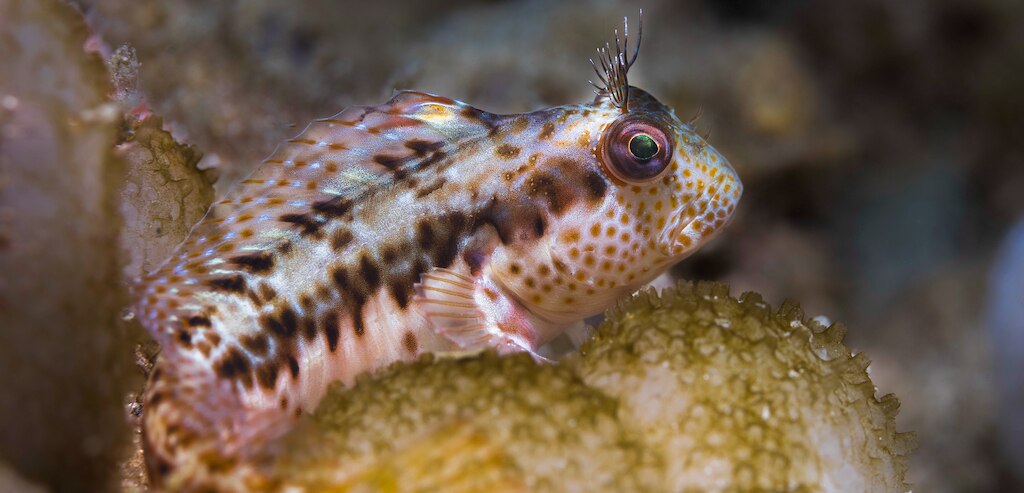
Blenny fish are a diverse group of mostly saltwater fish known for their bottom-dwelling lifestyle, unique personalities, and distinctive appearance.
The "true blennies" belong to the suborder Blennioidei, which includes more than 800 species across six families.
While most blenny species live in marine environments, a small number can also be found in brackish or freshwater habitats.
Blennies are strongly benthic fish, meaning they spend most of their time living on or near the bottom. Many species also display nesting behaviors, creating nests on the substrate where they lay and guard their eggs.
Most blenny fish have large eyes, prominent mouths, and distinctive cirri—small whisker-like or antenna-like appendages on the head. Their bodies are typically long and slender, and while some species have an eel-like appearance, most remain relatively small as adults.
Types of Blenny Fish for Aquariums
Many blenny fish species are available to aquarists, though care requirements can vary between different groups.
Triplefin Blenny (Threefin Blenny)
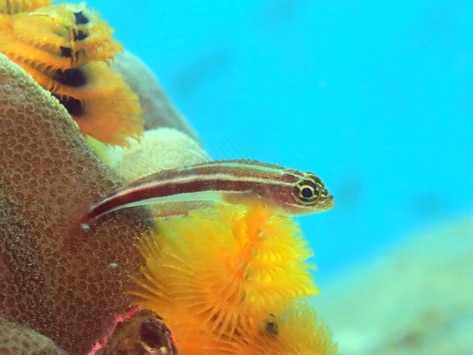
Triplefin blennies, also called threefins, belong to the family Tripterygiidae.
The genera Tripterygion and Enneanectes include roughly 100 species of small, often brightly colored fish. Their most distinctive feature is a dorsal fin divided into three separate sections.
Although rarely available in the aquarium trade, species such as the Niue triplefin (Enneapterygius niue) are highly sought after by hobbyists.
Sand Stargazer Blenny
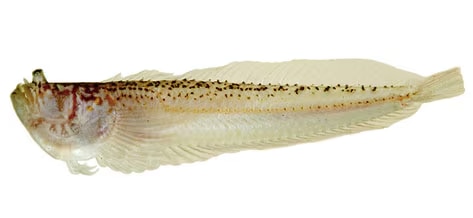
Sand stargazer blennies are burrowing predators in the family Dactyloscopidae that spend much of their lives hidden beneath sandy substrates. Typically, only their eyes, nose, and mouth remain visible above the sand.
Several physical adaptations help them thrive in this environment, including bulging eyes positioned on top of the head, an upward-facing mouth for catching prey, and a specialized branchiostegal pump that allows them to breathe while buried.
Sand stargazers are more predatory than many other blenny species. As ambush predators, they wait for prey to pass overhead before rapidly opening their mouths to capture it. Their diet includes small fish, shrimp, snails, and other invertebrates.
Because of their feeding habits, sand stargazers may not be suitable for every community aquarium. Although uncommon in the aquarium trade, species such as the red saddled sand stargazer (Dactyloscopus pectoralis) are occasionally available to hobbyists.
Clinid Blenny and Indonesian Weedfish
Clinid blennies are members of the family Clinidae and are recognized by their elongated bodies and long, continuous dorsal fins.
While many clinid species are found in temperate marine environments, some—such as the Indonesian weedfish (Springeratus xanthosoma)—are occasionally collected for tropical marine aquariums.
Other clinid species, including kelpfish, are more commonly kept in temperate aquarium systems.
Pikeblenny and Flagblenny
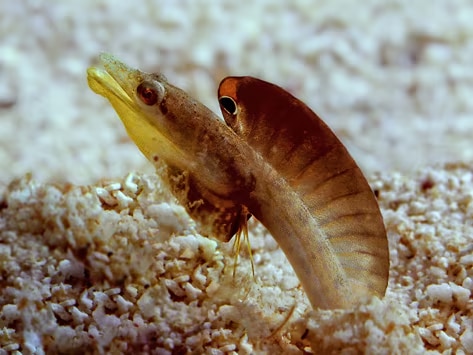
Pikeblennies and flagblennies are members of the family Chaenopsidae known for their slender bodies, sail-like dorsal fins, and distinctive appearance.
Species within this family vary considerably in color and pattern, but many share a scaleless body and an enlarged dorsal fin.
One species that has become increasingly available to aquarium hobbyists is the orange throat pikeblenny (Chaenopsis alepidota).
Labrisomid Blenny
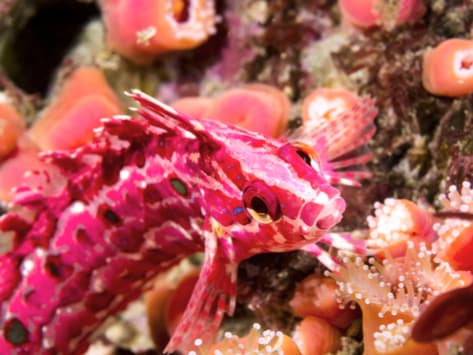
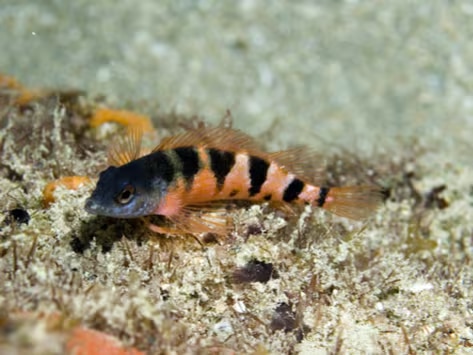
Labrisomid blennies are members of the family Labrisomidae known for their pointed faces and elongated bodies.
Although they are not commonly found in the aquarium trade, some species occasionally become available to hobbyists. One of the more readily available species is the saddled blenny (Malacoctenus triangulatus).
Their body shape can resemble that of unrelated dragonet fish, making them easy to distinguish from many other blenny species.
Combtooth Blenny
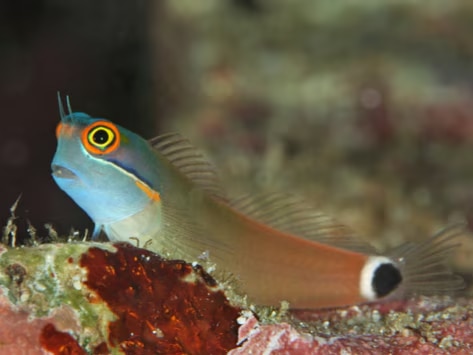
Combtooth blennies (family Blenniidae) are the most commonly kept blenny fish in home aquariums and are often the species aquarists mean when referring to "blennies."
This family includes many popular aquarium fish from the genera Blennius, Salarias, Ecsenius, and Meiacanthus.
Where Can You Buy Blenny Fish?
Many blenny fish are now available as captive-bred aquarium species, making them easier to find and care for than wild-caught fish.
Captive-bred blennies are generally hardier, better adapted to aquarium life, and represent a more sustainable choice than wild-caught specimens.
Several popular fang blenny species in the genus Meiacanthus are commonly available as captive-bred fish, including:
- M. bundoon
- M. kamoharai
- M. negrolineatus
- M. oualanensis
- M. grammistes
The Red Sea mimic blenny (Ecsenius gravieri) has also become a popular captive-bred species for nano aquariums.
The Molly Miller blenny (Scartella cristata) is becoming increasingly popular as one of the first captive-bred clean-up crew fish species used to help control algae growth in aquariums.
Several less common blenny fish species have also been successfully bred in captivity, including:
- Striped blenny (Chasmodes bosquianus)
- Feather blenny (Hypsoblennius hentz)
- Seaweed blenny (Parablennius marmoreus)
- Mimic fang blenny (Petroscirtes breviceps)
- Peacock blenny (Salaria pavo)
These species may become more widely available in the aquarium trade in the future.
One species that requires special consideration is the bluestriped fangblenny (Plagiotremus rhinorhynchos). This fish mimics the appearance and behavior of the bluestreak cleaner wrasse, a species that removes parasites from larger fish.
However, instead of cleaning fish, the bluestriped fangblenny may bite other fish and quickly swim away. Its venom has a numbing effect that reduces pain, but affected fish can still suffer injuries.
For this reason, carefully evaluate tankmate compatibility before adding this species to a community aquarium.
Blenny Fish Care Guide
Housing Blenny Fish
Blenny fish are hardy, adaptable aquarium pets that thrive in marine tanks with stable water quality and plenty of shelter.
Most blennies prefer rocky aquascapes with caves, crevices, and other secure hiding places. These fish frequently dart into shelter when startled and may even create their own burrows. Some species also appreciate tube-like structures where they can retreat and feel secure.
In many cases, a single blenny fish can be housed comfortably in a tank as small as 20 gallons, provided adequate shelter is available.
Although blennies are healthiest in excellent water conditions, they are generally more tolerant of minor fluctuations than many marine fish.
Use a secure, tight-fitting lid on any aquarium housing a blenny fish. While blennies are primarily bottom dwellers, they can be surprisingly active and may jump from uncovered aquariums.
Choosing Tankmates for Blenny Fish
Blenny fish are generally peaceful and compatible with many marine aquarium species.
Because most blennies are relatively small, avoid housing them with large predatory fish, such as lionfish, that may view them as prey. Likewise, some blenny species may prey on very small fish or invertebrates.
Blennies may occasionally compete for preferred hiding places, but they typically do not harass other tankmates. To reduce territorial disputes, especially between males, it is usually best to keep only one individual of each blenny species per aquarium.
Feeding Blenny Fish
Most blenny fish are enthusiastic feeders and readily accept a variety of commercially available aquarium foods.
Diet varies depending on the species and feeding behavior of the blenny.
Blennies that spend more time swimming in the water column, such as fang blennies, primarily feed on small crustaceans including brine shrimp and mysis shrimp.
Species that spend most of their time resting on the substrate, including many members of the Blennius and Ecsenius genera, tend to be more omnivorous. These blennies feed on small crustaceans as well as algae and other plant material.
Some species are primarily herbivorous. For example, the lawnmower blenny (Salarias spp.) feeds heavily on algae. Other algae-eating species, such as the Molly Miller blenny, are often added to reef aquariums to help control nuisance algae growth.
Blenny Fish FAQs
Are blenny fish good for beginners?
Yes, many blennies make excellent fish for beginners because they are hardy, easy to feed, and adapt well to aquarium life.
What do blenny fish eat?
Most blenny fish eat a combination of algae, small crustaceans, and prepared aquarium foods. Diet varies by species.
Can blenny fish live with other fish?
Yes, blenny fish generally coexist well with other peaceful marine fish, though territorial disputes may occur between members of the same species.


