Snow Nose: What Is It and Why Is My Dog’s Nose Turning Pink?


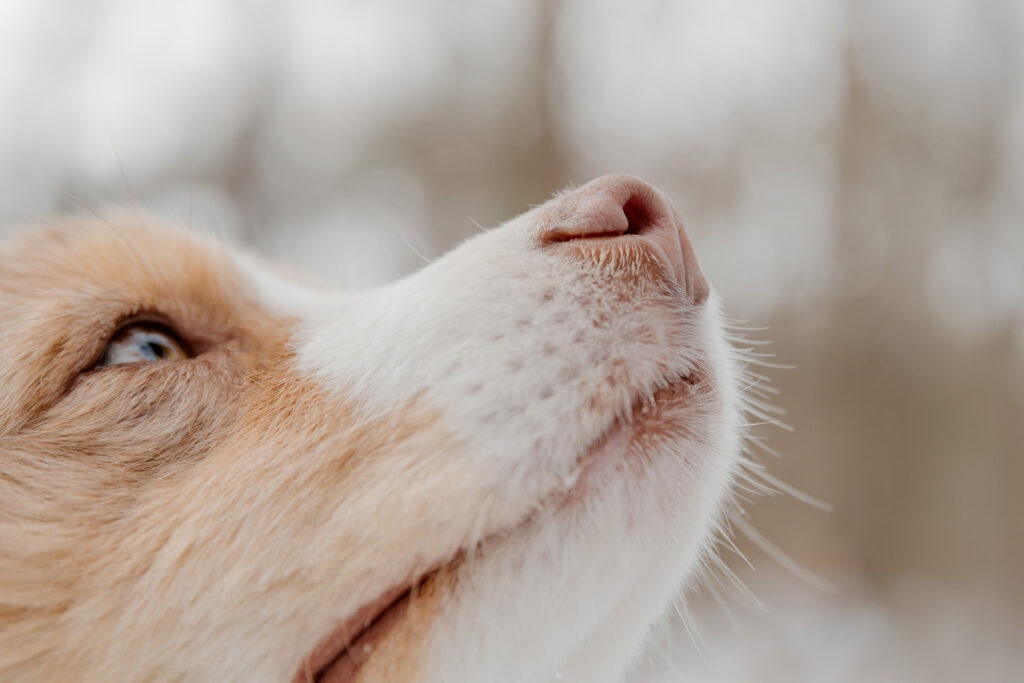
Olga Ovcharenko/iStock/Getty Images Plus via Getty Images
If your dog’s nose is naturally black and you suddenly notice it has become lighter, you may think, “Why is my dog’s nose turning pink?”
Your dog could have a condition called snow nose. Snow nose affects many dogs and is common in the winter months.
Fortunately, it’s a harmless, temporary condition.
Key Takeaways
- Snow nose is a harmless, temporary condition where a dog’s nose turns from black to pink, often during winter months.
- The exact cause is unknown, but it may be related to weather, reduced sunlight, enzyme changes, or genetics.
- No treatment is needed. Pigment usually returns as daylight increases, and the condition does not cause discomfort or health issues.
What Is Snow Nose?
Snow nose is a condition during which a dog’s nose color turns from black to pink.
This happens as the dog’s nose loses its natural pigment because of changes in weather and daylight length. It’s not due to an underlying health issue and is a temporary condition.
With snow nose, only the color of the nose is affected, not the texture of the nose, which makes it different from other underlying health issues that may cause color changes, such as discoid lupus erythematosus (a less aggressive form of lupus).
If you notice changes other than the color of your dog’s nose, bring them to the vet for an accurate diagnosis.
Why Is My Dog’s Nose Turning Pink?
The exact cause for snow nose in dogs is unknown.
However, there are a few possible reasons why a dog’s nose may turn pink, including:
-
Changes in weather: Snow nose in dogs most commonly happens in the winter months; however, it has been seen in some dogs throughout the summer or in warmer climates too. More research is needed to further explore how weather is linked to this condition.
-
Changes in daylight length: The shorter days of the winter months might contribute to pink noses in dogs. This is likely due to decreased sunlight and less pigment production.
-
Enzyme changes: Tyrosinase is an enzyme that makes melanin, which is the pigment that gives a dog’s nose its color. In the cold months, it’s thought that this enzyme is not as effective. As a result, less pigment is made, leading to lighter noses in dogs.
-
Genetics: Since certain breeds get snow nose more often, it is thought that genetics may play a role as well.
While snow nose can affect dogs of any age or breed, it’s most commonly seen in Labrador Retrievers, Siberian Huskies, and Bernese Mountain Dogs.
Is Snow Nose Permanent?
Snow nose in dogs is not a permanent condition.
It’s not caused by any underlying health issue either. Dogs will slowly get pigment back in their noses once the weather begins warming up again and there is more sunlight each day.
Can You Prevent Snow Nose?
Because veterinarians don’t know exactly what causes snow nose in dogs, there’s no way to prevent dogs’ noses from turning pink from this condition.
However, when a dog’s nose is pink, you can apply dog-safe sunscreen (like Gentle Creatures Pet Sunscreen) to protect the nose from sunburn even on cloudy days.
Snow Nose FAQs
How do you treat a snow nose in dogs?
Snow nose in dogs does not need treatment as it is a temporary, harmless condition.
Does a snow nose hurt dogs?
Snow nose in dogs is not a painful condition. Dogs likely don’t even realize their noses have changed color!
What do vets recommend for snow nose?
Veterinarians recommend a watch and wait approach. There is no need for treatment for snow nose, so simply waiting for the color to return to the dog’s nose is acceptable.
How to stop a snow nose?
There is no way to prevent snow nose in dogs. However, it is a temporary condition, so dogs will eventually get the pigment back in their noses.
What is a snow nose in dogs?
Snow nose in dogs refers to a condition during which a dog’s nose loses its natural pigment. This causes a dog’s nose to change from black to pink. There is only a change in color of the nose, not the texture.