Dog Pregnancy: Signs Your Dog Is Pregnant and How To Help


Natalia Duryagina/iStock / Getty Images Plus via Getty Images
Dog pregnancy typically lasts about 63 days, or around two months, although the gestation period can range from 57 to 72 days.
Signs your dog is pregnant may include weight gain, enlarged nipples, a swollen abdomen, appetite changes, and nesting behaviors.
Here’s what pet parents should know about the stages of dog pregnancy, how to care for a pregnant dog, and what to expect during labor and birth.
Key Takeaways
- Dog pregnancy lasts an average of 63 days, or about two months, although gestation can range from 57 to 72 days.
- Signs of pregnancy in dogs may include a swollen abdomen, enlarged nipples, weight gain, and nesting behaviors.
- Veterinarians can diagnose pregnancy using ultrasound, blood testing, abdominal palpation, or X-rays.
- Pregnant dogs may need dietary adjustments, especially during the final trimester when puppies grow rapidly.
- Dog pregnancy has three trimesters, and labor occurs in three stages.
How Long Are Dogs Pregnant?
Dog pregnancy lasts an average of 63 days, or around two months, but can range from 57 to 72 days. This period is called the gestation period.
The length of pregnancy is the same for all breeds and ages.
How To Care for a Pregnant Dog
Caring for a pregnant dog involves regular veterinary care, appropriate nutrition, monitoring weight gain, and ensuring that medications, vaccinations, and parasite preventives are safe during pregnancy.
The first step of caring for a pregnant dog is finding a veterinarian whose interests include dog pregnancy, whelping (labor), and neonatal (post-birth) care.
The veterinarian can work to keep your dog healthy during and after pregnancy. They will also discuss health risks to the mom and puppies and how to prevent parasites in newborn puppies.
Feeding a Pregnant Dog
One change to expect is for your dog to gain weight. Compared to her weight at the time of breeding or insemination, a female dog should weigh around 15% to 25% more than her breeding weight at the time of birthing.
During the first two trimesters of pregnancy, you can feed your pregnant dog a normal adult diet. You should watch her weight and body condition, increasing food if you notice any weight loss.
After around 40 days of pregnancy, once your dog enters her last trimester, the fetuses will have the most rapid period of growth. The mom-to-be may need you to increase the number of calories you feed her by 25% to 50%.
It’s recommended that you switch a pregnant dog to a growth or puppy diet during the last trimester. Make sure to transition to the new diet slowly over a period of seven to 10 days.
Because of the puppies growing in her abdomen, she will have trouble eating large meals. Feed your pregnant dog multiple small meals throughout the day.
Feeding Your Dog After Giving Birth
A female dog’s highest energy needs will be after she gives birth, when she is making milk for the pups.
She may need two to four times the number of calories she was eating before becoming pregnant. You should feed a diet approved for lactation/reproduction, often the same as a puppy or growth food.
Supplements and Medications During Dog Pregnancy
Supplements are not usually recommended for a pregnant dog. Your veterinarian is your best source for knowing if your dog needs anything extra added to her diet.
Don’t give your pup any extra medication, food, or supplements unless approved by your vet.
Vaccinations and Parasite Prevention During Dog Pregnancy
Make sure your dog is vaccinated before becoming pregnant.
Modified live vaccines (distemper, parvo, parainfluenza) are not recommended for pregnant dogs, except in circumstances where the risk of disease is greater than the risk from vaccines (such as in some animal shelters).
You should continue to give parasite preventives during your dog’s pregnancy, but make sure to check with your veterinarian that your dog’s specific preventives are safe for a pregnant dog.
What Are the Signs of Dog Pregnancy?
Signs of dog pregnancy include a swollen abdomen, enlarged nipples, nesting behaviors, appetite changes, weight gain, and behavioral changes such as irritability or clinginess.
Early in pregnancy, you may not be able to tell that your dog is going to have puppies. Some dogs may vomit early on in pregnancy, like morning sickness in human women.
As your dog moves further into pregnancy, you may notice:
- A swollen abdomen
- Enlarged nipples
- Nesting behaviors (dragging blankets, digging in a closet)
- Appetite changes
- Weight gain
- Behavioral changes like irritability or clinginess
How Veterinarians Diagnose Dog Pregnancy
Veterinarians can diagnose dog pregnancy using abdominal ultrasound, relaxin blood testing, abdominal palpation, or X-rays.
Abdominal Ultrasound
This is the most reliable way to diagnose and check pregnancy. During an ultrasound, the veterinarian can see the developing embryos at around three weeks after breeding. They can watch the embryos for proper development and get an exact count of puppies to expect.
Blood test for relaxin
Relaxin is a hormone made by the placenta (an organ that forms within the mother’s uterus that provides nutrients to the developing fetus through the umbilical cord).
Relaxin can be detected around 22 to 27 days after breeding. Relaxin testing may not be correct in small or toy dog breeds, especially if they only have one or two puppies.
Abdominal palpation
The veterinarian presses on the abdomen and can feel swellings in the uterus where the puppies have implanted. Some veterinarians can count puppies during palpation.
Abdominal X-rays (radiographs)
The bony structures of the puppies are picked up on X-ray. Abdominal X-rays can be used in the last trimester of pregnancy. Commonly, abdominal X-rays are used to count the number of fetuses.
What Are the Stages of Dog Pregnancy?
A dog pregnancy has three trimesters, each lasting approximately three weeks. During each trimester, your dog may experience different physical and behavioral changes.
Before Pregnancy: The Heat Cycle
Before pregnancy, the dog will go into heat.
You will notice swelling of her vulva (external female genitalia) and bloody discharge from her vulva.
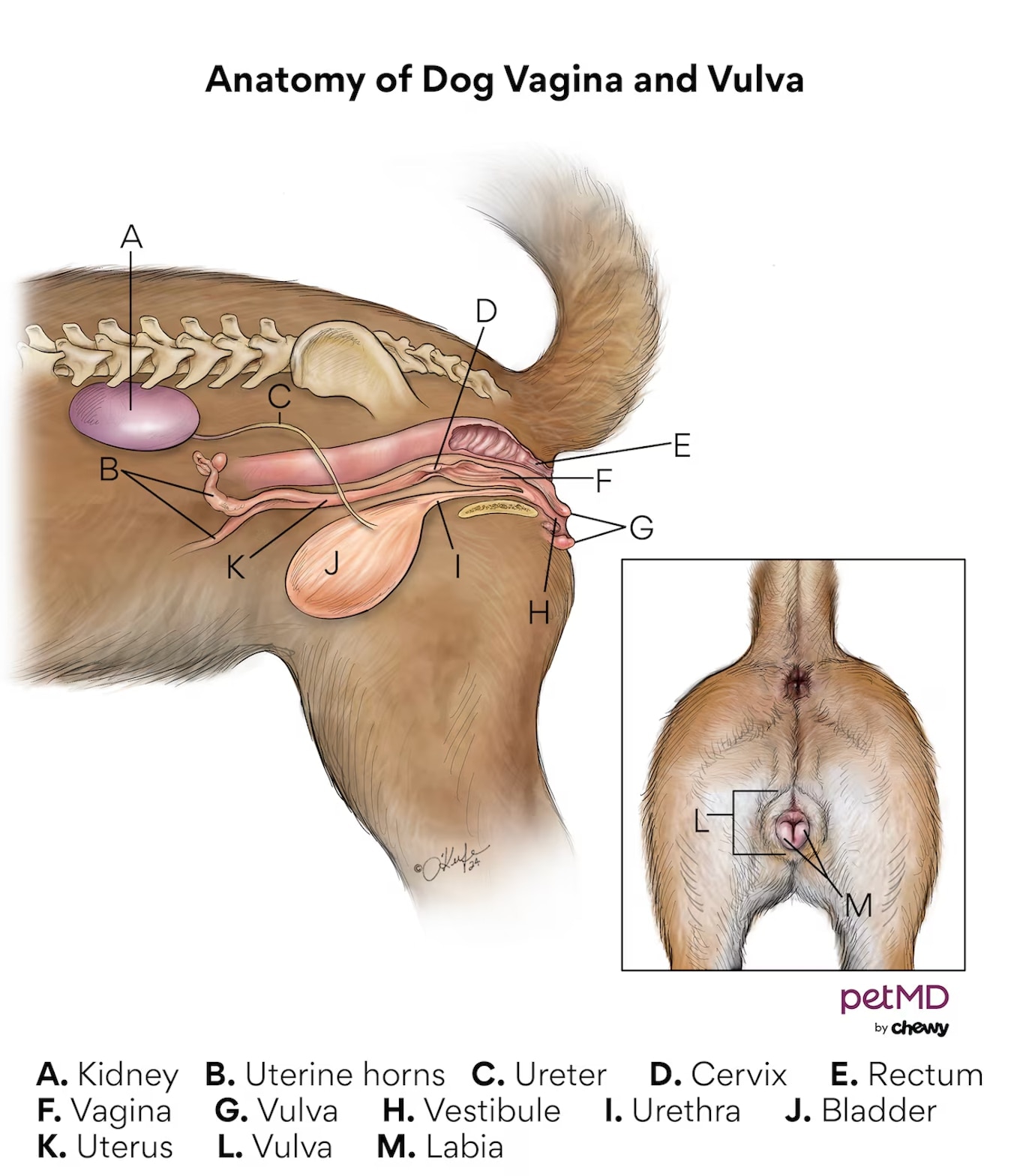
She may have swelling of her mammary glands and will show interest in intact (unneutered) males. If she mates with another dog or undergoes artificial insemination, she may become pregnant.
First Trimester: Weeks 1–3
During the first trimester, you are unlikely to notice big changes. Some early pregnancy dogs may occasionally vomit.
Second Trimester: Weeks 4–6
You may notice changes in appetite or abdominal swelling, especially toward the end of the second trimester.
Third Trimester: Weeks 7–9
Symptoms of pregnancy are the most obvious. Your dog’s energy needs increase during the last trimester. She is preparing to give birth.
How To Prepare for Your Dog To Give Birth
To prepare for your dog to give birth, set up a clean, dry, comfortable space with a suitable whelping box. The box should have enough room for the mother to move freely and low sides so she can easily step in and out.
DIY options could include a large cardboard packing case with an open top and side cut out or a small kids’ swimming pool. There are commercial whelping boxes available too.
The whelping box should be lined with newspaper, sheets, or a mat.
This will help with cleanup since a large amount of fluid will be produced during whelping. With adequate lining of the whelping box, pet parents will be able to take out soiled layers without significantly disrupting the mother.
A comfortable blanket can be added to the top, but pet parents should keep in mind that this will get dirty. Puppies are also more likely to get stuck under heavy blankets than they are a newspaper or thin sheet.
What Are the Three Stages of Dog Labor?
Dog labor occurs in three stages: uterine contractions and cervical dilation, delivery of the puppies, and expulsion of the placentas.
- The first stage is uterine contractions and dilation (opening) of the cervix. During the first stage, you may notice your dog showing extreme nesting behavior, panting, and restlessness. This stage usually happens six to 12 hours before giving birth, but it can last up to a day and a half.
- The second stage is when your dog gives birth to a puppy.
- The third stage is when your dog expels the placenta associated with the puppy. Typically, each puppy will have their own placenta. In dogs, stages two and three happen simultaneously, with each puppy typically followed by their own placenta.
What To Expect During and After Dog Birth
During dog birth, puppies may be delivered headfirst or tail first, with placentas following delivery. After giving birth, your dog may also experience vaginal discharge as she recovers.
Puppy Delivery and Placenta Expulsion
Because there are two uterine horns in dogs, it’s not uncommon for two puppies to be born followed by two placentas. Puppies generally come out headfirst or tail first with their legs extended straight.
If you notice a clear or white sac coming out from the vulva or a green discharge, a fetus should follow quickly. This is the amniotic sac, which is a fluid-filled sac full of amniotic fluid that surrounds each individual fetus.
It’s normal for the female dog to take up to two hours between each puppy. If you’re expecting more puppies, you should contact a veterinarian if more than two hours have passed without another puppy being born.
Monitoring Your Dog During Birth
While some dogs may be OK with their pet parent hanging around during the birthing, it’s common for dogs to want to give birth alone. We recommend that you give your dog some space while she is birthing.
If your dog makes more progress when left alone, you can watch from afar, check in at regular intervals, or set up a whelping camera.
You should not have to help with the physical act of birthing. If a puppy looks stuck, contact your veterinarian for advice.
What To Expect After Your Dog Gives Birth
It’s not uncommon for mother dogs to eat their placentas. Consumption may result in diarrhea. This is a natural behavior and does not mean anything is wrong.
After your dog is done giving birth, you may notice vaginal discharge called lochia. This discharge can have a green, red, or brown hue. It gets darker and decreases over time, usually lasting around three weeks.
In some cases, discharge continues for up to two months. If you notice that the discharge has a foul odor or is increasing in amount, you should contact a veterinarian.
Dog Pregnancy FAQs
How soon can you tell if a dog is pregnant?
With an abdominal ultrasound, pregnancy can be diagnosed at around 21 days in dogs.
Can you tell if your dog is pregnant at home?
If you suspect your dog is pregnant, you should see a veterinarian for diagnosis.
Some dogs can become pseudopregnant, where their body acts like they are pregnant when they’re not.
You will not be able to tell on your own that your dog is pregnant until she’s within a few weeks of giving birth.
How long does dog pregnancy last?
Dog pregnancy lasts an average of 63 days, or around two months. The gestation period can range from 57 to 72 days.
What are the first signs of pregnancy in dogs?
Early signs of dog pregnancy may include occasional vomiting. As pregnancy progresses, you may notice a swollen abdomen, enlarged nipples, nesting behaviors, appetite changes, weight gain, or behavioral changes.
What should you feed a pregnant dog?
During the first two trimesters, a pregnant dog can generally continue eating a normal adult diet. During the final trimester, a growth or puppy diet is recommended. Your veterinarian can help determine the appropriate diet and calorie requirements.
How long can a dog go between delivering puppies?
It can be normal for a dog to take up to two hours between puppies. If you are expecting additional puppies and more than two hours have passed without another puppy being born, contact your veterinarian.


