Do Dogs Know When You Are Sick?


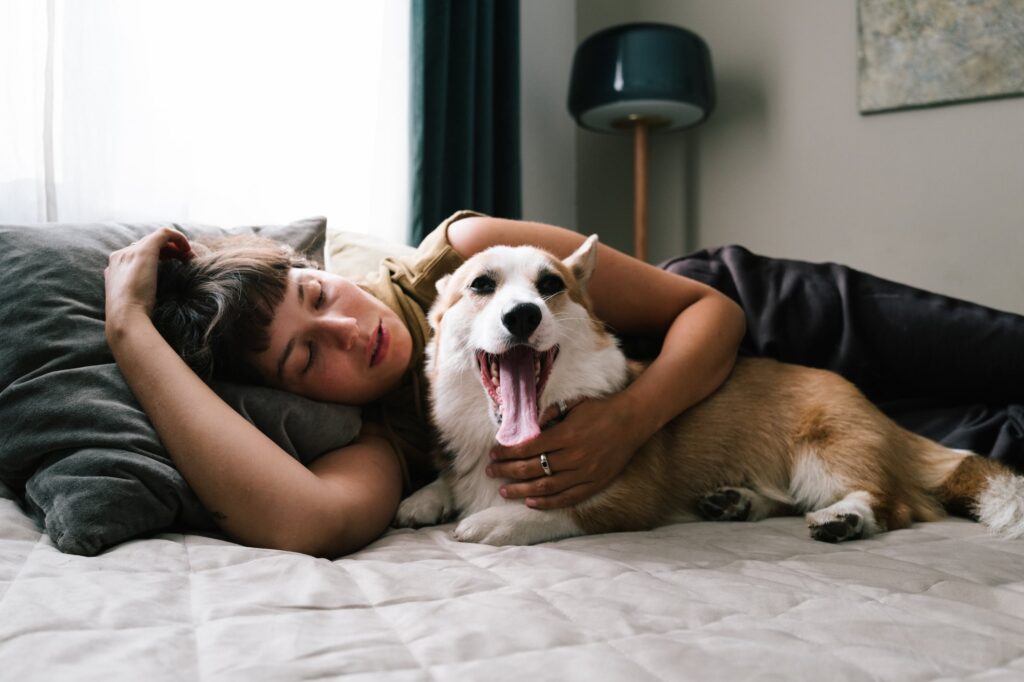
fotografixx/E+ via Getty Images
If you’re feeling sick and your dog is acting strange, it’s natural to wonder what’s going on.
Do dogs know when you are sick? Or could you have gotten your dog sick, too? The facts are more interesting (and reassuring) than you might think.
Key Takeaways
- There is evidence that many dogs can detect when a person is feeling sick.
- Some dogs can detect certain sicknesses, such as cancer and COVID, with their sense of smell.
- Changes in routine and in your body language also give them clues that their human isn’t feeling well.
- Most of the time, pathogens cannot transfer from human to dog or vice versa, but there are exceptions.
Can Dogs Tell When You’re Sick?
Yes, many dogs seem to be able to tell when people are sick. But there are some important limitations.
Dogs are very good at detecting when something about you has changed, but they aren’t aware of what specifically is wrong. Your dog isn't diagnosing COVID or cancer; they’re noticing a new smell or changes in your routine and reacting to them.
How Do Dogs Know You’re Sick?
Dogs can use their senses and other clues to determine that something about you has changed.
Smell
The canine sense of smell is truly remarkable. Compared to people, dogs have roughly 40 times more scent receptors in their noses, and a proportionally larger part of their brain is devoted to processing smells. Dogs can smell things we simply can’t detect.
This matters because when we’re sick, our bodies release different volatile organic compounds (VOCs) than when we are healthy. VOCs evaporate easily and often have distinct odors associated with them.
While your pet dog may simply be thinking that you smell a little weird, the noses of dogs who have been specifically trained can do truly remarkable things.
- In a 2004 study, dogs were trained to identify urine from patients with bladder cancer. They chose correctly more often than would be expected by chance. But in an interesting twist, the dogs kept insisting that one of the samples from a supposedly healthy person was positive for cancer. Further screening revealed the dogs were right—the volunteer had a previously undiagnosed cancer of the kidney.
- During the pandemic, research showed that trained dogs could accurately identify people with COVID from sweat samples.
- A 2019 study found that epileptic seizures produce a distinct odor and that dogs can learn to recognize it in different people. Other research showed similar results for people with migraines, diabetes, kidney disease, and several types of cancer.
Changes in Routine
Dogs love their routines. Keeping a consistent schedule is one of the best ways to help your dog feel secure—they always know what to expect next.
Those routines change when you’re sick. Walks get skipped, meals are late, and instead of being at work, you’re napping in bed. Your dog is keenly aware of all of this, and is likely to react with concern—or perhaps annoyance.
Emotions and Body Language
When you are sick, your emotions and body language change, too. Undoubtedly, you’re not in the best of moods. You might be slouched on the couch, moving slowly, or grimacing while curled up in a ball in bed.
Dogs are good at reading human body language and facial expressions and are quite capable of picking up on your mood. They will notice changes and act accordingly.
The Sounds You Make
Dogs have an excellent sense of hearing and can detect sounds that are quieter and at much higher frequencies than we can. Your dog can hear when illness changes the sound of your voice or your breathing, or you start coughing, sneezing, or making any other unusual noises.
How Do Dogs Act When You’re Sick?
Every dog is unique, so their responses to sick people will vary. You might notice:
- Increased attention. Many dogs become clingy. They won’t leave your side, following you from room to room and lying right next to you whenever they have the chance. Research has found that dogs take extra interest in people who appear distressed.
- Anxiety or restlessness. Some dogs pace, whine, and seem upset when their people are sick. One study found an increase in cortisol levels (an important stress hormone) when dogs heard human babies cry.
- Withdrawal. Other dogs pull back a bit and keep their distance. This could be their way of dealing with the uncertainty they feel in a situation that has changed.
- No change at all. And finally, plenty of dogs carry on like nothing is different, but this doesn’t mean that they don’t feel a bond with you. Perhaps they haven’t realized that something is wrong or they feel like you’ve got everything under control.
Can You Get Your Dog Sick?
If you’re sick, do you have to stay away from your dog to keep them safe?
For the most part, no. While your cold, flu, or other illness could be contagious to other people in your household, most common human pathogens do not make dogs sick. So feel free to cuddle up with your pup until you feel better.
There are a few exceptions, though. For example, ringworm, salmonellosis, or a methicillin-resistant staph infection can be transmitted from people to dogs (and vice versa).
If you’re sick, your best bet is to talk to your doctor and your dog’s veterinarian to determine what you should do to protect your loved ones.


