Why Do Dogs Wag Their Tails?



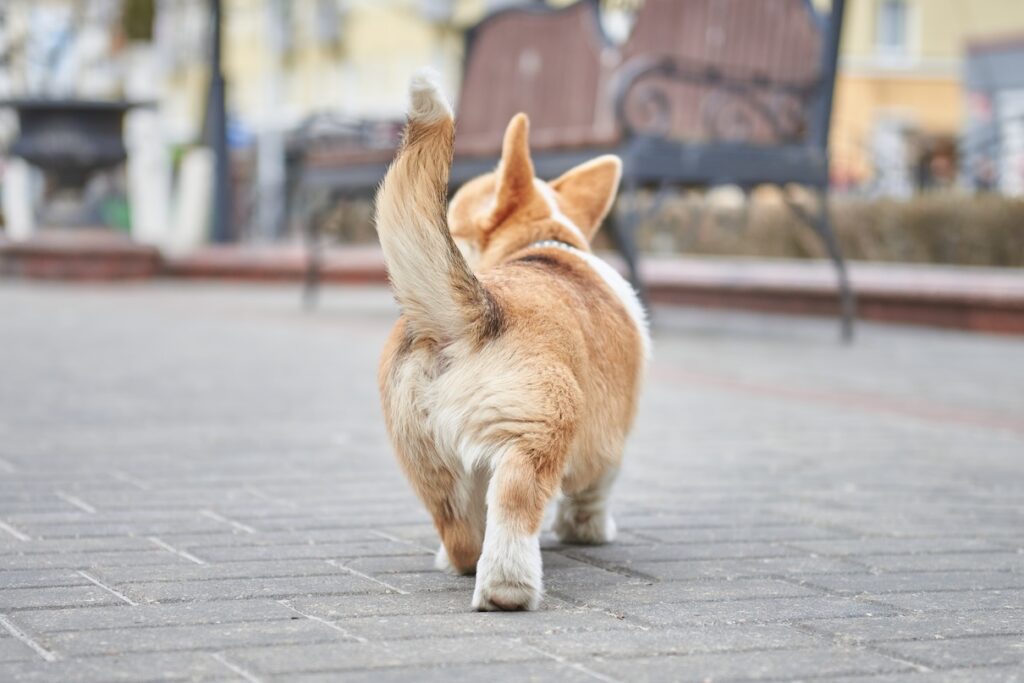
It’s easy to assume that dog with a wagging tail is happy, but this seemingly joyful behavior can be an indicator of wide spectrum of feelings, from fear to potential aggression.
The key to figuring out if the wag means “let’s hang out” or “stay away” is to pay attention to the dog’s entire body, as well as the circumstances of the interaction.
It’s always a good idea to take a beat to get the full context of the scenario before making assumptions about what a dog might be feeling, both to respect what the dog is saying as well as keeping everyone involved safe.
Key Takeaways
- If a dog wags their tail, it doesn’t always mean they’re friendly and want to engage with you.
- A dog wagging their tail can be showing many different emotions.
- You can tell what a dog is saying by how fast they’re wagging and their tail’s position.
- Always look at a dog’s entire body language, not just whether they’re wagging their tail.
How to Read a Dog’s Tail Wag
One of the biggest misconceptions about dogs is that a wagging tail means the dog is friendly. While it certainly can mean this, there are a multitude of reasons dogs wag their tails.
Because dogs use their tails to communicate different emotions, the feeling being conveyed depends on two factors:
- The tail position
- The speed of the wag
If a dog’s tail wag is thought of as their way of talking, then the positions of their tail can be thought of as words. The speed at which they’re wagging their tail can then be compared to how loud their voice is. The faster the tail wag, the louder the voice.
But it can be tricky to see, depending on the dog’s anatomy. Dogs with a longer tail might have a “relaxed” tail position that hangs low. But there are some breeds whose natural tail position is upright, and others that don’t have tails at all.
Looking at the tail’s base can give more insight thanks to the important tail set (or position). Once the angle of the tail is noted, assessing the speed of the wag can help complete the picture and help determine what kind of emotion the dog is feeling.
What Does It Mean When Dogs Wag Their Tails?
The tail’s position could be considered reflective of the dog’s general mood (scared, excited, concerned, curious, happy, or angry). The speed of the wag underscores the intensity of that emotion.
Here are several emotions a dog can convey through wagging their tail.

Happy/Friendly
When a dog is expressing happiness or friendliness, their tail is often in a neutral position (the base of the tail is parallel to the ground). It can also be in a slightly upward or downward position and wagging at a moderate speed.
Their tail is relaxed and wagging in full, sweeping side-to-side movements. It may even be wagging in a circular motion known as a “circle wag” or “helicopter tail.” (Though, some dogs can have a helicopter tail when they’re feeling anxious, aroused, or agitated. Again, it’s important to remember that no one body part communicates the whole story!)
The more excited a dog is, the faster their tail typically wags (although a fast wag can indicate happiness or anger, which is why it's vital to take in the dog's whole body to accurately translate the emotional state).
When dogs are excited and friendly, it's likely that their entire body will wiggle, from their shoulders down to their tail. A dog with a happy wagging tail often has loose, bouncy body language. Feel free to approach the dog and give them pets, treats, or engage them with a fun tug toy.
Relaxed
A relaxed dog will stand with a tail that’s void of tension in a neutral position and not wagging, or the dog might offer an occasional loose wag. The wag will kick into gear when an emotion is sparked by an environmental change.
Appeasing/Submissive/Fearful
Before describing an appeasing, submissive, or fearful tail wag, it’s important to note that all these forms likely have an element of fear, vulnerability, or uncertainty. It’s important to pick up on the cues a dog is giving with the rest of their body to avoid heightening the situation.
Submissive dogs will often lower their tail or tuck it between their legs. This is typically done because the dog feels threatened. This tail position is telling other dogs (and people!) that they need time and space to work through the discomfort. A submissive tail position may or may not be associated with a tail wag.
If a dog has their tail tucked tightly between their legs and is wagging the tip in a tight fast motion, this is typically indicative of the dog experiencing a fear response and wanting to pacify another dog. Many dogs show signs of submission when they’re scared as a survival strategy.
A submissive tail wag can be thought of as a dog saying, “Please don’t hurt me!” If a dog is exhibiting this sign, it’s best to stop approaching or interacting with them.
Allow the dog to approach when they are feeling safer. And remember: A dog moving forward with a tucked tail wagging low and tightly may not be asking for interaction.
Aggressive/Threatening
A dog moving closer to exhibiting aggressive behavior will move their tail into a vertical position that might arch over their back, depending on their tail type. The tail will be very stiff and may be still or practically vibrating with tight, small wags. The tighter and faster the tail movement, the more agitated the dog is.
If a dog is showing signs of feeling threatened, action needs to be taken to change the environment immediately. The dog should not be approached, as it might cause them to escalate their response to growling, lunging, or in worst case scenarios, biting.
If the dog can’t be removed from the situation, the people, other animals, or events causing the dog’s distress should be.
In addition to the high, stiff tail, other signs dogs may exhibit include:
- Stiff body pointing at the target
- Staring
- Pinning or flattening their ears
- Closing their mouth with tension in the lips
- Standing perfectly still/freezing
- Moving forward in slow motion
- Lip raising
- Growling
- Lunging
Avoidance
When dogs don’t want to interact at all, they typically stop wagging their tail and move away. They may even exhibit displacement behaviors like self-grooming or sniffing the ground. A more direct translation of these behaviors is, “please leave me alone,” or “please calm down.”
At this stage, this isn’t associated with aggression; it’s just the dog’s way of requesting to be left alone. However, if the dog is approached, the avoidance signals may transition to submission or aggression, depending on the dog.
Heed the dog’s request and do not approach unless absolutely necessary. If you’re able to give the dog some space, they may willing come to you after some time.
Curious
When a dog is curious about something, such as when they find a new smell, their tail is typically held straight out behind them.
This may or may not be associated with a tail wag—the tail is often held still, but it won’t look stiff or tense. They may also be standing with an alert posture with their ears perked up, potentially with wrinkles visible on their foreheads.
Right-Sided vs. Left-Sided Tail Wagging
Scientists have also discovered there is a difference between a more right-sided versus left-sided tail wagging:
- Dogs conveying more positive emotions will wag their tail slightly to the right.
- Dogs that are conveying more negative emotions will wag their tail slightly to the left.
Since this subtle behavior might be tough to see, it's best to rely on the more obvious tells about a dog's emotional state.
How Do Dogs Without Tails Communicate?
Keep in mind a tail is just one body part dogs use to communicate emotion. With or without a tail, here are just a few ways that dogs use their voice and body language to communicate their emotions:
- Vocalizations: Barking, growling, snarling, whimpering, whining, crying, and howling convey a dog’s emotional state, from fear to aggression.
- Facial expressions: The forehead, mouth, and cheeks provide extra context.
- Moving their tongue: Rapid lip-licking can indicate stress.
- Eye position: Whale eye, or when a dog turns their head away from a trigger but keeps their eyes focused on it and exposes the whites of the eyes, can be an indicator of stress.
- Ear position: Flattened, perked up, relaxed, and pinned ears all convey a variety of emotional states.
- Stance/posture: This type of body language—from hunching down to standing stiffly—is the most obvious tell of a dog’s emotional state.
- Movement: The way a dog moves, or doesn't move, can also provide additional context to their emotional state. The types of physicality include being stiff/frozen, lying down, walking around, lunging, tip-toeing, moving backward, and turning their head away.
One of the best gifts we can give our furry friends is acknowledging what they're trying to say to us.
We've been taught to believe that a wagging tail is a happy tail, but a closer look at the type of wag, plus the rest of the dog's body language during the interaction, can tell us if a dog wants war or peace. It's up to us to translate these emotional "tells" for a happier, healthier relationship.


