How To Tell If a Cat Is in Pain


Maryviolet/iStock/Getty Images Plus via Getty Images
Recognizing the signs a cat is in pain is an important part of being a pet parent.
Cats are excellent at hiding pain and sickness—so knowing what to look out for can help them get the medical attention they need before they become too ill.
Let’s dive into symptoms to look for.
Key Takeaways
- Cats hide pain well, so subtle changes—like reduced activity, appetite, or grooming—can signal discomfort.
- Common signs of feline pain include limping, hiding, vocal changes, aggression, and poor coat condition.
- Veterinary evaluation is essential, as human pain meds are toxic to cats and proper diagnosis leads to safe, effective treatment.
Do Cats Feel Pain?
As a pet parent, you may be wondering—do cats feel pain?
The answer is yes! Cats can feel pain.
Cats are renowned for their ability to mask pain and discomfort. They do this so well that they could be in excruciating pain without you knowing it, even if you’re the person closest to them.
This is a great advantage when cats are out in the wild around predators that look for signs of weakness. It’s a big problem, however, when your cat is ill or hurt but you have no clues to tell you that there’s a problem.
Cats may not speak, but they do communicate their pain in their own subtle ways. You will need to look for even the slightest behavioral changes that can indicate that your cat is experiencing pain.
Let’s look at common signs a cat is in pain and other signs of discomfort in cats.
Health Tools
Get quick answers with our vet-created Symptom Checker
How To Tell If a Cat Is in Pain
The International Veterinary Academy of Pain Management (IVAPM) has created a checklist for signs a cat is in pain. When you notice these symptoms, check them off and go over them with your vet.
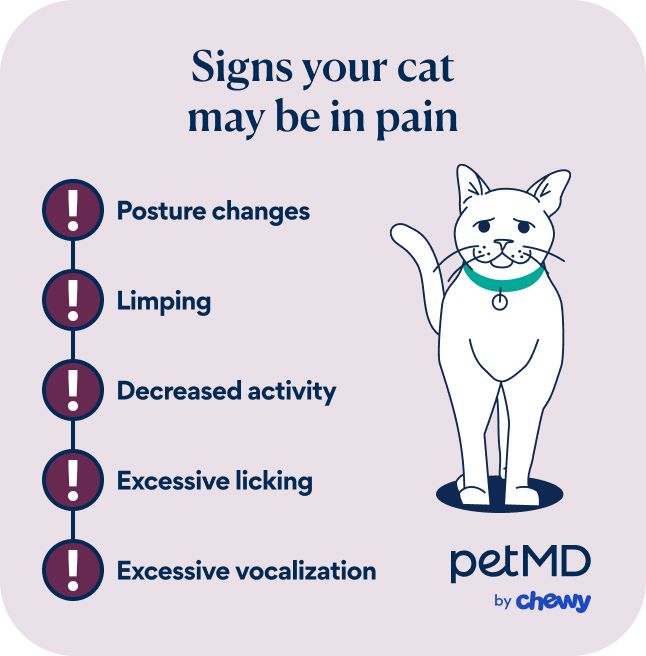
This can help you and your veterinarian determine which diagnostics and treatments will best help your cat to feel better.
The following are a few common signs of discomfort in cats to look out for.
Change in Activity Level
A change in activity level can be a sign of pain in cats.
Cats might become less active and sleep more hours than they used to. Stiff, arthritic cats may be reluctant to change positions or jump onto high surfaces like they did before.
However, some cats may become more active, even hyperactive or frantic. They may be restless, repetitively getting up and down, and show difficulty in getting comfortable.
Excessive Licking or Biting
While many people associate biting and licking with allergies, cats that are in pain also repetitively lick and bite the affected area. They may do it so often that they cause secondary trauma to their body in the form of wounds, skin infections, and hair loss.
Meowing or Purring
Most of us know that a hissing or growling cat is an unhappy cat, but did you know that meows and purrs can be signs of a cat in pain?
Purring is usually thought of as a sign of contentment, but some cats purr when they are frightened or hurting. This is particularly true for cats with easygoing or gentle personalities.
Change in Daily Routine
A cat whose appetite suddenly drops may be feeling too much pain to eat, or they may be experiencing nausea from a disease.
Cats that suddenly have accidents in the house (whether it’s pee or poop) after years of using the litter box, may be in too much pain to get in and out of a box with high sides. Or they may be too sore to get to where the box is located.
If you have an older cat with arthritis or mobility issues, consider putting multiple low-sided litter boxes around the house for easier access.
A lap cat who suddenly can’t stand being held may be experiencing pain when they are touched or petted. Any of these changes in their usual personality and preferences may be signs of a medical issue.
A normally social cat who is suddenly hiding and not partaking in normal daily events might be in pain.
It’s not uncommon for cats to isolate themselves to show that they’re not feeling their best, whether it be pain or sickness.
Posture
When they feel stiff, cats shuffle. They walk gingerly and avoid the usual leaps they do. A cat with abdominal pain may have a hunched back, tucking in their abdomen in a protective posture.
You may also notice a cat being protective of a certain area of their body, not wanting to be touched or scratched; they may also limp or hesitate to put weight on a sore limb.
Facial Expressions
Facial expression can be difficult to gauge in cats, but certain giveaways can indicate pain or discomfort. A vacant stare at nothing, or a “glazed” expression, is common for cats in pain.
The Feline Grimace Scale is a validated scale that tells us which expressions cats use when they are in pain.
Cats in distress can also have dilated pupils—part of the stress response in the body. Unlike in dogs, cats do not normally pant. If you notice a panting cat, particularly when they are at rest, take them to the vet immediately as it can indicate pain (or trouble breathing).
Aggression
Some cats are naturally feisty, while others are not. It can be hard to tell if a cat that’s usually feisty is suddenly acting aggressive. However, a normally friendly cat that is suddenly hissing, swatting, and biting may be a cat in pain.
Out-of-character aggression is a cat’s way of asking to be left alone. A cat that swats or growls when you pet them or try to pet a certain area of their body is trying to tell you that the area hurts.
Poor Coat Condition
Cats are expert groomers, spending up to five hours a day on maintaining their silky coats. However, pain from arthritis can make it difficult for a cat to contort themselves into their normal grooming positions.
Pain can make a cat too uncomfortable or worn out to maintain their normal routine. A cat that stops grooming and starts to look unkempt may be in pain and needs to be evaluated.
Talk to your vet about the potential underlying causes of your cat's coat condition and consider brushing or combing your cat more regularly to help keep their coat and skin healthy.
What To Do If You Think Your Cat Is in Pain
Never try to treat your cat with pain medications meant for people.
Cats metabolize medication differently and can die from ingesting something like acetaminophen (Tylenol).
If notice signs that your cat is in pain, get them evaluated by your vet as soon as possible.
Some common pain treatment options for cats include prescription pain medications, joint supplements, or natural and alternative therapies such as acupuncture or massage.


