Why Do Dogs Lick Your Face?


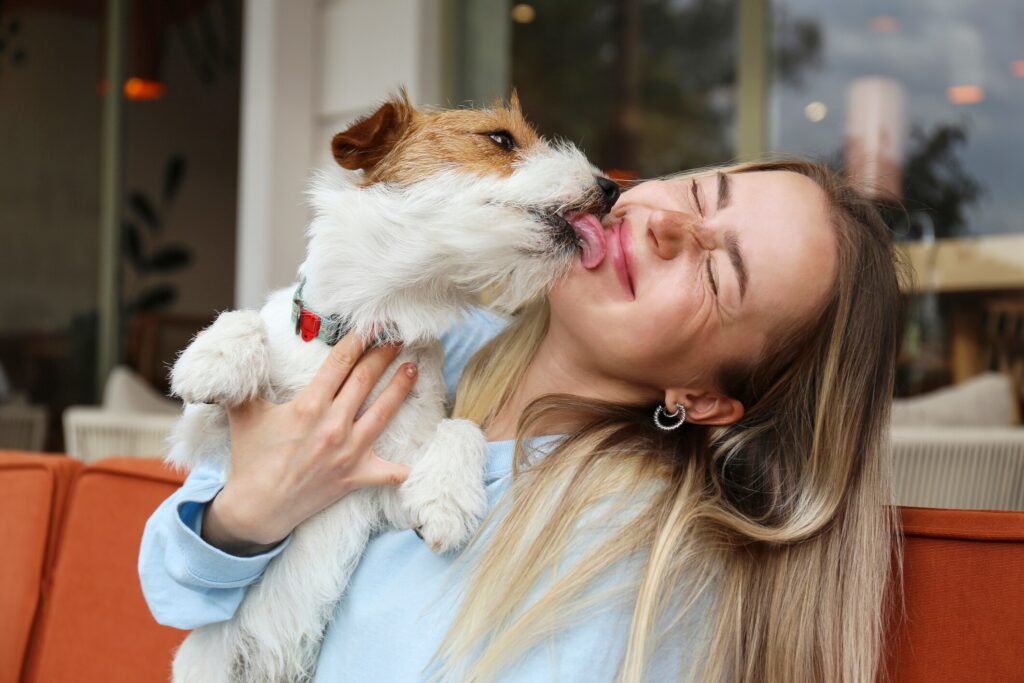
Why do dogs lick your face? Dogs may lick your face to show friendliness, seek attention, explore scents and tastes, relieve stress, communicate, or because they have learned the behavior gets a positive response.
Although face licking is usually a normal canine behavior, the meaning depends on your dog’s body language and the situation.
Understanding why dogs lick faces can help you tell the difference between affection, communication, and signs of stress.
Key Takeaways
- Dogs lick faces for several different behavioral reasons.
- Face licking may communicate friendliness, appeasement, curiosity, or attention-seeking.
- Some dogs lick to relieve stress or anxiety.
- Human skin, tears, sweat, and food odors are attractive to dogs.
- Avoid rewarding face licking with attention if you want the behavior to stop.
Why Does My Dog Lick My Face?
Dogs lick faces for several different reasons, including instinct, social bonding, attention-seeking, stress relief, grooming, curiosity, and even hunger.
Instinctive Behavior
Face licking begins early in life. Wolf and wild dog cubs lick their mother's face to stimulate food regurgitation, while domestic puppies lick their mother's muzzle to communicate that they are hungry.
As puppies grow, they often continue licking people because humans typically respond with attention, affection, play, or other rewarding interactions. Over time, puppies learn that licking people leads to positive outcomes.
A Friendly Greeting
Many people think of face licking as "dog kisses." While licking may be interpreted as affection, it is often rooted in appeasement and friendly social communication.
When dogs lick another dog's face, they are communicating peaceful intentions and showing that they are not a threat. Dogs often use the same behavior with people.
When owners respond with petting, laughter, or attention, the behavior becomes positively reinforced and is commonly interpreted as affection.
Attention-Seeking
Dogs quickly learn that licking gets a reaction.
Whether the response is laughter, talking, pushing the dog away, or petting, many dogs simply recognize that licking successfully gains their owner's attention.
Body language remains important. For example, if your dog wakes up from a nap, stretches, runs over, and begins licking your face, they may simply be inviting interaction or play.
A Request for Space
Sometimes face licking is actually a sign that a dog feels uncomfortable.
If your dog is forcefully licking someone while showing dilated pupils, a tucked tail, leaning forward, or repeatedly turning their head away, they may be using licking as a way to increase distance.
Behavior consultant Jennifer Shryock coined the phrase "kiss to dismiss" to describe this type of communication.
If you notice these signals, calmly interrupt the interaction and give your dog more space, particularly around unfamiliar people or young children.
Stress Relief
Some dogs lick repeatedly when they feel anxious or overwhelmed.
Licking promotes the release of endorphins, which may help dogs calm themselves during stressful situations.
If your dog frequently uses licking as a coping strategy, providing appropriate outlets such as a LickiMat® or LickiMat® Wobbler Bowl filled with wet dog food, peanut butter, or yogurt may help redirect the behavior.
Grooming Behavior
Dogs naturally use their tongues to groom themselves and one another.
This behavior begins when mother dogs clean their puppies and stimulate urination and defecation. Throughout life, dogs continue licking to remove debris, blood, earwax, and other scents from themselves or other dogs.
Taste and Smell
Human faces provide an enormous amount of sensory information.
Dogs are attracted to tears, sweat, food residue, skin oils, bacteria, and other scents found around the eyes, mouth, and skin. Because dogs rely heavily on smell, your face provides a wealth of interesting information to investigate.
Hunger
Sometimes face licking is simply your dog's way of asking for food.
Although dogs are not expecting food regurgitation like wild puppies, they may lick your face to get your attention when they think it's time for breakfast, dinner, or a snack.
Is It Safe for Dogs To Lick Your Face?
For most healthy people, allowing a dog to lick your face is considered low risk.
A dog's mouth naturally contains bacteria, including Capnocytophaga, which are also commonly found in human mouths. For most people, exposure to these bacteria does not cause illness, even after a bite or scratch.
However, the risk of infection or an allergic reaction may be higher if you:
- Have an open wound or broken skin
- Have a weakened immune system
- Take medications that suppress your immune system
- Are allergic to animal saliva
If any of these situations apply, or if you are concerned about exposure to a dog's saliva, it's safest to seek medical advice.
What Should You Do if a Dog Licks Your Face?
If a dog licks your face and you are uncomfortable with the contact, simply wash the area with warm water and soap.
If you have a dog allergy, wash away any saliva or fur as soon as possible to help reduce the chance of an allergic reaction.
If you'd like your dog to stop licking faces, avoid rewarding the behavior with attention. Instead, teach a cue that tells your dog when to stop licking or redirect them to an appropriate target, such as licking your hands instead.
Why Do Dogs Lick Your Face FAQs
Why do dogs lick your face when you cry?
Dogs may lick your face when you cry because they detect changes in your scent, respond to your emotions, or use licking as a comforting behavior.
Tears contain more than just salt—they also contain hormones and proteins that dogs may detect with their highly sensitive sense of smell. Your dog may lick your face to investigate these scents or to groom the area.
Research also suggests that dogs' emotional states can synchronize with those of their owners. If you're upset, your dog may recognize your emotional state and use licking as a way to comfort both you and themselves.
Why do dogs lick your face in the morning?
Dogs may lick your face in the morning because they're responding to your scent, your morning breath, or because they're ready to start the day.
Your mouth naturally accumulates bacteria and odors overnight, making it especially interesting to your dog's nose. Your dog may also be reminding you that it's time for breakfast, a walk, or simply encouraging you to wake up.
Why do dogs lick your face and ears?
Dogs often lick faces and ears because these areas contain scents, skin oils, bacteria, sweat, and food residue that they find interesting.
If your dog receives attention, laughter, or play after licking your face or ears, they quickly learn that the behavior produces a positive response and may repeat it more often in the future.


