Can Dogs Eat Peanut Butter?


Josfor/iStock/Getty Images Plus via Getty Images
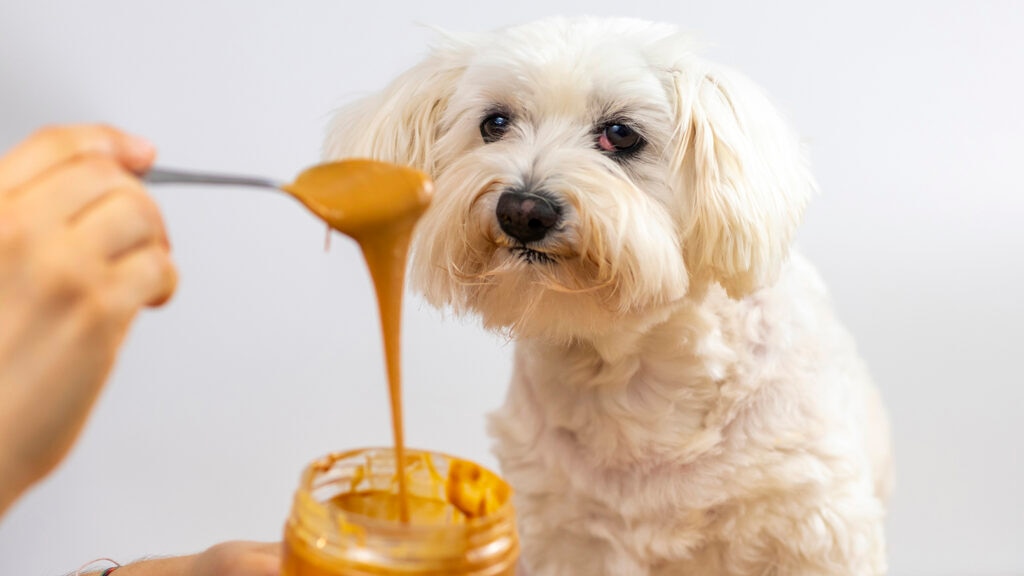
Dogs can eat peanut butter in moderation, as long as it does not contain xylitol, which is toxic to dogs.
Natural peanut butter with minimal ingredients is generally the safest option. However, because peanut butter is high in fat and calories, portion control is important.
Learn how to choose safe peanut butter, how much to feed, and the risks pet parents should know about before sharing this popular treat.
Key Takeaways
- Most dogs can safely eat peanut butter if it does not contain xylitol.
- Natural peanut butter with minimal ingredients is usually the safest option.
- Peanut butter is high in fat and calories, so moderation is important.
- Treats, including peanut butter, should make up no more than 10% of a dog’s daily calories.
- Always check ingredient labels before feeding peanut butter to dogs.
Can Dogs Eat Peanut Butter?
Yes, dogs can eat peanut butter as long as it does not contain xylitol and is fed in moderation.
The safest peanut butter for dogs contains simple, natural ingredients and does not include artificial sweeteners or unnecessary additives.
Before feeding any peanut butter product, always review the ingredient label carefully.
Can Dogs Eat Crunchy Peanut Butter?
Yes, dogs can eat crunchy peanut butter as long as it does not contain xylitol or other unsafe ingredients.
Both smooth and crunchy peanut butter are generally safe for dogs when fed in moderation.
As with creamy peanut butter, crunchy peanut butter should be considered an occasional treat rather than a regular part of your dog’s diet.
Benefits of Peanut Butter for Dogs
Peanut butter can be a good treat for dogs in moderation, but it should not be considered a major source of nutrition.
While peanut butter contains protein, it is also high in fat and calories, which can limit its role in a healthy canine diet.
Rather than serving as a dietary staple, peanut butter is often most useful as a high-value reward or enrichment treat.
Many pet parents use peanut butter to:
- Distract dogs during baths or grooming sessions
- Fill enrichment toys such as KONG® toys
- Encourage mental stimulation and problem-solving
- Reward positive behavior during training
Because many dogs find peanut butter highly appealing, it can be an effective tool for keeping them occupied and engaged for short periods of time.
Potential Risks of Peanut Butter for Dogs
While peanut butter is safe for many dogs, feeding too much or choosing the wrong product can create health risks.
High in Fat and Calories
Peanut butter contains a significant amount of fat and calories.
Regularly feeding large amounts may contribute to:
- Weight gain
- Obesity
- Digestive upset
- Diet-related health problems
Dogs with conditions such as pancreatitis or those requiring low-fat diets may need to avoid peanut butter altogether unless approved by a veterinarian.
Xylitol Toxicity Risk
Some peanut butter products contain xylitol, an artificial sweetener that is highly toxic to dogs.
Even small amounts of xylitol can cause life-threatening health problems, including dangerously low blood sugar and liver damage.
Always read ingredient labels carefully before offering peanut butter to your dog.
Which Peanut Butter Brands Contain Xylitol?
Some peanut butter brands contain xylitol, an artificial sweetener that is highly toxic to dogs.
Examples of brands that have sold peanut butter products containing xylitol include:
- Go Nuts Co.
- Krush Nutrition
- Nuts ‘n More
- P28 Foods
Peanut butter formulations can change over time, so never assume a product is safe based solely on the brand name.
Products marketed as "no sugar added" or "sugar-free" may contain xylitol or other artificial sweeteners.
Always read the ingredient label carefully before offering peanut butter to your dog.
If you are unsure whether a product contains xylitol, do not feed it to your pet until you have confirmed the ingredients.
How Much Peanut Butter Can Dogs Eat?
Dogs can eat peanut butter in small amounts, but it should only be offered occasionally as a treat.
Peanut butter is not a nutritionally complete food for dogs and should not become a regular part of their diet.
Like all treats, peanut butter should follow the 10% rule:
- 90% of your dog’s daily calories should come from a complete and balanced dog food.
- 10% or less should come from treats, snacks, enrichment items, and dog-safe human foods.
The appropriate amount of peanut butter depends on factors such as your dog’s size, weight, activity level, and overall health.
Use the following general feeding guidelines as a starting point, but always follow your veterinarian’s recommendations when available.
| Dog Size | Serving Size | Frequency |
|---|---|---|
| Extra-small dogs (2–10 pounds) | ½ teaspoon | Once daily |
| Small dogs (11–20 pounds) | ½ teaspoon | Twice daily |
| Medium dogs (21–50 pounds) | 1 teaspoon | Once daily |
| Large dogs (51–90 pounds) | 1 teaspoon | Twice daily |
| Extra-large dogs (91+ pounds) | 1 tablespoon | Once daily |
Before introducing peanut butter, start with a very small amount and monitor your dog for signs of an allergic reaction.
Signs of a Peanut Allergy in Dogs
Watch for symptoms such as:
- Red, itchy skin
- Excessive scratching or licking
- Hives (raised bumps on the skin)
- Diarrhea
- Vomiting
- Swelling of the face or throat (severe reactions)
If your dog develops signs of an allergic reaction after eating peanut butter, stop feeding it and contact your veterinarian immediately.
How To Feed Peanut Butter to Dogs Safely
The safest way to feed peanut butter to dogs is in small amounts as an occasional treat.
A general serving of about 1 teaspoon at a time is sufficient for many dogs, although your veterinarian may recommend a different amount based on your dog’s size and health needs.
Ways To Serve Peanut Butter to Dogs
- As a treat: Offer a small spoonful of peanut butter occasionally as a reward or special snack.
- Inside enrichment toys: Peanut butter can be stuffed into treat-dispensing toys and enrichment products to help keep dogs mentally engaged and occupied.
- On a lick mat: Spread a thin layer of peanut butter on a lick mat to provide enrichment and help occupy energetic dogs indoors.
- During grooming or bath time: Many pet parents use small amounts of peanut butter as a distraction during baths, nail trims, or grooming sessions to help create a more positive experience.
Can Dogs Eat Peanut Butter FAQs
Can puppies eat peanut butter?
Yes, puppies can eat peanut butter in small amounts.
When introducing peanut butter to a puppy, start slowly and monitor for signs of an allergic reaction or food sensitivity. Possible reactions may include itching, redness, digestive upset, or skin irritation.
What is the best peanut butter for dogs?
The best peanut butter for dogs is a natural peanut butter with a short ingredient list and no xylitol.
Many popular brands, including Jif, Skippy, Teddie, Justin’s, and some store brands, typically do not contain xylitol. However, ingredients can change, so always read the label before feeding any peanut butter product to your dog.
Can dogs eat Jif peanut butter?
Yes, Jif peanut butter is generally considered safe for dogs.
According to the manufacturer, Jif products do not contain xylitol. However, pet parents should always verify ingredient labels before feeding any product to their dog.
Can dogs eat peanut butter and jelly?
No, peanut butter and jelly is not recommended for dogs.
While peanut butter may be safe in moderation, jelly is typically high in sugar and may contribute to digestive upset, weight gain, or other health concerns.
Is natural peanut butter better for dogs?
Yes, natural peanut butter is generally a better choice for dogs.
Natural peanut butter products are less likely to contain artificial sweeteners, preservatives, and other unnecessary additives. Choose varieties with simple ingredients whenever possible.
Can dogs eat peanut butter every day?
Peanut butter is best served occasionally rather than every day.
Because it is high in fat and calories, regular feeding may contribute to weight gain and other health concerns if portions are not carefully controlled.
What ingredient in peanut butter is toxic to dogs?
Xylitol is the ingredient most pet parents should watch for when choosing peanut butter.
This artificial sweetener is highly toxic to dogs and can cause dangerously low blood sugar, liver damage, and other life-threatening complications.


