Triggerfish Care Sheet


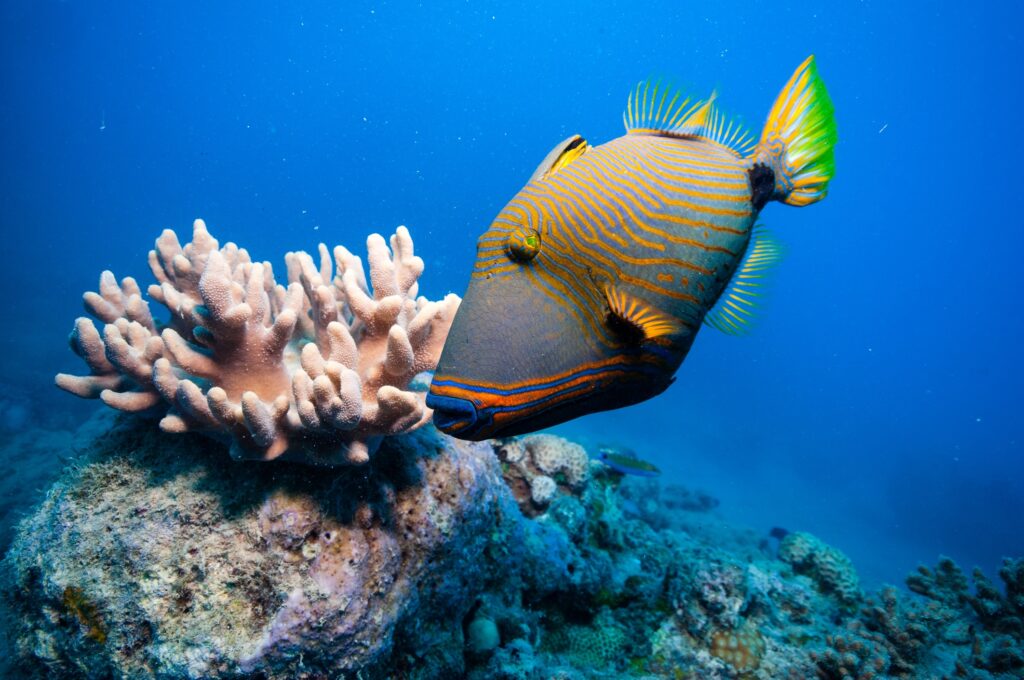
treetstreet/iStock / Getty Images Plus via Getty Images
Triggerfish care requires large aquariums, stable saltwater conditions, and careful management of their territorial behavior.
Known for their bold personalities and striking colors, triggerfish are intelligent, hardy marine fish. However, their size, behavior, and specialized needs make them better suited for experienced aquarists.
Key Takeaways
- Triggerfish are intelligent, territorial saltwater fish that require large aquariums.
- Most adult triggerfish need at least a 125-gallon tank.
- Triggerfish are carnivores and require a varied diet that includes hard-shelled foods.
- Many triggerfish species become increasingly aggressive as they mature.
Triggerfish Species Overview
Triggerfish are colorful marine fish found in tropical and subtropical waters around the world. Many species are known for their distinctive patterns and bold personalities.
These fish get their name from the three rigid dorsal spines on the top of their bodies. These spines help defend the fish and allow them to wedge themselves securely into rocky crevices.
Triggerfish are considered among the more intelligent aquarium fish and can communicate using grunting sounds.
Because triggerfish naturally nip at corals and invertebrates, they are not considered reef-safe aquarium fish.
Adult triggerfish are highly territorial and can become aggressive toward other triggerfish and tankmates. Some species, such as the red-toothed trigger, may appear more peaceful as juveniles but often become more aggressive with age.
Despite their relatively small mouths, triggerfish have powerful jaws and sharp teeth capable of inflicting serious bites.
Triggerfish Characteristics
|
Difficulty of Care |
Intermediate to advanced, depending on species |
|
Average Lifespan |
Up to 20 years with proper care |
|
Average Adult Size |
Up to 20+ inches, depending on species |
|
Diet |
Carnivore |
|
Minimum Habitat Size |
55+ gallons for a juvenile; 125+ gallons for an adult |
|
Water Temperature |
72–78 F |
|
Specific Gravity |
1.020–1.025 |
|
pH |
8.1–8.4, depending on species |
Triggerfish Supplies
Triggerfish care requires specialized saltwater aquarium equipment to maintain water quality, habitat stability, and long-term health.
To keep a triggerfish healthy, you’ll need the following supplies:
- Appropriate-sized aquarium
- Appropriate food (dry and frozen)
- Decor
- Marine aquarium salt
- Marine substrate
- Water conditioner
- Filter
- Water test kit
- Full-spectrum lighting
- Net
- Protein skimmer
- Thermometer
- Heater
- Refractometer
- Aquarium hood or cover
Triggerfish Habitat Requirements
Triggerfish require large aquariums with plenty of swimming space and room to establish territories.
Juvenile triggerfish require a minimum aquarium size of 55 gallons, while adults need at least 125 gallons. Because triggerfish grow significantly as they mature, aquarium size should be increased accordingly.
Triggerfish are powerful jumpers and may leap from the aquarium when startled. Use a secure lid or canopy to prevent escape and injury.
Choosing Triggerfish Tankmates
When caring for triggerfish, it’s important to choose tankmakes carefully because adult triggerfish are highly territorial and aggressive.
Adult triggerfish should generally be housed alone, as they are often aggressive toward both their own species and other triggerfish. However, triggerfish can sometimes coexist with larger, robust fish species, including:
If adding a triggerfish to a community aquarium, introduce them last whenever possible. This may help reduce territorial behavior, although aggression can still occur.
Monitor the aquarium closely for aggression or fighting. If fish repeatedly harass one another, separate them to prevent injury.
Introduce new tankmates gradually, as adding fish can affect ammonia, pH, and nitrate levels.
Avoid overcrowding, as it can increase stress and contribute to disease outbreaks.
Triggerfish Filtration Requirements
Triggerfish care requires powerful filtration to maintain water quality and support the high waste output of large marine fish.
Choose a filter capable of processing the entire aquarium volume at least four times per hour. For example, a 20-gallon aquarium should use a filter rated for at least 80 gallons per hour (GPH).
When possible, select a filter that exceeds the minimum recommendation. If choosing between a 50 GPH and 100 GPH filter, the 100 GPH option is preferable.
Triggerfish generally prefer slow to moderate water movement. Power ("hang-on-back") filters and external canister filters are recommended because they provide mechanical, biological, and chemical filtration without taking up space inside the aquarium.
Filter media should be replaced monthly or rinsed in old tank water during water changes, depending on water conditions and the number of fish and invertebrates in the aquarium. Avoid using hot water, bleach, or chemicals when cleaning filter media, as these can kill beneficial bacteria.
Do not replace all filtration media at the same time, as this can disrupt biological filtration. Always follow the manufacturer's instructions for filter use, care, and maintenance.
Triggerfish Tank Water Quality and Salinity
Triggerfish require stable water quality and salinity to support long-term health and prevent stress-related illness.
Regularly test aquarium water to ensure pH, ammonia, nitrite, and nitrate levels remain within a safe range. An aquarium test kit can quickly measure these parameters, but test kits expire and should be replaced yearly.
After adding new fish, invertebrates, or equipment to the aquarium, test water quality weekly for at least two months. During this period, monitor pH, ammonia, nitrite, nitrate, carbonate hardness, and general hardness levels.
If results remain stable after two months, testing frequency can typically be reduced to once per month.
A protein skimmer can further improve water quality by removing organic waste before it affects tank conditions.
As marine fish, triggerfish require stable salinity levels to survive. When setting up the aquarium, gradually add marine salt until the water reaches a specific gravity of 1.020–1.025.
Specific gravity should not fluctuate by more than +/- 0.001 within a 24-hour period. Use a hydrometer or refractometer to accurately measure salinity and specific gravity.
Triggerfish Water Temperature
Triggerfish care requires stable water temperatures between 72 and 78 F to support normal metabolism and overall health.
Water temperature should not fluctuate by more than +/- 2 degrees within a 24-hour period. Use an aquarium heater controlled by a thermostat to maintain stable temperatures.
Check the aquarium temperature daily using a reliable aquarium thermometer.
When choosing an aquarium heater, keep the following recommendations in mind:
- Some heaters include built-in thermostats, while others require a separate thermostat.
- Aquarium heaters should provide approximately 2.5–5 watts of power per gallon of water.
- A 10-gallon aquarium typically requires a heater rated between 25 and 50 watts.
- Aquariums larger than 50 gallons may require two heaters placed on opposite sides of the tank to prevent cold spots.
Triggerfish Tank Decor and Accessories
Triggerfish care includes providing secure substrate, hiding places, and stable decor that supports natural digging and territorial behaviors.
Triggerfish Tank Substrate
The bottom of a triggerfish aquarium should contain 1–2 inches of substrate. Sand is preferred over gravel because triggerfish naturally enjoy digging and burrowing.
Aquariums typically require about 1.5 pounds of substrate per gallon of water. For example, a 10-gallon tank requires approximately 15 pounds of substrate for a 1–2 inch layer.
Always rinse the substrate thoroughly before adding it to the aquarium.
Rocks, Caves, and Hiding Places
As triggerfish mature, they often become more territorial and require secure hiding places.
Rock caves, coral structures, and other shelters provide areas where triggerfish can rest and feel secure.
Because triggerfish are known to move and rearrange aquarium decor, all rocks and decorations should be firmly secured to prevent collapse or injury.
Plants for Triggerfish Tanks
Live or artificial plants can be used to enhance the aquarium and provide additional cover.
Because triggerfish are carnivores, they generally do not consume live plants.
Any submerged plants should be securely anchored to prevent them from being uprooted or displaced.
Triggerfish Tank Cleaning and Maintenance
Aquariums with triggerfish require regular water changes and routine maintenance to support stable water quality and a healthy environment.
Perform partial water changes every two to four weeks to help maintain water quality in a triggerfish aquarium.
Replace only 10–25% of the aquarium’s total water volume at a time. Avoid complete water changes, as they can disrupt beneficial bacteria and destabilize biological filtration.
Most aquariums also require periodic cleaning of the substrate, aquarium walls, and equipment. This may include removing algae, vacuuming debris, and inspecting aquarium equipment for proper operation.
The frequency of maintenance will vary depending on the number of fish and invertebrates housed in the aquarium.
Monitor water levels regularly and top off the aquarium as needed.
Before adding new water, treat it with a water conditioner to remove chlorine, chloramines, and heavy metals. Newly added water should also match the aquarium’s existing temperature and salinity.
Check the filter, water temperature, and other equipment daily to ensure proper operation.
Triggerfish Diet and Nutrition
Triggerfish care requires a varied carnivorous diet that supports healthy growth, strong teeth, and long-term health.
Their diet should include:
- Flakes
- Pellets
- Freeze-dried foods
- Frozen foods
- Occasional live foods
Offering a variety of foods is important, as triggerfish should not be fed the same diet every day.
To help naturally wear down their teeth, provide hard-shelled foods such as shrimp and shellfish.
Feed triggerfish small meals two to three times daily. Only provide as much food as they can consume within one to two minutes.
Frozen foods should always be fully thawed before feeding. Never use a microwave to thaw frozen fish food and never feed food that is still frozen.
Unused thawed food should not be refrozen, as doing so can encourage bacterial growth and reduce food quality.
Triggerfish Veterinary Care and Health
Triggerfish care includes regular health monitoring and routine veterinary evaluations to detect illness early and support long-term health.
Annual and Preventive Care
Annual or biannual examinations with an aquatic veterinarian are recommended to help identify health concerns before they become serious.
If an aquatic veterinarian is not available locally, your primary veterinarian may be able to consult with an aquatic specialist.
Whenever possible, use a veterinarian who performs house calls to reduce transportation stress and allow evaluation of the aquarium environment.
Signs of a Healthy Triggerfish
- Bright coloration
- Healthy appetite
- Intact fins and scales free of debris, crusts, or fuzz
- Active swimming behavior
- Full range of fin movement
When To Call a Vet for Your Triggerfish
Contact a veterinarian if you notice any of the following signs:
- Decreased appetite
- Lethargy or reduced activity
- Discoloration or changes in the scales, lips, eyes, or fins
- Abnormal swelling, growths, or spots
- Buoyancy problems
- Fin tears or damage
- Labored breathing
Common Triggerfish Health Problems
- Fungal infections
- Swim bladder disease
- Bacterial infections
- Parasitic infections
Triggerfish Care FAQs
Can you have a triggerfish as a pet?
Yes, triggerfish can be kept as pets, but they are generally best suited for experienced marine aquarists due to their size and territorial behavior.
Are triggerfish friendly?
Triggerfish are often aggressive and territorial, especially around nests and other tank mates during nesting season. However, they can be very docile at other times.
Be aware that they may also cause harm to coral and invertebrates.
Are triggerfish intelligent?
Yes, triggerfish are considered highly intelligent and can recognize their environment, learn routines, and communicate through sounds such as grunting.
How big of a tank does a triggerfish need?
Most adult triggerfish require at least a 125-gallon aquarium, though larger species may need significantly more space.
How long do triggerfish live?
With proper care, triggerfish can live up to 20 years or longer depending on the species.


