Dwarf Hamster Care Sheet


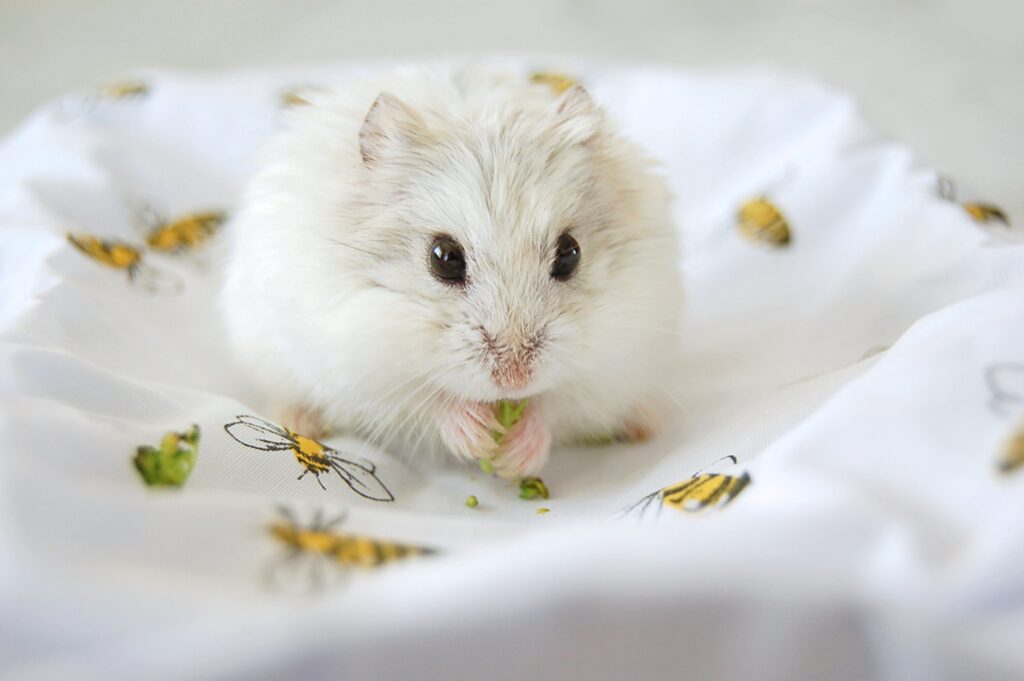
Seattle Roll/iStock/Getty Images Plus via Getty Images
Dwarf hamsters are small, active rodents that can make wonderful pets—but they need the right care to stay healthy and thrive. Proper housing, a balanced diet, and daily enrichment are essential to meeting their physical and behavioral needs.
Whether you’re a first-time hamster owner or looking to improve your current setup, understanding how to care for a dwarf hamster can help prevent common health issues and support a longer, happier life.
Key Takeaways
- Dwarf hamster care requires a proper habitat setup, including ample space, bedding, and enrichment to support natural behaviors.
- A balanced diet of high-quality pellets, fresh foods, and clean water is essential for your hamster’s health and longevity.
- Regular handling, cage cleaning, and health monitoring help keep your dwarf hamster happy and thriving.
Dwarf Hamster Species Overview
Dwarf hamsters are small, energetic rodents who make excellent companions for beginner pet parents.
Like any other pet, they require lots of love and care and routine veterinary visits. It’s important to have an exotic vet appointment lined up shortly after adoption (usually within a week or two) to establish care. Biannual or annual veterinary visits for routine checkups help ensure your dwarf hamster will be happy and healthy.
The following information outlines all the basic care needs for a range of dwarf hamster breeds, including:
-
Djungarian hamsters
-
Chinese hamsters
-
Russian hamsters
-
Roborovski hamsters
Dwarf hamster breeds grow to only 2–4 inches long, while adult Syrian hamsters can grow to about 6 inches.
When selecting your new dwarf hamster, keep in mind that they can be housed together in same-sex pairs if the two animals were raised together.
Otherwise, dwarf hamsters are best left in separate enclosures.
Socialization is key for these pets. When socialized properly, dwarf hamsters are friendly animals and can enjoy gentle handling from their pet parent. Pet parents should allow newly homed hamsters time to adjust to their surroundings.
When handling your hamster, these delicate pets should be held above a soft surface to prevent them from injuring themselves if they jump or fall.
Never grab a hamster by its tail or squeeze its body when handling them. Hamsters may bite when startled, especially if they were sleeping at the time.
Some species, like Chinese and Roborovski dwarf hamsters, are generally less likely to bite. Dwarf hamsters have muscular, expandable cheek pouches that they can use to store food, bedding, and other small objects. Pet parents should seek veterinary care if their hamster has swollen cheek pouches that don’t empty after a few hours.
Dwarf hamsters are usually nocturnal but they can adjust to their pet parent’s schedule over time. Hamsters often spend nights eating and running on their exercise wheel, so they may not be the best companions for light sleepers.
| Difficulty of Care | Beginner |
| Average Life Span | 2–3 years with proper care |
| Average Adult Size | 2–4 inches long, depending on species |
| Diet | Omnivorous |
| Minimum Habitat Size | 24" L x 12" W x 12" H for one hamster |
Dwarf Hamster Supply Checklist
To keep a dwarf hamster happy and healthy, keep these basic supplies on hand:
-
Appropriately sized habitat
-
High-quality hamster food
-
Nesting fluff
-
Exercise wheel
-
Mineral chews
-
Sand bath
Dwarf Hamster Habitat
Choosing the Right Enclosure
Dwarf hamsters are tiny yet mighty, and they need adequate space in their habitat to roam, exercise, and rest comfortably.
The ideal dwarf hamster habitat should measure at least 24” L x 12” W x 12” H. Enclosures should be well-ventilated with a deep, solid base and secured with an escape-proof lid.
Always provide the largest habitat possible.
Metal/wire-based habitats offer the best ventilation and are easy to clean. However, hamsters can escape the enclosure if the bars aren’t spaced closely enough. If a wire cage is used, the spaces between the cage’s bars should be around ¼-inch apart or smaller to prevent the hamster from escaping or getting stuck.
Setting Up Your Habitat
Hamsters are comfortable in average household temperatures—but keep it no greater than 80 F.
Keep habitats in a quiet, draft-free area that’s not close to an air conditioner or accessible to other pets, like cats and dogs.
Habitats should never be kept in a drafty area or direct sunlight.
Dwarf hamsters can be kept in same-sex pairs if they were raised together. Otherwise, adult hamsters should not be housed in the same enclosure. Dwarf hamsters kept in the same habitat should be monitored for aggressive behavior.
If the two hamsters fight, separate them.
Pet parents should never keep different species of animals in the same habitat.
Bedding
Dwarf hamsters need two types of bedding in their habitat: an absorbent substrate to line the bottom of their enclosure and a fluffy nesting material they can use to make a cozy burrow.
-
Two inches of high-quality paper-based bedding or crumpled paper should be placed at the bottom of the habitat. Paper-based bedding should be used instead of wood bedding, since paper is digestible and will not harm a hamster’sgastrointestinal tract if ingested. Cedar and unprocessed pine bedding products have aromatic oils that can irritate a hamster’s sensitive respiratory tracts and should be avoided.
-
Adding nesting material to a hamster’s enclosure can help it satisfy its natural desire to build nests, hide food, and burrow. Make a corner of the cage about 8 inches deep with bedding for them to burrow into.
Décor & Accessories
Décor and accessories are essential for dwarf hamsters because they provide mental stimulation, encourage natural behaviors like burrowing and exploring, and help create a safe, enriching environment that supports their overall well-being.
-
Hideout box: Dwarf hamsters should have at least one hiding space in their habitat for privacy. Hideout boxes made from chewable materials like hay or wood make excellent choices.
-
Plastic hideouts: These are durable and easier to disinfect, but remember to remove them from the hamster’s enclosure if they begin to chew on it. If ingested, broken plastic pieces can obstruct a hamster’s gastrointestinal tract and cause serious injuries.
-
Running wheel: Daily exercise is vital to a hamster’s overall health. An appropriately sized running wheel is a convenient way to satisfy a hamster’s instinctual need to run. Ensure that the wheel’s running surface is smooth and won’t entrap a hamster's feet or toes, causing injury.
-
Toys: Enrichment toys can help reduce boredom and encourage mental and physical stimulation. Hamsters’ upper and lower front (incisor) teeth never stop growing, so they should have plenty of safe wooden toys, mineral blocks, and other pet-safe chewable items that can wear down their teeth gradually as they grow. An exercise ball can help them stay in shape and enjoy some time outside of their usual enclosure.
Cleaning and Maintenance of Dwarf Hamsters
Pet parents should spot-clean their dwarf hamster’s bedding daily, removing any soiled material and uneaten food. The entire habitat and its contents should be cleaned thoroughly at least once a week with a pet-safe cleaner for exotic pets (such as Nature's Miracle Small Animal Cage Cleaner Spray).
To clean a hamster’s habitat, take these steps:
-
Move your hamster to a pet-safe, secure temporary enclosure (like their carrier) and remove any old bedding or litter from the habitat. Make sure they have access to food and water in the carrier during the cleaning, with a bit of new bedding for naps.
-
Use a small-animal habitat cleaner or diluted bleach (one part bleach to 10 parts water) to wash the habitat and any accessories. The bleach solution should stay on the habitat for at least 10 minutes to ensure that the surfaces are properly disinfected. If using a commercial habitat cleaner, follow the manufacturer's instructions.
-
Rinse the habitat and accessories thoroughly with water, making sure to remove any trace amounts or residual smells of the cleaning agent or bleach solution.
-
Allow the habitat and its contents to completely dry before placing new bedding and clean accessories back into the habitat.
-
Return your hamster to the clean habitat.
Dwarf Hamster Diet and Nutrition
A nutritious and well-balanced hamster diet consists of high-quality hamster lab blocks or a nutritionally balanced pelleted food formulated especially for hamsters.
Hamsters are primarily nocturnal, so daily feeding sessions should take place at night.
Grains, vegetables, fruits, hay, and treats, offered in limited quantities (no more than 10% of the hamster’s daily diet).
Most fruits are hamster-safe, but hamsters should never be given fruit with seeds or pits, citrus fruits, or rhubarb.
While hamsters can enjoy most vegetables, do not offer them garlic, onions, unripe tomatoes, raw beans, or potatoes.
Fruits and vegetables should be cut into small, bite-sized pieces before serving.
Typical servings would be a teaspoon of fresh veggies per day and a teaspoon of fruit one to three times weekly. Make sure to wash the fruit or vegetable before serving.
Safe fruit options include:
-
Apples
-
Pears
-
Strawberries
-
Bananas
-
Blueberries
Safe veggie options include:
-
Carrots
-
Squash
-
Broccoli
-
Cucumber
-
Spinach
Because fruits are naturally high in carbohydrates, excess fruits in a hamster’s diet can upset their gastrointestinal tract and cause unhealthy weight gain.
Discard any uneaten fruits and vegetables after 10 hours, as they may spoil and cause illness if eaten.
Hamsters should always have access to fresh, clean water.
Water should be changed daily and offered in a shallow, chew-resistant bowl or water bottle.
Check in on your hamster two to three times daily for water refills if needed.
Pet parents should clean and thoroughly rinse their hamster’s water bowl or bottle every day to help prevent bacteria from forming.
Make sure to get a bowl that is shallow and not too deep, since a hamster may slip into it and become trapped. Make sure the bowl is sturdy enough to not be knocked over by an excited hamster.
Never offer your hamster the following foods, as they are toxic and can cause upset stomach, serious illness, or death:
-
Chocolate
-
Caffeine
-
Alcohol
-
High-sugar, high-fat treats
Grooming and Care for Dwarf Hamsters
Dwarf hamsters groom themselves and rarely need baths, but pet parents can spot-clean them by using a damp washcloth or unscented baby wipes as needed.
Some dwarf hamsters enjoy taking weekly sand baths to remove oil and dirt from their fur.
Pet parents can add a shallow dish of bathing sand, like Tiny Friends Farm Small Animal Bathing Sand.
When selecting a bathing sand, make sure that the product is suitable for hamsters. The dust bath should not be left in a hamster's habitat for more than 12 hours at a time.
Hamster urine typically looks cloudy or milky. If a hamster’s urine looks bloody or is foul-smelling, contact your veterinarian. Female hamsters usually pass a creamy, white discharge after ovulation.
Consult a veterinarian if you see any vaginal bleeding or significant changes in the appearance of a hamster’s discharge.
Nail Care
Most hamsters will not need to have their nails trimmed. They wear them down with daily use.
However, if a hamster’s nails begin to curl or if they start leaving scratches on themselves during self-grooming, take them to their exotic vet for a trimming.
Dental Care
Hamsters’ front (incisor) teeth grow continuously, so pet parents should provide them with safe wooden toys, mineral blocks, or other chewable items to help keep their teeth at a manageable length. The enamel of a hamster’s incisor teeth naturally darkens and yellows as they age.
Consult a veterinarian if a hamster’s teeth seem too long, if they are drooling excessively, or if they are dropping food when they eat.
Veterinary Care for Dwarf Hamsters
Annual Care
Dwarf hamsters should be examined by an exotic veterinarian at least once each year.
Veterinarians will track your hamster’s weight and check their teeth.
When bringing your hamster to the vet, transfer them into a small carrier that has bedding, food, and water.
Signs of a Healthy Dwarf Hamster
Signs of a healthy dwarf hamster include:
-
Clear eyes
-
Clean nose
-
Clean ears
-
Thick, shiny hair coat
-
Clean feet
-
Nails and teeth that are not overgrown
-
Clean, dry hair around rectum
-
Inquisitive nature
-
Strong appetite
-
Moderate to high energy
When to Call Your Exotic Vet
Call your exotic veterinarian if your hamster is experiencing the following:
-
Weight loss
-
Wet, fecal stained hair around rectum (called wet tail in hamsters)
-
Wounds or trauma
-
Lumps
-
Coughing
-
Wheezing
-
Sneezing
-
Nasal discharge
-
Difficulty breathing
-
Diarrhea
-
Anorexia (not eating)
-
Drooling
-
Overgrown teeth
-
Bloody or foul-smelling urine
Common Illnesses in Dwarf Hamsters
Common illnesses in dwarf hamsters include:
-
Diarrhea
-
Wet tail
-
Bite wounds
-
Demodectic mange
-
Cancers
-
Alopecia (hair loss)
-
Malocclusion
-
Hairballs
-
Gastrointestinal foreign bodies
-
Hypothermia
-
Amyloidosis
-
Cardiomyopathy
-
Rectal prolapse
-
Stroke
-
Diabetes
Dwarf Hamsters FAQs
Are dwarf hamsters good pets?
Dwarf hamsters make great pets for adults and older children. They are fun to watch and can become comfortable with gentle consistent handling.
Do hamsters recognize their name?
Hamsters may respond to a repeated name, voice, or sound cue over time. But they do not understand names the same way people do. They can learn to associate a familiar sound with positive experiences such as food or gentle handling.
Do dwarf hamsters like being held?
Some dwarf hamsters enjoy gentle handling. Others prefer to burrow, explore, and climb around rather than be held.


