Dog Head Tilt: Causes, Symptoms and Treatment

Mary Swift/iStock/Getty Images Plus via Getty Images
If your dog has a persistent or sudden head tilt, it could be a sign of an underlying ear or neurological condition that requires veterinary attention.
While dogs sometimes tilt their heads out of curiosity, a head tilt that doesn’t go away is often associated with problems affecting the vestibular (balance) system.
Here’s what causes dog head tilt, the symptoms to watch for, how it’s diagnosed, and available treatment options.
Key Takeaways
- A head tilt in dogs often signals a vestibular issue, but it can also stem from infections, neurological problems, or other conditions.
- Additional symptoms like disorientation, falling, vomiting, or eye movement changes require emergency care.
- Treatment may include antibiotics, supportive care, or advanced diagnostics if symptoms persist.
What Is Dog Head Tilt?
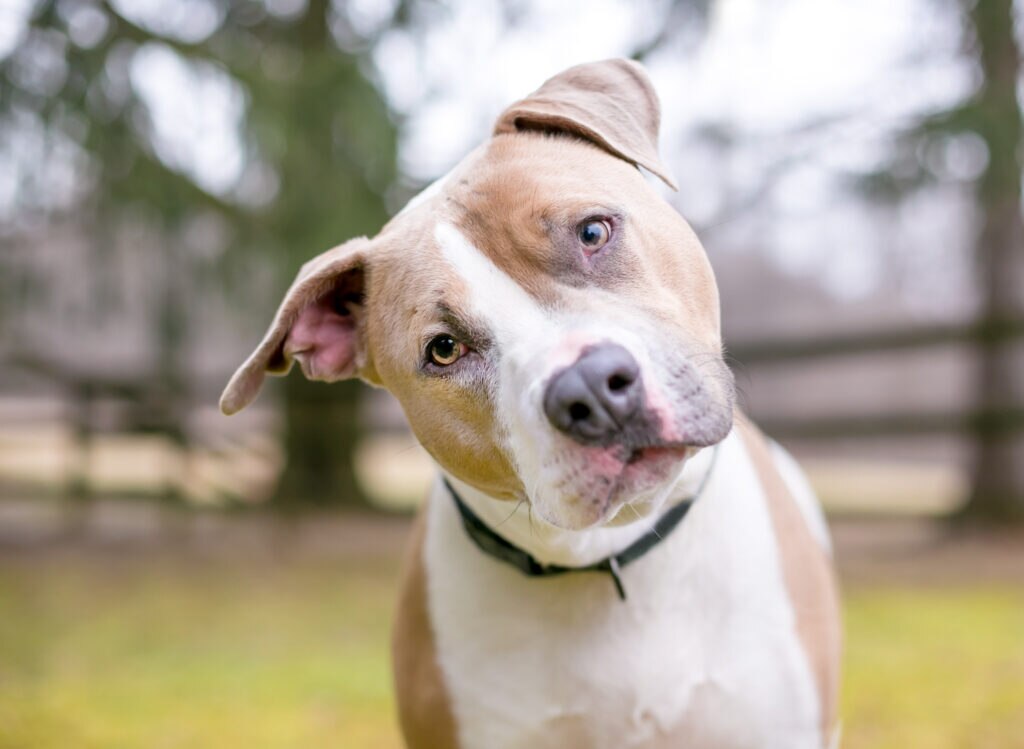
A dog head tilt occurs when a dog persistently or suddenly holds one ear lower than the other instead of keeping their head upright.
While dogs may briefly tilt their heads when they're curious or listening to a sound, a persistent or sudden head tilt is often a sign of an underlying medical condition.
Because persistent head tilts are typically caused by an underlying health problem, your dog should be examined by a veterinarian to determine the cause and begin appropriate treatment.
Causes of Dog Head Tilt
Most cases of dog head tilt are caused by problems affecting the vestibular system, which helps control balance, posture, head position, and eye movement. However, several other medical conditions can also cause a dog to develop a head tilt.
Common causes of dog head tilt include:
- Punctured or ruptured eardrum
- Antibiotic use (such as gentamicin) when the eardrum is ruptured
- Ear washes containing chlorhexidine
- Ear infections (bacterial or parasitic)
- Cancer
- Stroke
- Inflammation or infection of the brain (encephalitis)
- Hypothyroidism
- Nutritional deficiencies, particularly thiamine deficiency
Sometimes, the cause of a dog's head tilt cannot be identified. This is known as idiopathic vestibular disease and is most common in senior dogs, typically affecting the middle or inner ear.
When Dog Head Tilt Is an Emergency
A dog with a head tilt should be seen by a veterinarian immediately if they develop additional symptoms that suggest a serious ear or neurological condition.
Seek veterinary care right away if your dog has a head tilt along with any of the following:
How Veterinarians Diagnose Dog Head Tilt
Veterinarians diagnose dog head tilt by performing a physical examination and determining the underlying cause through additional testing when needed.
Your veterinarian will perform a thorough physical exam, paying particular attention to your dog's ears. Depending on the suspected cause, they may recommend one or more of the following tests:
- Blood work, including a complete blood count (CBC)
- Urinalysis and an electrolyte panel
- Evaluation of your dog's nutritional status
- Imaging tests, such as X-rays, computed tomography (CT), or magnetic resonance imaging (MRI), to evaluate the middle ear
- A cerebrospinal fluid (CSF) test if inflammation or infection of the brain is suspected. CSF is the fluid that surrounds and cushions the brain and spinal cord and is collected through a spinal tap while your dog is under anesthesia.
- A bone biopsy if a bone tumor or bone infection is suspected
Dog Head Tilt Treatment
Treatment for dog head tilt depends on the underlying cause. While some cases resolve on their own, many dogs require medication, supportive care, or additional treatment.
Depending on the diagnosis, treatment may include:
- Antibiotics, such as topical Animax®, for an ear infection
- Hormone replacement or nutritional support for hypothyroidism or nutritional deficiencies
- Supportive care when the underlying cause cannot be identified (idiopathic vestibular disease)
Supportive care is tailored to the severity of your dog's symptoms and may include:
- Hospitalization with intravenous (IV) fluids until head tilt, disorientation, poor coordination, or other symptoms improve
- Sedatives, when needed
- Anti-nausea medication and medications to reduce motion sickness, such as Cerenia®, particularly for mild to moderate cases
Dogs with more serious underlying conditions may not improve with initial treatment, or their symptoms may worsen. In these cases, your veterinarian may recommend advanced diagnostic testing and develop an individualized treatment plan based on your dog's specific condition.
Recovery and Management of Dog Head Tilt
Recovery from a dog head tilt depends on the underlying cause. Some dogs recover completely after treatment, while others may require long-term management if the head tilt is caused by a chronic or neurological condition.
Ear infections: Most dogs recover within 10–14 days after treatment, although severe ear infections may take one to two months to fully resolve.
Neurological conditions: Dogs with head tilts caused by neurological disorders, such as cancer or stroke, may continue to have an intermittent head tilt long term. In these cases, supportive care is often used to help manage symptoms rather than cure the condition.
Hypothyroidism: Dogs with hypothyroidism often improve once the condition is treated with the appropriate medication. However, lifelong medication is typically needed to keep symptoms under control.
Dog Head Tilt FAQs
Can a dog head tilt be a sign of neurological issues?
Yes. A dog head tilt can be caused by neurological conditions, including stroke, brain inflammation (encephalitis), or cancer.
Because several medical conditions can cause a head tilt, it's important to have your dog examined by a veterinarian to determine the underlying cause.
What are the symptoms of vestibular head tilt in dogs?
Dogs with vestibular disease commonly develop a head tilt along with balance problems.
Other symptoms may include circling, poor coordination, loss of balance, and nystagmus (rapid side-to-side eye movements).
Why is my dog leaning their head to one side and falling over?
Leaning the head to one side and falling over are often signs of an inner ear or neurological disorder affecting your dog's balance.
If your dog develops these symptoms, contact your veterinarian promptly so the underlying cause can be diagnosed and treated.
Can a dog recover from head tilt?
Yes. Many dogs recover from a head tilt, depending on the underlying cause.
Dogs with ear infections often recover fully after treatment. However, if the inner ear has been significantly damaged or the head tilt is caused by a neurological condition, some dogs may continue to have a persistent head tilt that requires long-term management.
Can an ear infection cause a dog head tilt?
Yes. Middle and inner ear infections are among the most common causes of head tilt in dogs because they affect the vestibular system that controls balance and head position.
Should I take my dog to the vet for a head tilt?
Yes. A sudden or persistent head tilt should always be evaluated by a veterinarian because it can be caused by an ear infection, vestibular disease, or a neurological condition.
Is dog head tilt an emergency?
It can be. Seek veterinary care immediately if your dog's head tilt is accompanied by vomiting, loss of balance, difficulty walking, confusion, rapid eye movements, or other neurological signs.
References
Carnes, M. “Head Tilt in Dogs: A Clinical Approach.” Today’s Veterinary Practice, June 2018.
“What Causes Head Tilt in Dogs? Symptoms and Treatment,” Kingsdale Animal Hospital, January 2022.


