Everything To Know About Safely Traveling With a Puppy



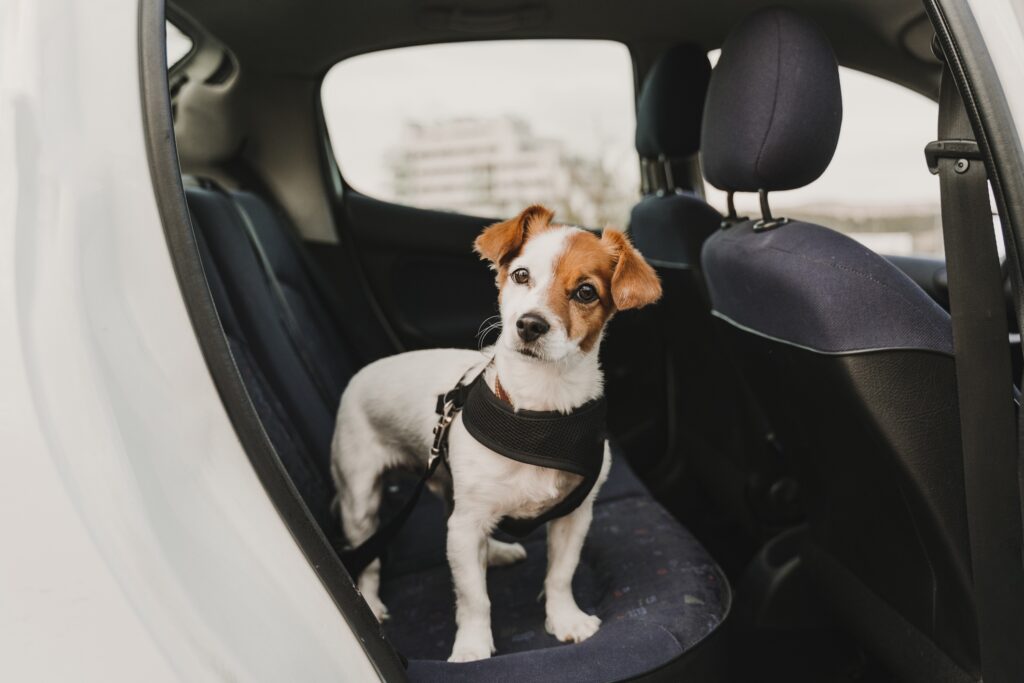
All dogs and puppies should travel in cars secured in a properly fitted harness attached to a dog seat belt or in a crate or carrier that is secured to the vehicle. The safest setup is usually in the back seat or in a secured, ventilated cargo area of an SUV—not loose in the cabin, in the front seat, or in a closed trunk.
The puppy stage is a good time to build calm car-travel habits. Here’s how to introduce your puppy to the car, choose safe travel gear, understand rules about dogs in cars, and reduce the risks of motion sickness, heat, and escape.
Key Takeaways
- Dogs should travel in a secured crate or carrier, or in a properly fitted harness attached to a dog seat belt, preferably in the back seat.
- Dog restraint car laws are not the same in every state. Check current state and local rules before traveling.
- Never let a dog ride loose, sit in the front seat with an active airbag, hang their head out the window, or stay alone in a parked car.
- Introduce puppies to the car gradually, make regular rest stops, and ask your veterinarian about persistent anxiety, vomiting, or other signs of illness.
Before You Leave
Before you leave for a trip with your puppy, there are a few important things you should do to prepare. The level of preparation will depend greatly on how long the trip is and where you’re heading.
1. Introduce Your Puppy to the Car
Cars can be scary for dogs when they’re not used to them, so it’s important to make your puppy feel as comfortable as possible. This begins by slowly introducing your pup to the car before they go for a long ride.
First, before you start the engine, let them walk around and sniff the car. Allow them time to get comfortable with the scents and textures of the space.
When they appear relaxed, turn on the engine. Continue training sessions until they appear comfortable in the running car.
2. Know the Rules About Dogs in Cars
Do dogs need to be restrained in cars by law? In the United States, there is no single nationwide dog restraint car law for dogs riding in passenger vehicles. Rules about dogs in cars vary by state and locality.
Some laws address animals in open pickup beds or animals left unattended in dangerous conditions, while other laws may apply if a loose dog distracts the driver or creates a safety or animal-welfare concern.
Before crossing state lines, check the current official state DMV, transportation, or legislative website for the rules that apply to your vehicle and route.
Keep in mind that legal minimums do not necessarily ensure your pet’s safety. To keep your puppy as safe as possible, use a secure crate or a properly fitted harness and dog seat belt every time.
3. Take a Test Drive
As soon as your puppy seems comfortable in your running car, it's time to take them for their first ride. This should be a short ride, only a couple minutes long.
Every time your puppy rides in the car, they should be safely confined in a secured crate or with a dog seat belt attached to their harness.
- A dog crate or carrier helps keep your pup safely confined during travel and provides a firm surface for them to stand on so they feel stable during travel. Secure the crate to your car so it cannot move during travel, and be sure the crate is large enough for them to turn around and lie down. Bonus: If you’re staying somewhere overnight, the crate provides your dog a safe space to sleep. Be sure to crate train your puppy prior to putting them in a crate in the car.
- A properly fitted harness and dog seat belt safely restrains your pup in much the same way your own seat belt does. If you elect to use a dog seat belt, always attach it to your dog’s harness—never their collar. This will help prevent neck injury in the event of a sudden stop or change of direction.
Give your pup plenty of praise and treats for riding quietly.
Before hitting the road, puppy-proof your car by removing loose items and making sure your puppy’s crate or carrier is secure. Never let your puppy ride in the front seat, where an airbag could cause serious injury.
Keep your puppy’s head and paws inside the car at all times. Sticking their head out the window can expose their eyes to flying debris, and an open window puts them at risk of jumping or falling out.
As your pup gets more comfortable with car rides, start to gradually increase the distance they travel in the car.
4. Gather Your Gear
Once your pup is comfortable in the car, make sure you have all the additional items you’ll need for them during your trip.
- Two leashes—your regular leash and a spare, just in case
- Collapsible water and food bowls
- Poop bags
- Dog wipes to clean them in case of an accident
- Dog treats
- Puppy toys
- Puppy food
- Dog blanket or bed
- Pet first aid kit
Interstate and international travel may require additional documentation, such as a health certificate. Requirements vary by destination, so check current information from the United States Department of Agriculture's (USDA) Animal and Plant Health Inspection Service.
It’s important to check this information as soon as you know your travel dates. Getting the required documentation can take anywhere from a few days to months, depending on where you’re traveling.
5. Have Up-To-Date ID
Be sure your dog has a name tag with your contact information and double-check that it’s securely attached to their collar. Also make sure they have a microchip and that the contact information associated with it is up to date.
Dogs are also more likely to get lost when traveling because they’re in unfamiliar places with lots of new distractions. If they do become lost, it’s much easier for someone to contact you when all your info is current on their name tag and microchip.
6. Address Preventive Care
Depending on where you’re traveling, there may be different recommendations for preventive care for your pet. Diseases are not evenly distributed throughout the world; certain areas are more prone to certain disease processes.
Talk to your vet about where you’re traveling so you can make sure your pup has all vaccines and preventive medications they need before you hit the road. Do this sooner than later, as some vaccines can take a few weeks to provide protection for your pet.
Ask your veterinarian about safe places for potty breaks and dog-to-dog contact if your puppy has not completed their vaccine series.
7. Exercise Before Traveling
Exercise not only physically exhausts puppies, but it can also mentally exhaust them (depending on the type of exercise). Tired puppies are more likely to remain calm and sleep throughout the trip.
So right before your drive, play with your puppy in whatever way they love best: a long walk, a game of fetch, or pulling on a tug toy. This can make the whole travel experience much smoother for both you and your pup.
During Your Trip
Now that you’ve done everything to prepare for your trip, here’s how to travel with your puppy safely.
1. Use a Secured Crate or Harness Seat Belt
Just like you did on your test drive, always make sure your puppy is safely secured in their carrier or dog seat belt during your trip. This helps keep your puppy from moving around the car, distracting the driver, or getting hurt during a sudden stop or accident.
A dog barrier for your car can provide an extra layer of safety, but it shouldn’t replace a crate, carrier, or seat belt harness.
2. Make Frequent Stops
How frequently a puppy needs to go to the bathroom depends on their age and how much water they've consumed. In general, puppies can hold their bladder for a length of time equal to their age in months plus one. So, a 2-month-old puppy can hold their bladder for about three hours.
It’s recommended to stop for potty breaks every two or three hours when traveling with a puppy. This allows them to go to the bathroom, stretch their legs, and have a water break.
3. Manage Car Sickness
Puppies can get carsick, but it’s important to distinguish whether they’re truly car sick or if they’re just anxious in the car, as these are treated differently.
Some of the most common signs of car sickness and anxiety are excessive drooling, whining, crying, and vomiting. If this starts soon after getting into the car, it’s likely anxiety-related. But if symptoms begin a little while into the car ride, your pup is likely car sick.
Car sickness is common in puppies, and fortunately they often outgrow it. In the meantime, there are several things we can do to help treat and prevent motion sickness.
- Keep the car cool and comfortable.
- Open the windows. Fresh air can help alleviate nausea for your pup, just as it does for people.
- Avoid feeding your puppy within two or three hours of travel; traveling on a full stomach can make them more nauseous.
- Take them for a walk prior to traveling so they feel less anxious about potentially having an accident.
- Give them medication. Several medicines can help with nausea in the car. Talk to your veterinarian about trying the medications below and never give your puppy medicine without a vet’s guidance.
4. Regulate the Temperature
Dogs are much more prone to overheating in cars than people, and puppies are especially sensitive to temperature changes. This is because their bodies aren’t as good at regulating their temperature yet.
Given how quickly cars can heat up when they’re just sitting in the sun, dogs (especially puppies) should never be left in a car alone. Similarly, in winter, puppies are also at risk of developing life-threatening hypothermia if left waiting alone in a car.
Cars don’t only get hot or cold when you’re parked. The temperatures can also rise or drop drastically while driving. To help keep your pup comfortable during the summer, open the windows a little to allow more airflow. If you keep your air conditioning on, be sure it flows to them; the back of the car is often much warmer than the front seat.
You can also consider window shades to help prevent direct sunlight from shining on your puppy. These are especially important if you crate your puppy in a plastic or metal crate, as these can heat up rapidly when exposed to direct sunlight.
In winter, keep your heat on and consider providing your puppy with a blanket to help keep them warm during travel.
During your drive, check on them frequently and remember that just because you feel comfortable does not mean they do.
After You Arrive
When arriving at a new destination, acclimate your puppy to the area. Take a walk around, showing them the yard and the home or hotel room where you’re staying.
Show your puppy the new location of their water and food bowls. Lay their toys out for them so they know they have something to play with. A familiar crate to sleep in can also help them feel much more comfortable while traveling.
Check the new place for dangers to your puppy. If there’s a fenced area, walk them around the perimeter of the yard on a leash, and make sure there are no breaks or holes in the fence where they could escape. It’s best to keep them on a leash until they get used to their new environment.
Traveling With a Puppy FAQs
What is the safest way for a dog to travel in a car?
The safest setup is a secured crate or carrier, or a properly fitted harness attached to a dog seat belt designed for vehicle travel. Keep the dog in the back seat or in a secured, ventilated cargo area of an SUV. Never let a dog ride loose or in a front seat with an active airbag.
Do dogs need to be restrained in cars?
For safety, yes—dogs should be restrained on every trip, even a short one. The exact legal requirement varies by state and locality, so check the rules where you live and where you are traveling. A restraint also helps prevent driver distraction, escape, and injury during sudden stops.
What is the law on dogs in cars?
There is no single nationwide rule for dogs in cars. Laws in your area may cover restraint, open pickup beds, driver distraction, or leaving animals in dangerous temperatures. Check current official state and local sources.
Can a dog ride in the front seat?
The back seat is safer. An active passenger airbag can seriously injure a dog, even when the dog is wearing a harness or seat belt. Keep dogs secured in the back seat or in a properly secured cargo-area setup that is open to the passenger compartment.
Can dogs ride with their head out the window?
No. Wind, debris, and sudden braking can injure a dog’s eyes, ears, or body, and an open window creates an escape risk. Keep windows closed enough to prevent the dog from leaning or jumping out.
How often should I stop when traveling with a puppy?
Plan potty, water, and stretch breaks about every two or three hours, adjusting for your puppy’s age, health, water intake, and behavior. Keep your puppy leashed before opening the car door and never allow a rest stop to become an uncontrolled greeting with unfamiliar dogs.


