How Long Do Flea and Tick Medications Take to Work on Dogs?
SPONSORED BY


Istock/Dmitrii Anikin
If you’ve found fleas or ticks on your dog, don’t panic. Acting fast is important, and there are a variety of flea and tick medications for dogs that start working within a few hours, though the exact timeline depends on the specific product. For instance, Credelio (lotilaner) starts to kill ticks (Ixodes ricinus) and fleas in just four hours1,2 and kills 100% of fleas throughout the month.2
The quicker you can kill fleas and ticks, the better, as they can cause serious health problems for your pet, including flea allergy dermatitis, tapeworms, Lyme disease, and other infectious diseases, such as anaplasmosis and ehrlichiosis.
Key Takeaways
- Most flea and tick medications start working within a few hours, but the exact timeline depends on the active ingredient in the product used.
- Oral flea and tick protection medications start working faster than most topicals or flea collars in most pets.
- You should notice within 24–48 hours if the flea and tick medication is working by seeing these parasites die and fall off your pet.
- All pets, the home, and the yard should all be treated at the same time to help avoid reinfestation of fleas and ticks.
- Talk to your veterinary team about which flea and tick medication would be right for your pets.
Signs Flea and Tick Medication Is Working on Your Dog
After you give your dog flea and tick medicine, you should see results within a day or two, depending on the type of treatment. If you’re wondering how long does it take for fleas to die, most products begin killing fleas within 24 hours. Ticks are hardier than fleas, so treatment may take longer to work on them.
Fleas:
- You should start seeing dead fleas within 24 hours.
- It may take a few days for your dog’s itching to decrease.
Most veterinarians recommend regular monthly treatment throughout the full year to keep pests away for good. Depending on the environmental conditions, the flea life cycle from egg to adult can take anywhere from a couple weeks to several months, and some medications only treat the adult fleas.
Ticks:
- You should start seeing dead ticks within 24–48 hours.
- Dead ticks may or may not fall off your dog. It is generally recommended to have dead ticks removed by a veterinarian as soon as possible to ensure that the head of the tick, which can be buried under your dog’s skin, is completely removed.
How Long Do Oral Flea and Tick Medications Take To Work?
Oral flea and tick medications for dogs are taken by mouth and come in chew form or tablets. Oral flea medications work by introducing a medication into the bloodstream after ingestion. Depending on the active ingredient, most oral flea medications require the flea to bite the dog in order to be killed by attacking the flea nervous system.
Some oral flea and tick protection options begin to work within a few hours. Protection typically lasts one month, depending on the product. Rapid elimination of fleas and ticks is important because it helps reduce the risk of disease transmission and discomfort to pets.
For example, Credelio is a monthly prescription medication that starts killing fleas and the Ixodes ricinus tick within four hours1,2 and kills 100% of fleas throughout the month.2 The beef-flavored chewable tablet is highly palatable and contains extra-purified lotilaner as the active ingredient. The extra purification process leaves only the active portion of lotilaner in the final product.
How Long Do Topical Flea and Tick Medications Take To Work?
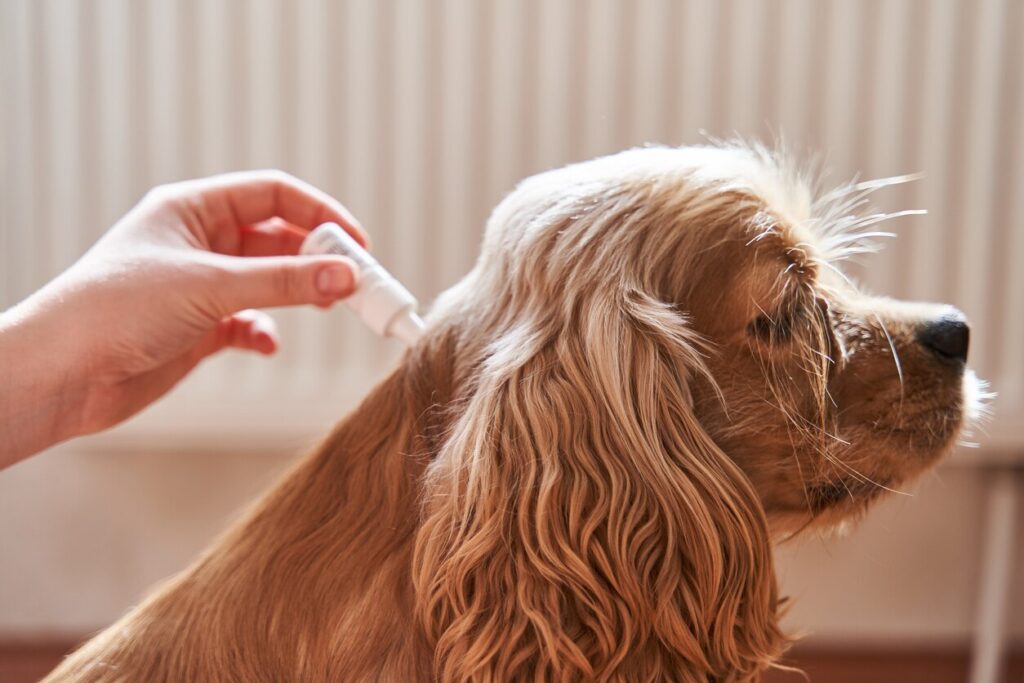
Topical preventions are liquid products generally applied to the skin at the neck's nape. Topical flea and tick medications work by depositing the active ingredient into the pet’s natural skin oils via sebaceous glands. Fleas are killed on treated pets following exposure or ingestion of the active ingredients on the surface of the pet's skin.
How fast topical flea medications work depends on the product, but most take within 12–24 hours after application to begin working. For example, K9 Advantix II kills existing fleas on dogs within 12 hours after initial application. Do not use K9 Advantix II on cats.
These products can be toxic when ingested (especially if a cat ingests a dog flea preventive), so it is important that these products have dried on dogs before other pets or children are allowed to interact with them. Bathing may affect the efficacy of these products; please read and follow all label instructions for these products.
How Fast Do Flea and Tick Collars Take To Work
Flea collars work similarly to topicals by releasing an active ingredient directly into the skin’s oil glands. The medication slowly settles into the hair follicles as well, which allows the collar to work for an extended period of time. Flea collars generally take at least 24 hours to start working.
These products are not all equally effective. Generally, older products use insect growth regulator ingredients, which vary in efficacy. These products should not be handled by young children and other animals should not be licking or chewing them.
Seresto is the No. 1 vet-recommended3 flea and tick collar labeled for over-the-counter use in dogs. It is designed to kill existing fleas on dogs 24 hours after initial application and provides eight months of continuous protection against fleas and ticks.
After handling any flea and tick prevention collars, pet parents should wash their hands thoroughly. Please read and follow all label instructions for these products.
How To Get Rid of Fleas and Ticks in Your Home
To get rid of all fleas and ticks, you must do more than just administer medication to your dog. You need to treat all pets, the home, and the yard at the same time.
Follow these vet-recommended tips:
- Ensure that all pets in the home are on species-specific flea and/or tick protection. This includes dogs, cats, ferrets, and rabbits.
- Vacuum daily to remove flea eggs and larvae, even if you have hardwood or tile flooring. Make sure to discard the vacuum bag or empty the canister immediately after use.
- Wash all bedding with hot water weekly.
- Bathe your dog weekly to remove dead fleas if you’re managing a flea infestation. (Frequent bathing may affect the efficacy of many topical flea and tick medications.)
- Ask your vet about insecticides for home use, such as sprays, bug bombs, or powders. Use only pet-safe products and follow the instructions carefully.
- Keep a neat yard. Fleas and especially ticks love shaded, dense areas, so keep a distance between your home and any forested areas, dense brush, or tall grasses.
- Consider having a professional company come to spray your home and yard; just be sure it is a pet-friendly treatment.
Just how long will it take to get rid of fleas completely? A flea infestation in your house can last several weeks to a few months, depending on how established it is and how consistently you treat it.
Watch this tutorial for step-by-step instructions on how to get rid of fleas in the home.
Why Is It Important to Quickly Get Rid of Fleas and Ticks?
Fleas and ticks are more than just a nuisance—they can cause serious health problems for dogs if not treated promptly. Quickly eliminating these parasites helps reduce discomfort, prevent allergic reactions, and lower the risk of disease transmission.
Flea and tick infestations can cause:
- Flea Allergy Dermatitis (FAD): An allergic reaction to flea saliva causing intense itching, inflamed skin, scabs, and hair loss, often around the lower back and tail.
- Anemia: In heavy infestations, blood loss from flea and tick bites can lead to pale gums, weakness, and lethargy.
- Tapeworms (from fleas): Dogs can ingest infected fleas while grooming, which can lead to tapeworms, an intestinal parasite.
- Bacterial infections (from fleas): Fleas can carry harmful bacteria that may lead to illness, such as plague (Yersinia pestis) and cat scratch disease (Bartonella henselae), especially in dogs with weakened immune systems.
- Tick-borne diseases: Ticks can spread serious illnesses like Lyme disease, Rocky Mountain spotted fever, anaplasmosis, and ehrlichiosis, which often require veterinary care and antibiotics.
Early flea and tick prevention is key to protecting your dog’s overall health.
Dog Flea and Tick FAQ
What will 100% get rid of fleas?
In order to completely get rid of fleas, you need to treat all pets and both indoor and outdoor environments at the same time. Make sure to use products that aim to kill all life stages of the fleas—both adults and flea eggs. Prescription flea protection medications, such as Credelio, can be used during an infestation as well as afterward to prevent the issue from returning.
Why am I still seeing fleas after treatment?
It’s not uncommon to still see fleas after your pet is treated. You are often seeing the results of the medication working and the fleas falling off your pet. Due to the life cycle of the flea, it also takes a few weeks for immature fleas to hatch after initial treatment. These newly emerged fleas will jump on your pet but then be killed by the medication.
What age can puppies start flea and tick medicine?
Most flea and tick treatments for dogs are not indicated for use until the puppy is 8 weeks old, although some medications can be used on puppies as young as 4 weeks old or not until they are 24 weeks old. The dog’s weight is also a factor. Always check the product label and consult your veterinarian to determine the right product for your specific puppy.
What diseases are transmitted by fleas and ticks?
Fleas and ticks can cause a range of health problems for pets and people. Fleas can carry tapeworms and bacterial diseases such as plague. Tick-borne illnesses include Lyme disease and Rocky Mountain spotted fever. Fleas and ticks both can cause anemia and various skin issues, including skin infections or dermatitis—all the more reason to kill fleas and ticks fast and prevent reinfestation.
What other parasites should I protect my dog against?
In addition to fleas and ticks, other parasites, both external and internal, can spell trouble for your dog, including mites, heartworms, roundworms, hookworms, whipworms, and tapeworms.
Broad-spectrum flea and tick medications protect against many of these other parasites, though which ones depends on the product. Additionally, certain parasiticides can treat and control common parasite infections. For example, Interceptor Plus (milbemycin oxime/praziquantel) is a monthly chew that protects dogs and puppies 6 weeks or older and 2 pounds or greater against heartworm disease, adult hookworm, roundworm, tapeworm and whipworm infections. Talk to your vet about parasite protection that’s tailored to your pet’s needs.
DISCLAIMERS:
Emergency Use Authorization for Credelio (lotilaner) for New World screwworm (NWS)
The U.S. Food and Drug Administration (FDA) has issued an Emergency Use Authorization (EUA) for the emergency use of the approved product Credelio (lotilaner) for the treatment of infestations caused by NWS (Cochliomyia hominivorax) larvae (myiasis) in dogs and puppies. However, Credelio is not approved for this use.
Credelio is approved for other uses.
For additional information on the EUA, please refer to the Credelio NWS Fact Sheet.
Limitations of Authorized Use
Credelio (lotilaner) is authorized only for the duration of the declaration that circumstances exist justifying the authorization of the emergency use of Credelio (lotilaner) under section 564(b)(1) of the Federal Food, Drug, and Cosmetic Act (FD&C Act), 21 U.S.C. § 360bbb-3(b)(1), unless the authorization is terminated or revoked sooner.
Indications for Credelio
Credelio kills adult fleas and is indicated for the treatment and prevention of flea infestations and treatment and control of tick infestations (lone star tick, American dog tick, black-legged tick, brown dog tick, and longhorned tick) for one month in dogs and puppies 8 weeks and older and 4.4 pounds or greater. Credelio is indicated for the prevention of Lyme disease infections as a direct result of killing black-legged ticks.
Important Safety Information for Credelio
Lotilaner is a member of the isoxazoline class of drugs. This class has been associated with neurologic adverse reactions including tremors, incoordination, and seizures. Seizures have been reported in dogs receiving this class of drugs, even in dogs without a history of seizures. Use with caution in dogs with a history of seizures or neurologic disorders. The safe use of Credelio in breeding, pregnant or lactating dogs has not been evaluated. The most frequently reported adverse reactions are weight loss, elevated blood urea nitrogen, increased urination, and diarrhea. For complete safety information, please see Credelio product label or ask your veterinarian.
Indications for Interceptor Plus
Interceptor Plus prevents heartworm disease and treats and controls adult roundworm, hookworm, whipworm, and tapeworm infections in dogs and puppies 6 weeks or older and 2 pounds or greater.
Important Safety Information for Interceptor Plus
Treatment with fewer than 6 monthly doses after the last exposure to mosquitoes may not provide complete heartworm prevention. Prior to administration of Interceptor Plus, dogs should be tested for existing heartworm infections. The safety of Interceptor Plus has not been evaluated in dogs used for breeding or in lactating females. The following adverse reactions have been reported in dogs after administration of milbemycin oxime or praziquantel: vomiting, diarrhea, decreased activity, incoordination, weight loss, convulsions, weakness, and salivation. For complete safety information, please see Interceptor® Plus product label or ask your veterinarian.
Advantage, Credelio, K9 Advantix II, Interceptor Plus are trademarks of Elanco or its affiliates. PM-US-26-0709
References
- Cavalleri D. et al 2017. "Assessment of the speed of flea kill of lotilaner (Credelio™) throughout the month following oral administration to dogs." Parasites & Vectors. 10:529.
- Murphy M. et al 2017. "Laboratory evaluation of the speed of kill of lotilaner (Credelio™) against Ixodes ricinus ticks on dogs." Parasites & Vectors. 10:541.
- Elanco Animal Health. Data on File. REF-23987


