Dog Dental Care: 6 Ways to Keep a Dog’s Mouth Clean


Nastasic/E+ via Getty Images
Dog dental care is an important part of care that pet parents can easily fall behind on.
If your dog is a breed that is prone to dental disease (Greyhounds and every small-breed dog), or they have had many dental health issues in the past, it’s important to offer more than one type of at-home dental care in addition to the regular dental cleanings at the vet’s office.
There are several products out there geared towards supporting your dog’s dental health.
Between the dental chews, toothpastes, powdered food and water additives, it can be confusing and overwhelming for pet parents searching for a good at-home dental care routine.
Fortunately, the Veterinary Oral Health Council (VOHC) is an independent group that reviews products and will give their seal of approval if the product works and will reduce plaque and build up by at least 20%. This is called the VOHC seal and can be seen on the corner of approved products.
You can also visit their website at VOHC.org to see which brands have passed the test before shopping for new dental care products.
Key Takeaways
- Brushing your dog’s teeth regularly with canine toothpaste is the most effective way to prevent plaque and tartar buildup.
- Dental powders, water additives, treats, and prescription diets can support dental health—especially for dogs that resist brushing.
- Professional cleanings are essential, as at-home care can’t fully remove tartar, especially below the gumline.
Dog Dental Care Tips
Let’s look at a few vet-approved dog dental care tips to keep your pet happy and healthy.
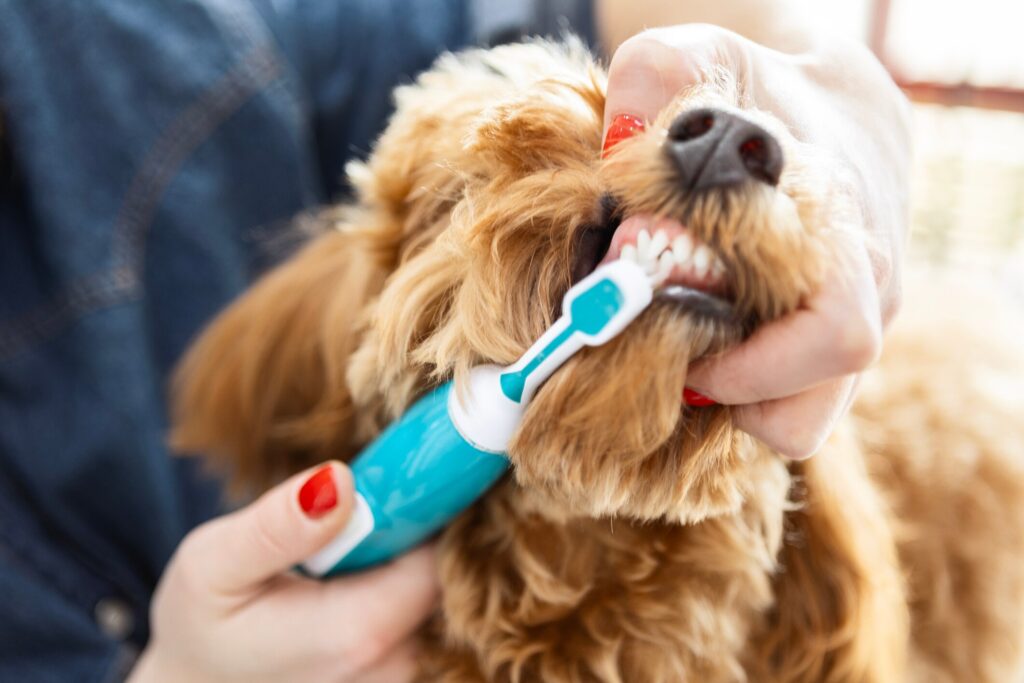
1. Brush Your Dog’s Teeth With Canine Toothpaste
Some dogs truly enjoy having their teeth brushed because canine toothpaste is usually flavored to suit a dog’s taste buds.
Chicken, beef, and peanut butter are the most popular flavors.
If your dog has a food allergy, use caution when choosing a flavor of toothpaste to select. Speak with your veterinarian about which products are best for your pup if they are on a restricted or hydrolyzed diet.
Dogs that are food-motivated and can sit still for a couple of minutes will generally do well with having their teeth brushed.
For large dogs, you can use a regular human toothbrush.
For small dogs, it is best to either use a baby toothbrush or a fingertip brush (like this Jasper 360 Dog Finger Toothbrush).
You can purchase a dog toothbrushing kit that includes the toothpaste, a regular brush, and a fingertip brush. (like the Virbac C.E.T. Oral Hygiene Kit for dogs)
Wet your pup’s toothbrush and apply a layer of toothpaste to the toothbrush, then brush your dog’s teeth.
If your dog will not let you brush the inside of their teeth, that’s okay. You don’t need to rinse the toothpaste out of their mouth after you’ve finished brushing, either.
Try to brush your dog’s teeth two to three days a week, but if you have the time and your dog enjoys it, brushing their teeth daily would be ideal.
If you are concerned that your dog may bite you if you brush their teeth, don’t attempt it. Instead, you can try other options.
2. Add Dental Powder To Your Dog’s Meals
VetriScience Perio Support is a flavored dental powder that is easy to apply to the top of your dog’s food.
It contains a probiotic that helps promote healthy bacteria in your dog’s mouth and simultaneously kills plaque-building bacteria.
The powder should be applied to every meal your dog eats. It helps freshen your dog’s breath and prevents tartar and plaque from building up on your dog’s teeth.
3. Add A Water Additive To Your Dog’s Bowl
There are several different water additives available for dogs.
These oral solutions are tasteless. Based on the directions on the bottle, you will add a certain amount of the water additive to your dog’s water bowl daily.
The solution helps freshen your dog’s breath and kills plaque-building bacteria in your dog’s mouth.
4. Ask Your Vet About Prescription Dental Food
Dogs that are opposed to the other options or are prone to periodontal disease may be good candidates for veterinary dental diets. These have been clinically proven to help reduce dental disease.
As your dog chews the food, the kibble cleans the surface of their teeth, and by doing so, reduces tartar buildup. The kibble also contains ingredients that help to kill bacteria that lead to plaque and tartar formation.
The following options may be good for your dog:
Since these diets require a prescription from a veterinarian, ask your vet about trying one of these formulas for your specific pet.
5. Offer Your Dog Dental Treats
When you pick out dental treats or chews for your dog, make sure they have the Veterinary Oral Health Council’s Seal of Acceptance on the packaging, as this seal indicates that these products help control tartar buildup.
One example is a OraVet chewable that is given once daily.
These chews reduce plaque and tartar buildup and create a protective barrier on the surface of a dog’s teeth that makes it harder for bacteria to stick and form tartar.
The Purina Pro Plan Veterinary Diets Dental Chewz also help significantly reduce tartar buildup and are to be given occasionally as treats.
6. Take Your Dog for Regular Dental Cleanings
No matter how much at-home dental care you provide for your dog, tartar will still build up over time on your dog’s teeth.
We may brush our teeth daily, but we still need a dentist to clean our teeth periodically. The same goes for dogs.
When visible tartar and gingivitis are present in your dog’s mouth, your veterinarian will recommend a dental cleaning (called dental prophylaxis). Be sure to bring your pup in yearly for their annual wellness exam and to have their oral health checked.
Your dog will need to go under general anesthesia to allow a veterinarian to properly clean off all the tartar on their teeth as well as the layer of tartar under the gumline.
Some dogs need dental cleanings yearly, and others every few years; it depends on the breed of the dog, their genetics, diet and the dental care that they receive at home.
Why Dog Dental Care Is Important
Dental health care is very important for dogs to lead long, healthy lives.
The bacteria that accumulate in the mouth will collect on the teeth and form tartar. The bacteria can make its way beneath the gum line to infect the tooth roots and spread into the blood stream.
Once in the blood, bacteria will circulate and seed other organ systems, like the heart and kidneys.
Dogs with dental disease are significantly more likely to develop other diseases like chronic kidney disease and heart disease.
In addition to developing other diseases, dogs affected by dental disease may experience chronic pain from infected teeth. Pet parents may notice them dropping lots of food or even being hesitant to eat.
When certain tooth roots become infected, they can lead to abscess formation, painful swellings of the face beneath the eye on the side of the infected tooth.
Having a good dental routine is essential for your dog’s health, happiness, and longevity.
References
Pet dental care. American Veterinary Medical Association. https://www.avma.org/resources-tools/pet-owners/petcare/pet-dental-care


