How Do Dogs Sense Panic Attacks in Humans?


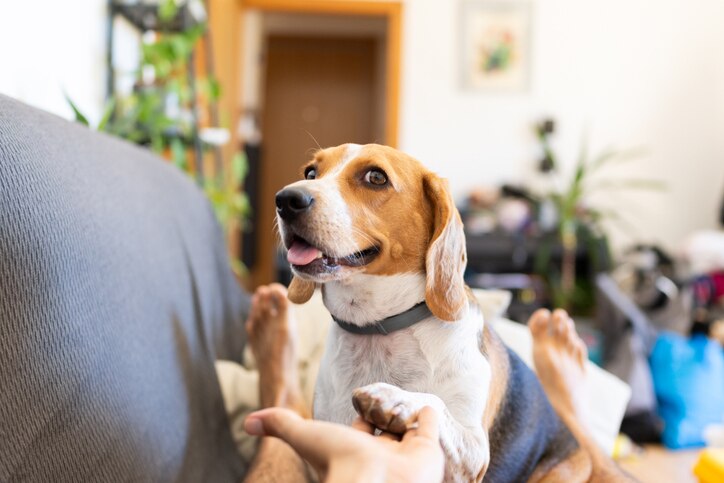
David Petrus Ibars/iStock/Getty Images Plus via Getty Images
If you’ve known someone with panic attacks—or had one yourself—you know that they can come on quickly: Your pulse quickens, your heart races, and you may start to shake or feel dizzy.
For people with psychiatric service dogs, this scene may play out better than most: Their dog may rush over and drape their body across them like a weighted blanket or maybe even bring them a prescribed medication.
In fact, psychiatric service dogs can recognize panic attacks in humans—and help them get through the moment. Here’s how.
Key Takeaways
- Psychiatric service dogs can be trained to sense panic attacks in humans.
- Dogs can often pick up on subtle signs of anxiety and emotional distress in people.
- A dog’s powerful sense of smell may help them detect chemical changes linked to panic attacks.
- Body language, breathing patterns, and energy shifts may also signal distress to dogs.
- Dogs can help people with panic attacks by draping their body across them like a weighted blanket, fetching their meds, or completing other helpful tasks.
Can Dogs Sense Panic Attacks in Humans?
Yes, trained psychiatric service dogs can detect panic attacks in humans.
A panic attack in humans is a sudden wave of intense fear or anxiety that triggers strong physical and emotional symptoms, even when there’s no immediate danger.
Common signs include a racing or pounding heartbeat, shortness of breath, sweating, and dizziness, along with a sense of danger or doom.
However, detecting and responding to panic attacks isn’t something dogs automatically know how to do. While many dogs without formal training can pick up on signs of human stress or anxiety, their responses may be inconsistent and they often don’t know how to help.
Psychiatric service dogs, on the other hand, receive targeted training to reliably recognize panic attacks and respond in ways that support their pet parent.
How Do Dogs Sense Panic Attacks in Humans?
Psychiatric service dogs are trained to recognize the physical, behavioral, and scent changes their pet parents may exhibit before or during a panic attack, says Michelle Nelson, PhD, CPDT-KA, CEO and founder of Paws Assisting Veterans (PAVE).
Here are the changes dogs may learn to detect.
They Smell Chemical Changes in the Body
Dogs have an incredible sense of smell, estimated to be up to 100,000 times more powerful than a human’s. During a panic attack, humans give off a unique “scent recipe” that trained dogs can pick up on, Nelson explains.
Here’s how it works:
-
When a person experiences panic or anxiety, the body releases stress hormones such as cortisol and adrenaline.
-
Those hormones trigger changes in things like metabolism, breathing, heart rate, and sweat production.
-
Those changes alter the mix of tiny odor molecules, called volatile organic compounds (VOCs), released through sweat and saliva.
To train psychiatric service dogs to recognize these changes, trainers use human scent samples—typically sweat or saliva gathered during a panic attack, Nelson says. Dogs are then taught to recognize and alert to those scent shifts.
They Notice Physical Changes
Due to their strong bond with people and their ability to read body language, dogs are naturally skilled at recognizing when a person is distressed, says Wailani Sung, DVM, DACVB, a board-certified veterinary behaviorist and the senior director of animal admissions and wellbeing at Joybound People & Pets.
Trainers can build on those natural instincts to teach psychiatric service dogs to consistently notice physical changes, such as heavier breathing, trembling, or sweating, that may signal an oncoming panic attack.
They Notice Behavioral Changes
People often have behaviors or routines they tend to repeat before a panic attack, such as pacing, foot tapping, or reaching for a favorite blanket. Trainers can teach psychiatric service dogs to recognize these patterns as signs that a panic attack may be coming on.
How Early Can Dogs Detect a Panic Attack?
Stress-related body changes can begin before a panic attack fully peaks. Psychiatric service dogs are trained to alert as soon as they notice these subtle signs of distress, Dr. Sung says.
She notes that timing can vary depending on how perceptive the dog is and how closely they’re paying attention to their person. However, many trained dogs may alert several seconds to a few minutes before a panic attack fully escalates.
That early “heads up” can make a big difference. It may give the pet parent time to move to a quieter space, take medication if prescribed, start calming exercises, or use other coping strategies before symptoms become overwhelming.
What Cues Do Dogs Use To Detect a Panic Attack?
Dogs may notice different physical, behavioral, and scent-related changes before or during a panic attack.
According to Dr. Sung, some of the most common cues include:
-
Rapid breathing or hyperventilation
-
Increased sweating
-
Fidgeting or pacing
-
Trembling
-
Clenched fists
-
Changes in facial expression
-
Staring blankly or “zoning out”
-
Repetitive movements
-
Raised voice or distressed vocalizations
-
Scent changes
These cues can vary from person to person, and psychiatric service dogs are typically trained to recognize the unique patterns and warning signs of their pet parent.
How Do Dogs Alert People To Panic Attacks?
“Dogs are trained to use clear, repeatable behaviors that are hard to ignore,” Nelson says. “The exact alert is customized to the client’s needs and preferences.”
Common psychiatric service dog alert behaviors include:
-
Persistent nudging with the nose
-
Gently pawing at the person
-
Staring intently or making sustained eye contact
-
Leading the person to a quieter space
Psychiatric service dogs may also be trained to respond once a panic attack is already happening by:
-
Licking the person’s hands or face to interrupt panic-related behaviors
-
Lying across the person as a form of deep-pressure therapy
-
Retrieving medication or another item
How Psychiatric Service Dogs Are Trained
Training a dog to consistently recognize panic attack cues and respond appropriately in real-world situations takes a lot of skill and practice. Pet-parent-trained service dogs are legally allowed in the U.S., but working with a professional service-dog trainer is strongly recommended.
It’s also important to note that not every dog is cut out for the job (and that’s OK!). Nelson says dogs must have:
-
A calm, stable temperament
-
High trainability and focus
-
Low reactivity to noise and distractions
-
Confidence without aggression
-
A strong bond with their pet parent
Breeds commonly used for psychiatric service work include Labrador Retrievers, Golden Retrievers, and Standard Poodles, Nelson adds. However, other breeds or mixed breeds can also succeed if they have the right temperament and skills.
So how does the training actually work? Nelson says it tends to follow this process:
-
Trainers introduce panic attack-related cues. These may include scent samples and physical cues.
-
The dog is rewarded for recognizing the cues. When the dog notices or responds to the scent or behavior, trainers use a marker word like “yes!” followed by a treat. This helps build a positive association, making the dog more likely to repeat the behavior in the future.
- The dog learns a specific alert behavior. Trainers teach the dog how to respond to those cues by nudging, pawing, licking, or applying pressure.
-
The training is practiced in different environments. Dogs are gradually trained in various settings and around different distractions. This helps them reliably recognize and respond to panic attack cues in the real world.
-
The skills are continually reinforced. Like any working skill, psychiatric service dogs require ongoing practice throughout their life.
Once fully trained, psychiatric service dogs may qualify as service animals under the Americans with Disabilities Act (ADA). Nelson says there is no government certification or registration required, but the person must have a qualifying disability and the dog must be trained to perform specific disability-related tasks.
Service Dogs vs. Emotional Support Dogs
Psychiatric service dogs and emotional support animals (ESAs) are not the same thing.
Psychiatric service dogs are trained to perform specific tasks related to a person’s disability, such as detecting panic attacks or getting medication for you.
ESAs provide comfort through companionship. Unlike psychiatric service dogs, they are not trained to perform specific tasks and do not have the same public access rights as service dogs.
When To Seek Professional Help
While pets can provide much-needed companionship, they aren’t a replacement for a therapist, psychologist, or psychiatrist.
If you’re experiencing panic attacks or other mental health issues, speak with a qualified medical or mental health professional. The National Institute of Mental Health is a helpful resource for learning more about symptoms, treatment options, and finding support.
Dogs and Panic Attacks FAQs
Can dogs smell anxiety?
Yes, dogs can smell anxiety. Stress hormones, such as cortisol and adrenaline, can trigger changes in the body that subtly alter a person’s scent.
Can dogs have panic attacks?
Yes. Dogs can experience severe anxiety and can even have episodes that resemble panic attacks in humans.
Can anyone have a psychiatric service dog?
No, you must have a qualifying disability under the ADA to have a psychiatric service dog.


