Obesity in Cats: Signs, Causes, and Treatment


Obesity in cats is essential to manage, as it is a very serious risk factor for many underlying health conditions in cats. Obesity not only exacerbates conditions like pain from arthritis, but it can also lead to medical issues, such as diabetes and heart disease. Also, according to studies, an obese cat will have a shorter life expectancy.
For those reasons it’s important to always feed your cat the appropriate amount and include exercise as part of your cat’s daily routine. If your cat is already obese, talk with your vet to devise a weight loss plan.
Key Takeaways
- All cat breeds and both sexes are prone to obesity, but neutered or spayed, middle-aged, and indoor-only cats are most at risk.
- A cat is considered overweight at 10–20% above ideal weight and obese when they are more than 20% above ideal weight.
- Obese cats have increased health risks, which can include a weakened immune system, endocrine and metabolic disorders, cardiovascular disease, arthritis, and urinary issues.
- The cause of obesity in cats is based on not only the cat themself and their health, but also the diet you choose to feed them and how many calories they eat daily.
- Your veterinarian is the best resource to discuss how to keep your cat at a healthy weight and how to help your obese cat lose weight.
What Is Obesity in Cats?
A cat is considered overweight when they weigh 10–20% more than their ideal body weight, and an obese cat weighs more than 20% above their ideal body weight.
Feline obesity is a very common disease, occurring in up to 63% of cats in developed countries.
All cat breeds can become obese. Middle-aged (8–12 years old), spayed or neutered, indoor-only or primarily indoor cats tend to be more at risk for becoming obese cats.
Dietary changes, such as switching to a special weight control food like Blue Buffalo Natural Veterinary Diet W+U Weight Management + Urinary Care wet cat food, feeding strategies, including portion control, and exercise are the main ways to treat cat obesity.
Risks Associated With Obesity in Cats
Obese cats have increased health risks, which can include a weakened immune system, endocrine and metabolic disorders, cardiovascular disease, arthritis, and urinary issues.
Symptoms of Obesity in Cats
Besides visible weight gain, signs your cat is obese include:
-
Difficulty jumping or climbing stairs
-
Sitting or lying down more and showing an unwillingness to get up and move around
-
Loss of a visible waistline
-
Inability for pet parent to feel rib bones or hip bones
-
Looking down from above, your cat’s back appears flat and/or your cat’s profile looks rectangular
-
Dirty, messy, unkempt hair coat
-
Collar keeps getting tighter
-
Less frequent bowel movements and/or more passing of gas
Health Tools
Get quick answers with our vet-created Symptom Checker
Causes of Obesity in Cats
The reasons for obesity in cats can be broken down into two categories: animal-specific factors and diet-specific factors.
Animal-specific factors
-
Age: Middle-aged cats 8–12 years old are more likely to be overweight than younger or elderly cats.
-
Neutered: Male and female neutered cats tend to have a stronger appetite than unneutered cats.
-
Environment: Indoor cats, or cats with restricted outdoor access, are more commonly overweight because of greater inactivity with fewer opportunities for exercise to burn calories.
-
Underlying health conditions: Medical issues can cause weight gain. For example, joint discomfort and arthritis can reduce mobility, and therefore energy use, increasing the risk of weight gain.
Diet-specific factors
-
Type of diet: Feeding a diet of mostly dry food tends to promote weight gain in cats more so than a diet solely or primarily consisting of canned food.
-
Inaccurate food measurement: It is important to be consistent with food, and to use a scoop with a known measure (e.g., a ¼-cup measuring cup vs. a plastic cup), and feed out of a bowl size that is appropriate formeasured food offered. Without these tools, the risk of overfeeding a cat is more likely.
-
Rapid food consumption: If your pet eats too quickly, this can lead to boredom, crying, and begging, which results in feeding your cat more food off schedule to keep them entertained and quiet.
-
Indulgent feeding practices: Feeding one or two large meals in the day may increase risk of obesity and begging in your cat compared to feeding small, frequent meals. Free feeding, where you keep a bowl out full of food,is also a known cause of obesity in cats of any age.
-
Excessive treats: Treats tend to be higher in fat and calories than a cat’s regular diet, so offering too many treats throughout the day quickly increases the total calories offered and can create a nutritionally unbalanced diet.
How Vets Diagnose Obesity in Cats
A cat’s weight alone isn’t enough to diagnose cat obesity. Veterinarians diagnose obesity in cats by assessing body weight and the cat’s Body Condition Score, using a Body Condition Score chart like the one below.
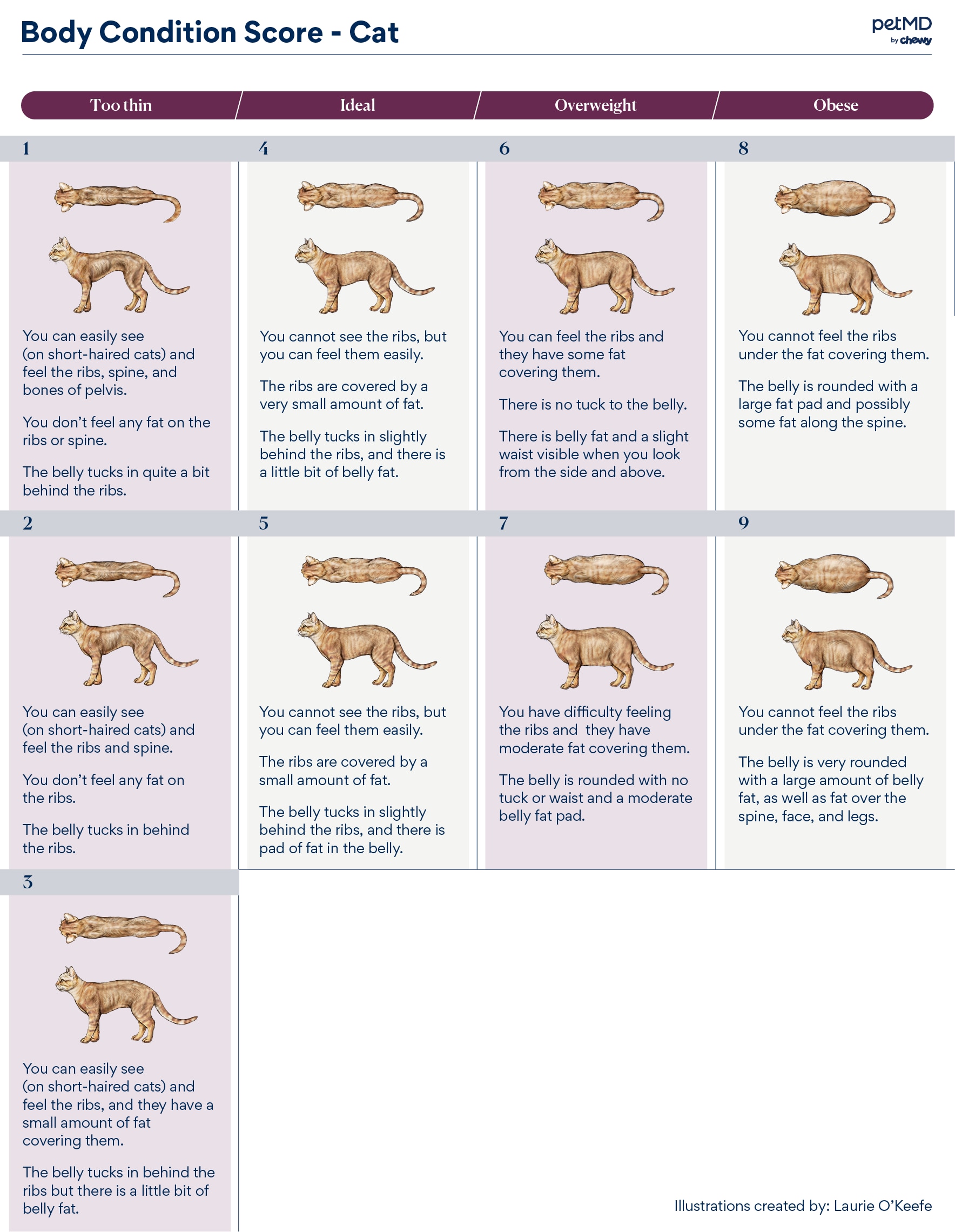
To determine your cat’s body condition score, your vet will look at whether ribs and hip bones are visible, whether a waistline is present, and whether fat deposits are obvious along the belly. They’ll also palpate over the ribs, spine, and hips to assess how much fat is obscuring underlying bones. In severely obese cats, ribs, spine, and hips may be barely detectable under thick fat pads, and the abdomen often appears distended with no waist.
Vets may diagnose other conditions that are linked to obesity through a physical exam or with blood work. These findings may include joint discomfort on manipulation of your cat’s hips or knees; high blood pressure that shows underlying cardiovascular disease; or high blood glucose suspicious of diabetes.
Treatment of Obesity in Cats
It is important for you to provide your veterinarian with an accurate description of your cat’s environment and the food provided, including all types of food and treats offered, amounts (by weight or measured scoop), and times fed, so that an appropriate weight loss plan can be developed.
Based on your cat’s health, your veterinarian will first calculate an appropriate target goal for calories fed per day to promote weight loss and then work with you to employ several strategies to tackle your cat’s obese condition.
Diet Change
A change in diet may be in order, and the new diet may be one of the following:
-
Calorie-restricted foods: Most often a calorie-controlled food will be recommended to promote weight loss but maintain lean muscle mass. Low-carbohydrate and low-fat diets with higher protein and insoluble fiber, such as Blue Buffalo Wilderness High-Protein Weight Control Adult Dry Cat Food, are generally recommended for obese or overweight cats to promote feeling full.
- Dry vs. canned diet: It may be necessary to switch from a kibble to a canned diet to best achieve nutrient goals. Canned food for cats is lower in calories and carbohydrates and higher in moisture compared to dry food. This formula makes weight loss easier to achieve by leaving cats satisfied and fuller longer while maintaining health and hydration.
-
Veterinary diets: There are different types of veterinary diets to help with weight loss in cats. Available only with your veterinarian’s authorization, these are often the most effective method, along with lifestyle changes to increase physical activity. They include:
-
Weight control and/or weight management veterinary diets, such as Purina Pro Plan Veterinary Diets OM Overweight Management Dry Cat Food, Royal Canin Veterinary Diet Satiety Support Weight Management Dry Cat Food, and Hill's Prescription Diet r/d Weight Reduction/Management Dry Cat Food.
-
-
Weight control and/or weight management veterinary diets that also address other comorbidities. For example, obesity predisposes cats to more urinary issues. Blue Buffalo Veterinary Diet W+U Weight Management + Urinary Care Dry Cat Food is formulated with ideal levels of fat, calories, and fiber to help properly manage weight, plus controlled levels of minerals to support urinary health. It also comes in a wet food version.
-
“Metabolic-control” veterinary diets may further help to promote weight loss, because these diets aim to induce ketosis—where the body burns fat for energy instead of glucose from carbohydrates—rather than a total reduction in calorie intake. Hill's Prescription Diet Metabolic Weight Loss & Maintenance Dry Cat Food is a great example of this kind of weight loss diet, which is very successful in cats.
Remember that if you are changing your cat’s food type, it is important to slowly transition to the new diet over 7–10 days to prevent gastrointestinal upset.
Measure Food
Once a diet is selected, your veterinarian will determine how much food to feed daily based on the caloric goal for weight loss.
It’s important that you accurately measure how much food is offered per day to meet that caloric goal and stay consistent. Weighing the food on a gram scale is the most accurate means of measurement.
Using a specific volume measuring cup is the second-best way to ensure an accurate measure.
You may also want to discuss feeding strategies with your vet to help make the plan successful. Talking points may include:
-
Bowl selection: Feed in an appropriate, cat-size bowl that appears full or almost full when food is added. Consider slow-feeders for those cats who need to be encouraged to slow down when eating.
-
Timed feeds vs. free choice: Discuss with your veterinarian which feeding strategy might work best for your lifestyle. An automatic pet feeder can help make it easier to do timed feedings and maintain portion control.
Limit Treats
When it comes to treats, have a conversation with your veterinarian about the importance of treats in your relationship with your cat. If your favorite part of the day is offering your cat a bedtime snack, it is important for your bond to keep that tradition going. That said, keeping the snacks low calorie and part of their weight control regime is important.
These Blue Buffalo Tastefuls Mini Purees are 10 calories per tube, and may be a good choice.
Your veterinarian can work with you to select plan-appropriate treats and how best to incorporate them into your cat’s daily calorie goal.
Exercise
Work with your veterinarian to be sure they understand your cat’s particular living situation and can address the weight loss plan from an environmental angle as well. Depending on your cat’s living situation and underlying health conditions, you and your veterinarian may devise a plan to get your cat moving more.
Some examples may include:
-
Make mealtime an activity: Incorporate puzzle-toys or food-dispensing cat toys to promote more activity during feeding.
-
Place meals higher up: If your cat is indoor-only and has limited movement but is otherwise agile and healthy, you can feed several small meals throughout the day on an elevated surface, like a cat tree, to encourage jumping.
-
Try cat leash training: For certain indoor cats who are more adventurous, you could fit them with a cat harness and incorporate a certain number of leashed-walks each day.
-
Consider a cat wheel: A cat wheel can help get your cat moving indoors, though they will need training to get used to the equipment.
Recovery and Prevention of Obesity in Cats
Prevention of cat obesity is vital. To help discourage weight gain early on in your cat’s life, be mindful not to overfeed them and help them stay active by engaging them in regular playtime.
Once your cat has gained weight and is considered obese, weight control will be a lifelong goal. After a weight loss plan has been started, it is important to stay consistent and continually monitor your cat’s progress:
-
Stick to the vet-approved foods and treats
-
Measure out food portions accurately
-
Increase activity that is suitable for your cat
-
Use a reliable scale at home to weigh your cat and follow the same body condition scoring system your veterinarian uses
-
Revisit the plan with your vet regularly to assess progress. Adjustments to calories or strategy may be needed as your cat ages or health conditions evolve
Remember to be patient. Healthy weight loss takes time, and it’s normal to hit slow patches along the way. Stay focused, lean on your vet for support, and celebrate the small wins.
Obesity in Cats FAQs
How do I get my indoor cat to lose weight?
The goal for weight loss in cats is to reduce calories and increase energy used. Work with your veterinarian to make sure your cat is on the right diet and being fed the correct number of calories per day for weight loss, and try to get your cat moving at home by playing, jumping for meals, or even going on a harness-leash walk.
At what point is a cat overweight?
Cats are overweight when they weigh 10–20% more than their expected body weight, where body condition is assessed as ideal. A cat is considered obese when they weigh more than 20% above their expected body weight.
Does obesity shorten a cat’s life?
Yes, obesity is a disease that leads to the development of many other diseases that can shorten a cat’s life, like diabetes, certain types of cancer, metabolic diseases, and respiratory and heart diseases.
References
-
Wall, Meredith, et al. “Owner and Cat-Related Risk Factors for Feline Overweight or Obesity.” Frontiers in Veterinary Science, 19 Aug. 2019, www.frontiersin.org/articles/10.3389/fvets.2019.00266/full.
-
McReynolds, Tony. “Pet Obesity Is an Epidemic.” American Animal Hospital Association, AAHA, 6 Feb. 2020, http://www.aaha.org/publications/newstat/articles/2020-02/pet-obesity-is-an-epidemic/.
-
Burkholder WJ, Toll PW. Obesity. In: Hand MS, Thatcher CD, Remillard RL, et al, eds. Small Animal Clinical Nutrition, 4th ed. Topeka, KS: Mark Morris Institute, 2010; 501-544.
-
WSAVA Global Nutrition Committee. “Body Condition Score.” World Small Animal Veterinary Association, WSAVA, 13 Aug. 2020, wsava.org/wp-content/uploads/2020/08/Body-Condition-Score-cat-updated-August-2020.pdf.
-
Cline, Martha G., et al. “2021 AAHA Nutrition and Weight Management Guidelines for Dogs and Cats.” Journal of the American Animal Hospital Association, vol. 57, no. 4, 1 July 2021, pp. 153–178, 10.5326/jaaha-ms-7232.


