Do Dogs Know When You’re Packing for a Trip?


redonion1515/iStock/Getty Images Plus via Getty Images
You’ve been counting down the days until your trip, and your suitcase is packed. But you might be wondering: Does my dog know I’m going on vacation? And why are they suddenly acting a little different?
Chances are, they do know—and those subtle behavior changes you’re noticing are a big clue. Dogs are incredibly tuned in to our routines and behaviors, so even small changes can tip them off that something’s about to happen.
Here’s how dogs pick up on those cues—and what you can do to help them stay calm while you pack.
Key Takeaways
- Dogs can pick up on familiar cues—like the appearance of a suitcase—that signals you’re leaving for vacation.
- Even small shifts in your behavior or stress levels can tip your dog off that something’s about to change.
- You can ease your dog’s anxiety by keeping routines consistent and making packing feel less like a big event.
- A little extra support—like playtime, distractions, or calming aids—can help your dog stay relaxed while you get ready.
Do Dogs Know When You’re Packing for a Trip?
Yes, dogs likely know that you’re packing for a trip—or at least that you’re about to leave.
While they might not understand the concept of a vacation, they’re perceptive of changes in routine and pick up on other cues in their environment that tell them that you’re about to head out.
So- while you’re probably trying to keep your trip on the down-low for as long as possible, your dog has probably already figured things out.
How Do Dogs Know You’re Leaving for a Trip?
These are the most common signals that tell your dog you’re leaving for a trip:
They Notice a Different Routine or Pattern
A change in your schedule is one of the biggest clues that you’re about to leave.
“Our dogs notice when we switch things up,” says Leslie Sinn, CPDT-KA, DVM, a veterinary behaviorist and founder of Behavior Solutions in Ashburn, Virginia. If you start running extra errands to prepare for your tip, your dog is going to notice.
She says that an increase in activity—even routine ones like going up and down stairs, pulling clothes out of closets and drawers, or stacking items around the house—can signal that something is about to happen.
You might also be giving your pup less attention than usual. That shift, combined with the extra activity, can feel out of the ordinary to your dog.
They Pick Up on Visual Cues
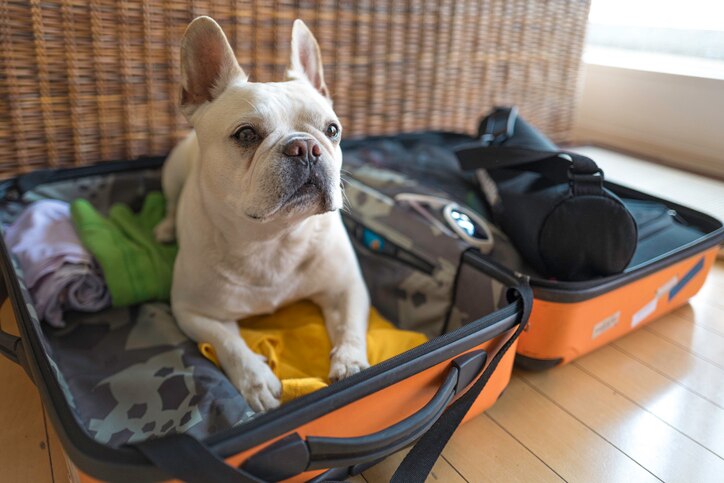
Your suitcase is a dead giveaway.
Objects associated with past trips can quickly tip off your dog that you’re leaving again. Dr. Sinn says suitcases are a big cue because they usually only show up when something specific is about to happen—your departure.
They Notice When You’re More Stressed or Emotional
As your vacation nears, you might feel pressure to check everything off your to-do list.
Dogs are attuned to their pet parent’s emotional state, and changes in stress or energy levels can set off alarm bells, says certified dog trainer Shir Limazati, CPDT-KA, of Another Chance Training in Chicago.
In fact, dogs can tell when we’re stressed. For them, that shift is another clue that something is about to change.
How To Help Your Dog When You’re Packing for a Trip
Vacation doesn’t have to be a bad thing! On the contrary, you should be able to get away while knowing that your dog is safe and loved.
With a few quick tips, you can help your dog relax by reducing stress triggers and keeping their routine predictable—and even have some fun along the way.
1. Get Your Dog Used To Your Suitcase
Desensitize your dog to your suitcase by taking it out more often—when you’re not traveling.
“Consider leaving the suitcase out for long periods when you aren’t leaving so that they can come to see it as just a normal part of their environment,” suggests Annie Grossman, a certified dog trainer and author of “How to Train Your Dog with Love + Science.”
2. Get Your Dog Out of the House When You’re Packing
Make other plans for your pup while you tackle your to-do list.
Dr. Sinn suggests dropping your dog off somewhere they enjoy—like a friend or family member’s house—for a fun playdate.
You can also have a friend or partner take your pup on a long walk or trip to the dog park.
If all else fails, offer them a tasty meal in the kitchen and put up a pet gate so they don’t see you packing.
3. Don’t Pack All at Once
If you can’t keep your dog away for your pack-a-thon, do it in small chunks.
“Toss something in every day rather than turning packing into a big event they’re going to notice and monitor,” Grossman says.
This can be especially effective if you’ve already gotten your dog accustomed to seeing your suitcase.
4. Keep Your Dog’s Routine Normal
“Dogs thrive on predictability,” says Dr. Sinn—so keep your dog’s feeding times, walk times, and sleep times consistent.
5. Invest in Some Calming Help
Nervous dogs, especially those with separation anxiety, might need some extra love when it comes to trip time.
Ask your veterinarian if your pup could benefit from calming chews, an anxiety vest, or a calming diffuser.
6. Help Your Dog Stay Busy
Puzzle toys can help keep your dog distracted while you pack. As they work for their reward, they’ll be less focused on your packing activity.
They also offer much-needed mental stimulation that can help release stress.
With a little bit of planning and a lot of consideration for your pup’s feelings, you can make packing an experience that’s not scary at all. And if it means more toys and treats, your dog might even welcome it!
Dogs and Packing FAQs
Do dogs get sad when you’re on vacation?
It’s hard to say. While dogs are likely to miss our presence, they don’t experience sadness in the same way that humans do. Most dogs will cope just fine without us, as long as we leave them in good care with everything they need while we’re gone.
Do dogs recognize a suitcase as a sign you’re leaving?
Yes. If your dog has seen you packing for a trip before, chances are that they will recognize a suitcase as a sign that you might leave again soon.
Do dogs know how long you’re gone?
Yes, dogs do have a sense of how long you’re gone—but not an exact time frame.
While your dog doesn’t track time in terms of hours and days, they perceive the passing of time through scent and cues in their environment. Your scent stays in the air when you leave your house, so when your scent starts to dissipate, your dog will come to anticipate your return.


