20 Cat Sleeping Positions and What They Mean


Istock/danilovi
Cat sleeping positions can reveal important clues about your cat’s comfort level, trust, temperature preferences, and overall state of mind.
Cats sleep up to 16 hours a day—and often even more as they age. While some sleeping positions may seem unusual, many are linked to instinctive behaviors that help cats stay comfortable, safe, and warm.
So what does it mean when your cat sleeps curled into a ball versus right next to your head? Understanding common cat sleeping positions can provide insight into how your cat is feeling and interacting with their environment.
Here are 20 cat sleeping positions and what they may mean.
Key Takeaways
- Cat sleeping positions often reflect comfort, temperature regulation, trust, and instinctive safety behaviors.
- Sleeping on their back or side usually indicates a cat feels safe and relaxed.
- Positions such as loafing or curling into a ball help cats conserve heat and protect vulnerable organs.
- Cats often sleep near people and pets they trust for warmth, comfort, and companionship.
- Sudden changes in sleeping habits or unusual sleeping locations can sometimes signal a health concern.
Why Do Cats Sleep in Different Positions?
Cats sleep in different positions to regulate body temperature, stay alert to their surroundings, seek comfort, and strengthen social bonds.
Much of a cat’s sleeping behavior is influenced by social tendencies. Despite their reputation for independence, cats can form strong bonds with pet parents and other pets.
Cats also seek warmth while sleeping, which is why they often sleep on or near people. Some pet parents even provide heated cat beds to satisfy this preference.
Other cat sleeping positions reflect their wild ancestry. Cats are both predators and prey animals, so they naturally remain aware of their surroundings and protect vulnerable areas of their bodies whenever possible.
These instincts help explain why some cats sleep curled into a ball, tucked under blankets, or perched in elevated locations.
20 Cat Sleeping Positions and What They Mean
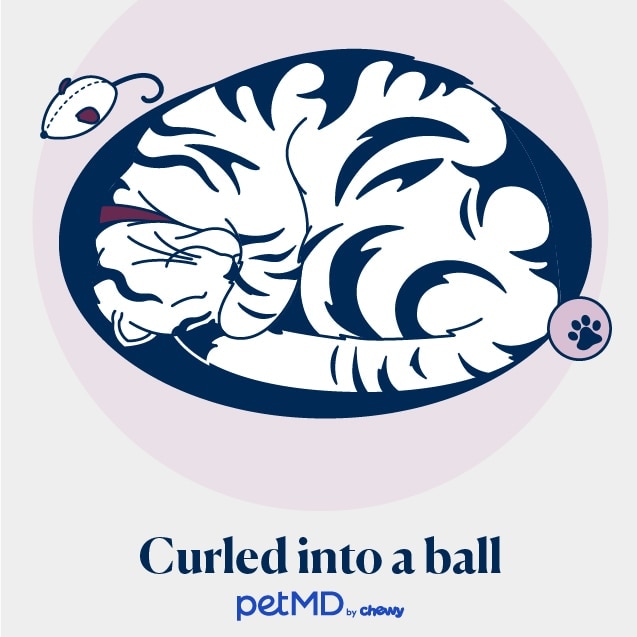
1. Curled Into a Ball
When cats sleep curled into a ball, they are usually trying to conserve body heat and protect vulnerable areas of their body.
Curling into a ball also helps protect the vital organs in the abdomen by surrounding them with stronger muscle and bone structures.
Cats that frequently sleep in this position may enjoy donut-shaped beds or round bolster beds that support their natural curling behavior.
2. On Their Back
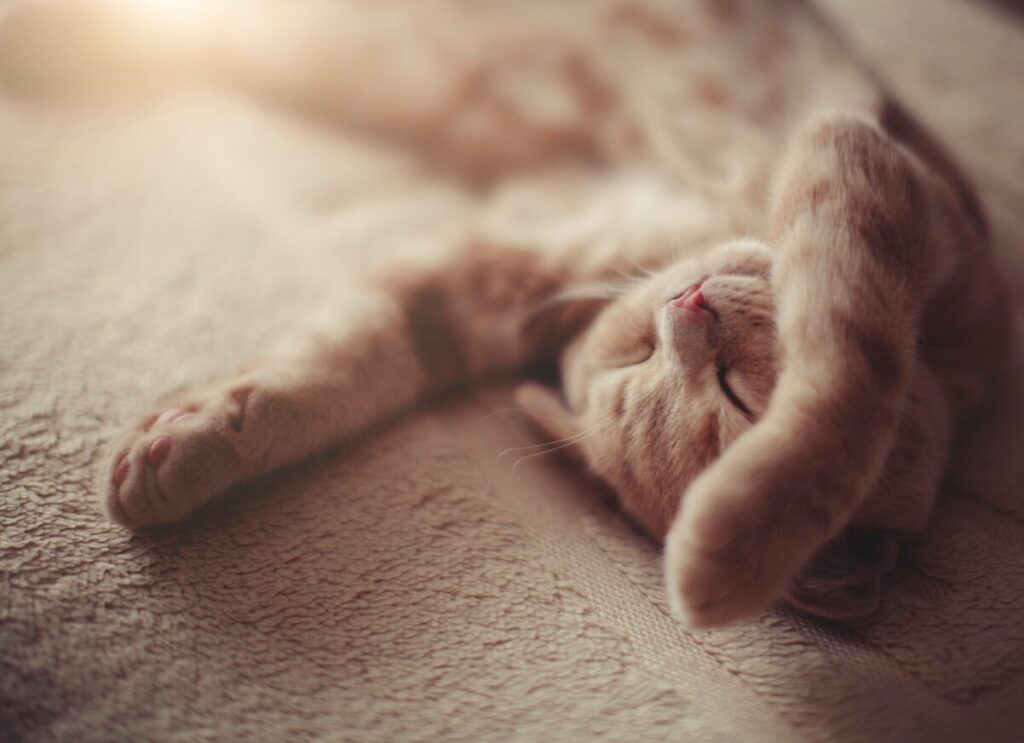
When cats sleep on their back with their belly exposed, it usually means they feel safe, comfortable, and secure in their environment.
You may see your cat resting with their front paws on their belly or stretched above their head while their abdomen remains fully exposed.
Because cats instinctively protect their vital organs, exposing the belly during sleep is often a sign of trust and confidence.
However, a relaxed sleeping position does not necessarily mean your cat wants a belly rub. Many cats will still instinctively protect this sensitive area and may respond by scratching, swatting, or biting if touched on the stomach.

3. Side Sleeping
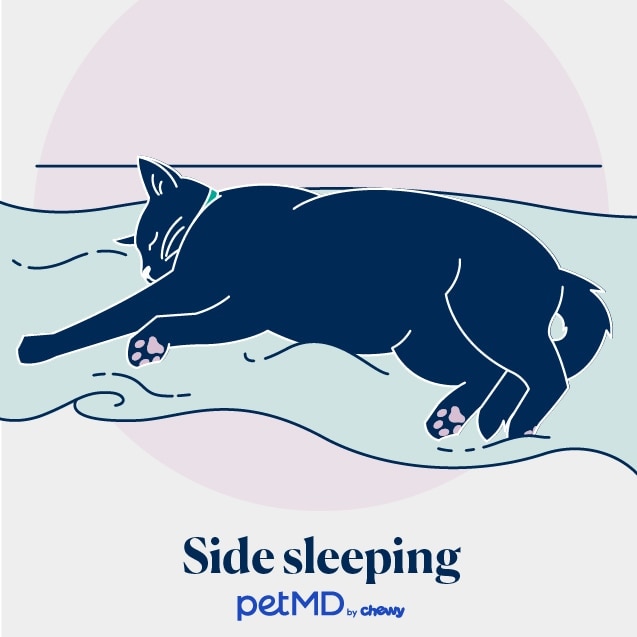
When cats sleep on their side, it usually means they feel relaxed, comfortable, and secure in their surroundings.
In this position, cats stretch out their legs and expose much of their body while they sleep.
Like sleeping on their back, side sleeping leaves a cat’s vital organs more exposed, which is often a sign of trust and confidence in their environment. However, side sleeping also allows cats to quickly get up and move if necessary.
As both predators and prey animals, cats naturally prefer positions that allow them to rest comfortably while still maintaining an easy escape route if they sense danger.
4. In a Loaf Shape
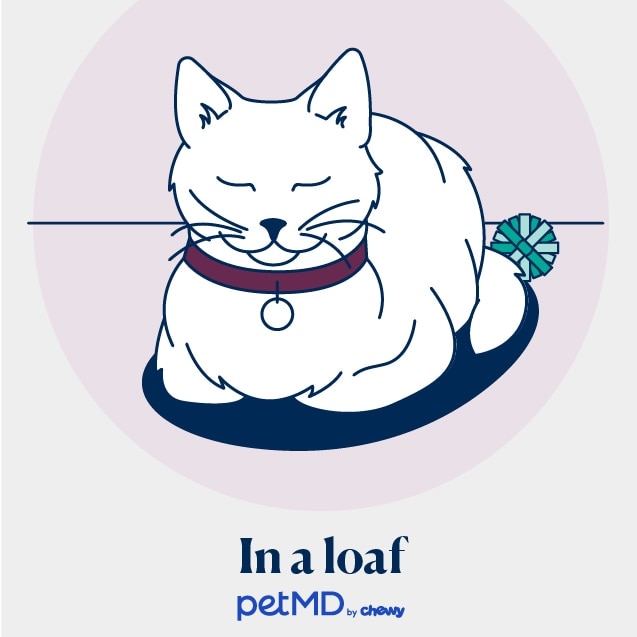
When cats sleep in a loaf position, they are usually relaxed while still remaining alert and ready to react if needed.
This cat sleeping position resembles a loaf of bread, with the front paws tucked underneath the body and the head remaining upright.
The loaf position helps cats conserve body heat and protect their vital organs while resting. Keeping their paws tucked underneath allows them to react faster and use their claws if necessary.
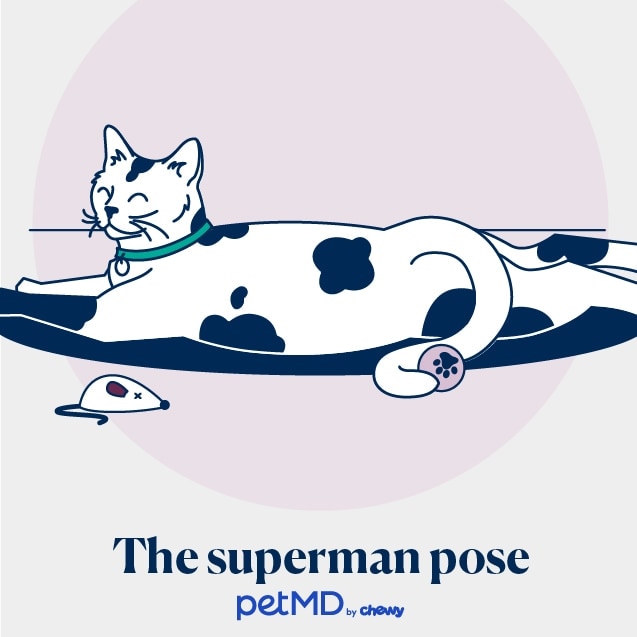
5. The Superman Pose
When cats sleep in the Superman pose, they are usually relaxed but still prepared to move quickly if needed.
In this cat sleeping position, the cat lies on their belly with their front legs stretched forward and their back legs extended behind them, resembling Superman in flight.
The Superman pose protects a cat’s vulnerable abdomen while allowing them to rest comfortably.
Cats may choose to stretch out on warm, soft surfaces to conserve body heat, such as a blanket or heated bed. During warmer weather, however, they may prefer cool surfaces like tile or hardwood floors to help regulate body temperature.
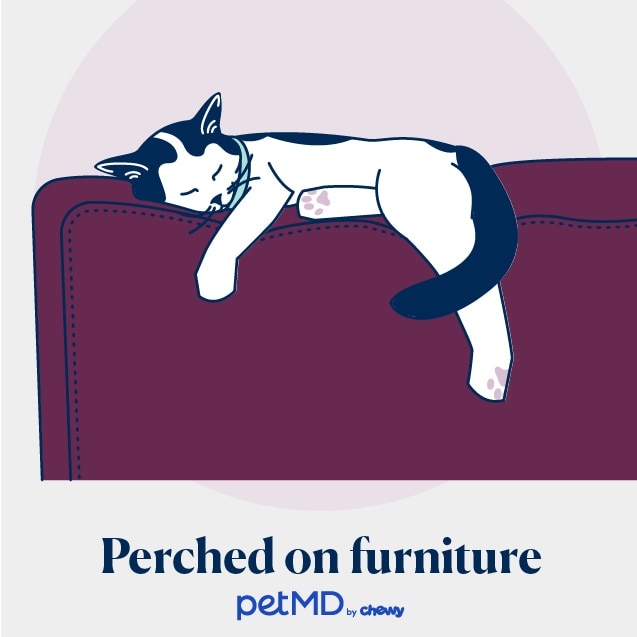
6. Perched on Furniture or Appliances
When cats sleep in elevated locations, they are often seeking safety, security, and a better view of their surroundings.
Although it may seem precarious when a cat naps on the back of a couch, the arm of a chair, or even the top of a refrigerator, elevated sleeping spots provide several advantages.
From a high vantage point, cats can rest while feeling protected from potential threats, including other pets, children, or unfamiliar visitors.
Cats are also natural predators, and elevated sleeping positions allow them to monitor their environment and keep an eye on potential “prey,” even if that prey is just a favorite toy in your home.
If your cat enjoys sleeping up high, consider providing a cat tree or elevated perch that offers a safe, designated place to rest and observe their surroundings.
7. In Strange Positions
When cats sleep in strange or awkward-looking positions, it usually reflects their natural flexibility rather than discomfort.
Cats often curl, twist, and contort their bodies into sleeping positions that may look uncomfortable to humans.
Unlike dogs and many other animals, cats have highly flexible spines with elastic discs that allow for an exceptional range of motion. Their shoulder blades are also attached primarily by muscle rather than bone, giving them even greater flexibility in their front limbs and shoulders.
As a result, many unusual cat sleeping positions that appear awkward are actually perfectly comfortable for your cat.

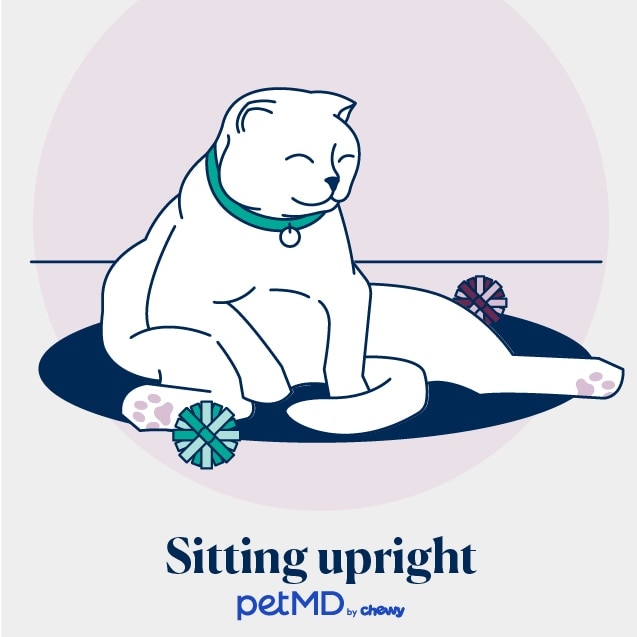
8. Sitting Upright
When cats sleep sitting upright, it often means they feel safe, comfortable, and confident in their surroundings.
Although it may look like your cat is trying to sit like a human, this sleeping position is actually a sign that they feel secure enough to expose part of their belly while resting.
Sitting upright also allows cats to quickly transition into grooming, making it easier to clean their belly and lower body between naps.
Some cats may also use this position to provide additional support for their back muscles while resting.
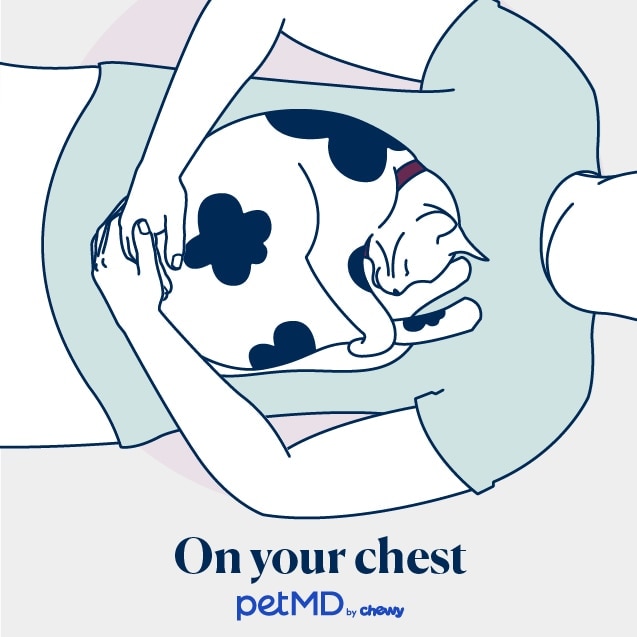
9. On Your Chest
When cats sleep on your chest, it usually reflects trust, affection, comfort, and a desire to be close to you.
Cats that are strongly bonded to their pet parents may choose to sleep on their chest because they enjoy physical closeness and companionship.
Sleeping near your face also allows your cat to hear your voice, which may provide reassurance and familiarity.
Similar to how a heartbeat can soothe an infant, some cats may find comfort in the sound of your heartbeat and the rhythmic movement of your breathing.
Your chest also provides a reliable source of warmth, making it an especially appealing sleeping spot for many cats.
10. Next to You
When cats sleep next to you, it is often a sign of trust, comfort, and a strong bond—even if they are not directly touching you.
Sleeping beside you allows your cat to rest in a vulnerable state while still feeling safe in your presence.
For many cats, choosing a spot next to their favorite person is a clear sign of affection and companionship.
Some cats prefer a small amount of personal space and may feel more secure with a slight buffer rather than sleeping directly on top of you.
In these cases, sleeping next to you is simply your cat’s way of showing affection while maintaining a little extra room for comfort.

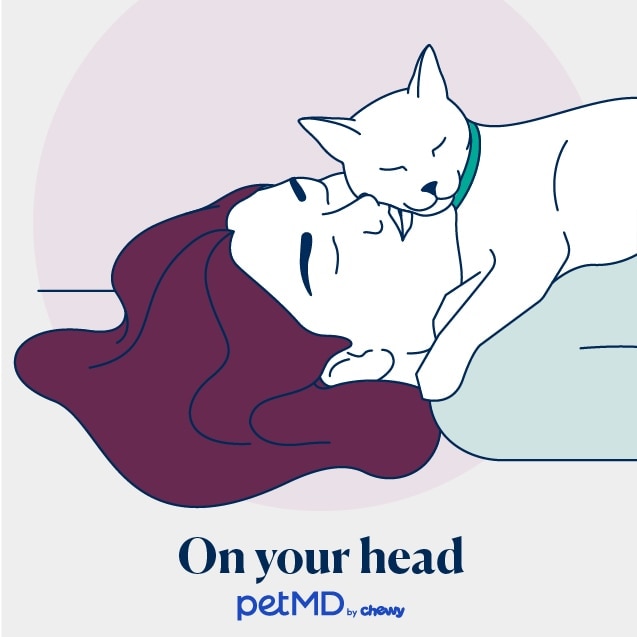
11. On Your Head
When cats sleep on or near your head, they are often seeking comfort, warmth, security, and easy access to their favorite person.
Your head is typically resting on a soft pillow, making it an appealing place for a cat to settle down and nap.
Unlike other parts of your body, your head tends to move less during sleep, which means your cat is less likely to be disturbed while resting nearby.
Many cats also adapt to their pet parent’s sleep schedule and may choose to sleep close by simply because they enjoy your company.
Sleeping near your head gives your cat convenient access to you, making it easier to wake you for food, attention, or other needs when they are ready to start the day.
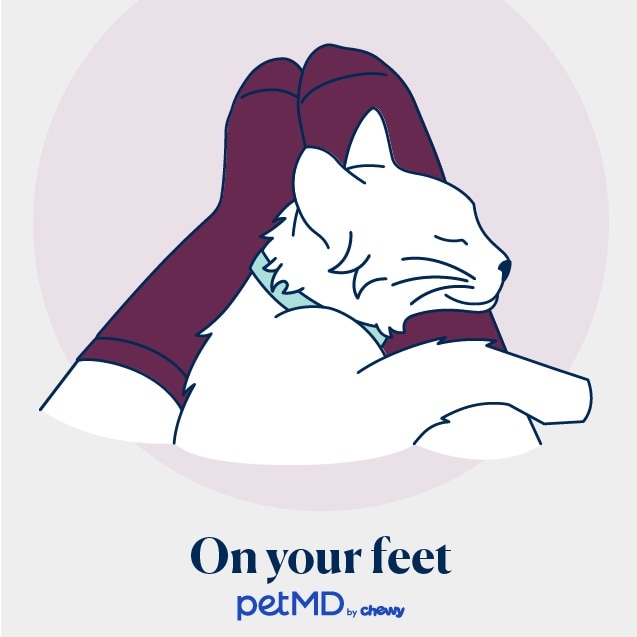
12. On Your Feet
When cats sleep on your feet, they are often seeking warmth, comfort, and closeness while still maintaining an easy escape route.
Your feet provide a convenient source of body heat, making them an attractive sleeping spot for many cats.
Sleeping near or on your feet also allows your cat to stay close to you without feeling confined or crowded.
Because the foot of a bed, couch, or chair offers a quick path away from potential disturbances, this position gives cats the reassurance of an easy escape if they suddenly feel the need to move.
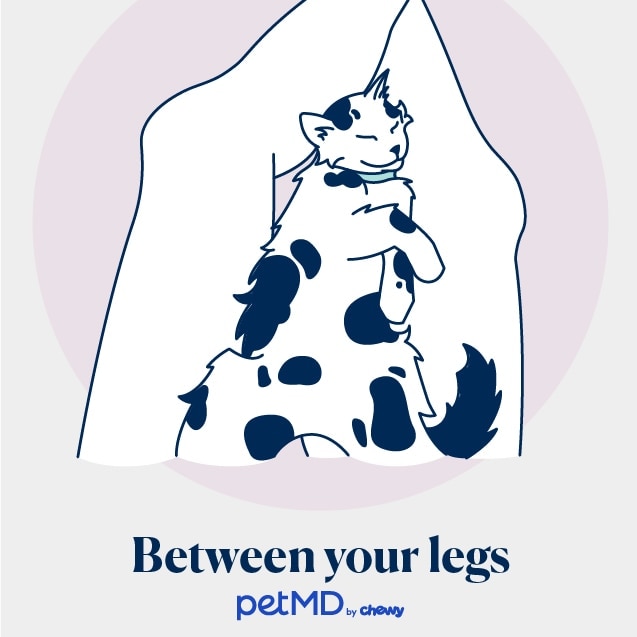
13. Between Your Legs
When cats sleep between your legs, they are usually seeking warmth, security, and close physical contact with you.
Although this sleeping position may not always be comfortable for you, it offers several benefits for your cat.
Your legs create a warm, enclosed, nest-like space that can help your cat feel protected while they rest.
Sleeping between your legs also allows your cat to stay very close to you, which may be especially appealing if they are strongly bonded to you.
At the same time, this position still provides an easy escape route if your cat decides to move or becomes startled.
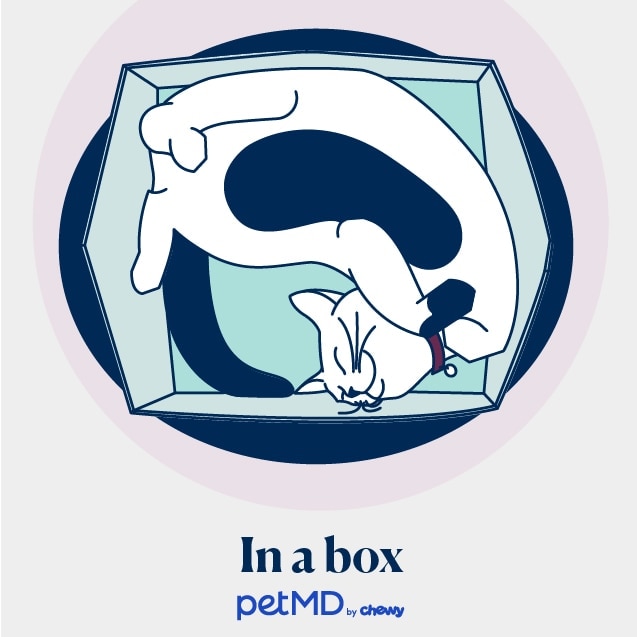
14. In a Box
When cats sleep in boxes, they are usually seeking security, warmth, and a protected place to rest.
As both predators and prey animals, cats instinctively look for enclosed spaces where they can feel hidden and protected from potential threats.
Boxes provide a cozy environment that helps retain body heat while still offering a quick escape route if needed.
When a cat squeezes into a box that appears too small, they may be seeking the same sense of comfort and security that swaddling provides for infants.
If your cat enjoys sleeping in boxes or other enclosed spaces, a covered cat bed may offer a similar sense of safety and comfort.
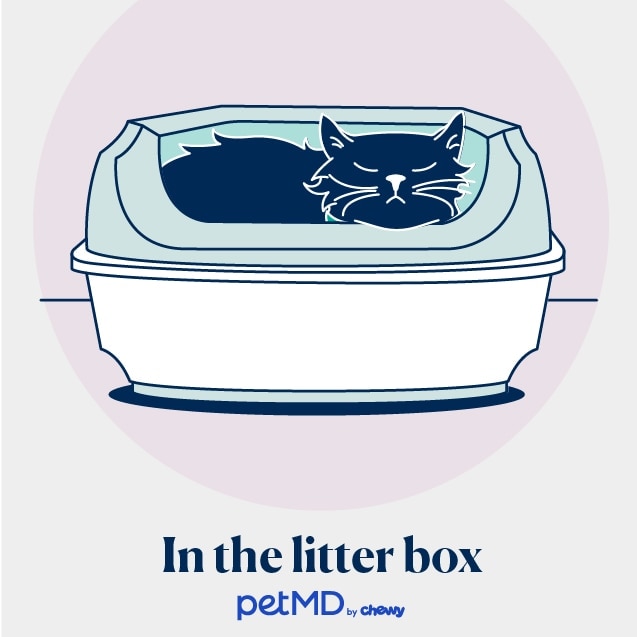
15. In the Litter Box
When cats sleep in the litter box, it can sometimes signal an underlying medical problem and should not be ignored.
Cats that suddenly begin sleeping, resting, or spending unusual amounts of time in their litter box may be experiencing urinary, digestive, or other health issues.
Because this behavior can indicate a significant change in your cat’s health, contact your veterinarian if it develops unexpectedly.
In some cases, cats may sleep in the litter box for non-medical reasons, such as a lack of safe hiding places or stressful environments like animal shelters. However, medical causes should always be ruled out before assuming the behavior is simply a harmless quirk.
16. Eyes Open or Half Open
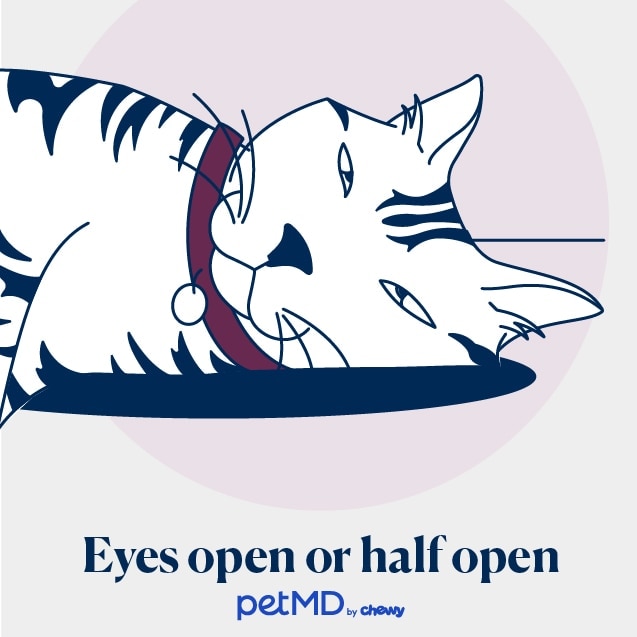
Cats can sleep with their eyes partially or even fully open, and this is often a normal behavior.
In some cases, you may even notice rapid eye movement (REM) while your cat sleeps. REM sleep is the stage associated with dreaming in humans and likely occurs in cats as well.
Cats also have a translucent third eyelid that may become visible during sleep. This membrane helps protect the eyes from irritation and prevents them from drying out while resting.
Although sleeping with partially open eyes is often normal, it is important to watch for signs of eye disease or injury.
Contact your veterinarian if you notice any of the following:
- Eye swelling
- Eye discharge
- Squinting
- Pawing at the eye
- The third eyelid remaining visible while your cat is awake
17. Paws Over Eyes
When cats sleep with their paws over their eyes, they are often trying to stay warm, block light, or create a more comfortable sleeping environment.
Although this sleeping position is undeniably cute, it also serves a practical purpose. Covering the face with a paw can help conserve warmth by insulating both the paws and facial area while sleeping.
A cat’s paws may also function like a natural sleep mask, helping block bright light and even providing some protection from dust or pollen.

18. With Other Cats
When cats sleep together, it often reflects social bonding, trust, companionship, and a desire for warmth.
Although some cats simply tolerate one another, many cats that live together develop close social relationships and choose to sleep side by side.
Sharing a sleeping space can help cats stay warm, comfortable, and secure.
Cats that are bonded may also find comfort in physical contact and the soothing sound of another cat’s purr while they rest.

19. With a Dog
When cats sleep with dogs, it is often a sign of trust, companionship, and a positive bond between the two animals.
Although cats and dogs can sometimes have a predator-prey dynamic, careful introductions and supervision can help them develop positive relationships.
These pets may share sleeping spaces for companionship, warmth, comfort, and social bonding, much like cats that sleep with other cats or their human family members.

20. Tucked In
When cats sleep tucked under blankets or covers, they are often seeking warmth, comfort, security, and protection from noise.
Many cats enjoy sleeping under covers because the enclosed space traps body heat and surrounds them with familiar scents, including those of their favorite people.
Blankets can also help reduce exposure to stressful sounds, making them appealing to cats that are sensitive to noise.
Some cats simply enjoy the feeling of being wrapped or swaddled, which may provide an added sense of safety and comfort while resting.
Although sleeping under blankets is generally safe, always be aware of where your cat is resting to avoid accidentally sitting or lying on them.
Make sure any blankets, sheets, or bedding your cat sleeps under are breathable and allow adequate airflow.

Cat Sleeping Positions FAQs
Why does my cat sleep curled into a ball?
Cats often sleep curled into a ball to conserve body heat and protect their vital organs.
Why does my cat sleep on my chest?
Cats may sleep on your chest because they feel bonded to you and enjoy your warmth, heartbeat, and scent.
Why does my cat sleep on their back?
Sleeping on their back often indicates that a cat feels safe, comfortable, and secure in their environment.
Why does my cat sleep with their eyes open?
Cats can sleep with their eyes partially open, and their third eyelid may be visible while resting. However, eye abnormalities should be evaluated by a veterinarian.


