8 Tips for Traveling With a Cat


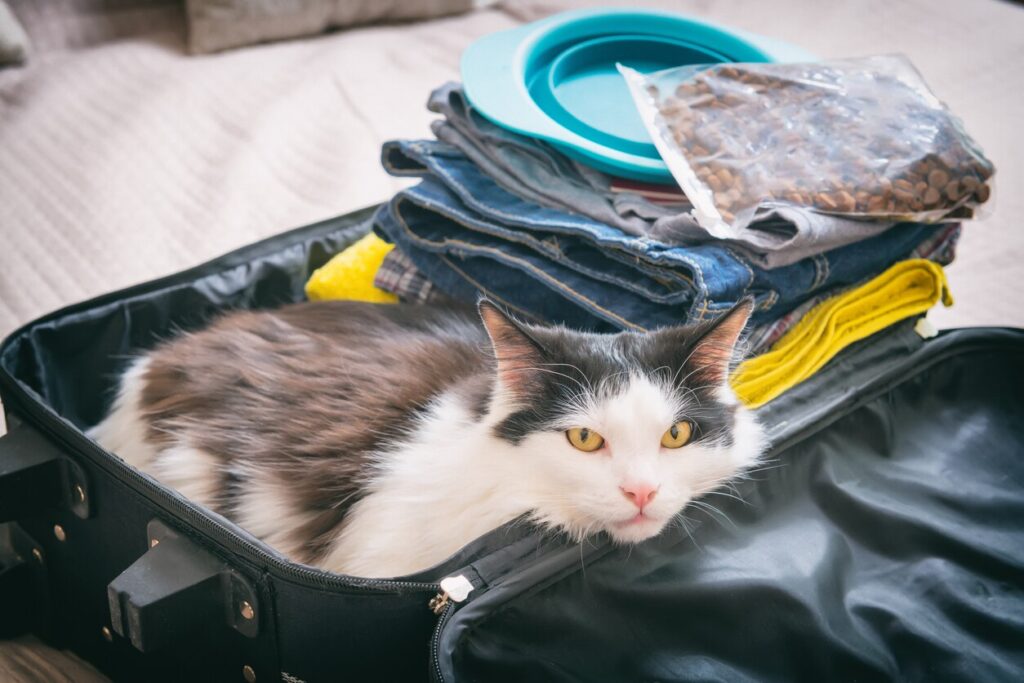
Cats are generally attached to their home environment, where they feel safe and secure. However, it might be necessary to travel with your cat at some point.
Here’s what you can do to ensure traveling with a cat is as pleasant as possible for both of you.
Key Takeaways
- Traveling with a cat requires preparation.
- Choose a secure cat carrier your kitty is comfortable with.
- Talk with your veterinarian before traveling for their tips.
- Bring familiar items, like your cat’s bed and toys, to reduce stress.
1. Make Sure You Have the Correct Cat Carrier
There are many types of cat carriers available, but an ideal carrier has a front and top opening to give you and your cat options for entry and exit.
It’s also nice to be able to remove the top of a carrier for a couple of reasons:
-
It offers a less stressful way to remove your cat from the carrier.
-
You can place a cozy blanket in the bottom of the carrier and place the carrier in a quiet spot in your home with the top off.
- Allow your cat to become comfortable with the carrier before you travel; this can make going into the carrier just another part of your cat’s normal routine.
Get a carrier large enough for your cat to stand up and turn around in. If your cat is a larger breed, such as a Maine Coon, you may need to use a carrier designed for dogs to ensure that it’s big enough.
Many cats also like having a blanket draped over the carrier to block out stress-inducing visual stimuli when traveling.
2. Secure the Carrier
If you are traveling by car, try to make sure that the carrier is level in the vehicle, as this will feel more secure to your cat. It is also a good idea to buckle the carrier in the car with a seat belt, if possible.
If your trip is going to be several hours long, it is a good idea to offer small amounts of food and water (as long as they are not prone to motion sickness). Some carriers come with small dishes inside.
3. Know the Airline Policy
If you and your cat are traveling by airplane, a soft carrier with a waterproof bottom is preferred, but more than one entry and exit option should still be available.
You will be required to remove your cat from the carrier to go through TSA security screening, so be sure to have your cat wear a harness and leash, so you can safely hold your cat during this time. Airports can be loud, scary places, and you wouldn’t want your cat to get startled and run off.
The carrier should not be larger than a typical carry-on bag—17.5 x 12 x 7.5 inches in some cases. Check with your airline’s pet policies before you travel.
4. Chat With Your Veterinarian
If you know or suspect that your cat will be anxious during travel, schedule an appointment with your veterinarian before your trip to discuss options for preventing and treating anxiety. Your veterinarian will consider your cat’s age, demeanor, and overall health when making recommendations.
If anxiety medication is prescribed, it’s a good idea to try it at home before you travel to make sure your cat tolerates it and doesn’t have any undesirable side effects.
Examples of supplements and medications used for travel anxiety include:
-
Alprazolam
Make sure to ask your veterinarian if your cat needs vaccinations, blood work, or documentation before you travel. This is especially important if you plan to travel outside of the U.S. Requirements imposed by some countries may require several months of advance planning, so do your research.
Whether traveling by car or airplane, take along proof of vaccinations and ask the airline or state/country of destination what other documentation is needed, such as a health certificate or certificate of veterinary inspection.
5. Update Your Cat’s ID
Always be sure your cat has identification in case you get separated. Having your cat microchipped and wearing a collar with an ID tag with your contact information will aid in reuniting you if you become separated.
6. Bring Cleaning Supplies
Despite your best efforts, accidents may happen when traveling with your cat. Pack some extra blankets or towels (and a trash bag) in case one gets soiled. It can also be helpful to place a disposable absorbent pad in the bottom of the carrier.
If traveling by car, bring along some paper towels and a cleaner in case you need to clean up urine, stool, or vomit. If you will be flying with your cat, unscented baby wipes or wipes designed for cats, like Vetnique Labs Cleansing and Deodorizing Wipes, will help with any cleanup needed.
7. Pack Their Own Litter Box, if Possible
When going on a road trip, it’s helpful to bring a litter box and cat litter from home. Cats are very sensitive to scents, and asking your cat to use a different type of litter may lead to accidents on the road or at your destination.
If you can, bring your cat’s litter box from home as well. Or, you can use a disposable litter box.
8. Bring Along Favorite Toys and Blankets
Just like you, your cat will appreciate having some of their favorite items from home when traveling. A favorite blanket or bed, favorite toys, and familiar food and treats will make your trip more enjoyable and less stressful for both of you.
Remember that traveling with your cat can be quite enjoyable for both of you—with the right preparation.


