Cats in Heat: How Long It Lasts and What To Do


Pekic/E+ via Getty Images
When Do Cats Go Into Heat?
A cat in heat typically experiences their first heat cycle between 5 and 9 months of age, although some kittens mature much earlier.
Some kittens may begin cycling as early as 3–4 months old, while others may not experience their first heat cycle until 18 months of age.
The timing of a cat’s first heat cycle can vary based on factors such as breed, body weight, and seasonality.
Key Takeaways
- Most cats go into heat between 5–9 months of age, though some start earlier.
- The estrus phase, when a cat is actively in heat, typically lasts 3–14 days.
- Common signs of a cat in heat include vocalizing, restlessness, and increased affection.
- Cats do not usually bleed during heat cycles.
- Spaying is the only reliable way to prevent heat cycles and pregnancy.
How Long Are Cats in Heat?
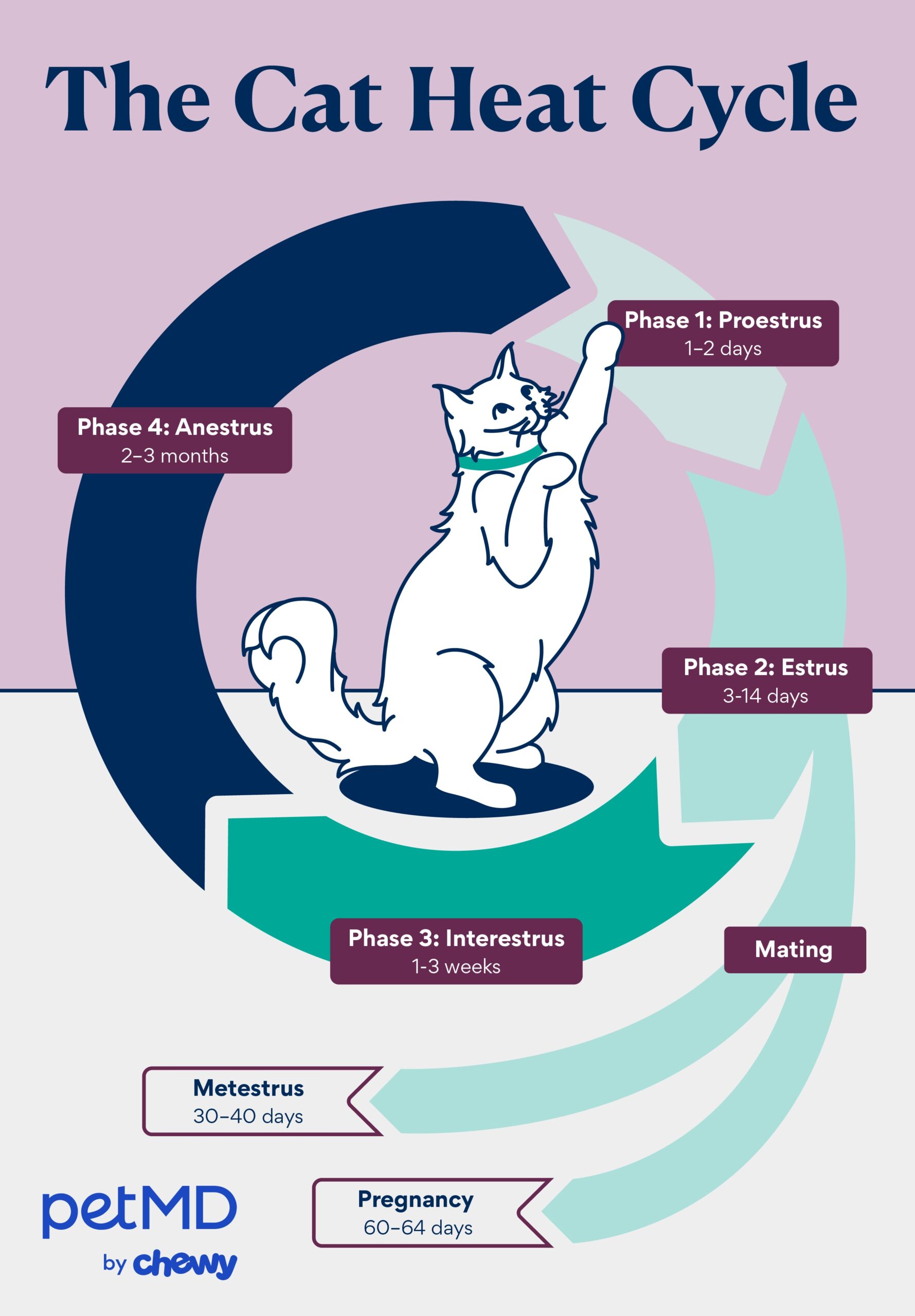
A cat in heat typically remains in the estrus phase for three to 14 days, but the entire reproductive cycle includes four distinct stages.
Stage 1: Proestrus
Proestrus is the first stage of the feline heat cycle and occurs when estrogen levels begin to rise.
This stage usually lasts one to two days and does not cause visible symptoms that pet parents can easily recognize.
Male cats may show increased interest in the female during this time, but she will not yet be receptive to mating.
Stage 2: Estrus (Heat)
Estrus is the stage most people are referring to when they say a cat is “in heat.” This phase typically lasts about one week but can range from three to 14 days.
During estrus, female cats often become more affectionate, vocal, and restless. This is also the stage when mating occurs.
Stage 3: Interestrus or Metestrus
Interestrus and metestrus are the periods between active heat cycles.
Cats are induced ovulators, meaning they release eggs only after mating.
If mating occurs and eggs are released but not fertilized, the cat enters metestrus, which lasts approximately 30–40 days. If fertilization occurs, pregnancy follows and typically lasts 60–64 days.
If a cat does not mate or ovulate, she enters interestrus for one to three weeks before beginning another heat cycle.
Stage 4: Anestrus
Anestrus is the inactive phase of the reproductive cycle when hormone activity temporarily stops.
Cats usually experience anestrus for two to three months each year between active breeding seasons.
How Often Does a Cat Go Into Heat?
Most cats go into heat repeatedly during the breeding season, with cycles occurring every few weeks if mating does not occur.
Cat heat cycles are strongly influenced by seasonal changes and daylight exposure. Cats are considered "long-day breeders," meaning heat cycles become more frequent as daylight hours increase in the spring.
Heat activity typically peaks between February and April and often continues through October or November.
Unless breeding or pregnancy occurs, heat cycles may repeat throughout the breeding season before ending during anestrus.
Signs of a Cat in Heat
The most common signs of a cat in heat are behavioral changes such as increased vocalization, affection, and restlessness.
Unlike dogs and humans, cats do not typically bleed during their heat cycle.
A cat in heat may:
- Become unusually affectionate toward people and other cats
- Vocalize excessively to attract male cats
- Have a decreased appetite
- Appear restless or unable to settle
- Urinate more frequently or outside the litter box (less common)
Because these behavioral changes can be dramatic, some pet parents worry that their cat is in pain.
Contact your veterinarian if your cat experiences sudden or unusual behavioral changes.
What To Do if Your Cat Is in Heat
If your cat is in heat, the most important step is keeping her indoors to prevent unwanted pregnancy. Female cats should not be allowed outside while they are actively cycling.
If your cat must leave the house, use a secure cat carrier or cat backpack for transportation.
Other than preventing breeding, most cats in heat do not require major lifestyle changes.
If you do not plan to spay your cat, monitor the frequency and duration of heat cycles for potential complications such as pseudopregnancy (false pregnancy) or mucometra (mucus accumulation in the uterus).
Pyometra, a serious uterine infection, is a life-threatening condition that can occur in cats of any age but is most commonly diagnosed in middle-aged queens.
Contact your veterinarian if your cat develops any of the following symptoms during or after a heat cycle:
How To Prevent Heat Cycles in Cats
The only reliable way to prevent a cat in heat is through spaying. Spaying removes the uterus and ovaries, preventing both heat cycles and pregnancy.
Unless a cat is part of a responsible breeding program, there is generally no medical reason to leave her unspayed.
In addition to preventing heat-related behaviors, spaying can reduce the risk of several serious health conditions, including:
- Pyometra
- Pseudopregnancy
- Mammary cancer
- Ovarian cancer
There are currently no known health benefits to allowing a cat to experience a heat cycle before being spayed.
Veterinarians typically recommend spaying kittens around 5–6 months of age to prevent heat cycles from occurring in the first place.
Cats in Heat FAQs
Do cats bleed when in heat?
No, cats do not normally bleed when in heat.
Cats should not have bloody discharge during a heat cycle or pregnancy, although a small amount of clear vaginal discharge can occasionally occur during proestrus. Any vaginal bleeding should be treated as an emergency and evaluated by a veterinarian immediately.
Can you spay a cat in heat?
Yes, a cat can be spayed while she is in heat.
Once a cat begins cycling, delaying the procedure until anestrus may increase the risk of unwanted pregnancy and other reproductive complications. Your veterinarian can discuss the best timing for surgery.
Do male cats go into heat?
No, male cats do not go into heat.
Because male cats do not have ovaries, they do not experience heat cycles. However, intact male cats can breed with females at any time.
How many days is a cat in heat?
The heat phase of the feline reproductive cycle usually lasts three to 14 days. Most cats remain in estrus for about one week, although the duration can vary between individuals.
How do I know if my cat is in heat?
Common signs of a cat in heat include excessive vocalization, increased affection, restlessness, and attention-seeking behavior.
If you suspect your cat is in heat, contact your veterinarian to confirm the diagnosis and discuss management options.
Can indoor cats go into heat?
Yes. Indoor cats experience heat cycles just like outdoor cats if they have not been spayed.
How can I calm a cat in heat?
Keeping your cat indoors, providing enrichment, maintaining a consistent routine, and offering extra attention may help reduce stress during a heat cycle. Spaying is the only permanent solution.


