Why Are Cats Scared of Vacuums?


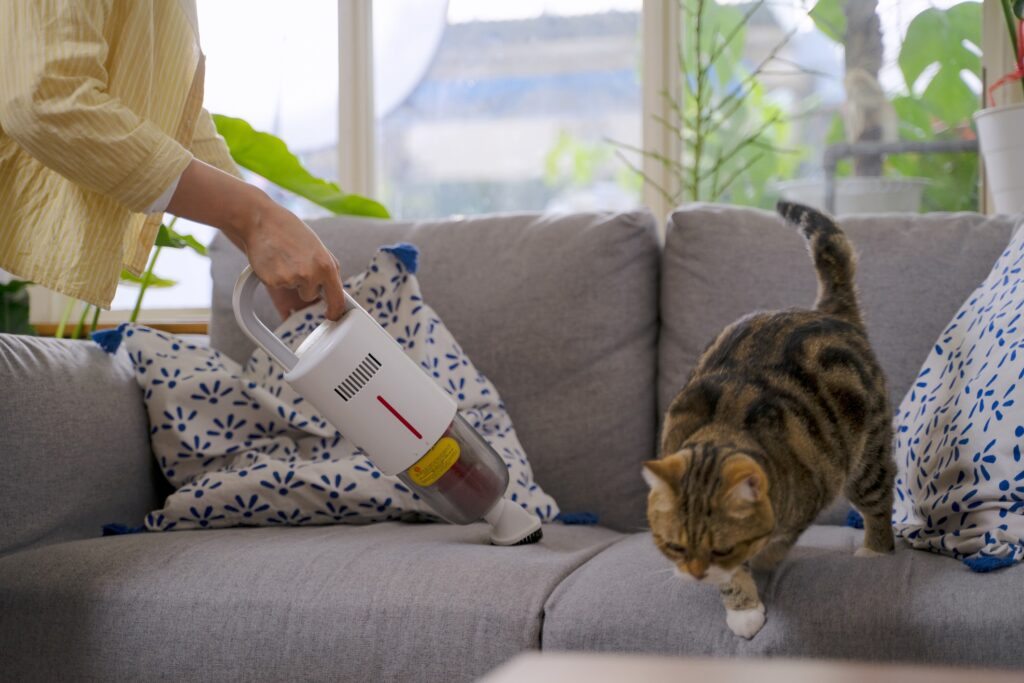
eyesfoto/E+ via Getty Images
The vacuum cleaner can be scary to cats for several reasons, causing them to show signs of fear and anxiety, such as pinning their ears back, vocalizing, and holding their body low to the ground.
Here’s why cats often find vacuums scary, and how you can help keep cleaning day stress-free for your kitty.
Key Takeaways
- Cats are often scared of vacuums because they are loud, move unpredictably, and produce unfamiliar scents.
- Gradual desensitization can help reduce fear over time.
- Offer your cat high-value rewards and give them a safe place to retreat to, if needed.
- Talk to your vet if vacuum-related fear leads to aggression, overgrooming, litter box issues, or other behavior changes.
Why Are Cats Scared of the Vacuum Cleaner?
Cats are afraid of vacuum cleaners for three major reasons: vacuums are loud, they move erratically, and they smell strange.
Sound
The vacuum is very loud for cats. It’s also an unfamiliar sound that will usually startle them, especially during a cozy nap.
Cats have extremely sensitive hearing, which causes the fear and anxiety response you see as they retreat from the room.
Movement
The movement and vibration of the vacuum cleaner can also make a cat afraid. A vacuum cleaner often has jerky movements, both fast and slow, which can lead a cat to think it’s a threat to them.
The vacuum can be a big, tall, scary creature entering their happy place attached to their favorite person. If you have a robot vacuum, it can be perceived as a round, self-moving animal lookalike roaming around the home like a predator.
Scent
Another scary factor is the smell, which can be a sensory assault to their little bodies.
Cats have a better sense of smell than people, and the smell of electrical components from the vacuum, scented floor cleaners used while vacuuming, dust kicked into the air, or even the disruption of their scent markers in the home can cause a cat to become frightened.
How To Help a Cat Who’s Scared of Vacuums
If your cat is scared of the vacuum, there are steps you can try at home to reduce their stress and anxiety around the vacuum cleaner. Here are some tips.
Begin Exposure Therapy
Desensitizing your cat to the vacuum cleaner's presence, sound, movement, and smell requires you to start small:
-
Leave the vacuum out in a common area of the home where your cat spends time. The vacuum doesn’t have to be on initially—just let it sit in the room so your cat becomes used to its presence.
-
Move the vacuum next to your cat's bed or their litter box so they grow more used to it in their space.
-
After a few days, weeks, or however long it takes your cat to be comfortable with the vacuum nearby, turn it on for short periods. Start with the cat and vacuum on opposite sides of the room—or even in separate rooms—and slowly move the vacuum toward your cat in a nonthreatening way.
-
Do this in short sessions and work slowly, at a rate your cat is comfortable with. If they show signs of fear, turn the vacuum off.
Provide a Quiet Refuge
As you work through exposure therapy, make sure your cat has a safe place to retreat when they get scared of the vacuum. It's possible your cat could get used to the vacuum and not need this safe spot, but others might need their quiet refuge anytime the scary vacuum rolls around.
Make sure this cozy spot contains the essentials, like a litter box, fresh water, and a comfy bed or blanket.
Offer High-Value Rewards
Offer your cat a high-value reward they receive only when the vacuum cleaner is on, such as a specific cat treat or special playtime with their favorite toy.
A calming chew such as Nutramax Solliquin Supplements, a lickable treat like a Churu, or interactive playtime with a wand teaser toy or laser pointer are all ways you can help your cat associate positive feelings with vacuuming.
Catnip toys or treats are another great way to reward your cat for sticking around when the vacuum cleaner is on or nearby. Remember, catnip might make them a bit hyper, so don’t be surprised if they go chasing after the vacuum and playing once they have overcome their fear.
Take Things at Your Cat’s Pace
It takes time for a cat who’s scared of the vacuum to acclimate. Don’t rush the process, and go at your cat’s pace so as not to induce too much fear or anxiety at one time.
Going too quickly can cause unnecessary stress and even push your cat to exhibit unwanted behaviors such as aggression or inappropriate urination.
When To Talk to a Veterinarian
If your cat develops unwanted behaviors, take them to the vet to rule out any underlying medical issues that may be causing their fear and anxiety. Common behaviors that warrant a vet visit include:
-
Inappropriate urination or defecation
If the vacuum triggers aggression toward people, other pets, or even the vacuum itself, your vet can make sure the aggression is not a pain response.
In the meantime, you might have to hide the vacuum, break out the broom and dustpan, and only reintroduce the vacuum cleaner when your veterinarian deems your cat healthy.


