Why Do Cats Rub Against You?


Adobe_stock/romablack
Cats have a reputation as fickle creatures who don’t immediately grant their trust to people. It can sometimes require months of relationship-building between kitty and pet parent to form a mutually faithful bond.
Once this bond is established, you’ll still need to understand cat body language to know what your kitty is telling you. Cats often interact using covert signals, including blinking, tail movements, and rubbing against other animals or humans.
Here’s what this interesting cat behavior really means.
Key Takeaways
- Rubbing is a common cat behavior typically used to signal affection, act as a greeting, or mark their territory.
- Cats use scent glands on their head and tail to leave pheromones on people, other animals, and objects.
- When cats rub against new people or animals, they may be gathering information rather than asking for attention.
- Rubbing can also be a way for cats to signal that they want or need something, such as food, attention, or playtime.
What Does It Mean When a Cat Rubs Against You?
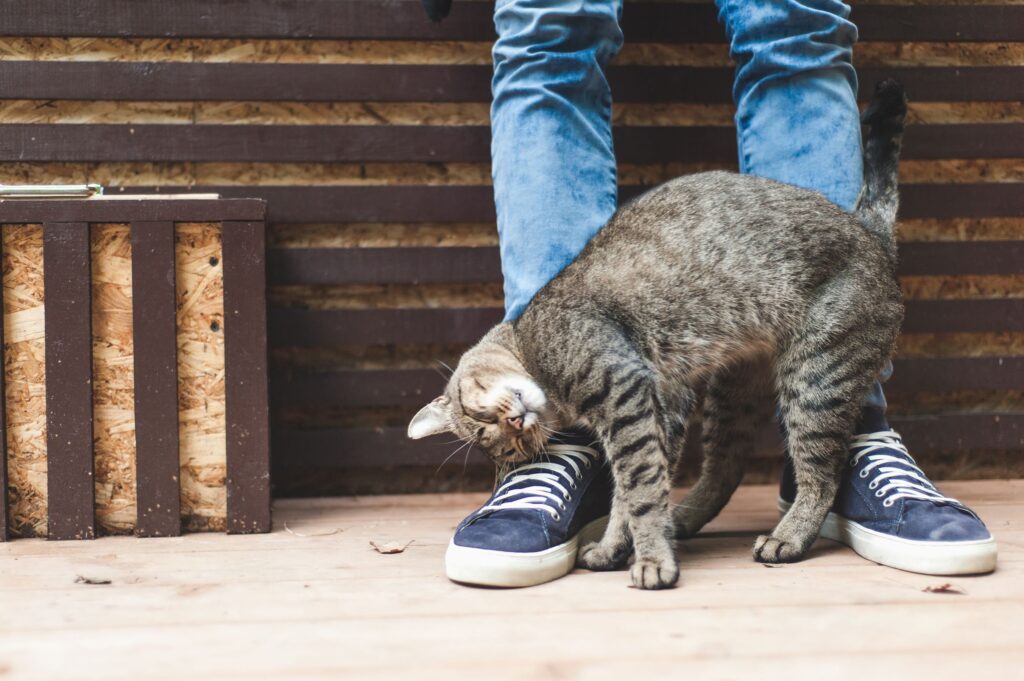
Rubbing and headbutting (also called bunting) in the cat community are usually signs of marking territory, acceptance into the group, and/or greetings and affection. Rubbing against something can also be a way to gain information.
If your cat decides that they want to rub against you, it should typically be considered a badge of honor. However, make sure that the rubbing doesn’t become compulsive and isn’t linked with abnormal behavior or symptoms, as this can sometimes be related to medical issues.
Your Cat Is Greeting You
Most of the time, a cat rubbing their head or body against your leg is a very good sign. This is often a sign of greeting, meaning your cat is happy to see you. You may notice this more when you've been gone for a long time.
They’re Claiming You Through Scent
Cats are territorial creatures and will claim their pet parents as part of their territory. So not only is rubbing against you a sign of a happy “hello” or “welcome home,” but cats also want to make sure that they have marked you with their scent.
Cats have scent glands on their cheeks, chin, top of their head, and base of their tail. These scent glands contain pheromones. When cats rub their face or tail against humans, other animals, or even household items, they are leaving these pheromones behind.
Cats intermittently mark their territory in this way because these scents do not last forever and need to be “reapplied.”
Once you come home from being out in the world, your cat’s personal scent has faded. So, they may want to mark you again by rubbing, headbutting, licking, or even gently biting you.
This allows your cat to reclaim you, and it’s thought that these behaviors release endorphins, which gives your cat a sense of calm, happiness, and safety.
Natural and human-made feline facial pheromones also help cats feel calm in their surroundings.
They’re Gathering Information
Sometimes cats will rub their head against new humans in their environment and/or other animals when they are trying to collect information about this new interloper.
In this case, it doesn’t mean that the cat wants the human or other animal to touch or pet them. So it’s important to not mistake this cue as an invitation to start petting a cat you just met.
They’re Creating a Group Scent
Feral and stray cats living in a colony often rub against each other to leave their pheromones on the group. This creates a communal scent, which helps identify intruders and promotes peace within the group.
Cats can associate other cat pheromone smells with mating, aggression, and health status, which helps them navigate the hierarchy of their colony.
They’re Telling You They Need Something
We often wish our cats could talk to us to tell us what they need. Cats do communicate in their own way; they will often use rubbing, headbutting, and gentle biting as a sign of need.
If your cat is rubbing against the cabinet that contains their food or treats, it’s likely that they’re alerting you that they’re hungry.
Sometimes cats will aggressively rub against us to signal that something is wrong. This could be illness, or perhaps it’s a gentle reminder to clean out their litter box or that they want to play with you.
That’s why it’s important to monitor and learn your cat’s behavior so you can recognize changes and understand when they need something from you.
Should I Worry If My Cat Is Rubbing Against Things All the Time?
If your cat suddenly begins aggressively rubbing against rugs, other objects, or even you, it’s a good idea to talk to your vet. Medical issues that can cause excessive rubbing include:
-
Intracranial disease (tumors, infectious, or inflammatory causes)
-
Feline hypersensitivity disorder
Be on the lookout for additional symptoms like:
-
Moderate to severe scratching or overgrooming
-
Hair loss
-
Eye flicking
-
Confusion
If you notice your cat is rubbing excessively, or you have any concerns about their behavior or health, schedule a visit with your veterinarian for evaluation and possible testing.


