Lipoma in Dogs: Symptoms, Treatment, and Removal


Kerkez/iStock/Getty Images Plus via Getty Images
Lipomas in dogs are common, non-cancerous lumps of fat that develop underneath the skin. Simple lipomas usually grow slowly and don’t require treatment, but surgery may be recommended if their size or location affects a dog’s mobility, breathing, or comfort.
Any new lump on your dog should be examined by a veterinarian for an accurate diagnosis.
Key Takeaways
- Lipomas are common, non-cancerous fat lumps in dogs that typically grow slowly and don't require treatment unless they affect mobility or comfort.
- A veterinarian may use a fine needle aspirate or biopsy to diagnose a lipoma and rule out more serious conditions.
- Surgery may be recommended for large or problematic lipomas, while infiltrative lipomas can require additional treatment.
What Is a Lipoma in Dogs?
A lipoma in dogs is a non-cancerous lump of fat cells that develops underneath the skin. Lipomas typically grow slowly and can develop virtually anywhere fat is present.
The most common locations for lipomas are the chest, flank, limbs, abdomen, and back. They typically feel soft to the touch and are freely movable underneath the skin.
In contrast, a less common form called an infiltrative lipoma may feel firmer and be less easily moved.
Lipomas are generally not medical emergencies. However, prompt veterinary attention may be needed if a lipoma:
- Grows large enough to interfere with mobility or breathing
- Grows quickly
- Causes significant discomfort
- Begins leaking blood or pus
Anytime you notice a new lump on your dog, schedule a veterinary appointment at your earliest convenience so a veterinarian can accurately diagnose the lump and rule out other serious conditions, such as cancer or infection.
What Are the Symptoms of a Lipoma in Dogs?
A lipoma in dogs typically appears as a slow-growing, soft, freely movable lump underneath the skin. Lipomas generally do not cause pain or discomfort, so the lump itself is usually the main symptom.
Signs of a lipoma in dogs may include:
- A slow-growing lump underneath the skin
- A soft, freely movable lump, most commonly on the torso or limbs
- A firm, less movable lump in the case of an infiltrative lipoma
If a lipoma grows very large, a dog may have trouble walking or breathing, depending on the location of the lump.
What Causes Lipomas in Dogs?
The exact cause of lipomas in dogs is unknown. However, several factors are suspected to contribute to their development, including:
- Older age: While any dog can develop lipomas, they are significantly more common in dogs who are at least 7 years old.
- Obesity: Dogs who are overweight or obese tend to have higher rates of lipomas compared with dogs of optimal weight.
- Genetics: Some breeds, including Labrador Retrievers and Doberman Pinschers, commonly develop lipomas.
- Sex: Female dogs are more likely to develop lipomas than male dogs.
- Reproductive status: Spayed and neutered dogs are more commonly affected by lipomas compared with dogs who have not had those procedures.
- Trauma: Sometimes dogs develop lipomas at the affected site after physical injuries.
How Is a Lipoma in Dogs Diagnosed?
Veterinarians diagnose a lipoma in dogs with a thorough physical exam and may use a fine needle aspirate (FNA) or biopsy to accurately diagnose the lump.
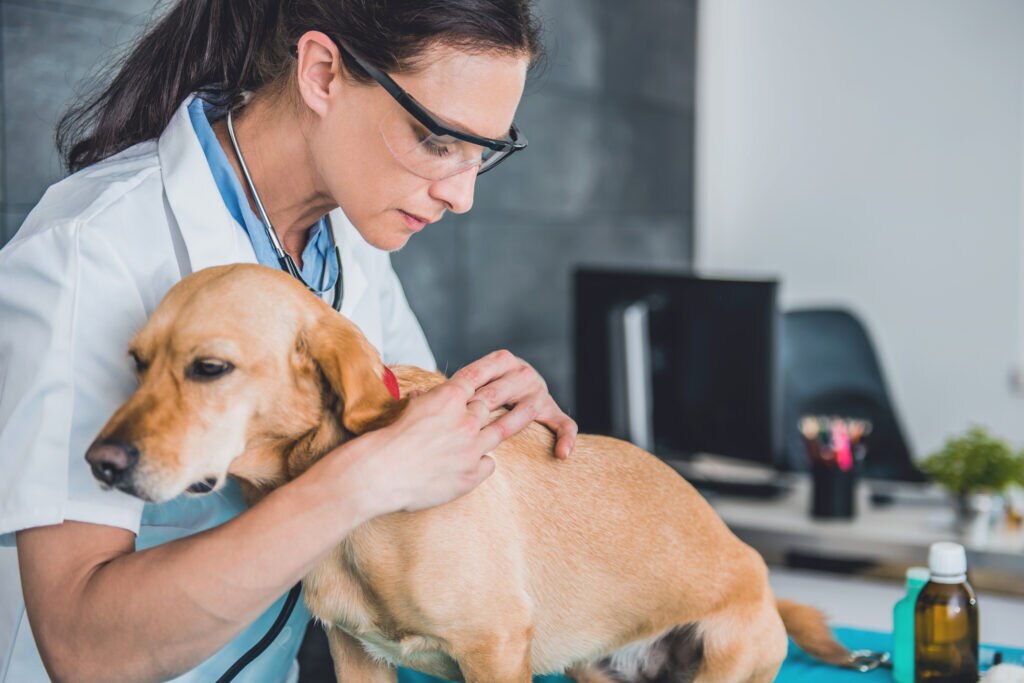
The veterinarian will start with a thorough physical exam, paying special attention to all areas of the dog's skin. They will manually feel along the dog's torso and limbs to detect any lumps and bumps.
If a lump is found, additional testing may include:
- Fine needle aspirate (FNA): A veterinarian uses a small needle to gently poke the lump and collect a sample of cells. The sample is added to a glass slide and stained with dye to highlight the cells when viewed under a microscope.
- Biopsy: A small piece of the lump is surgically removed and submitted to a pathologist for an accurate diagnosis. This procedure requires anesthesia.
Once a diagnosis is made, treatment options can be discussed with your veterinarian.
How Are Lipomas in Dogs Treated?
Simple lipomas in dogs generally do not require treatment. However, surgery may be recommended if a lipoma is in a location that affects a dog's ability to walk.
Treatment for Simple Lipomas
Surgical removal is generally curative for simple lipomas, and they don't usually recur. However, additional lipomas can develop in new locations throughout the body.
Treatment for Infiltrative Lipomas
Infiltrative lipomas generally require surgery and may recur. These lipomas are more difficult to remove completely because they infiltrate surrounding tissue.
Additional treatments, such as radiation therapy, may be required for these more aggressive lumps.
Recovery and Management of a Lipoma in Dogs
If surgery is recommended to remove a lipoma in dogs, recovery time is generally seven to 10 days.
Recovery After Lipoma Surgery
A recovery cone is usually needed to prevent your dog from chewing the surgical area while it heals.
Monitoring Lipomas Without Surgery
Dogs who do not undergo surgery should be monitored for changes in the size or appearance of the lipoma.
Rapid growth or leaking blood or pus may warrant prompt veterinary attention.
How To Prevent Lipomas in Dogs
Because the exact cause of lipomas in dogs is unknown, they're difficult to prevent. However, maintaining a healthy weight and regular veterinary wellness care may help address the risk factors and monitoring needs already identified in this article.
- Maintain a healthy weight. Overweight dogs have an increased likelihood of developing lipomas. Feeding a high-quality diet in appropriate meal portions can help keep your dog in the optimal weight range.
- Encourage regular exercise. Regular exercise can also help your dog maintain a healthy weight.
- Keep up with veterinary wellness care. Regular veterinary visits can help detect skin lumps early so they can be accurately diagnosed and monitored.
Lipoma in Dogs FAQs
Should lipomas in dogs be removed?
Not always. Lipomas grow slowly and are non-cancerous, so they don't always need to be removed.
However, if a lipoma is in an area of the body that makes walking difficult or interferes with normal breathing, it should be removed. Always follow your veterinarian's recommendation when it comes to lipoma removal.
How do you get rid of lipomas on dogs at home?
There are no home remedies to get rid of lipomas.
If you notice a lump on your dog, bring them to the veterinarian for an assessment and professional guidance.
How can you tell if a dog's lipoma is cancerous?
The only way to tell whether a lump on your dog is cancerous is to see a veterinarian for testing.
Your veterinarian can take a sample of the lump and provide an accurate diagnosis.
Can lipomas shrink on their own dog?
Lipomas don't generally shrink but continue to grow slowly over time.


