Large Hookbill Care Sheet


Species Overview
Renowned for their talking ability and boisterous personalities, hookbills are members of the parrot family. This care sheet outlines basic care needs for a variety of large hookbill species, including:
-
African grey parrots
-
Amazon parrots
-
Small cockatoos
Hookbills are named for their large, strong, and hooklike beaks. Hookbills vary greatly in their temperament and appearance depending on their species:
-
African grey parrots are known for their large vocabularies! African greys can learn hundreds of words and mimic human sounds. At around 5 to 7 years old, African greys reach sexual maturity and often bond closely with owners.
-
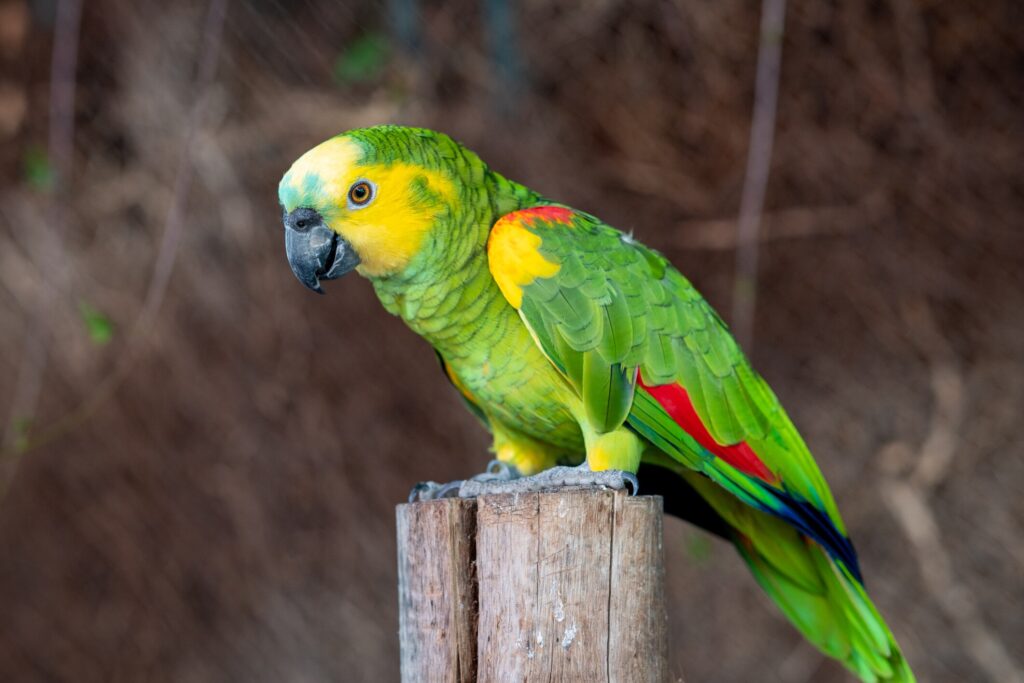
Amazon parrots usually have green and yellow feathers, with hints of other colors depending on the species. Amazons are long-lived birds with bold personalities, and they enjoy talking and singing.
-
Cockatoos are a group of large hookbill parrots made up of several different subspecies, including smaller Goffin’s and citron- and sulfur-crested cockatoos. They are known to be cuddly, affectionate, and socially needy pets, requiring a great deal of daily attention and time out of their enclosures. Depending on species, they are typically white or salmon-colored, and they all have a white powdery coating on their feathers, called powder down, that protects and waterproofs the feathers.
| Difficulty of Care | Advanced |
| Average Lifespan | Up to 60+ years depending on species |
| Average Adult Size | 9–18 inches from head to end of tail, depending on species |
| Diet | Omnivorous |
| Minimum Habitat Size | 36” L x 32” W x 48” H |
Handling
Hookbills may bite or nip at people on occasion, especially when feeling excited, confused, or threatened. With their large, sharp beaks, hookbills can inflict significant injury if they bite, so children should never be left alone with a large hookbill.
Don’t yell at a bird if they bite; by giving attention to the behavior, you’ll just will encourage it and increase the chance of it happening again. Instead of reacting to the bite, you should put the bird down (in a pet-safe area) and walk away. This acts as a “time-out” for the bird that teaches them that biting does not get attention.
Always pay attention to a bird’s body language before approaching or handling them. If the bird has pinned eyes, flared tail feathers, or is lunging, they may be warning you that they are upset, stressed, or afraid and about to bite.
Supply Checklist
To keep a large hookbill happy and healthy, have these basic supplies on hand:
-
Appropriately sized habitat (at least 36” L x 32” W x 48” H)
-
High-quality large hookbill food
-
Cuttlebone/millet holder
-
Treats
-
Habitat paper or other paper litter
-
Food and water dishes
-
Variety of wooden chew toys
-
Variety of perches
-
Spray bottle mister
-
Grooming supplies
-
Play gym
Habitat
Choosing the Right Enclosure
Hookbills need a spacious environment with sturdy, metal bars. A single large hookbill should be housed in a habitat that’s at least 36” L x 24” W x 48” H.
The spaces between the cage’s bars should be ¾–1 inch apart or smaller to prevent the bird from escaping or getting their head or limbs stuck. Always provide the largest habitat possible.
Parrots are well-known for escape attempts, so ensure that any habitat uses locks securely. Hookbills can use their large beaks and strong tongues to open unlocked habitat doors.
Most commercially sold habitats are made of stainless steel or powder-coated metal, which are both safe for birds. Homemade habitats or any habitat made with wood or galvanized wire are not recommended. These materials can expose birds to potentially toxic chemicals that can cause serious medical problems if ingested.
Setting Up Your Habitat
Hookbills are comfortable in average household temperatures between 65 F and 80 F. Be cautious of extreme temperature changes.
Hookbills are social creatures that love feeling like part of the family! Pet parents should place their hookbill’s habitat in an area of the home that gets a lot of foot traffic, to keep the bird stimulated and entertained. Birds should not, however, be housed in kitchens, as fumes and smoke can be toxic to birds if inhaled.
Hookbills need daily time outside their enclosed habitat to stay happy and healthy. Birds must be supervised whenever they’re outside of their habitat. Be sure to close any open windows and doors, cover mirrors, and turn off ceiling fans.
Keep habitats off the floor and in a draft-free, well-lit area that’s not near an air conditioner or accessible to other pets, including cats and dogs.
Make sure that no habitat parts or toys are made with lead, zinc, lead-based paints, galvanized metal, or other potentially toxic materials. All these materials can cause serious medical issues if ingested.
Habitat Mates
Large hookbills that are housed alone must have regular time to socialize with their owners and exercise outside of their cage. Without enough interaction, hookbills will become unhappy and engage in harmful behaviors like feather plucking.
Hookbills can also be kept in a bonded pair if the habitat is large enough (60” L x 42” W x 48’ H).
Take precautions before housing more than one hookbill in the same habitat. Males and females housed together will likely breed and lay eggs.
Birds must be introduced to each other slowly, in neutral territory, and under close supervision to ensure they are compatible. If two birds fight, they need to be separated. Never keep different species of animals in the same habitat.
Bedding
The bottom of a hookbill’s habitat should have a removable metal grate so droppings can fall below the bird’s feet. Line the tray at the base of the habitat with habitat paper or other paper-based bedding. This will help keep the environment clean and minimize dust.
Lighting
Birds need exposure to ultraviolet (UV) light to produce vitamin D in their skin so they can absorb dietary calcium. Glass windows filter out UV light, so placing their habitat next to an indoor window is not enough.
Instead, birds can get natural UV exposure by spending time outside in an escape-proof cage each day. Birds should never be left unattended while outside and should not be placed in direct sunlight.
To supplement UV exposure, you can shine a full-spectrum UV light designed for birds on your hookbill’s habitat for 10–12 hours each day. UV lights should be about 12–18 inches from where the bird perches. Replace lights every 6 months because their potency wanes over time.
Decor and Accessories
Perches
A large hookbill’s habitat should be furnished with perches of assorted sizes, heights, textures, and materials so that the birds can exercise their feet and prevent pressure sores from developing.
Perches for large hookbills should be around ¾ to 2 ½-inches in diameter, depending on the size and species of the bird. If a perch’s diameter is too wide, the bird will not be able to grip it properly. This can lead to falls and other serious injuries.
Concrete, wood, braided rope, and natural branches all make suitable materials for perches. Sandpaper perches and sanded perch covers are not recommended because they can cause painful abrasions on the underside of a bird’s feet. Gravel-coated perches should also be avoided because they are abrasive to birds’ feet, and birds can pick off the gravel and ingest it.
Do not place perches above the bird’s water or food bowl. If you do, waste droppings will land in or near the bowls.
Food and Water Dishes
Dry food, fresh food, and water should all be offered in separate dishes. If more than one hookbill is kept in the same habitat, then each bird should have their own feeding station to discourage competition.
Dishes should be washed and rinsed thoroughly every day to prevent bacterial growth.
Toys
Hookbills are known for their intelligence. To keep birds mentally and physically stimulated, pet parents should provide their hookbill with an assortment of toys for exercise and entertainment.
Without adequate stimulation, bored hookbills can develop harmful habits, like screaming and feather-plucking.
Safe toys are made of paper, cardboard, wood, or plastic that’s too hard for parrots to chew.
Foraging toys are a necessity, as they will help satisfy a hookbill’s natural urge to gnaw, forage, and chew.
As hookbills, particularly African greys, are known to be stressed by changes in their habitat, new toys should be introduced one at a time. Rotate toys regularly to prevent boredom.
Ensure that toys are securely attached to the inside of the habitat. Birds can unscrew the C-clamps that are commonly used to hang toys if they aren’t secured properly, which can lead to injury.
Cuttlebones
Cuttlebones are an excellent way to supplement calcium and other trace minerals in a bird’s diet. Calcium is a vital nutrient that helps keep birds’ bones, beaks, nails, and feathers strong and healthy.
A cuttlebone holder can help keep a bird’s cuttlebone in place and prevent cuttlebone debris from falling outside the cage.
Cleaning and Maintenance
Pet parents should spot-clean their hookbill’s habitat daily, removing any soiled material and discarded food. Water and food bowls must be washed daily. Substrate, bedding, and habitat liners should be replaced at least once a week (or more often if more than one hookbill lives in the same habitat). The bars of a parrot’s habitat should be checked regularly for chipped paint and rust, which can cause serious health problems if ingested.
Pet parents should only use cleaning agents formulated for pets when cleaning their hookbill’s cage, as birds’ respiratory systems are sensitive to aerosolized fumes.
To clean a large hookbill’s habitat, take these steps:
-
Move the bird to a secure environment (such as another habitat or travel cage) in a separate air space. Remove any old substrate, bedding, and accessories from the habitat.
-
Use a bird habitat cleaner or 3% bleach solution to wash the habitat and any accessories.
-
Rinse the habitat and accessories thoroughly with water, making sure to remove any trace amounts or residual smells left by the cleaning agent or bleach solution.
-
Allow the habitat and its contents to dry completely before placing new substrate, bedding, and clean accessories back into the habitat.
-
Return the bird to the clean habitat.
Perches, dishes, and toys should be replaced when worn or damaged. Pet parents should frequently swap old toys with new ones to prevent boredom. Hookbills, particularly African grey parrots, are known to be stressed by changes in their habitat, so toys should be introduced one at a time.
Diet and Nutrition
Large hookbills enjoy a range of foods, including pelleted food, seeds, vegetables, fruits, and the occasional treat. Birds should always have access to fresh, clean water.
Never share food from your mouth or plate with your hookbill. Human mouths have microorganisms that can cause illness in birds.
A nutritious and well-balanced diet for a large hookbill consists of species–appropriate pelleted food (70–75%), treats (5%), fresh vegetables and fruits (15%), and seeds and nuts (less than 10%).
Use the manufacturer's instructions to determine how much food should be given daily. Uneaten food should be discarded and replaced before each feeding.
Hookbills enjoy and can safely eat a variety of fresh fruits and vegetables, including:
-
Berries
-
Melons
-
Papaya
-
Sweet potatoes
-
Bell peppers
-
Broccoli
-
Pea pods
Red, yellow, and orange-colored fruits and veggies typically have higher levels of vitamin A, which are crucial to keeping bird’s skin and feathers healthy.
Uneaten fruits and vegetables should be discarded after 10 hours, as they may spoil and cause infection if eaten.
Fortified seeds and millet can be fed as a treat. Parrots remove the hulls of seeds before eating them, so you don’t need to give them an insoluble grit supplement to help them grind down whole seeds in their stomachs.
Fresh, clean water should be changed daily.
Do not allow parrots to ingest avocados, fruit seeds, chocolate, caffeine, or alcohol, as they are all toxic and can cause death or serious illness. You should also avoid giving your bird treats high in salt or fat.
Grooming and Care
Bathing
Most large hookbills do not bathe in a dish but like to have a shower perch.
You can groom birds that do not regularly bathe themselves by gently misting them with warm water from a clean spray bottle a few times a week.
Nail Care
Nails must be trimmed on an as-needed basis, which can range from every few weeks to months. Nails should be trimmed by a trained professional, avian veterinarian, or someone otherwise trained to trim birds’ nails to prevent injury.
If bleeding occurs, a styptic powder can be used to stop the bleeding quickly.
Most birds will not need to have their beaks trimmed to stay in good condition with daily use. Underlying conditions, such as liver disease or deformity from trauma, can cause abnormal beak growth and must be addressed by an avian veterinarian.
Veterinary Care
Annual Care
Large hookbills should be seen by a veterinarian once a year. A transport carrier or cage should be used and pictures of their cage, diet, and supplies at home can be shown to the veterinarian as part of the exam.
The carrier may be covered for protection and stress relief as needed. Providing enrichment items like toys and puzzle treats can help with stress and noise during travel.
Signs of a Healthy Large Hookbill
-
Bright, social attitude with regular vocalizations and speech
-
Clean, clear, bright eyes
-
Clean nostrils
-
Symmetrical, intact beak that closes appropriately
-
Intact, clean, bright feathers
-
Clean, smooth feet of equal strength
-
Full and equal range of motion of wings
-
Consistent droppings
-
Clean and dry vent/cloaca
When to Call a Vet
-
Eye discharge or swelling
-
Nasal discharge
-
Wheezing or sneezing
-
Rapid breathing
-
Overgrown beak or fractures to beak, especially overlong “hook”
-
Feather plucking, bleeding feathers, uneven feather growth
-
Constantly fluffed feathers
-
Favoring a foot or open sores or lumps
-
Limping, unwillingness to use a limb or wing, or holding a wing abnormally
-
Moist feathers around cloaca or any discharge from cloaca
-
Runny, liquid, or abnormally colored droppings
-
Loss of appetite
-
Vomiting or regurgitating
-
Not vocalizing
-
Head tilt
-
Lethargy
Common Illnesses in Large Hookbills
-
Feather picking or other anxiety- or boredom-related behaviors
-
Tyzzer’s disease
-
Diarrhea
-
Yeast (candida)
-
Polyoma virus
-
Overgrown beaks
-
Chlamydiosis
-
Trauma
-
Heavy metal toxicities
-
Teflon toxicity
-
Cancer
Large Hookbill FAQs
What is a large hookbill bird?
While all parrot species are considered hookbills, some of the larger species, such as African greys, are known as large hookbills.
Is an African grey a hookbill bird?
They definitely are! African grey parrots have the distinctive hook-like beak which gives them a strong bite strength and high dexterity with their beak. This allows them to carefully handle and pull apart lots of items and foods.
Are all hookbills parrots?
Yes, despite how many other differences they might have, a defining characteristic of parrots is their hook-shaped beak.


