Heat Stress in Horses: Recognizing Symptoms and When It’s Too Hot to Ride


LightFieldStudios/iStock / Getty Images Plus via Getty Images
Just as excessive heat can be dangerous for humans, the same is true for our equine companions. Hot weather, heavy workloads, and limited access to cooling measures can all affect a horse and put them at risk for heat stress and stroke.
It’s important to learn the signs of heat stress in horses and how to keep them cool, as well as how to calculate when it’s just too hot to ride.
Key Takeaways
- A heat stressed horse will have rapid breathing and heart rate, as well as a high body temperature above 102 F.
- Heat stress in horses becomes heat stroke when the horse’s temperature reaches above 105–106 F.
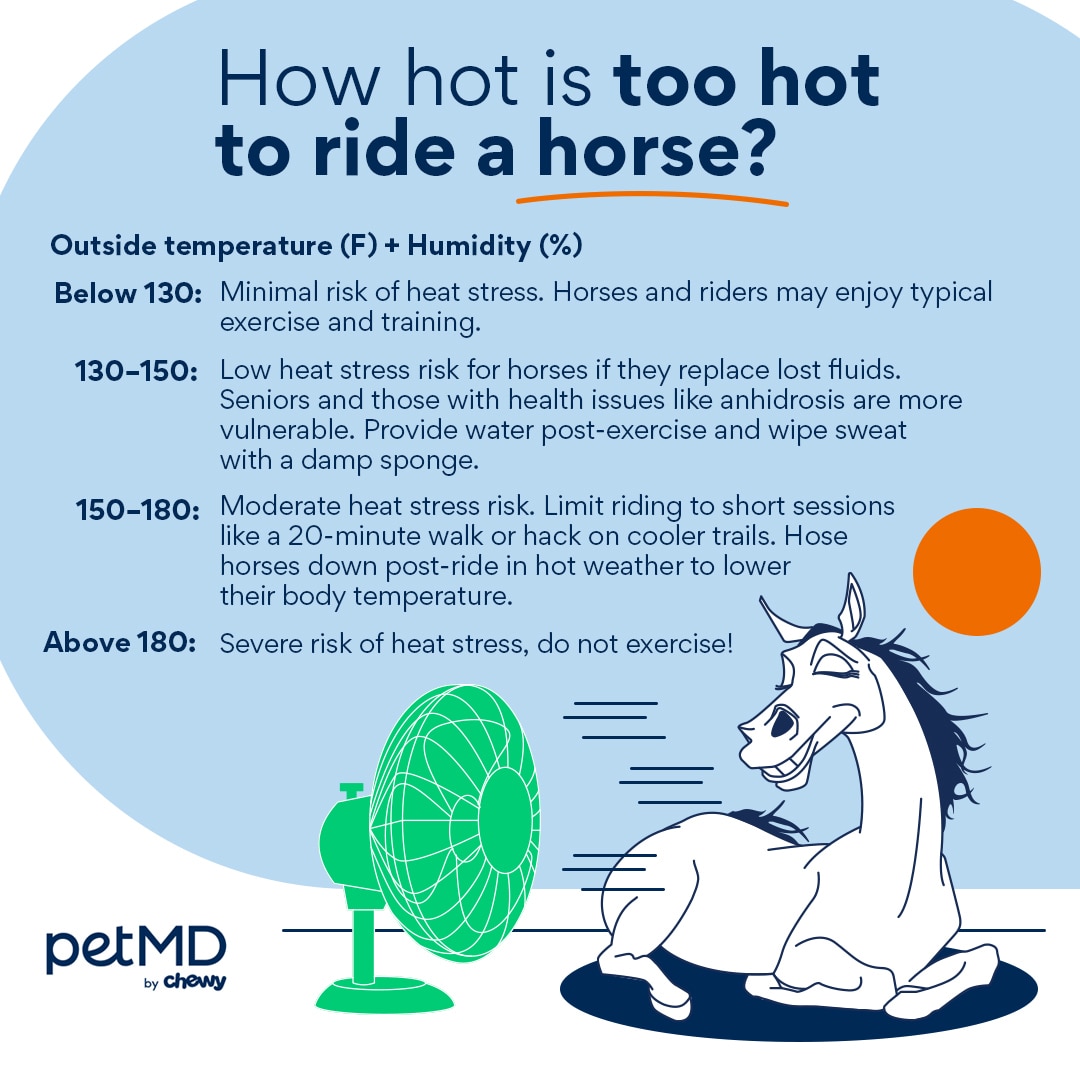
- Calculate the outside temperature plus humidity to see if you’re in a safe range to ride a horse safely.
What Is Heat Stress and Heat Stroke in Horses?
Heat stress and heat stroke in horses are equine emergencies that are most commonly observed in the summer months when the temperature and humidity outside are at their highest.
Horses naturally produce heat in two normal metabolic functions: digestion and exercise. Heat stress occurs when there is a breakdown in the way a horse normally cools down and sweat cannot evaporate and allow for proper cooling.
If left untreated, heat stress can lead to heat stroke, during which a horse’s body temperature rises above 105–106 F, which can be life-threatening in horses.
Symptoms of Heat Stress
A horse who is experiencing heat stress may exhibit one or more of the following signs:
-
Profuse sweating or less sweating than expected
-
Hot skin to the touch
-
Rapid breathing
-
Rapid heart rate or pulse that does not improve with rest from exercise
-
Increased body temperature of above 102 F
-
Muscle weakness
-
Stumbling
-
-
Tacky mucous membranes
-
Sunken eyes
-
Lack of skin elasticity or tent when you pull up from the body
-
Lack of urination
-
Symptoms of Equine Heat Stroke
Heat stress can quickly turn into heat stroke. Symptoms of heat stroke include:
-
Rapid respiratory rate continues
-
Increased body temperature of over 105–106 F
-
Collapse
-
Convulsion
Causes of Heat Stress and Heat Stroke in Horses
There are several factors and conditions that can lead to heat stress in horses.
These conditions include:
-
High outside temperature
-
High environmental humidity
-
Poor barn ventilation
-
Prolonged exposure to sunlight
-
Excessive work
-
Transportation
-
Obesity
The most common scenario for a horse to become heat stressed is if they are exercised when the conditions outside are hot and humid. Under these conditions, evaporation from sweat is greatly reduced and heat stress leading to heat stroke are much more likely to occur.
When Is It Too Hot to Ride a Horse?
Every horse tolerates heat differently, but there are some general guidelines to when it’s just too hot to ride.
In the heat of summer, it is best to ride in the mornings and evenings instead of the heat of the day. It is also important to allow adequate time for a horse to acclimate to hotter weather if they are new to the environment.
Additional factors that can make a horse more prone to heat stress include:
-
Dehydration
-
Loss of electrolytes from sweat
-
Horses with anhidrosis (unable to sweat normally)
How Veterinarians Diagnose Heat Stress and Heat Stroke in Horses
Your veterinarian will start with a history and physical exam in order to diagnose heat stress and heat stroke in your horse.
During the exam, it will be important for the veterinarian to look at the horse's mucus membranes for color and moisture, check the heart and respiratory rate, and check body temperature.
A horse that shows an elevated temperature of over 102 may be experiencing heat stress, and horses with a temperature of over 105–106 F are diagnosed with heat stroke.
Your veterinarian may also check their hydration status and evaluate kidney health through blood work if they seem dehydrated.
Treatment of Heat Stress and Heat Stroke in Horses
Treatment of heat stress and stroke in horses will depend on the severity of your horse’s symptoms. If you suspect your horse is experiencing heat stress, it is critical to stop all exercise immediately and move your horse to a cooler setting, such as in the shade. Be sure to contact your veterinarian immediately.
While waiting for veterinary assistance, place a fan next to your horse and spray them with cool water. Allow your horse access to fresh water in small intervals until the veterinarian arrives.
Your veterinarian will likely want to give your horse some intravenous fluids and electrolytes to help cool them off as well as replenish fluid and electrolyte losses.
As a horse’s condition improves, their temperature will start to decrease, respiratory rate may return to normal, they may calm down if they were behaving stressed, and sweating will return to normal.
Recovery of Equine Heat Stress and Heat Stroke
Horses generally recover from heat stress with no lasting effects. Depending on the severity of the heat stress, your veterinarian will be able to advise you on how to safely return to your horse's normal lifestyle.
Typically, allowing rest for a day or two and slowly easing your horse back to exercise is advised. Electrolytes may also be recommended to help restore balance and improve your horse’s hydration.
How To Prevent Heat Stress in Horses
You can help prevent heat stress in your horse in a variety of ways:
-
Provide access to fresh water
-
Provide access to shade
-
Reduce ride time and intensity when it is hot and humid
-
Ride in the morning or evening when it is the coolest
-
Ask your veterinarian about providing electrolytes in times of strenuous work and increased sweating
-
Provide access to a fan if there is low to no air flow in your horse’s stall
-
Consider clipping horses with long hair
-
Transport horses during the cooler parts of the day
Heat Stress and Heat Stroke in Horses FAQs
How can I keep a horse cool in extreme heat?
During hot weather, only ride in the early mornings or evenings, provide shade for your horse, and give them plenty of fresh water. To encourage your horse to drink enough to stay hydrated, consider discussing an electrolyte supplement for your horse. If your horse stays in a barn or stall for parts of the day, ensuring good airflow through windows and fans is crucial.
Does heat stroke cause gas colic in horses?
Heat stress or stroke can lead to colic in horses. This is because as the horse becomes dehydrated, so do the intestines. This can lead to decreased motility, impaction, spasming of the GI tract, or even leaky gut which can lead to toxins entering the bloodstream from the intestines.
What are the long-term effects of heat stroke in horses?
In severe cases, heat stroke can lead to organ failure or death. If a horse recovers from heat stroke/stress, potential long-term effects can include neurological deficits, anhidrosis, and heat intolerance.


