Sweet Itch in Horses: Symptoms, Causes, and Treatment Options


virgonira/iStock/Getty Images Plus via Getty Images
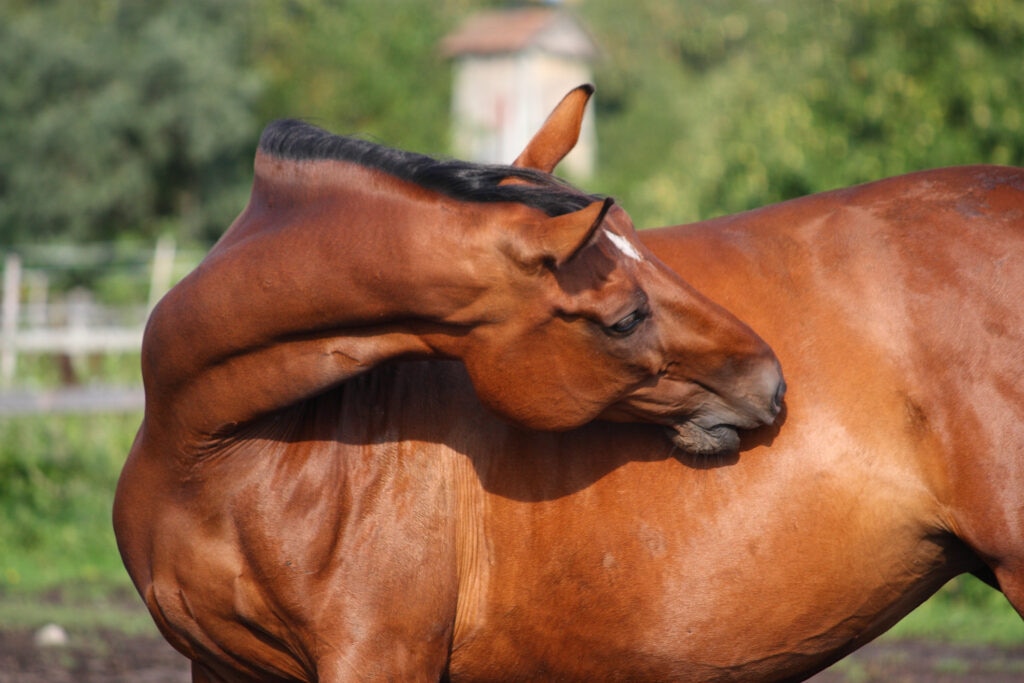
Sweet itch is a seasonal allergic dermatitis typically associated with certain biting insects. Dermatitis refers to swelling and irritation of the skin.
Sweet itch in horses is most commonly caused by culicoides, better known as biting midges. But it can also be caused by stable flies, black flies, and other blood-sucking insects.
Key Takeaways
- Sweet itch in horses occurs when a horse’s skin reacts to insect bites.
- Horses with sweet itch typically experience itchiness and spotty hair loss, among other symptoms.
- It’s recommended to treat equine sweet itch with topical medications and ointments, as well as fly control.
What Is Sweet Itch in Horses?
Sweet itch is when a horse has an allergic skin reaction to biting insects. It’s very common among horses, donkeys, and mules.
Horses with other skin conditions and allergies are more prone to allergic reactions from biting insects. It is believed that equine allergies can be genetic as well.
Sweet itch can be severe enough to require veterinary attention, but it’s not considered an emergency. More severe cases with significant hair loss, incessant itching, or raw open sores will require veterinary intervention with medications.
Symptoms of Sweet Itch in Horses
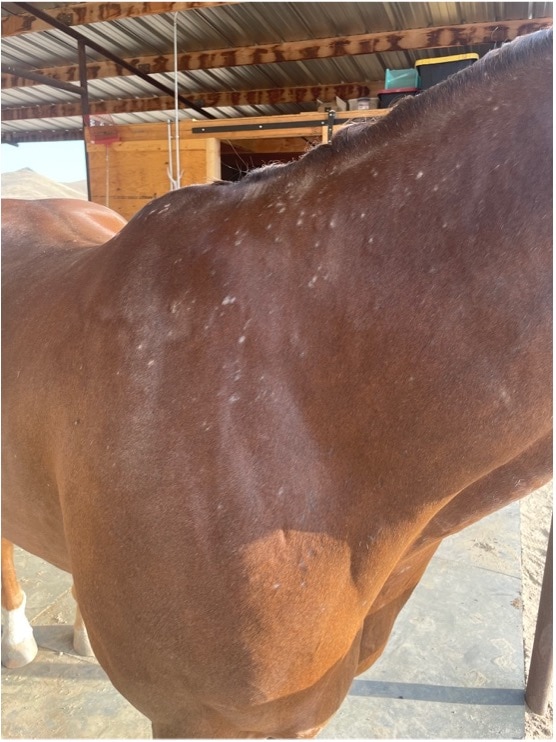
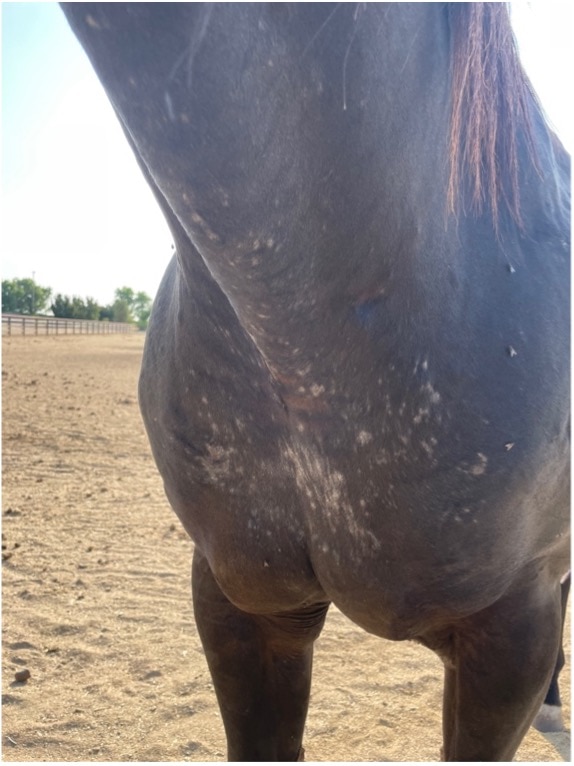
Horses with sweet itch may experience:
-
Itchiness
-
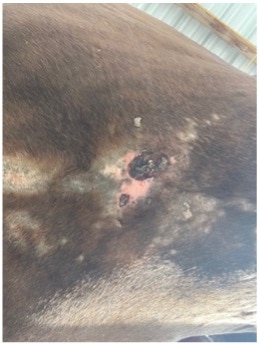
Raw skin, particularly in the mane, tail, and along the belly from itching
-
Hair loss
-
Thick, rough skin
-
Dandruff
-
Skin crusting
-
Swelling of affected areas.
-
Changes in behavior
-
Irritability
-
Agitation
-
Stomping
-
Tail swishing
-
Restlessnes
-
Causes of Sweet Itch in Horses
Allergies are an example of when the body is fighting itself due to an external reaction. Allergic reactions can be broken down by “hypersensitivity type.”
Sweet itch in horses is categorized as a type 1 hypersensitivity, meaning that the skin cells react immediately to an external stimulus. This is commonly seen in hives, asthma, or anaphylaxis.
In the case of sweet itch, horses’ cells are “overreacting” to the insect saliva and bite. When an insect lands on a horse and bites them, it leaves behind debris and saliva. The saliva contains proteins that the horse’s immune system reacts to.
The horse’s immune system calls in a certain cell type called mast cells to the skin, essentially readying for battle. The mast cells release certain molecules that cause all the symptoms the horse experiences, like itching, redness, and swelling.
How Veterinarians Diagnose Sweet Itch in Horses
Sweet itch can often be diagnosed based on the history, clinical signs, and evaluation of the horse’s skin by a veterinarian.
Some allergies can present in a similar way, so allergy tests (skin or blood) can be used to confirm reaction to specific insects.
Depending on what your vet is seeing, or how severe the reaction, they may order tests including:
-
General blood test to confirm the reaction is allergic and not an infection
-
Serum allergy tests to see what specific allergens your horse is reacting to.
-
Skin test for specific allergies
When dealing with any type of itchiness in your horse, it is important tell your veterinarian about all new things in the horse’s life, such as:
-
New paddock
-
New plants
-
New haystack
-
Change of grain
-
New barn
It can also be helpful to explain the timeline of when symptoms began, how severe they are, and how they progressed.
Sweet itch is typically seasonal to the months when insect activity is the highest, like spring and summer. Specific dates may vary depending on where you live, such as when the frost stops and the spring rain begins, which is when bugs like to reemerge.
Sweet Itch Treatment for Horses
Sweet itch can be difficult to control but it is a treatable problem.
Equine sweet itch is not considered curable, as treatment does not completely take away the problem, but it can be maintained on an annual basis.
Treatments for sweet itch in horses are geared toward minimizing the body’s reaction to the insect bites and providing relief from the itching.
Prescription Medications
As recommended by your veterinarian, horses with sweet itch may be maintained with one or multiple medications. Antihistamines like hydroxyzine may be used, or long-term glucocorticoid steroid injections to calm the skin reaction.
Topical Therapies
Medicated shampoos, ointments, and sprays are meant to soothe the skin and help it heal from the allergic reaction.
They can also help repel insects and heal the wounds if created. Most importantly, these topical treatments minimize the itchiness that sweet itch causes.
Supplementation
Supplements to improve skin health and healing may be added as additional maintenance for your horse.
Vitamin E, biotin, and omega fatty acids are known to help support healthy skin. Adding these into the daily feeding regimen help skin become less reactive, heal quickly from the condition, and rebound.
Fly-control supplements are also available to help deter insects from landing on or biting horses.
Fly and Insect Control
Decreasing the population of flies, biting midges, gnats, and mosquitoes around your horses has a huge impact on the severity of sweet itch in your horse.
Protective gear like fly masks, sheets, and boots can be used to decrease the contact with your horse’s skin.
Fly and insect repellents require regular application, but they can also deter insects from biting your horse.
Work with a veterinarian to choose the best fly protection for your horse.
Recovery and Management of Sweet Itch in Horses
Fly control and minimizing itchiness are the main goals for sweet itch therapy. Long-term management of flies and other insects stops the disease at its source, but of course we cannot get rid of all the bugs!
In addition to using fly sheets, fly masks, and insect repellent, make sure your barn has effective manure control. Manure should be piled away from the barn and can be hauled off the property on a regular basis.
Equine Sweet Itch Prevention
Sweet itch can be prevented to the best of your ability through fly/insect control and avoiding insect contact with horses. Helpful tips include:
-
Avoid turnout in wet areas, or near water
-
Use fly sheets and other fly protective gear
-
Use insect repellent at intervals (morning and night)
-
Regularly clean water troughs
-
Frequently clean and clear manure and soiled bedding
-
Use fans
-
Feed skin health or insect repellent supplements
Wet, swampy, humid, stagnant environments are where flies and biting midges thrive, so these areas are best avoided.
Sweet Itch in Horses FAQs
Are there any homemade sweet itch remedies for horses?
There are many “all natural” and home remedies for sweet itch. The usefulness and safety of these has not been officially tested ,and the use of any of these products should be first discussed with your veterinarian before any use on your horse. Most home remedies for sweet itch include the use of oils and natural solutions that deter insects and soothe skin.
What should you feed a horse with sweet itch?
It is important to feed horses with sweet itch a balanced diet complete with vitamins and minerals to support gut and coat health. Supplements that contain ingredients to deter insects include garlic, while ingredients that support healthy skin include vitamin E and omega fatty acids.
Does apple cider vinegar help sweet itch in horses?
It is believed that apple cider vinegar may help to balance the pH of skin and deter insects, though this has not been scientifically verified. Apple cider vinegar should only be used with veterinary approval.
What is the best cream for sweet itch in horses?
SWAT may be used to repel insects but it should not be applied directly to sores. There are many anti-itch creams and soothing gels that help relieve itchiness and heal sores.
Does the sweet itch injection work?
The sweet itch injection or fly allergy shot is typically a dose of glucocorticoid steroid that can be administered by your veterinarian to calm the body’s allergic response to insects. In appropriate situations, they typically work well.


