Percheron


Holcy/iStock/Getty Images Plus via Getty Images
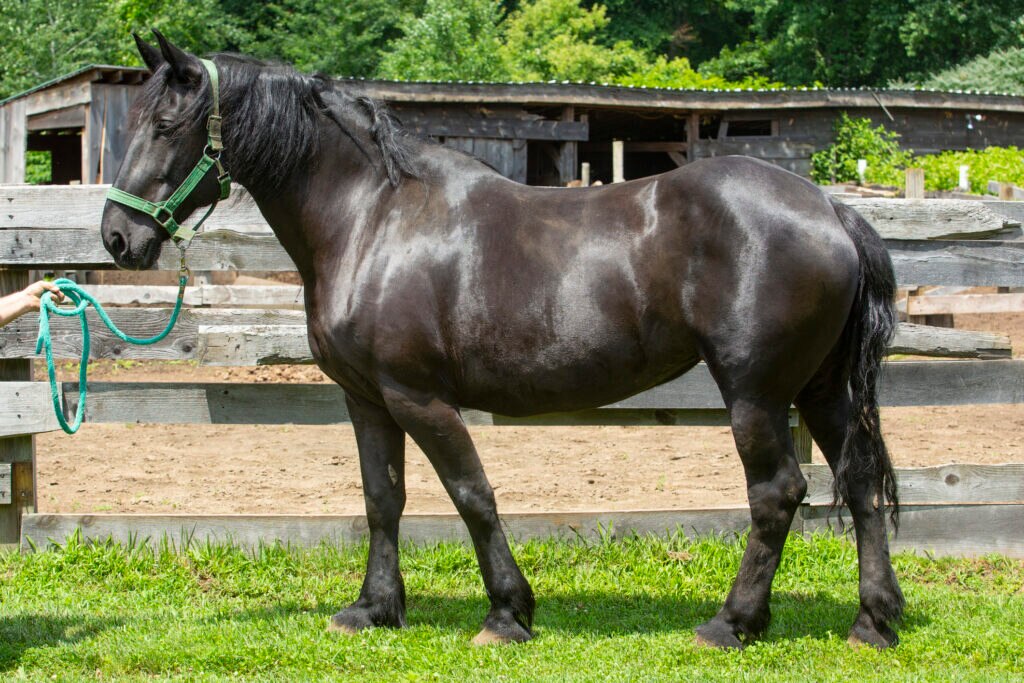
The Percheron horse breed originated in the Perche region of France. Over hundreds of years, Percherons were used as war horses, farm horses, and for pulling stagecoaches. Today these gentle giants are still valued for working, competing, and riding, thanks to their versatility and strength.
Percheron Snapshot
-
Height: 16–17 hands (64–68 inches)
-
Weight: 1,800–2,600 pounds
-
Lifespan: 25–30 years
-
Colors: Black, gray, bay, roan, chestnut; may have white markings on legs and head
Caring for a Percheron
As large draft horses, Percherons need a lot of space and can be a little harder to groom because of their height. If you have a tall Percheron, consider investing in a grooming box that doubles as a step stool, like this one from Horze.
Otherwise, they need the same type of daily care as any other horse breed: a high-quality diet that won’t lead to unwanted weight gain, plenty of exercise and interaction with humans and other horses, and routine veterinary and farrier care.
Percheron Health Issues
The Percheron breed can be prone to certain health conditions common among draft horses, including:
Polysaccharide Storage Myopathy (PSSM)
There are two types of polysaccharide storage myopathy. Type 1, which can affect Percherons, is linked to a mutation in the GYS1 gene. If a horse inherits this condition, their body stores too much glycogen (sugar) in their muscles. This leads to painful tying-up episodes.
Symptoms of PSSM include:
-
Cramping
-
Stiffness
-
Weakness
-
Soreness
-
Sweating
-
Pawing
-
Muscle tremors
-
Hard muscles
-
Reluctance to move
-
Shifting lameness
-
Discomfort when lying down
-
Dark brown urine
-
Poor performance
There’s no cure for PSSM, but your veterinarian can help manage it through diet and exercise adjustments. Stall rest, IV fluids, and anti-inflammatory pain medications like phenylbutazone or Banamine may be prescribed after a tying-up episode.
Laryngeal Hemiplegia
Laryngeal hemiplegia can occur in draft horses like the Percheron. It affects the larynx and upper airway, reducing airflow to the lungs and causing exercise intolerance.
Affected horses may make a roaring or whistling sound when active—hence the nickname “roarers.” Other symptoms include gasping for air when exercising and changes in the sound of their whinny.
Once the condition is diagnosed, a veterinarian can perform a surgical procedure to open the airway.
Ocular Squamous Cell Carcinoma
Ocular squamous cell carcinoma is a common type of cancer that develops on the eyes or eyelids of horses. Exposure to UV light may increase the risk, though some horses appear to be genetically predisposed.
Symptoms include:
-
Lesions on or around the eye
-
Thick, yellow eye discharge
-
Scabs on the eyelid
-
Vision impairment or blindness
Treatment options for ocular squamous cell carcinoma include:
-
Surgery
-
Chemotherapy
-
Photodynamic therapy
-
Radiation
Depending on the severity, the eye may need to be removed. The sooner the cancer is found and treated, the better the prognosis.
Chronic Progressive Lymphedema (CPL)
Chronic progressive lymphedema (CPL) affects many draft breeds, including the Percheron. It can become apparent while a horse is young, and because it’s chronic, it will progress as the horse gets older.
CPL causes lymph fluid buildup in the lower legs. Though experts aren’t sure what causes it, genetics may play a role.
Symptoms of CPL include:
-
Leg swelling that becomes firmer over time
-
Skin folds
-
Nodules
-
Lesions
-
Soft pitting edema (fluid accumulation)
-
Pus
-
Secondary skin infections
-
Changes in hoof growth
-
Trouble moving
-
Cone-shaped lower legs
Although there’s no cure, CPL can be managed. Your veterinarian may recommend massage, consistent exercise, and medications to treat infections. Severe cases might not be treatable, in which case humane euthanasia would be advised.
Shivers
Shivers is a chronic, progressive neurologic disease that affects many breeds, including the Percheron. It’s thought to have a genetic component, and causes hyperflexion or hyperextension—especially when a horse backs up.
Symptoms of shivers can begin when a horse is less than 5 years old, and will progress as the horse ages. They include:
-
Muscle trembling (appearance of shivering)
-
Hyperflexion or hyperextension of the hind limbs
-
Muscle atrophy
-
Resistance to having hind limbs picked up
While there’s no cure, shivers can be managed with veterinary guidance. Regular turnout and consistent exercise can help. Limiting your horse’s time in their stall, reducing stress, and supportive therapies like spinal manipulation, massage, or acupuncture may also be beneficial.
What To Feed a Percheron
Percherons are easy keepers who can gain weight quickly when not fed properly. Slow feeders and grazing muzzles can help keep calorie intake in check.
Because of their size, these horses need more food and water than smaller equine breeds. A general rule is to feed around 2% of their body weight in forage (pasture or low-starch hay) daily—so a 2,400-pound Percheron would need about 48 pounds of forage per day.
Feed your horse high-quality forage, and add salt and a vitamin/mineral supplement to be sure they get all the nutrients they need. Always have fresh clean water available for your horse.
It’s best to discuss your horse’s dietary needs with your veterinarian, especially if you aren’t sure what or how much to feed. They can help you monitor your horse’s body condition score and weight. They can also recommend supplements, such as fatty acids and joint supplements, and help you use diet to manage your horse’s health if they’ve been diagnosed with a chronic condition.
Percheron Disciplines
Percherons are strong, versatile horses suited for a wide range of work and performance roles. They excel in equestrian shows and sports, on farms and in forests, and even in mounted police units.
They often compete in sports like halter and driving, and are popular for general riding because of their calm nature. Their strength, energy, and endurance make them ideal for pulling heavy loads, and their beauty also makes them a popular choice for pulling carriages.
Percheron Personality and Temperament
Percheron horses are beloved for their personalities. Though their size can be intimidating, they’re docile, friendly, and willing—true “gentle giants.”
Percherons are calm, intelligent, hardworking, and brave. They’re adaptable, alert, and steady, even in environments that might startle other horses, such as city streets.
Every horse is unique, but Percherons are generally suitable for riders of all levels who are comfortable handling such a big horse.
Percheron Training
Thanks to the Percheron’s easygoing disposition and intelligence, they aren’t typically challenging to train. If you’re gentle, patient, and use a positive training method they respond very well.
Like all other breeds, a Percheron will benefit from being trained at a young age. Starting with groundwork gives your horse time to get to know you while learning various cues before you begin riding them. As they advance in their training, your Percheron will learn to trust you and will gladly follow your lead.
When your horse is ready, you can train them for sport or work. If training them to pull heavy loads, don’t overdo it; instead, start with lower weights until they’ve developed the strength to pull more.
Always keep this strong horse’s size in mind while training them—that way, everyone can stay safe. Aim to make each training session fun and interesting, and keep the sessions short so your horse doesn’t get frustrated, bored, or tired. Over time, you’re sure to develop a strong bond that makes working together easy and enjoyable.
Percheron Grooming Guide
Percheron draft horses require the same grooming and hoof care as other horses. Because of their size, you might find it harder to reach every part of their body, so it’s a good idea to have a stool nearby.
This breed has some feathering on the legs and has a thick, long mane and tail. Focus on keeping your Percheron’s coat clean and their mane and tail tangle-free.
Coat Care
Set a schedule for grooming your horse every day or at least a few times a week. Use curry combs, dandy brushes, body and face brushes, and mane and tail brushes to remove dirt, loose hair, and debris.
The thick mane and tail of a Percheron can tangle easily. Consider trimming the tail short or use detangler and conditioner to make brushing easier. Avoid pulling too hard, which can rip the hair out or cause breakage.
Hoof Care
Check your Percheron’s hooves daily for injuries or infections that may need veterinary attention. Clean them thoroughly with a hoof pick to remove dirt and debris that has become lodged in them.
Schedule regular visits from a reputable farrier to provide professional hoof care. They can ensure your Percheron’s hooves are healthy and balanced—especially important for heavy draft breeds—and can choose the right shoes for your horse if needed.
Percheron FAQs
Which is bigger, a Percheron or a Clydesdale?
Both breeds are large, but their proportions differ slightly. Clydesdales are an average of 16–18 hands tall and weigh an average of 1,500–2,200 pounds. The average Percheron height is 16–17 hands, and they weigh an average of 1,800–2,600 pounds. Clydesdales are often slightly taller, while Percherons tend to be heavier.
How much does a Percheron horse cost?
Percherons generally cost from $1,000 to over $30,000, depending on factors such as the horse’s age, bloodline, health, training, experience, and location.
What are Percheron horses known for?
In addition to their impressive size, energy, and strength, Percherons are known for their calm, intelligent, and cooperative temperament, making them a pleasure to train and work with.
Is a Percheron a war horse?
Historically, yes. Percherons served as dependable war horses and were later used to pull stagecoaches and heavy loads.


