All About Baby Horse Hooves


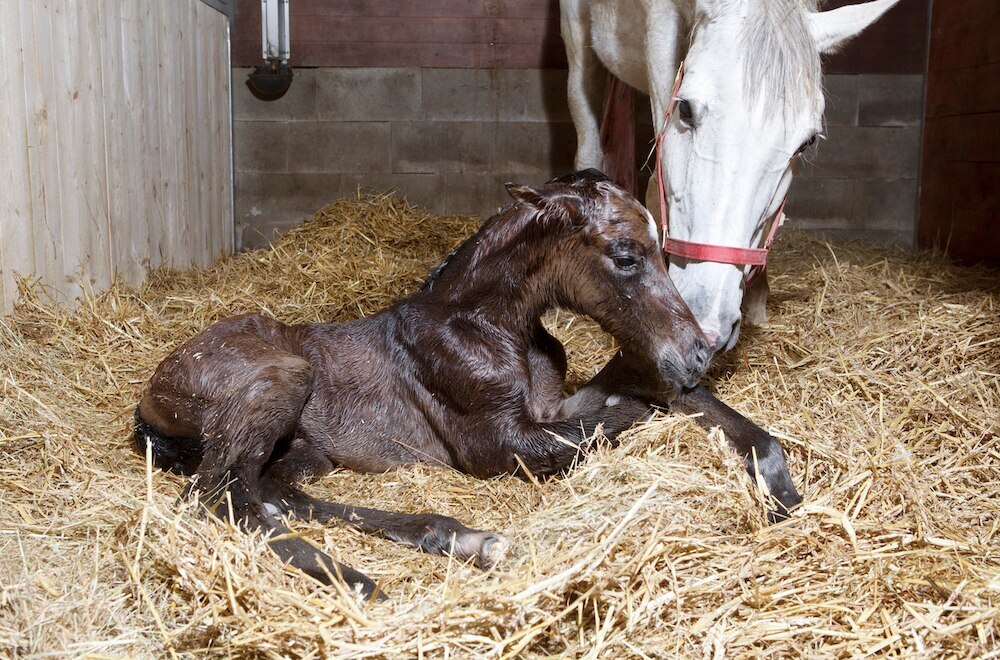
If you’ve ever seen a horse birthing video, or have seen a live birth, you’ve probably wondered why newborn foal hooves look so funny. The soft, rubbery covering you see on newborn horse hooves actually have a very important purpose to keep mares safe.
Key Takeaways
- Newborn foals have a soft layer of tissue covering their hooves at birth called eponychium, or the deciduous hoof capsule.
- Baby horse hooves are also called fairy fingers or golden slippers.
- Newborn hooves start to harden as soon as the foal leaves the womb, and the deciduous hoof capsules fall off within a couple days.
Are Baby Horses Born with Hooves?
Yes! Baby horses need their hooves shortly after their birth to run away—when a mare gives birth to a foal, the tissues that are passed during the birthing process attract predators.
Since horses in the wild are prey animals they must be prepared to run after the birth is complete. Foals are born with fully developed hooves—however, they may look a little non-traditional at first sight.
Newborn foals have a smooth, soft layer of tissue covering their hooves at birth. This tissue is called eponychium (pronounced ep-uh-nik-ee-uhm). Eponychium comes from the Greek words meaning “on top of” and “little claw.”
Foals are born with fully developed hooves—however, they may look a little non-traditional at first sight.
It is also known as the deciduous hoof capsule and is made of the same horn tubules, keratin, and lamellae that make up adult horse hooves.
Foals are very active during late gestation in the womb and like human babies, like to kick and move around in the uterus. During a normal birthing process, the front legs of a foal should come through the birth canal first.
The deciduous hoof capsule provides protection to the mare’s uterus and birth canal from injuries that could be caused by the foal’s hooves.
What Do Baby Horse Hooves Look Like?
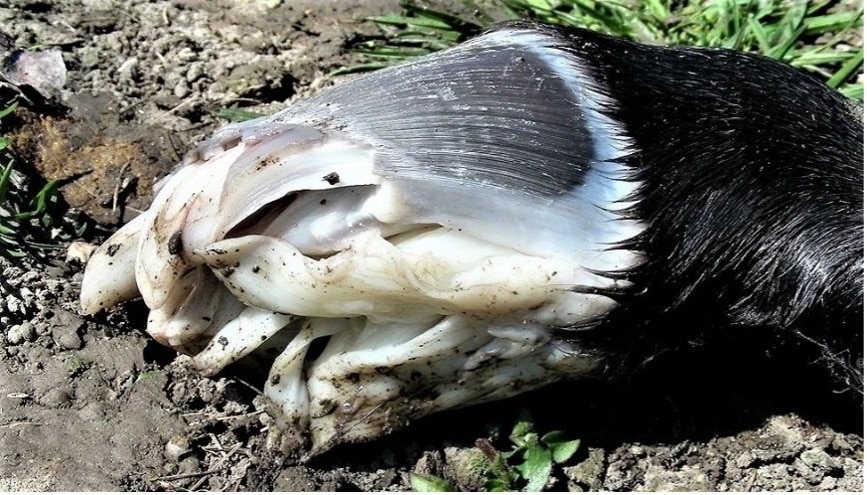
Foal hooves look like little versions of adult hooves but are covered with the deciduous hoof capsule, which looks like rubbery fingerlike projections covered in a gooey material. Some describe the appearance as a cluster of wet feathers stuck together.
Fairy Fingers and Golden Slippers
Other terms for deciduous hoof capsules are "fairy fingers" and "golden slippers." Historically, because the appearance of the deciduous hoof capsules were upsetting to the human eye, many horsemen started calling the structures by more appealing names.
“Fairy fingers” are a descriptive term, because the rubbery tissue on the underside of the hoof does appear like small fingers.
The term “golden slippers” describes the view of the hoof seen from the top side, where the hoof is wider and closer to the body, then tapers towards the toe. This gives a slipper-like appearance. And the term “golden” is a fashionable description of the yellow tinge the tissue has.
How Long Does It Take for Foal Hooves to Harden?
Within moments after birth, as soon as the deciduous hoof capsule is exposed to the air, it will begin to dry out and harden. Once it has hardened and the foal is walking, the deciduous hoof capsule will fall off naturally. The hoof capsule typically wears off completely 48–72 hours after birth.
A foal’s hoof conformation will gradually change. It starts out with a tapered appearance, wider at the top and narrower at the bottom where it contacts the ground.
The foal’s hoof will not only grow in length but also expand outward. As the foal bears weight on the hoof, the bottom of the hoof wall starts to spread out and the weight bearing surface becomes the wider part of the hoof.
When Do Foals Need Their Hooves Trimmed?
Routine hoof care for a foal is very important. Foals should start to get used to getting their hooves picked and cared for at an early age.
Foals should first be seen by a farrier at 3 to 4 weeks of age. At this visit, the farrier completes a gentle rasping of the toe to square it off.
Foals’ hooves grow at approximately 0.4 millimeters per day; that is almost twice as fast as an adult horse. After their initial visit, foals should receive monthly visits from the farrier.
The goal is to promote thick, durable hoof wall growth. Monthly farrier visits will also help establish good ground manners for the foal’s future.
Potential Complications of Foal Hooves
Complications during hoof development may occur in a foal, and tend to be issues related to their lower legs. The most common complications are:
-
Club foot
-
Tendon contracture or laxity
-
Angular limb deformities
The best way to combat these abnormalities is contact your veterinarian to address these medical concerns. By working with your veterinarian and farrier, early intervention and management of developmental issues is the best way to ensure that the foal will become a healthy mature adult.


