Caring for a Degu: A Pet Parent’s Guide


Almaje/iStock/Getty Images Plus via Getty Images
Degus are social, intelligent small pets who require specialized care, daily interaction, and a low-sugar diet to stay healthy.
While they can make rewarding companions, they are best suited for dedicated pet parents who understand their unique needs and can commit to proper housing, enrichment, and regular veterinary care.
Key Takeaways
- Degus are social, intelligent rodents who require daily interaction, mental enrichment, and companionship to stay healthy and happy.
- A proper degu diet is high in fiber and low in sugar, with unlimited hay and carefully limited treats to help prevent diabetes and obesity.
- Degus need spacious, secure housing, regular veterinary care, and safe handling to avoid injury and support their 5–9-year lifespan.
What Is a Degu?
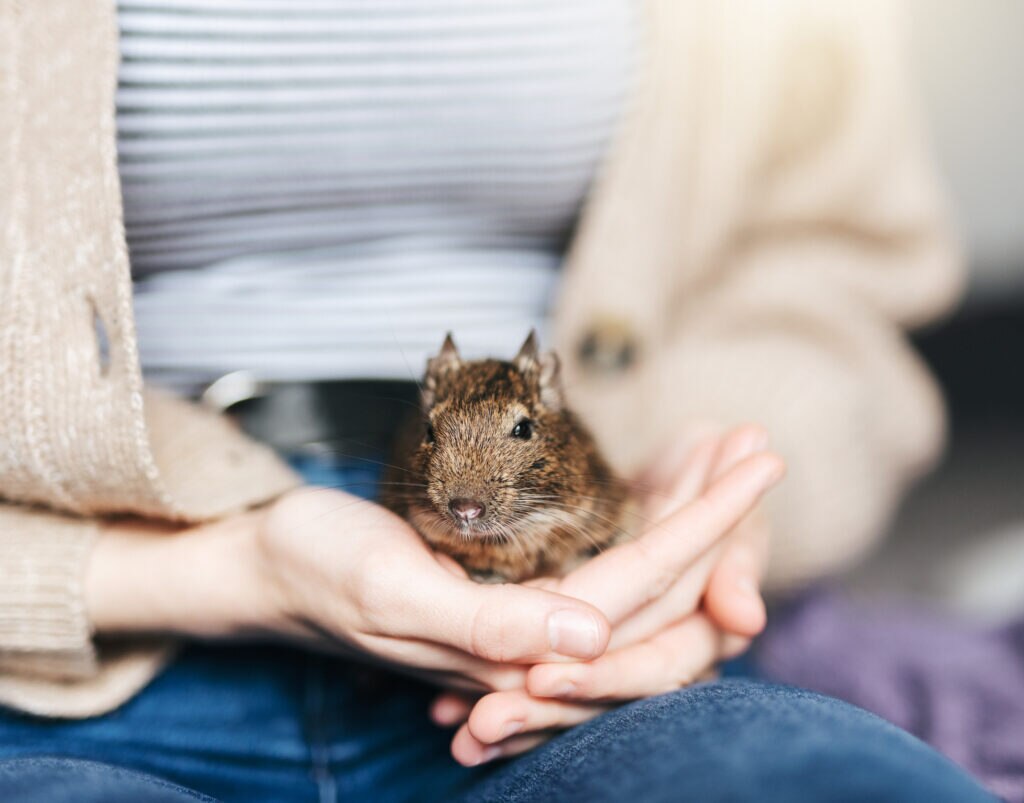
Degus—often called the common degu or the trumpet-tailed rat—are native to Chile and belong to the burrowing rodent family Octodontidae, found in South America. Degus look like a cross between a gerbil and a chinchilla. They typically weigh about 6–10 ounces and have soft brown fur, large ears, and a long tail with a fluffy tip.
The typical lifespan of a degu is 5–9 years, though many live 8 years or more in captivity.
In the wild, degus live in social groups, spending their time burrowing, foraging for food, and socializing with one another. They’re highly intelligent and social animals who require daily interaction and mental stimulation.
Degu Activity
Degus are very active pets, so providing an exercise wheel, dig box, and exploration time helps keep them happy and mentally stimulated.
Most degus are diurnal, meaning they are most active during the day—from morning through early evening.
Degu Behavior and Personality
Degus are social, curious, and intelligent rodents.
They communicate with chirps and squeaks and enjoy interacting with both their pet parents and cage mates. They are often described as playful, alert, and energetic.
How To Care for a Degu
Degus require daily care, proper housing, and a specialized diet to stay healthy. Because of their complex needs, they are often best suited for adults or responsible teens with parental supervision.
Anyone considering a degu should be prepared to learn about exotic pet care and commit to regular veterinary visits with an exotics veterinarian.
Degus are not recommended for young children, as they are delicate and may bite if frightened or handled improperly.
Degus also have a defense mechanism in which they can shed the skin and tip of their tail if grabbed, which can lead to infection.
Never grab or pick up a degu by the tail.
Enclosures
Degus are social animals and are best kept in pairs to prevent loneliness, depression, or self-harming behaviors. They should not be housed with other rodent species or small mammals (such as rabbits), as this can spread disease.
For two degus, the minimum enclosure size should be about 28″ L x 18″ W x 28″ H, with multiple levels and access to a daily exercise area outside of the cage.
Enclosure tips:
-
Bars should be metal to prevent chewing
-
Bar spacing should be no more than a half inch
-
Flooring and shelves should be solid and cushioned to prevent foot injuries and diseases like bumblefoot
-
Provide bedding to protect feet—paper-based bedding is ideal
-
Avoid cedar wood chips and wood shavings or cat litter to prevent any respiratory issues from bedding
-
Avoid plastic cages or accessories, as degus will often chew through them
Food
Degus are herbivores. In the wild, they eat grasses, seeds, cactus fruits, tubers, and plants.
In captivity, their diet should include high-quality, low-sugar pellets formulated for degus.
If degu-specific pellets are unavailable, a temporary mix of half guinea pig and half chinchilla pellets may be used until degu-specific pellets are available.
Feed about 1–2 tablespoons of pellets per degu daily, depending on size and activity level, with hay making up most of their diet.
Avoid sugary and starchy foods, such as fruit, peas, corn, and potatoes, as these can contribute to high blood sugar and degus are prone to diabetes.
Water
Degus should always have access to fresh, clean water.
Clean water bottles or bowls daily with dish soap, rinse thoroughly, and refill.
You can offer both a bowl and a bottle to see which your degu prefers.
Treats, Veggies, and More
Offer vegetables in small amounts a few times a week. Too many can cause digestive upset and bloating.
Safe options include:
-
Romaine lettuce
-
Dandelion greens
-
Bell peppers
-
Green or red leaf lettuce
Other treats like timothy hay-based chews can also be offered occasionally, especially during handling.
Avoid high sugar and high fat foods because degus can be prone to weight gain and diabetes. Those foods include the following: honey, molasses, seeds, or fruit, as these food items can increase the risk of obesity and diabetes.
Rodent blocks or fortified pellets along with unlimited hay typically provide complete nutrition, so additional supplements are usually unnecessary unless recommended by your veterinarian.
Hay
Unlimited access to grass hay—such as timothy, orchard, or meadow hay—is essential. Hay provides enough fiber for a healthy intestinal tract and helps wear down continuously growing teeth.
Alfalfa hay can be offered in small amounts to young degus but should not be fed regularly, as it can contribute to weight gain.
Toys and Enrichment
Degus are intelligent and active, requiring plenty of mental stimulation and enrichment to prevent boredom.
A solid exercise wheel (10 to 12 inches in diameter) is ideal to keep them active and entertained. They also love to climb, burrow, and chew; therefore, additional enrichment items include:
-
Hide boxes
-
Climbing branches
-
Ladders and ramps
-
Dig boxes
Degus also benefit from dust baths (using chinchilla dust) about twice weekly, which should be performed outside the cage.
They should also have a safe, supervised exercise area outside the cage. Be sure to “degu-proof” the space by removing cords, toxic plants, and items they could chew.
Common Degu Health Issues
Some of the most common degu health issues include:
-
Cataracts
-
Diabetes
-
Obesity
-
Dental disease
When Should You Take Your Degu to an Exotic Vet?
Degus should be examined by an exotics veterinarian (or a veterinarian with exotic pet experience) shortly after adoption, annually for routine care, and anytime they appear unwell.
Seek veterinary care promptly if your degu shows:
-
Reduced appetite
-
Weight loss
-
Labored breathing
-
Diarrhea
-
Trouble chewing
-
Lethargy
-
Trauma
Caring for a Degu FAQs
Are degus good pets?
Yes, degus can make excellent pets for those willing to meet their social and environmental needs. They are interactive and intelligent companions.
Do degus like to be held?
Some degus enjoy handling once they’re accustomed to it, while others prefer interacting through play rather than being held for long periods of time.
Do degus bite or scratch?
Degus rarely bite or scratch unless frightened, stressed, or mishandled. Proper socialization and gentle handling help reduce the risk.
Are degus good pets for kids?
Degus are better suited for adults or older children. Their small size and delicate bodies mean they can be easily injured if handled improperly, and they may bite or scratch if they feel threatened.


