Cleft Palate in Dogs: Treatment and More


Cleft palate affects about 3% of newborn, purebred puppies and may occur even more frequently in certain breeds.
The condition can also affect mixed-breed puppies or even develop in older dogs due to trauma or other health problems.
Dogs with a cleft palate often develop serious medical issues like aspiration pneumonia if the condition is not corrected, usually with surgery.
Key Takeaways
- Cleft palate is a congenital or acquired defect in a dog’s mouth that creates an opening between the mouth and nasal passages.
- Puppies with cleft palates often have difficulty nursing and may develop life-threatening conditions like aspiration pneumonia.
- Surgery is the most common treatment and often requires referral to a veterinary specialist.
- With proper treatment and aftercare, the prognosis for most dogs with cleft palate is good. roof
What Is Cleft Palate in Dogs?
The palate is the roof of your dog’s mouth. A cleft palate is an abnormal opening, usually along the middle of the palate.
This opening can range from small (a few millimeters) to severe (the entire length of the hard and soft palate). This creates a passageway between the mouth and nasal passages, producing problems for the dog that include difficulty eating, nursing, and growing.
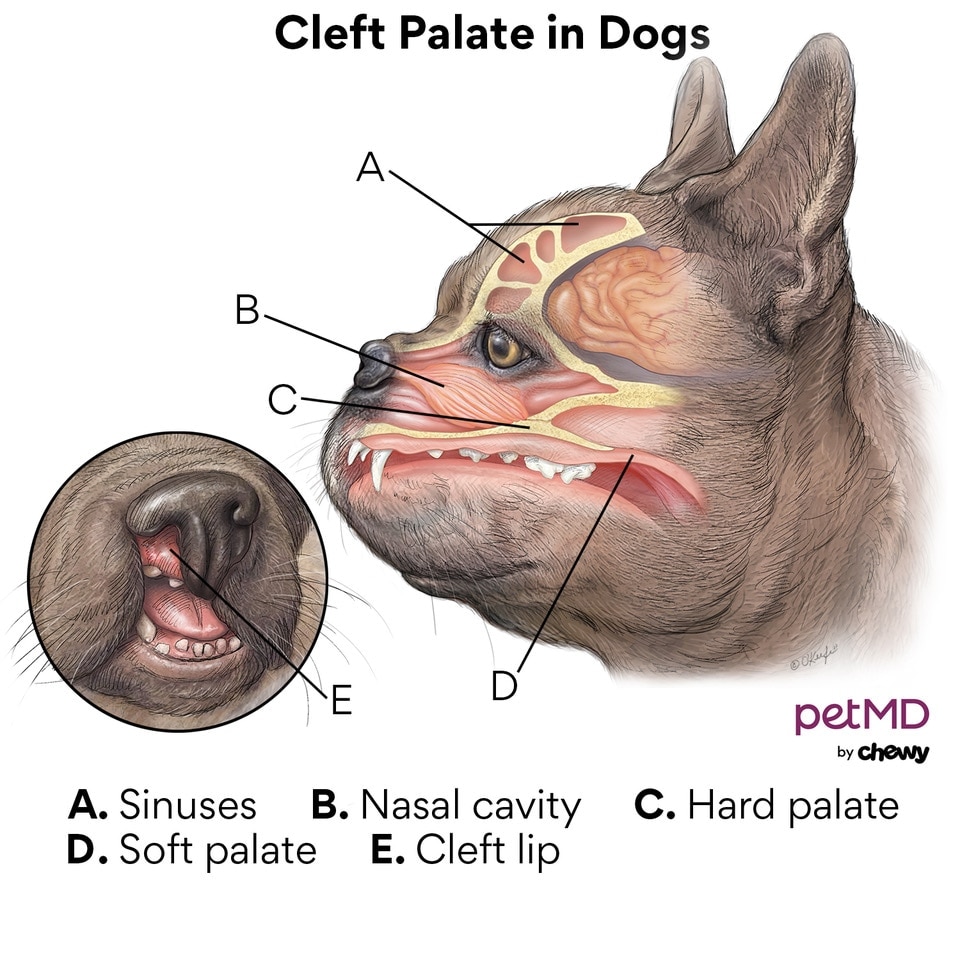
Click here to download this medical illustration.
Symptoms of Cleft Palate in Dogs
Symptoms of a cleft palate in dogs can be easy to notice and even visible. Cleft palate in dogs can also create various health issues. The symptoms can include:
-
Difficulty nursing: Puppies with a cleft palate are unable to create enough suction when nursing because the oral cavity is open to the nasal cavity. The milk, water, or food the dog does manage to get can travel from the mouth to the nose, causing sneezing, nasal discharge, nasal irritation (also known as rhinitis), coughing, and gagging.
-
Poor growth: Without the ability to nurse and eat normally, many puppies and dogs with cleft palate do not get proper nutrition and can be lethargic, with a poor rate of growth.
-
Aspiration pneumonia: Breathing in food and water can cause an infection of the lungs. This may result in a cough, fever, lethargy, difficulty breathing, and possibly death.
-
Facial deformity: Occasionally, dogs with a cleft palate will also have a facial deformity, such as a cleft lip.
-
Other issues: Though problems are not always apparent at first and depend on the cause of the cleft palate, issues with the middle ear, swallowing apparatus, nasal septum, sinuses, and teeth may develop.
Causes of Cleft Palate in Dogs
There are two types of cleft palate in dogs:
Congenital cleft palate is present at birth if the palate fails to fuse properly during days 25–28 of gestation. This can occur for a variety of reasons:
-
Genes: Most congenital cleft palates are genetic. Therefore, dogs with any level of cleft palate should be spayed or neutered and not used for breeding purposes.
-
Nutrition: Cleft palates can occur with too much dietary vitamin A or a lack of folic acid during pregnancy.
-
Medications: Most notably, steroids, griseofulvin, and some anti-seizure medications given during pregnancy can cause cleft palate in puppies.
-
Viruses: If the mother is exposed to certain viruses at a specific time during pregnancy, her puppies may be born with cleft palate.
Acquired cleft palate is a new defect that appears in a previously normal palate. Causes may include:
-
Trauma, such as gunshot injuries, bite wounds, thermal/electric burns, or blunt-force trauma
-
Periodontal disease and infection
-
Foreign bodies that damage the mouth
-
Cancer
Dog Breeds Prone to Cleft Palate
Purebred dogs, especially brachycephalic breeds (dogs that have short muzzles and flat faces), are more likely to have a cleft palate.
Some common brachycephalic breeds predisposed to cleft palates include Boston terriers, Pekingese, Boxers, and Bulldogs. Other breeds that may have congenital cleft palate include:
While there may be a genetic link in some of these breeds, there are other causes, and cleft palate can happen to both purebred and non-purebred dogs.
If you want to determine what type of breed your dog is, consider a dog DNA test kit to help you learn more about possible linked health conditions.
How Veterinarians Diagnose Cleft Palate in Dogs
Most commonly, veterinarians diagnose a cleft palate based on a physical exam. Some dogs may need to be sedated for the exam, which involves a thorough oral inspection.
Other abnormalities will be evaluated at this point, with special attention to the lungs for signs of pneumonia. Your vet may use X-rays to check for abnormalities of the skull, nasal sinuses, and oral and nasal cavities, as well as problems with the middle ear and the teeth.
Vets may use additional imaging techniques, such as MRI and CT. Biopsy and histopathology can be used in cases of acquired cleft palate caused by infections or tumors.
Treatment of Cleft Palate in Dogs
Severe cleft palates require surgical correction by board-certified veterinary dentists and surgeons.
Some dogs with cleft palate will require several surgeries, but the first is the most important because the presence of scar tissue can adversely affect future surgeries. There are a variety of techniques surgeons use depending on the size, location (hard vs. soft palate), and severity of the cleft.
The goal of surgery is to reestablish separate oral and nasal cavities and to reconstruct the nasal cavity floor. This is most commonly done using a flap technique, which involves relocating existing, healthy tissue in the mouth to cover the deformity.
Small, acquired defects can sometimes be repaired by a general practitioner or may even heal on their own.
Cleft Palate Surgery in Dogs
While some small, acquired cleft palates can heal on their own with medical support, most dogs with cleft palate will need surgery.
Before Surgery
Newborn puppies with cleft palate commonly require tube-feeding up until they are old enough for surgery, which is usually scheduled when they are 4 to 6 months old.
Tube-feeding will decrease the chance of aspiration pneumonia and ensure that the puppy receives adequate nutrition. In some cases, a prosthesis (like a retainer) can be designed to cover the palate, allowing dogs to eat more normally until surgery.
If an older dog requires cleft palate surgery, it will be recommended they eat soft food in small, meatball-sized portions. This may decrease the chances of preoperative aspiration pneumonia.
Dog foods that are rich in nutrients and calories are ideal because they allow dogs to eat a smaller volume of food. They include Merrick’s Fresh Selects Frozen Turkey & Brown Rice or Royal Canin’s Health Nutrition Starter Mousse.
All active infections must be treated before surgery. Dogs with chronic rhinitis or pneumonia may require oral or IV antibiotics before and after surgery. Proper pain medications will also be prescribed.
Post-Surgery
Dehiscence—the surgical site breaking down—is a common postsurgical complication.
Many surgical sites break open due to tension at the surgery site, lack of space in the mouth, trauma during surgery, and trauma after surgery from eating or chewing. Your vet will recommend that your dog wear a recovery cone such as the All Four Paws Comfy Cone, so they can't paw at their face.
Hard food and chew toys must be avoided for a few weeks after surgery to allow proper wound healing. Dogs should be fed a diet with a thick liquid consistency during this time, such as Royal Canin’s Veterinary Diet Recovery Soft Mousse or Hill’s Prescription Diet a/d Urgent Care Wet Dog Food.
Postoperative rechecks should be scheduled with the surgeon, typically at 2- to 4-week intervals to ensure healing is going well.
Dogs that suffer from chronic rhinitis may still have flare-ups and require medications to manage the condition, even after surgery. However, with a successful surgery and a healed palate, the prognosis for these dogs is good.
Cleft Palate in Dogs FAQs
Can a puppy with cleft palate survive?
A puppy with cleft palate can survive. However, such puppies may have many medical conditions to monitor and treat until they are old enough for surgery. Multiple surgeries may be required.
Is cleft palate hereditary in dogs?
Some types of cleft palates are congenital (present at birth) and can have genetic causes.
Can a cleft palate repair itself in dogs?
Small acquired cleft palates (such as those caused by foreign objects in the mouth, infection, or dental issues) can sometimes heal on their own. However, this is rare. Most cleft palates require surgical correction.
Does cleft palate cause any medical issues in dogs if left untreated?
Untreated cleft palate can lead to serious and potentially fatal medical conditions such as chronic rhinitis, infection, discomfort, aspiration pneumonia, and even death.
How much does cleft palate surgery cost for dogs?
Repairing a complicated cleft palate can require multiple surgeries by specialized board-certified veterinary dentists and surgeons.
Each surgery and post-op hospitalization can range from $5,000 to $10,000 or more. However, surgery for a smaller and straightforward cleft palate could cost significantly less.
Pet insurance may help you recover much of the cost of this expensive condition. Chat with your veterinarian to determine what makes the most sense, based on your pet’s diagnosis.
Can dogs live with a cleft palate without surgery?
Small cleft palates that are caused by trauma or infection may heal with medical management. Surgery is usually necessary for other types of cleft palates. A veterinarian can recommend the best treatment options based on the specifics of a dog's case.
What is the prognosis for a dog with a cleft palate?
Prognosis is usually positive for a dog who has a mild to moderate cleft palate that is surgically repaired. If a dog has a severe cleft palate or has developed complications, the prognosis is not as good.


