Everything You Need to Know About Puppy Teething



Puppy teething is a normal stage of development that begins around 3 weeks of age and is usually complete by about 6 months.
As baby teeth fall out and adult teeth erupt, puppies often become more mouthy and chew more than usual. While teething can be uncomfortable, it is a normal part of growing up.
Here’s what pet parents should know about the puppy teething timeline, common signs, and how to help soothe sore gums.
Key Takeaways
- A puppy’s baby teeth begin erupting around 3 weeks of age.
- Most puppies finish teething by about 6 months.
- Increased chewing and mouthing are normal during teething.
- Safe chew toys and chilled treats can help relieve sore gums.
How Many Teeth Do Puppies Have?
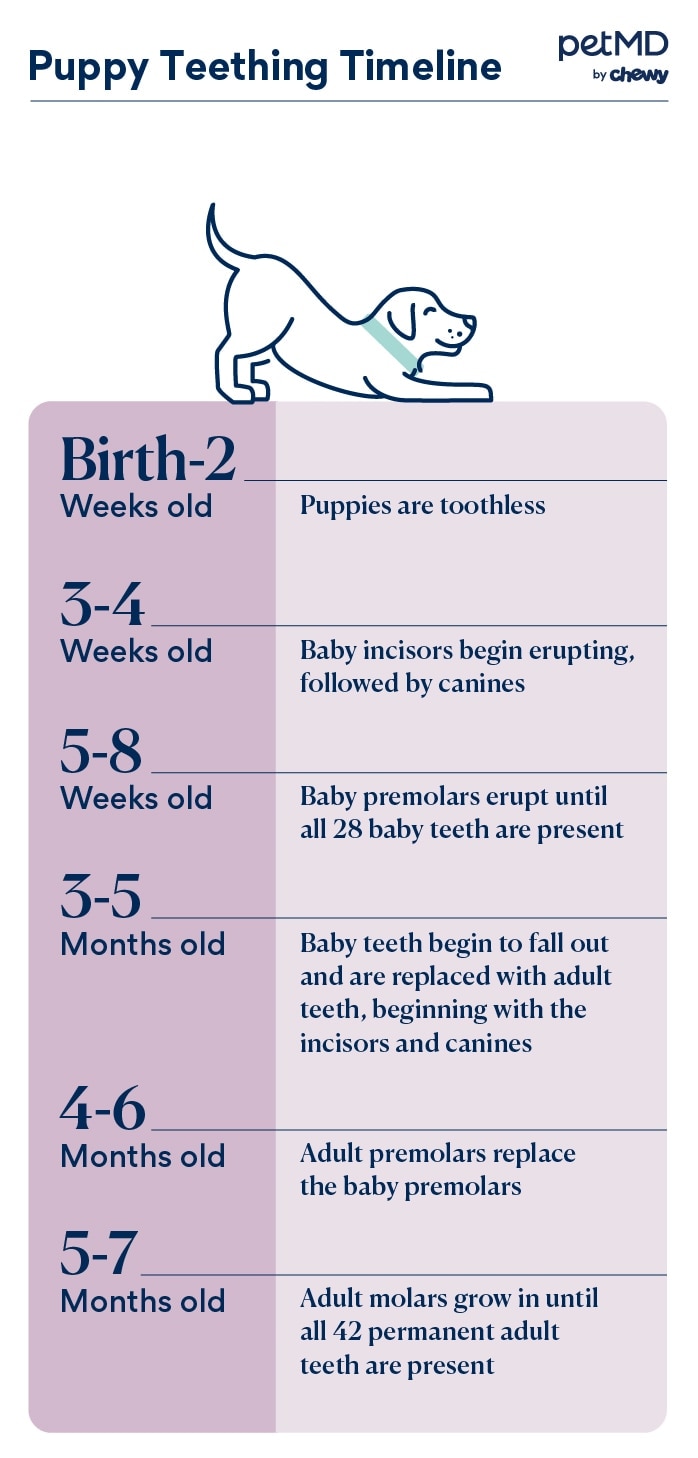
Puppies are born without teeth but develop a full set of 28 baby teeth by about 6–8 weeks of age.
Because newborn puppies nurse from their mother, they do not need teeth immediately after birth.
Baby (deciduous) teeth begin erupting at around 3 weeks of age, which is also when puppies can start transitioning to solid food while continuing to nurse.
The teeth erupt in the following order:
- Incisors (the small front teeth)
- Canines (the "fang" teeth)
- Premolars (used for chewing)
The remaining baby teeth continue erupting over the next several weeks until the full set is present.
When Do Puppies Stop Teething?
Most puppies finish teething by about 6 months of age, although the exact timing varies slightly between individual dogs and breeds.
Puppies usually begin losing their baby teeth at around 3½ to 5 months of age. In general, large- and giant-breed dogs tend to erupt their adult teeth slightly earlier than small-breed dogs.
The baby incisors are usually the first teeth to fall out as the permanent teeth begin pushing through the gums.
Don't be surprised if you occasionally find a tiny baby tooth on the floor. It's completely normal. Many puppies also swallow their baby teeth while eating or chewing, so it's equally normal if you never find any.
General Puppy Teething Timeline
- 3½–5 months: Baby teeth begin falling out
- 3–5 months: Adult incisors and canine teeth erupt
- 4–6 months: Adult premolars erupt
- 5–7 months: Adult molars erupt
- Around 6 months: Most puppies have a full set of permanent teeth
Puppies have 28 baby teeth, while adult dogs have 42 permanent teeth.
Signs of Puppy Teething
The most common signs of puppy teething are increased chewing, mouthing, and a stronger desire to gnaw on objects.
Between 3 and 7 months of age, puppies naturally explore their environment with their mouths while their baby teeth are falling out and adult teeth are erupting.
Because this developmental stage overlaps with the teething process, it can be difficult to tell whether your puppy is chewing because of sore gums or simple curiosity.
Teething discomfort may make your puppy:
- Chew more frequently
- Become more mouthy during play
- Gnaw on furniture or household objects
- Seek out different textures to chew
This stage is temporary, and puppies should be gently redirected to appropriate chew toys whenever they begin chewing inappropriate items.
How To Help a Teething Puppy
The best way to help a teething puppy is by providing safe chew toys and cold treats that help soothe sore gums.
Because every puppy experiences teething differently, some may prefer softer toys while others enjoy firmer chew toys. Offering a variety of safe options allows your puppy to choose what feels most comfortable.
Cold can also help reduce gum discomfort and inflammation. Good options include:
- Soft puppy chew toys
- Rubber chew toys
- Chilled chew toys
- Frozen chew toys
- Frozen or chilled blueberries
- Frozen or chilled green beans
- Frozen or chilled carrots
Providing appropriate chewing outlets also helps redirect your puppy away from chewing furniture, shoes, and other household items while they work through this temporary stage.
Best Puppy Teething Toys
The best puppy teething toys help soothe sore gums while redirecting chewing away from furniture and other household items.
Look for toys designed specifically for teething puppies that are soft enough for sore gums but durable enough to withstand frequent chewing.
A simple way to provide additional relief is to freeze your puppy’s regular kibble inside a Classic KONG® or another puzzle toy.
The cold helps soothe inflamed gums while the puzzle toy provides mental enrichment and encourages appropriate chewing behavior.
Health Tools
Not sure whether to see a vet?
Puppy Teething FAQs
When do puppies start teething?
Puppies begin growing their baby teeth at around 3 weeks of age.
When do puppies stop teething?
Most puppies finish teething by about 6 months of age.
Is it normal for puppies to chew everything while teething?
Yes. Increased chewing and mouthing are completely normal during the teething stage.
Should I worry if my puppy swallows a baby tooth?
Usually not. Puppies commonly swallow their baby teeth while eating or chewing, and this is generally harmless.
What helps soothe puppy teething pain?
Cold chew toys, frozen treats, and safe rubber chew toys can all help reduce discomfort during teething.


