Hairless Guinea Pigs: A Pet Parent’s Guide


Chewy
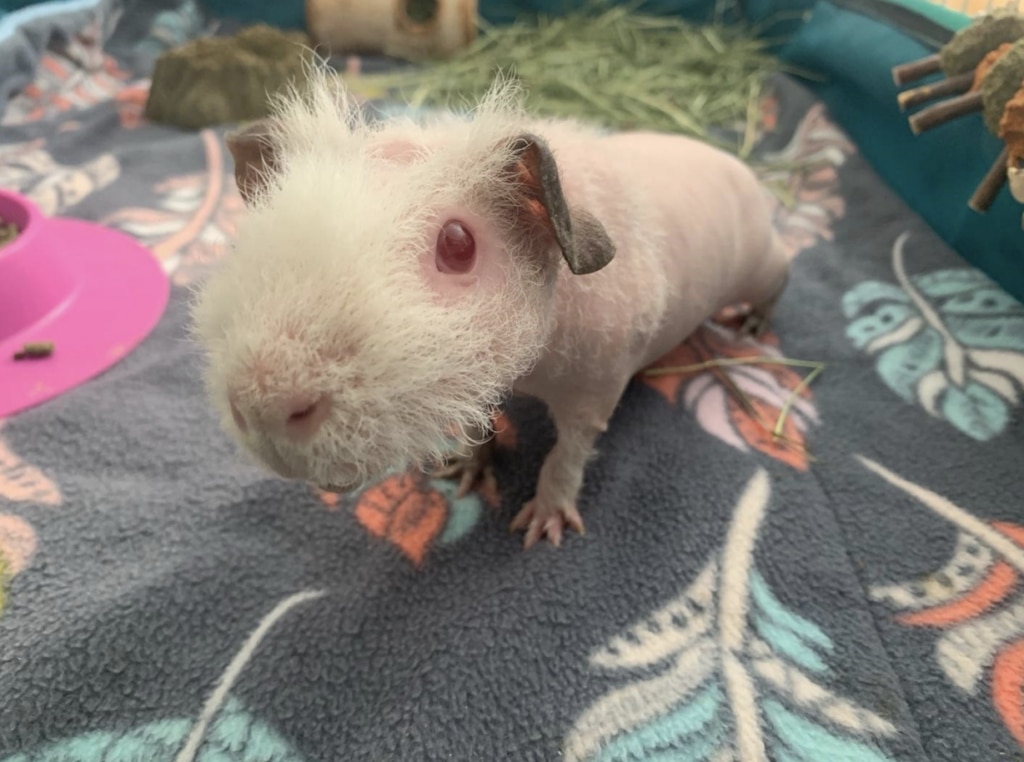
A hairless guinea pig is a type of guinea pig (also called a cavy) with little to no hair, and there are two types: the skinny pig and the Baldwin guinea pig.
While their basic care is like that of other guinea pigs, these hairless cavies need extra attention to their skin, environment, and temperature to help keep them healthy, safe, happy, and comfortable.
Hairless Guinea Pig Overview
- Hairless guinea pigs are social, gentle pets known for their nearly hair-free appearance and friendly personalities.
- There are two types of hairless guinea pigs: skinny pigs and Baldwin guinea pigs, which differ in how and when they lose their hair.
- Hairless guinea pigs typically live five to seven years with proper nutrition, housing, and veterinary care.
- Because they lack a protective coat, hairless guinea pigs need extra care to protect their sensitive skin and maintain a comfortable body temperature.
| Difficulty of Care | Beginner to Intermediate |
|---|---|
| Average Lifespan | Up to 8 years with proper care |
| Average Adult Size | 8 to 10 inches in length. Typical guinea pigs weigh approximately 700–1,200 grams (1.5–2.65 pounds), with males (boars) generally larger than the females (sows). |
| Diet | Herbivore |
| Minimum Habitat Size for 1 guinea pig | Usable floor space is the most important factor, not height, as guinea pigs are ground-dwelling. One guinea pig should have at least 7.5 square feet of usable floor space, although bigger is always better. |
| Minimum habitat size for 2 or more guinea pigs | For two cavies, a minimum of 10 square feet of usable floor space. After that, increase usable floor space by at least 20% for each additional guinea pig |
Types of Hairless Guinea Pigs
There are two types of hairless guinea pigs—the skinny pig and the Baldwin guinea pig:
- Skinny pigs are born almost completely hairless, with some hair on their feet, muzzle, and back that grows with age.
-
- On occasion, you may see a skinny pig with extra hair on their face or shoulders and may hear them referred to as “werewolf” skinnies.
- For all skinnies, their skin is typically smooth to the touch.
- Skinny pigs are the most common hairless guinea pigs kept as pets.
- The Baldwin guinea pig is born with fur that’s progressively lost over the days to months after birth, leaving in some cases only the whiskers and/or hair on the feet.
Both types of hairless guinea pigs arose from spontaneous genetic mutations about 40 years ago. However, the skinny pig is not one of the 13 guinea pig breeds recognized by the American Cavy Breeders Association.
Hairlessness in both skinny and Baldwin guinea pigs is inherited as a recessive trait, but the two varieties have different genetic causes of hairlessness.
Caring for a Hairless Guinea Pig
Caring for a hairless guinea pig does not differ much from caring for a typical guinea pig.
Hairless guinea pigs eat the same types of foods as haired guinea pigs. Because they lack an insulating hair coat, some may need more calories to maintain their body temperature and a healthy body weight. Monitor weight and body condition closely and ask your veterinarian experienced in guinea pig care whether your pet’s diet needs to be adjusted.
Always feed a guinea pig on a schedule that maintains a healthy body weight and energy level.
All guinea pigs should have unlimited access to hay. Their diet should also include a balanced diet of fresh greens and veggies, including vitamin-C rich options such as bell peppers; pellets; and a source of vitamin C through oral supplements of tablet-like treats (such as the Oxbow Natural Science Vitamin C Small Animal Supplement).
Always check with your veterinarian experienced in guinea pig care before offering your guinea pig a new supplement.
Hairless guinea pigs can be extremely sensitive to heat, cold, and drafts, so keep them in a comfortable, temperature-regulated area of the house, typically between 70–75 F.
Cooler temperatures, especially with hairless guinea pigs, may cause hypothermia or respiratory issues. A temperature of 80 or above can put cavies at risk for heat stroke. Humidity is also important to monitor with hairless guinea pigs; they do best with 30–60% relative humidity.
Like all other guinea pigs, they may enjoy an occasional trip outdoors. Because hairless guinea pigs are especially vulnerable to sunburn and temperature extremes, keep them out of direct sunlight and limit outdoor time to mild temperatures.
Take care to prevent your guinea pig from chewing on or eating unfamiliar plants or other materials outdoors. Grass and plants may be contaminated with pesticides, fertilizers, or other chemicals, and some plants and insects can be harmful if ingested.
Also, with any small pet outside, be sure to protect them from predators (including hawks and other large birds) and never leave them outside unsupervised.
Spot-clean the enclosure daily by removing any wet or soiled bedding, hay, and feces, particularly around feeding, sleeping, and toileting areas. About once a week, perform a more thorough cleaning by replacing soiled bedding and cleaning the enclosure and accessories with a small-pet-safe cleaner.
Keeping the habitat clean and dry is especially important for hairless guinea pigs because prolonged contact with urine, feces, or damp bedding can irritate their exposed skin.
If you use fleece liners and housing, remove or replace wet or soiled sections promptly and launder liners weekly to keep your piggie’s enclosure clean and dry.
Because hairless guinea pigs lack hair on their body, their skin is sensitive, prone to irritation, and may become dry easily.
If your hairless guinea pig’s skin becomes excessively dry or flaky, your veterinarian experienced in guinea pig care may recommend topical treatments to help the skin stay better hydrated.
Hairless Guinea Pig Health Issues
With dedicated, loving care, hairless guinea pigs can thrive and bring a lot of joy to your home.
Hairless guinea pigs can be predisposed to all the same health issues other guinea pigs experience, such as:
- Gastrointestinal issues, like stasis
- Respiratory infection
- Dental issues
- Skin conditions, like bumblefoot or ringworm
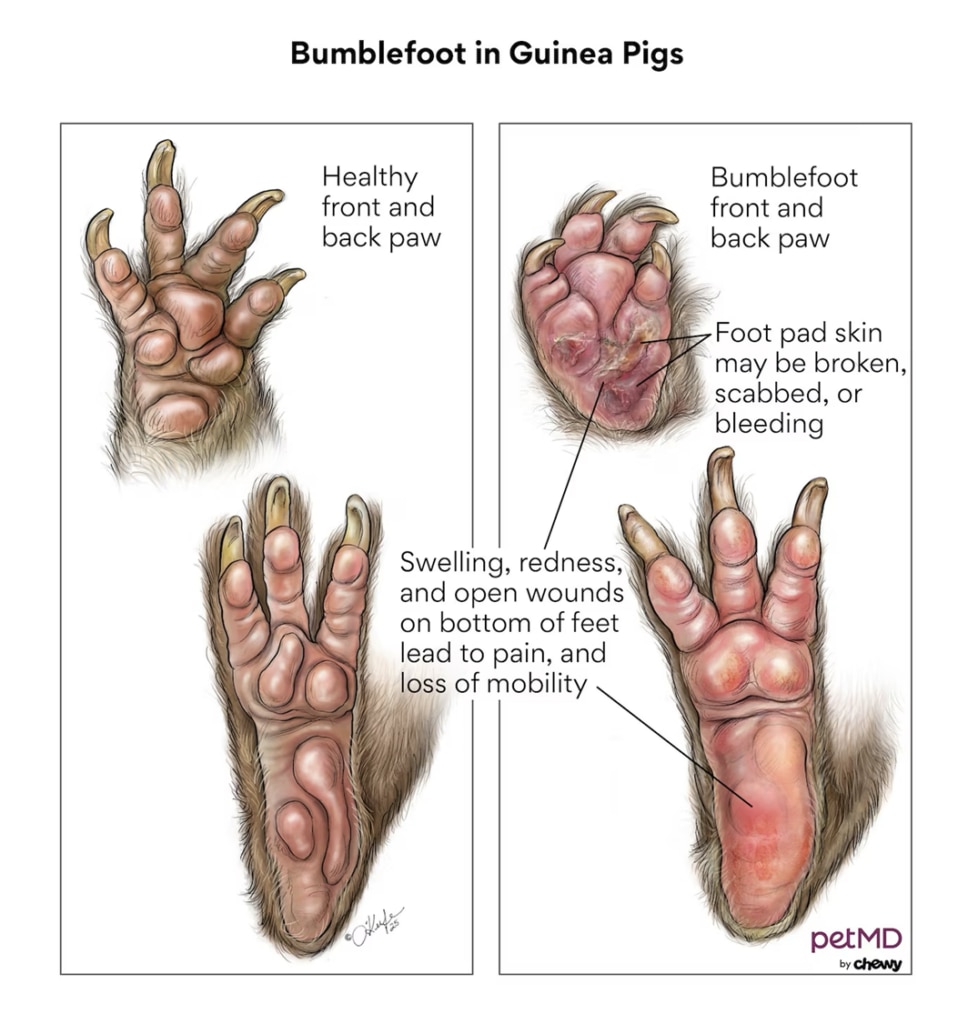
Click here to download this medical illustration.
- Eye issues, like corneal ulcers/hay pokes
Every pet’s appetite, energy level, and overall appearance should be monitored carefully.
Routine assessment of your hairless guinea pig’s well-being is important, and if you suspect something is wrong, call your veterinarian experienced in guinea pig care immediately.
Establishing a relationship with a veterinarian who is experienced in guinea pig care is a must.
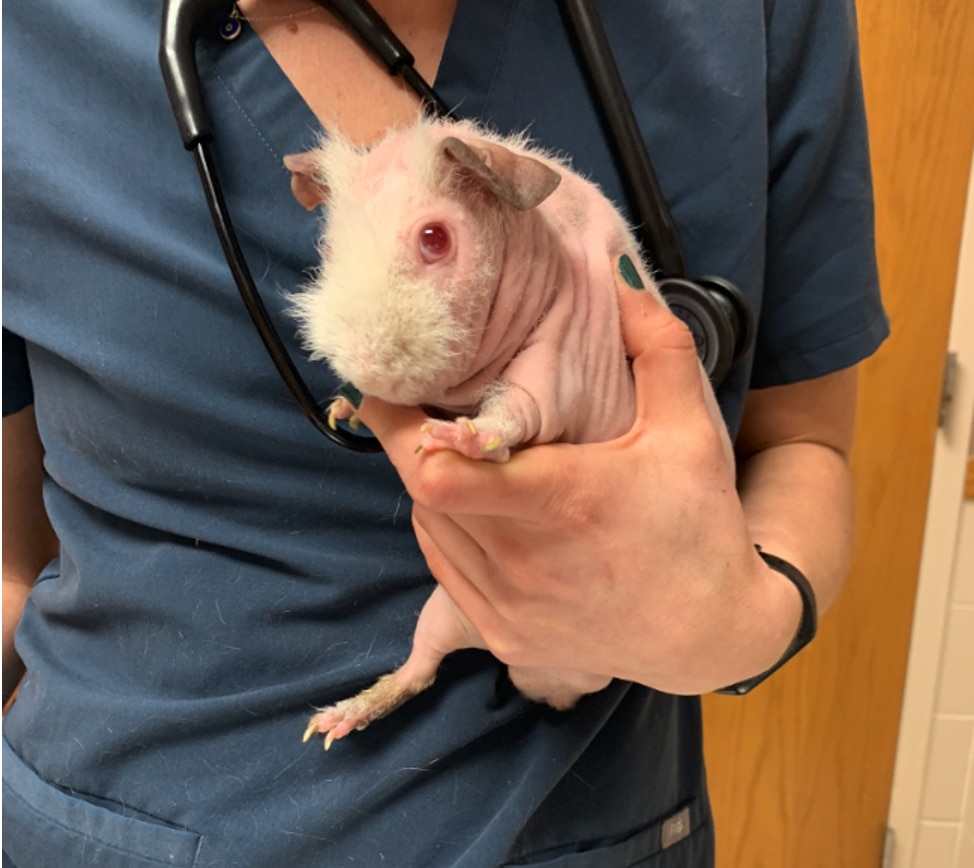
Like cats and dogs, guinea pigs should have at least yearly veterinary check-ups to help ensure they are healthy.
Gastrointestinal Issues
All guinea pigs rely on a healthy population of bacteria in their gastrointestinal (GI) tracts to digest their food properly.
To keep their GI bacteria healthy, guinea pigs must ingest a large amount of fibrous hay daily, along with smaller amounts of vitamin C-enriched pellets and fresh, guinea pig-safe greens.
When a guinea pig stops eating or doesn’t consume enough fiber, normal gastrointestinal motility and the balance of intestinal bacteria can be disrupted. This can lead to painful gas, slowed movement of food through the GI tract, and a potentially life-threatening condition commonly called GI stasis.
Affected guinea pigs may be weak, lethargic, have little to no appetite, and pass less or no stool. Diarrhea is also abnormal in guinea pigs and warrants prompt veterinary attention.
If untreated, GI stasis can quickly lead to death. If your hairless guinea pig is showing any of these signs, contact a veterinarian experienced in guinea pig care right away.
GI disease can also result from infections, parasites, dental disease, systemic illness, and certain antibiotics that disrupt the normal intestinal microbiome.
Use only antibiotics prescribed by a veterinarian experienced in guinea pig care.
Not all GI issues in guinea pigs can be prevented, but the best way to reduce the chance is to:
- Provide them with unlimited hay (kept in small, flat piles and/or in hay feeders.
- Provide a portion of non-seeded, vitamin C-rich pelleted food (amount and frequency based on the recommendation of your veterinarian experienced in guinea pig care).
- Provide unlimited fresh water (change water 1–2 times a day, as guinea pigs may backwash into their water)
- Provide a daily vitamin C supplement
Keeping their cages clean and tidy, as well as reducing overcrowding, also helps decrease exposure to GI parasites.
Guinea pig enclosures should allow at least 7.5 square feet of floor space per cavy—but bigger is always better. Guinea pigs love to play and explore, so make sure that your pig has plenty of room to stretch their legs but also to hide in comfy hideaways when they want to. Most guinea pigs do well with a compatible companion, so floor space requirements increase to 10 square feet for two guinea pigs and then by about 20% for each additional guinea pig.
Make sure each has at least one hide, and never use mesh flooring, wire flooring, or cedar shavings, as these can lead to significant health issues. Plush fleece liners with underlying absorbent layers or recycled paper bedding are great options for hairless guinea pigs.
Cavies, especially when young, enjoy doing zoomies or “popcorning” around the cage.
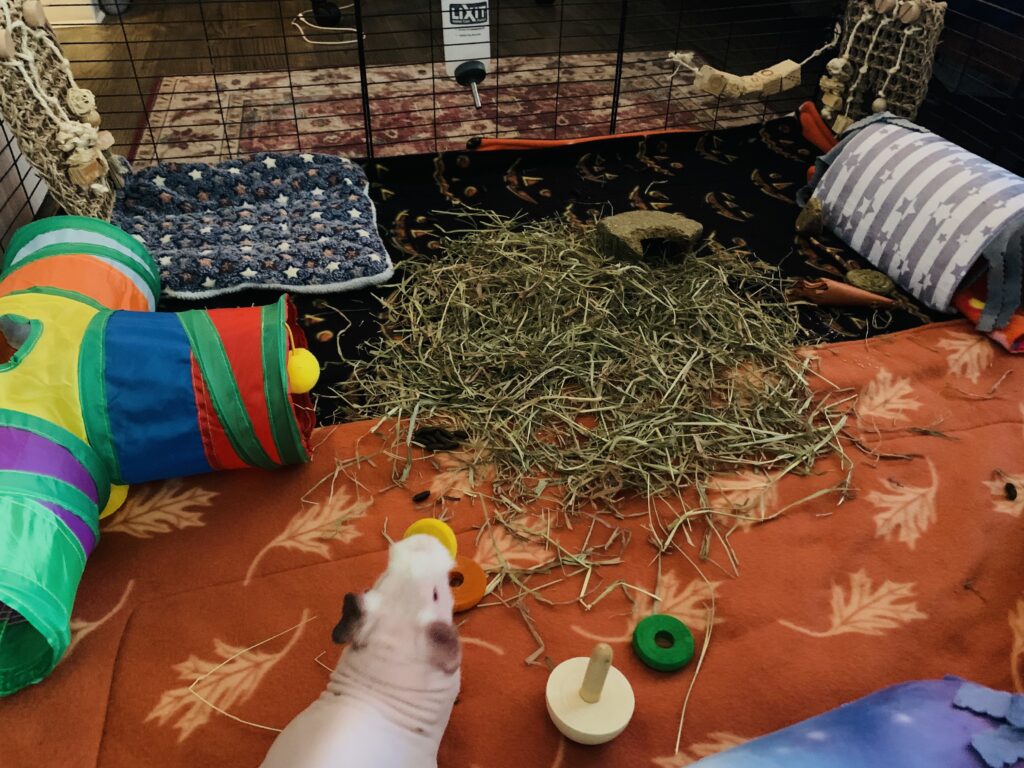
Large enclosures, like the Midwest cage or a cage you build with pet-safe panels, are ideal for encouraging play, exercise, and enrichment. Make sure none of the toys, hides, bowls, or chews have sharp spots or splinters that could cause wounds.
Respiratory Issues in Hairless Guinea Pigs
Like other pet guinea pigs, hairless guinea pigs are prone to pneumonia, commonly caused by bacteria including Bordetella, Streptococcus, and Staphylococcus.
Guinea pigs can carry these bacteria in their respiratory tracts without showing symptoms, then develop visible signs when sick with other illnesses or when they are exposed to high levels of ammonia caused from wet, soiled bedding.
Very young guinea pigs, whose immune systems are still developing, are also more prone to developing pneumonia.
Respiratory symptoms in guinea pigs include:
- Lethargy
- Coughing
- Sneezing
- Runny eyes and nose
- Decreased appetite
- Difficulty/heavy breathing (in severe cases)
If your guinea pig is exhibiting these signs, bring them to a veterinarian experienced in guinea pig care immediately.
To prevent respiratory issues in hairless guinea pigs, clean their cage often and remove all soiled blankets, litter, and bedding. Avoid keeping too many guinea pigs in one habitat, and feed them a nutritious, balanced diet.
Dental Issues in Hairless Guinea Pigs
All guinea pigs’ teeth grow continuously throughout their life. Eating and chewing fibrous foods, especially grass hay, promotes normal tooth wear.
Guinea pig-safe wooden/solid hay chews and toys can provide additional chewing opportunities and enrichment.
Inadequate access to fibrous foods such as grass hay can contribute to abnormal tooth wear and dental disease.
In extreme cases, overgrown teeth can become impacted and cause an abscess (infection), making it too painful for guinea pigs to bite or chew at all. The lack of food and increasing pain can lead to GI stasis.
Abnormal tooth wear or malocclusion can cause sharp points to develop on the cheek teeth. These can injure the tongue or other tissues in the mouth and interfere with eating. Vitamin C deficiency can also contribute to dental and periodontal disease in guinea pigs.
Guinea pigs with dental issues may:
- Drool
- Drop food
- Eat less
- Pass less stool
- Lose weight
If your guinea pig has any of these symptoms, they should be examined by a veterinarian experienced in guinea pig care immediately.
While some dental problems in guinea pigs are genetic, dental disease in guinea pigs may be reduced by ensuring these pets always have hay, in addition to guinea pig-safe toys and chews.
Skin Issues in Hairless Guinea Pigs
Because a guinea pig’s hair protects them from the environment and helps insulate them from the cold, hairless guinea pigs may be more prone than their haired counterparts to developing skin problems and hypothermia.
They may also be at increased risk of developing skin problems from sunburn, trauma, and infectious organisms such as bacteria, fungi, and parasites.
In addition, hairless guinea pigs may develop skin abrasions from bedding, toys, fighting with other guinea pigs, or scratching themselves with overgrown nails.
To prevent self-induced trauma, check your hairless guinea pig’s nails regularly to ensure they are kept at an appropriate length.
Bedding should be very soft to protect their sensitive skin and feet—fleece liners are ideal.
Soft, fleece-style sleeping cozies are a great addition to any skinny pig’s home.
Ringworm is a fungal infection that can be seen in all types of guinea pigs, but hairless pigs may be more susceptible.
Without hair protecting their skin, hairless guinea pigs have more direct exposure to environmental fungi, bacteria, and other pathogens. Skin lesions may appear dry, crusty, scaly, or reddened.
Ringworm is treatable, but it can take several weeks to months to treat. It’s also contagious, both to other guinea pigs and humans.
If you suspect your guinea pig has ringworm, seek veterinary care right away. Be sure to wash your hands thoroughly after handling your pet or bedding, blankets, toys, or other objects they have been in contact with.
Eye Issues in Hairless Guinea Pigs
Hay can occasionally scratch an eye or become lodged around it, causing irritation or corneal ulceration.
Seek veterinary care promptly if your guinea pig is squinting, holding an eye closed, tearing excessively, or has redness, discharge, swelling, or cloudiness of the eye.
Urinary Issues in Hairless Guinea Pigs
Like other guinea pigs, hairless guinea pigs can develop urinary tract problems, including bladder inflammation, urinary tract infections, and bladder or urinary stones.
Signs of a urinary problem may include:
- Straining or vocalizing while urinating
- Urinating more frequently or passing only small amounts of urine
- Blood in the urine
- Wetness or urine staining around the hind end
- Decreased appetite
- Lethargy or signs of pain
Urinary stones can sometimes block the flow of urine, which can become a medical emergency. If your guinea pig is straining to urinate, appears to be in pain, has blood in their urine, or is unable to pass urine normally, contact a veterinarian experienced in guinea pig care right away.
Providing unlimited fresh water, an appropriate guinea pig diet, and a clean, dry enclosure can help support urinary health, but not all urinary problems can be prevented.
Hairless Guinea Pig Temperament and Behavior
Hairless guinea pigs, like most other guinea pigs, are typically gentle, docile, and loving pets.
However, all guinea pigs should be handled gently every day when they are young, to socialize them and make them comfortable in their new homes.
Guinea pigs are by nature social creatures, and nothing replaces the bond they form with their own species.
It’s ideal to keep them in pairs or groups—but remember, more cavies mean more space is needed. Guinea pigs should never be housed with other species.
Compatible same-sex pairs can live together, and a neutered male may also live with one or more females. Intact males and females should not be housed together because of the risk of pregnancy.
Males can be territorial and some may fight, so be sure to provide them with adequate space.
Whenever introducing new guinea pigs to each other, be sure to do so gradually. Introduce unfamiliar guinea pigs in a large, neutral area with plenty of space and resources. Closely supervise their interactions and be prepared to separate them if fighting or injury occurs. Never leave them unsupervised when they are together until you are sure that all is harmonious.
Monitor your hairless guinea pig’s behavior with others, especially if they’re new friends. Grooming each other and sleeping together are signs that things are going well.
Some chasing, mounting, vocalizing, and other dominance behaviors can occur while guinea pigs establish their relationship. Persistent aggression, biting that causes injury, or preventing another guinea pig from accessing food, water, or shelter are behaviors that warrant intervention.
For hairless guinea pigs, it’s especially important to prevent fighting, as this could lead to unintended skin injury.
If your guinea pigs are not getting along well, try providing more space, more enrichment with separate feeding stations and toys, and consider short, frequent, supervised visits.
Hairless Guinea Pig Grooming
It’s important to keep an eye on your hairless guinea pig’s skin. Wounds, infection, and injury should be assessed by a veterinarian experienced in guinea pig care right away for appropriate treatment.
If your hairless guinea pig develops dry, flaky, red, or irritated skin, contact your veterinarian experienced in guinea pig care before applying creams, oils, or other topical products.
Your veterinarian can determine whether treatment is needed and recommend a guinea pig-safe product if appropriate.
Keep an eye on hydration, water intake, and environmental temperature and humidity, as low humidity and high temperatures can lead to dry skin.
Frequent nail trimming is important to prevent unintended self-trauma. It’s natural for guinea pigs to scratch now and again, but if nails are overgrown and your guinea pig lacks hair, this could lead to an abrasion or deeper wound.
Your veterinary office can perform a routine nail trim and advise you on how to do it at home with guinea pig-safe nail trimmers.
Hairless Guinea Pig Considerations for Pet Parents
Before considering any type of pet, think about how well suited you are to meeting their needs.
Hairless guinea pigs are social inquisitive pets who require extra attention to hygiene and skin care. Because of this, it may cost more than caring for another type of pet, and take more time to keep them healthy, comfortable, and happy.
Be sure you have the time and finances available to properly care for a hairless guinea pig before you bring one home.
Hairless Guinea Pig FAQs
How much does a hairless guinea pig cost?
Hairless guinea pigs may cost $100 to $300 or more, depending on the breeder, location, and type. You can also consider adopting from a guinea pig rescue, as they often have wonderful guinea pigs looking for homes. Pet parents should also budget for an appropriate enclosure, food and bedding, enrichment, and both routine and unexpected veterinary care.
Are hairless guinea pigs good pets?
Hairless guinea pigs can make wonderful pets for people prepared to meet their specialized needs. They are social animals who typically do best with a compatible guinea pig companion and require extra attention to temperature, skin health, nutrition, and enclosure hygiene.
How long can a hairless guinea pig live?
Hairless guinea pigs typically live about five to seven years, although some may live eight years or longer. Appropriate nutrition and housing, daily care, and annual or more frequent veterinary wellness exams can help support a long, healthy life.
Do hairless guinea pigs like to be held?
Many hairless guinea pigs can learn to enjoy gentle handling, especially when they are socialized with people using positive interactions. Always support their entire body when holding them, and never force handling if your guinea pig appears to be frightened or stressed.


