How to Pull A Horse’s Mane



Alexander Pytskiy/iStock / Getty Images Plus via Getty Images
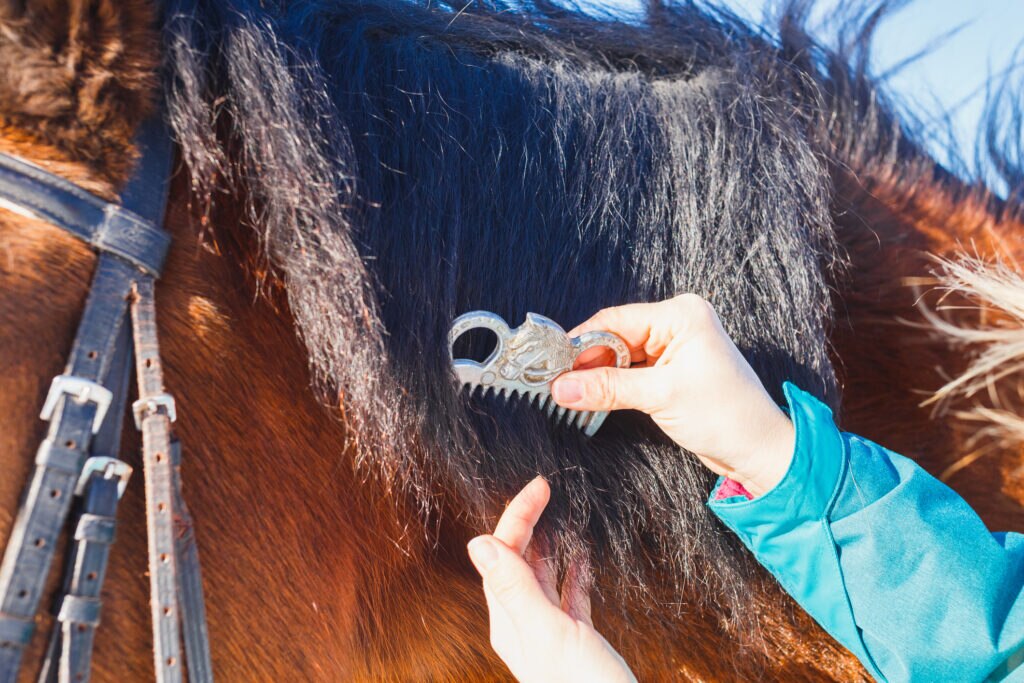
Mane pulling is the act of pulling small amounts of hair out at a time to maintain a manageable, uniform-length mane. This is often done in show disciplines such as hunter and jumper, whereas reining and cutting horses’ manes are typically kept long and flowing.
Some horse sport trends require small, uniformed braids down the neck or a thinner, tidier mane; carefully pulling the mane can help make this process easier.
Horse manes naturally grow long for protection, and mane pulling allows for a more natural look that can’t be acquired with scissors.
Key Takeaways
- Pulling a horse’s mane involves using a comb to pull out the horse’s hair in small sections.
- A pulled horse mane looks tidier and is easier to keep clean and braid.
- Mane pulling generally doesn’t hurt the horse, as horses don’t have much feeling in their mane.
Mane Pulling Supplies
Before you begin pulling a horse’s mane, make sure you have these supplies on hand:
- Brush: a heavier duty brush to loosen dirt and debris in the mane
- Mane detangler: a handy spray to help work out knots in a horse’s mane with minimal breakage
- Horse mane pulling comb: a small metal comb, or you can use a sturdy human comb
How To Pull a Horse’s Mane Properly
Mane pulling is typically best done after a workout, when the horse is still warm, and the pores of the skin are open. Here’s how to go about getting your horse’s mane look show-ready:
-
Brush the mane free of knots, spritzing detangler lightly if needed.
-
Start at either the withers or poll (near shoulders or behind ears) and grab a small section of hair.
-
Gently tease out the shorter hairs until you have just a few of the longer hairs remaining. Most people consider 4–6 inches to be the “appropriate” show-length.
-
Wrap these hairs around the comb a few times, then quickly pull either up or down to free the hairs. Some horses may prefer their mane to be pulled straight up, while others seem more comfortable with straight down or an angle in between.
-
Repeat in small sections moving up or down the mane. It’s important not to grab too many hairs at once, as that can cause discomfort for your horse.
-
Pulling the mane to achieve goal thickness and length should be done in several sessions over a week or two, to prevent your horse from getting uncomfortable, bored, or frustrated with the process.
-
Always use positive reinforcement to help keep this a somewhat enjoyable experience. Offer cookies, praise, and take breaks periodically.
Does Pulling a Horse’s Mane Hurt?
Mane pulling can be painful if you pull too many hairs simultaneously.
Make the process as painless by pulling the mane after a workout while the horse is still warm/sweaty and their pores are open, and only pulling a few hairs at a time.
What Side Do You Pull a Horse’s Mane?
Most Western disciplines style or prefer the mane on the left side, and English disciplines on the right.
While this isn’t always possible with unruly growth, you can “train” the mane to lay on and grow in one direction by using a wet comb or brush daily.
How Often Should You Pull a Horse’s Mane?
Once your horse’s mane is at the desired thickness and length, a single mane-pulling session a week for maintenance should keep it show- or braid-ready.
Are There Alternatives to Mane Pulling?
If horses are extremely uncomfortable with mane pulling, owners may opt to cut their horse’s mane.
To avoid having your horse’s mane looking chunky, use a thinning comb, or back-comb sections of the mane. Then, use a pair of sharp scissors to trim the hairs on an angle.
Cutting a horse’s mane is also a good option for giving a horse a “roached” look, which can also be achieved with horse clippers.
Whether you choose to pull or cut your horse’s mane, always make sure to keep the experience as positive as possible for your horse. Over time, they will get used to regular mane maintenance and may even enjoy getting pampered with a haircut.


