Uveitis in Dogs: Symptoms and When To Call Your Veterinarian


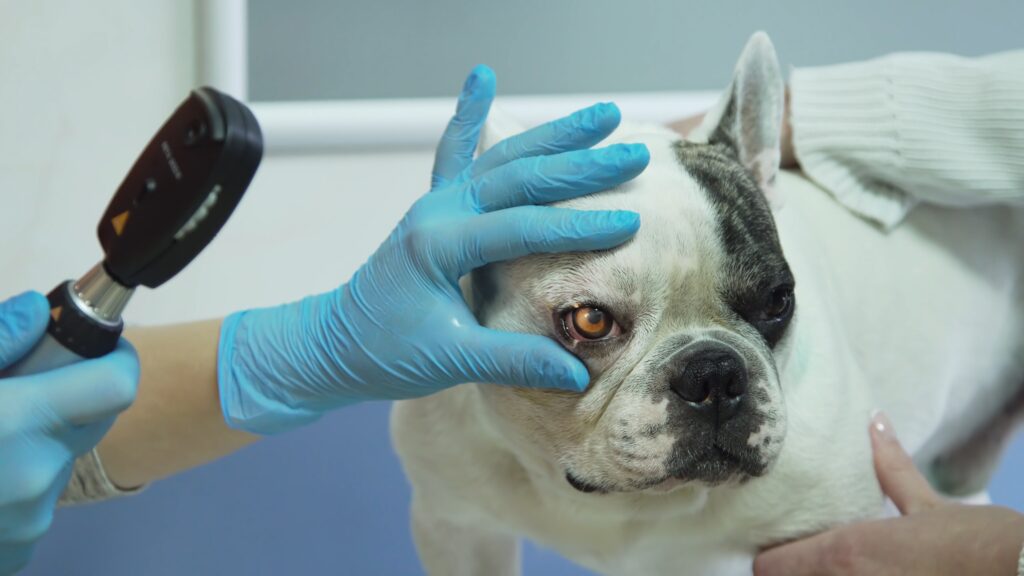
Alexpunker/iStock / Getty Images Plus via Getty Images
Vision is a remarkable sense and one your dog relies on to interact with the world. As a pet parent, it’s important to do what you can to help maintain your dog’s eyesight.
Any change in your dog’s vision or the appearance of the eye could signal a larger problem and should be examined right away. One such problem is uveitis.
Uveitis in dogs can have serious, potentially vision-threatening consequences and may be associated with systemic (whole-body) disease.
In this article, you’ll learn about uveitis in dogs, how veterinarians diagnose and treat it, and how to protect your pet.
Key Takeaways
- Uveitis is a painful inflammation of the eye’s uveal tract that can lead to serious complications, including blindness and glaucoma.
- Causes of uveitis range from trauma and infections to systemic illnesses like cancer or autoimmune conditions.
- Treatment includes aggressive use of topical and oral medications to reduce inflammation, control pain, and preserve vision.
What Is Uveitis in Dogs?
Uveitis in dogs is inflammation of a pup’s uvea.
In dogs, the uvea—which is highly vascular (has good blood supply)—is the middle layer of the eye, and includes the iris, ciliary body, and choroid.
The iris, through constriction or dilation, regulates how much light enters the eye; the ciliary body produces fluid that nourishes the eye and helps alter the shape of the lens; and the choroid provides blood supply for the retina.
The iris and ciliary body form the anterior portion of the uvea, and the choroid is the posterior portion.
Because it’s so vascular, the uvea is often secondarily affected by diseases elsewhere in the body (for example, infections). Uveitis can therefore be a sign of an underlying disease and should be considered a medical emergency.
Seek veterinary attention immediately.
Uveitis may occur in one or both eyes. It’s painful and can lead to severe, life-threatening complications, such as:
-
Phthisis bulbi (shrinkage of the globe)
Uveitis in dogs may appear as a "red eye" with a hazy appearance. Because it’s painful, your dog will most likely squint and try to paw or rub their head on the floor or couch.
Symptoms of Uveitis in Dogs
Uveitis in dogs is painful.
Beyond the signs below, you may notice eye discomfort, such as increased squinting (blepharospasm), tearing, and sensitivity to light (photophobia).
-
Decreased or lost vision
-
Small pupil (miosis)
-
Hyphema or hypopyon (red or white blood cells layering in the eye)
-
Haziness in the eye
-
A blueish appearance to the eye
Causes of Uveitis in Dogs
Uveitis has a wide variety of causes, which are generally divided into two main groups: exogenous and endogenous.
-
Exogenous: conditions outside of the eye, such as trauma or corneal ulceration.
-
Endogenous: diseases originating in the eye or occurring secondarily due to spreading from systemic disease.
Common causes of uveitis in dogs include:
-
Cancer (melanoma is the most common primary eye tumor in dogs; lymphosarcoma [lymphoma] is the most common metastatic [spreadable] cause)
-
Endocrine disease (diabetes mellitus, high cholesterol)
-
Heritable conditions (pigmentary uveitis in Golden Retrievers)
-
Idiopathic (unknown), the most common cause
-
Immune-mediated (lens-induced uveitis; uveodermatologic syndrome, seen more in male Akitas, Samoyeds, Siberian Huskies, and Shetland Sheepdogs)
-
Infections, including bacterial, viral, parasitic, and fungal
How Veterinarians Diagnose Uveitis in Dogs
Uveitis’ hallmark symptom—"red eye”—is also common in many other dog eye conditions.
A veterinarian must rely on a thorough history provided by the pet parent (travel, medications, trauma) and perform a physical exam with preliminary eye tests, such as a fluorescein eye stain, Schirmer tear test, and tonometry.
In dogs with uveitis, the Schirmer tear test and fluorescein eye stain are often normal, whereas the tonometry, which measures a dog's intraocular pressure, is typically low.
Once uveitis has been diagnosed, additional testing helps determine the underlying cause. These tests may include:
-
Infectious disease testing (for example, ELISA SNAP tests, tick titers)
-
Imaging (chest X-rays, ultrasound of the abdomen and/or eye)
Even with extensive testing, the underlying cause remains unknown in many cases.
Treatment of Uveitis in Dogs
The main goal in treating uveitis in dogs is to control pain or manage the underlying cause (if known) and preserve vision.
Treatment is aimed at the underlying cause and associated symptoms. For example, trauma or cancer may require surgery (and possibly chemotherapy); dental disease may require cleaning and extraction.
Because uveitis itself must be treated aggressively, medications are often administered every couple of hours.
Topical steroids (prednisolone acetate or dexamethasone) or NSAIDs (flurbiprofen) are the preferred primary treatment.
Broad-spectrum antibiotics, medications that dilate the eye such as atropine sulfate, and immunosuppressives like cyclosporine may be used to treat or prevent infection, reduce pain, and limit complications.
In addition to eye medications, oral medications like prednisone, carprofen, or doxycycline are typically prescribed.
Unfortunately, for dogs with severe or refractory uveitis—or for eyes that are blind or especially painful—removal of the eye (enucleation) or humane euthanasia may be recommended.
Recovery and Management of Uveitis in Dogs
With proper treatment of uveitis in dogs, improvement can often be observed after a few days.
However, treatment often continues for several weeks, sometimes two to four weeks past resolution of symptoms. Do not stop early because your dog looks better—make sure to complete the entire treatment as prescribed by your vet.
Mild cases may respond to topical therapy alone; others require oral medications. Follow your veterinarian’s directions and keep all follow-up visits and rechecks.
If any oral steroids are prescribed, pay close attention to the dosing instructions, as they often require a tapering schedule.
Because the affected eye will be painful and sensitive to light, keep your pup in a darker room and avoid direct sunlight during their recovery.
Generally, give eye drops before ointments, and separate eye medications by five to 10 minutes. Ask your vet about the exact order and timing.
Do not let any part of the medication bottle touch your dog’s eye.
A recovery cone is important to prevent scratching or rubbing of the face and eyes, which can worsen the situation.
Eye conditions can change abruptly, so therapy often needs adjustment. Complications, such as vision loss, glaucoma, cataracts, and phthisis bulbi, can occur, so frequent rechecks and tests are necessary to help ensure there is an appropriate response.
Prevention of Uveitis in Dogs
Unfortunately, not all cases of uveitis in dogs can be prevented, but having your pup examined at the first sign of eye changes will often provide a quicker diagnosis and greater success of treatment.
If your dog has an underlying or congenital disease, managing that condition is paramount to preventing uveitis from occurring secondarily.
You can reduce the risk of eye trauma by supervising play, preventing fights, using a leash, and discouraging scratching or face-rubbing on rough surfaces.
Keeping your dog healthy with proper diet and exercise, routine examinations (including dental care and blood pressure checks), and parasite prevention goes a long way toward protecting eye health.
Uveitis in Dogs FAQs
What eye drops are good for dogs with uveitis?
Topical steroids, such as prednisolone acetate or dexamethasone, are commonly used to treat uveitis, often given every couple of hours or more frequently.
Other drops to address inflammation, infection, pain, and the formation of adhesions include flurbiprofen (NSAID), atropine sulfate (mydriatic), and antibiotics such as Neo-Poly-Bac or ofloxacin.
What triggers uveitis flare-ups?
Causes of uveitis in dogs include disease that primarily affects the eye (for example, a penetrating wound) and systemic disease (for example, lymphosarcoma).
Despite thorough testing, about 40–60% of cases remain idiopathic (cause unknown).
Can cataracts cause uveitis in dogs?
Yes. Cataracts can trigger lens-induced uveitis, seen more often as cataracts mature with age. This occurs because the material within the cataract causes inflammation inside the eye.
How do you treat uveitis in dogs at home?
Uveitis requires veterinary expertise and prescription medications. Besides being painful, left untreated, it can lead to serious consequences, such as vision loss (for example, due to retinal detachment/deterioration), glaucoma, adhesions (synechiae), cataracts, and phthisis bulbi.
References
Allbaugh, R. A. (2019, February 11). Managing Uveitis in Dogs and Cats. Today’s Veterinary Practice. https://todaysveterinarypractice.com/ophthalmology/managing-uveitis-in-dogs-and-cats/.
Maggs, D. J., et al. (2013). Slatter’s Fundamentals of Veterinary Ophthalmology. Elsevier. 978-1-4377-2367-0.


