6 Reasons Your Cat Is Peeing Outside the Litter Box and How To Stop It

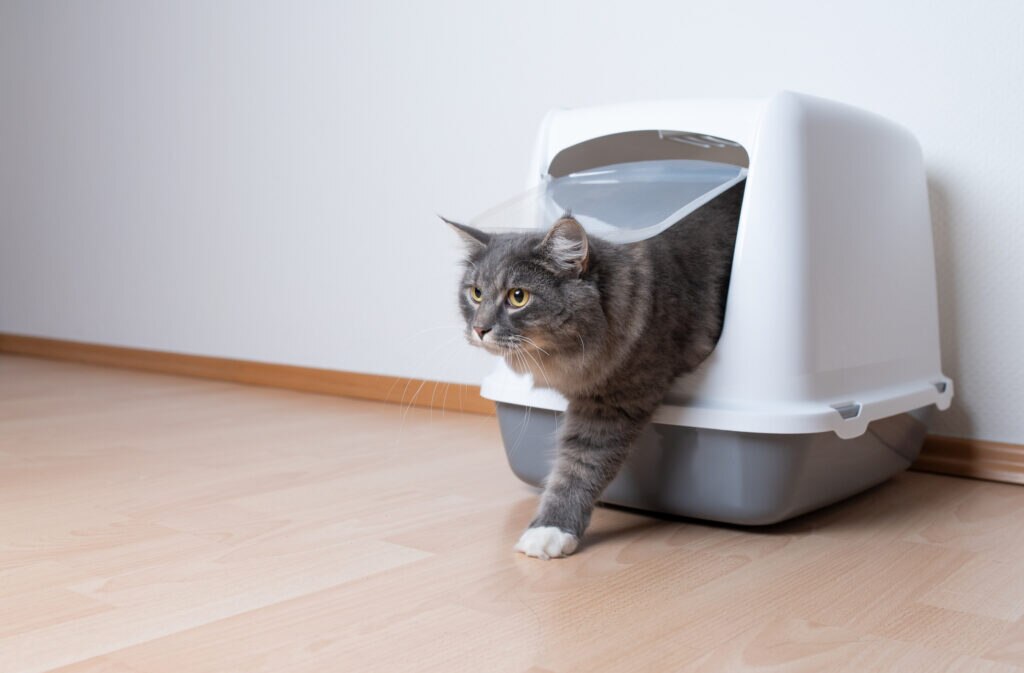
If your cat is peeing outside the litter box, the cause is often a medical condition, stress, or an issue with the litter box itself.
The best way to stop inappropriate urination is to identify and treat the underlying cause rather than simply addressing the behavior.
Before becoming frustrated with your cat, schedule a veterinary examination. Many causes are treatable, and simple environmental changes or medications may resolve the problem.
Key Takeaways
- Sudden litter box accidents are often caused by a medical problem.
- Stress, litter box setup, and litter preferences can also contribute.
- Never punish a cat for urinating outside the litter box.
- Veterinary evaluation should always be the first step.
- Most cases improve once the underlying cause is identified and treated.
Why Is My Cat Peeing Outside the Litter Box?
If your cat is peeing outside the litter box, the cause is most often a medical problem, stress, or an issue with their litter box environment.
1. Your Cat Has a Medical Condition
If your cat suddenly starts peeing outside the litter box, the first step is always to schedule a veterinary examination.
Many medical conditions can cause changes in litter box habits, and your veterinarian can often begin ruling out these problems with urine and blood tests.
"Anything that changes a cat's feeling of well-being can create a change in behavior, and in cats, that means litter box habit changes," says Cathy Lund, DVM, of City Kitty, a feline-only veterinary practice in Providence, Rhode Island.
"This behavior could be the result of a urinary tract infection, kidney disease, or diabetes. Other health problems that are painful, or simply make your cat feel 'off' also could be to blame. For example, an older cat with severe arthritis might have trouble getting into a box with high sides or a cover."
Medical conditions that may cause a cat to pee outside the litter box include:
- Urinary tract infection (UTI): Bacteria in the urinary tract can cause inflammation of the bladder or kidneys. Common signs include straining to urinate, frequent urination of small amounts, and blood in the urine.
- Crystalluria (urinary crystals): Crystals may form because of abnormal urine pH, genetics, diet, or inadequate water intake. These crystals can irritate the bladder and increase the risk of UTIs and bladder stones.
- Bladder stones (cystic calculi): Bladder stones can irritate the bladder, increase urgency, contribute to infections, and in severe cases block the urinary tract, which is a medical emergency.
- Hyperthyroidism: An overactive thyroid commonly causes increased thirst, increased urination, weight loss, vomiting, and increased vocalization, particularly in older cats.
- Degenerative joint disease (arthritis): Painful joints may make it difficult for cats to climb into litter boxes with high sides or covered entrances.
- Kidney disease: Kidney disease commonly causes increased thirst and urination, decreased appetite, vomiting, and weight loss, especially in senior cats.
- Feline idiopathic cystitis (FIC): Stress-related bladder inflammation can cause frequent urination, accidents outside the litter box, blood in the urine, urinary tract infections, and potentially life-threatening urinary blockages. Even small environmental changes can trigger FIC in some cats.
2. The Litter Box Needs Cleaning
Cats are very sensitive to dirty litter boxes, and an unclean box is one of the most common reasons they start peeing elsewhere.
"I use the analogy of a Porta Potty," says Dr. Cathy Lund. "Who wants to use one of those when it's dirty, and you can smell it before you see it?" The same principle applies to your cat's litter box. If it isn't kept clean, many cats will choose another place to urinate.
Dr. Neil Marrinan, DVM, of the Old Lyme Veterinary Hospital in Old Lyme, Connecticut, agrees that the overall litter box experience is often a major factor in inappropriate urination. "The trick is making the litter box the first and only place they go," he says.
To keep the litter box clean:
- Scoop waste at least once daily.
- If you have multiple cats, scoop multiple times each day.
- Replace litter and thoroughly wash the litter box every 1–2 weeks.
Remember that cats have a much stronger sense of smell than humans. A litter box that seems clean to you may still smell unpleasant to your cat, especially in multi-cat households.
3. The Litter Box Location Is a Problem
Even a clean litter box may be ignored if it's difficult to reach or located in an area your cat doesn't feel comfortable using.
According to Dr. Cathy Lund, litter box placement can be especially important for older cats. For example, a litter box located in a basement may be difficult for a senior cat with arthritis, poor vision, or trouble using stairs.
The ideal litter box location should be:
- Easy for your cat to access
- Located in a relatively active part of the home
- Quiet enough to provide privacy
- Away from loud appliances or sudden vibrations, such as washing machines
- Free from areas where another pet could trap or intimidate your cat
As Dr. Neil Marrinan explains, "Generally, you want litter boxes that are out of traffic but not at the end of a scary, trappable tunnel."
Good locations often include a nearby hallway, bathroom, or home office where your cat has privacy but can still easily find the box.
Once you've found a location your cat likes, try not to move the litter box unnecessarily. Many cats dislike frequent location changes, and relocating the box can contribute to inappropriate urination.
4. Your Cat Doesn’t Like The Litter
Cats can be very particular about their litter, and using a type they dislike may cause them to avoid the litter box.
According to Dr. Cathy Lund, not every type of litter feels comfortable to every cat. If your cat suddenly begins avoiding the litter box, their litter preference may be worth reconsidering.
Depending on your cat's preferences, you might try:
- A clumping litter, such as Fresh Step Heavy Duty 30 Day Odor Control with Febreze Freshness Clumping Cat Litter
- An unscented clumping litter, such as Fresh Step Simply Unscented Clumping Cat Litter
- A non-clumping litter, such as Fresh Step Premium Scented Non-Clumping Cat Litter
Some trial and error is often necessary to find the litter your cat prefers.
A simple way to test different options is to set up three litter boxes with different litter types and allow your cat to choose their favorite before making a permanent switch.
5. There Aren't Enough Litter Boxes
In multi-cat households, competition for litter boxes is a common reason cats begin peeing outside the litter box.
"Peeing outside the litter box happens more frequently in a household with multiple cats, particularly if one is a bully that prevents another cat from getting to the box," says Dr. Cathy Lund.
To help reduce competition and stress, experts recommend providing one more litter box than the number of cats in your home.
For example:
- 1 cat = 2 litter boxes
- 2 cats = 3 litter boxes
- 3 cats = 4 litter boxes
Place the litter boxes in different rooms so every cat has easy access without having to compete with another cat.
If you have a timid or less confident cat, consider giving them a separate litter box in an area where other cats cannot easily follow or intimidate them.
Dr. Lund also recommends avoiding covered litter boxes in some multi-cat households. Covered boxes can make certain cats feel trapped because they cannot see whether another cat is waiting nearby.
6. Your Cat Is Stressed or Anxious
Stress and anxiety can cause some cats to start peeing outside the litter box, especially after changes to their routine or environment.
Cats thrive on routine, and even small changes—such as moving the litter box, introducing a new pet, rearranging furniture, or loud noises near the litter box—can trigger inappropriate urination.
"An anxious cat might pee elsewhere as a way to relieve their anxiety because the smell of their own urine makes them feel safer," says Dr. Cathy Lund.
To help reduce stress-related litter box problems:
- Introduce household changes gradually whenever possible.
- Keep your cat's routine as consistent as possible.
- Talk with your veterinarian before major life changes if your cat is prone to anxiety.
- Consider using feline calming pheromone products if recommended by your veterinarian.
Preventing stress is often easier than treating stress-related litter box problems after they develop.
When Should You See a Vet?
If your cat suddenly starts peeing outside the litter box, your veterinarian should always be your first call.
Because medical conditions are one of the most common causes of inappropriate urination, your veterinarian should rule out underlying health problems before assuming the issue is behavioral.
If your cat is medically healthy but continues peeing outside the litter box, your veterinarian may recommend working with a qualified cat behaviorist to identify environmental or behavioral triggers.
There is rarely a single quick fix for litter box problems. Successful treatment usually involves addressing your cat's medical needs, litter box setup, environment, and stress levels together.
As Dr. Cathy Lund explains, "You really have to treat these things holistically and make sure you are covering all the bases."
With patience, consistency, and the right treatment plan, most cats can successfully return to using the litter box and your household routine can return to normal.
Health Tools
Not sure whether to see a vet?
Cat Peeing Outside the Litter Box FAQs
1. Why is my cat peeing outside of the litter box suddenly?
If your cat suddenly starts peeing outside the litter box, the most common cause is an underlying medical condition.
Your veterinarian should first rule out medical problems before behavioral causes are considered. If your cat is medically healthy, factors such as stress, litter box cleanliness, litter preference, or litter box location may be contributing to the behavior.
2. Why is my cat peeing over the edge of the litter box?
Cats may urinate over the edge of the litter box if the box is too dirty, too small, or uncomfortable to use.
Some cats also spray or urinate high against the side of the box as a form of territorial marking. In other cases, pain, arthritis, weakness, or other mobility problems can make it difficult for a cat to squat normally, causing urine to go over the edge of the box.
3. Should I punish my cat for peeing outside the litter box?
No. You should never punish a cat for peeing outside the litter box.
Because inappropriate urination is often caused by an underlying medical condition or stress, punishment does not address the root cause and may actually make the problem worse by increasing your cat's anxiety.
Instead, work with your veterinarian to identify the underlying cause and develop an appropriate treatment plan.
Why is my cat peeing outside the litter box but still pooping in it?
This behavior often suggests a urinary problem, stress, or an issue with the litter box setup rather than a complete litter box aversion.
Because urinary conditions can become serious quickly, schedule a veterinary examination whenever your cat suddenly begins urinating outside the litter box, even if they continue to defecate in it.


