Saint Bernard



Adobe_stock/Rita Kochmarjova
Saint Bernards are giant dogs first trained by monks in the 1600s to locate and rescue people buried by avalanches in the Swiss Alps. While they’re still used as search and rescue dogs today, most Saint Bernards are found in homes where they serve as affectionate and gentle companions.
Because they are friendly and calm dogs, Saint Bernards typically do well around young children and make wonderful family dogs. The breed’s popularity soared after the release of the 1992 family movie Beethoven.
Caring for a Saint Bernard
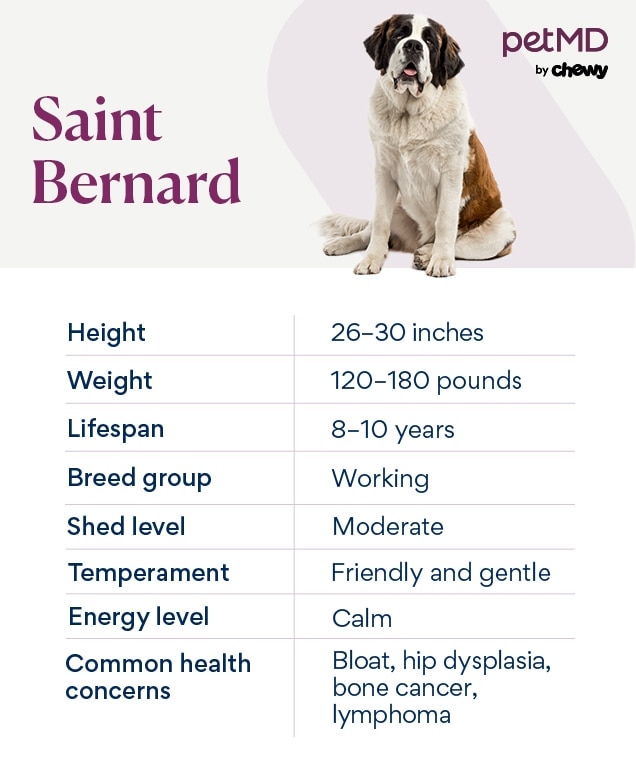
Saint Bernards enjoy playing with and being around their family members. They have a moderate energy level and need at least one 30-minute walk a day, but they will easily go on longer walks or hikes if offered.
Are Saint Bernards Good Family Dogs?
Yes, Saint Bernards make great family dogs. They are extremely affectionate and do well around young children.
Do Saint Bernards Drool a Lot?
Yes. One Saint Bernard characteristic is their big head, which produces a lot of drool. Make sure you keep the area around their mouth clean.
How Big Do Saint Bernards Get?
The average weight of a Saint Bernard ranges from 120 to 180 pounds, and they stand up to 30 inches tall at the shoulders. Make sure you have enough space for a Saint Bernard dog before adding one to your family.
Saint Bernard Temperament and Personality
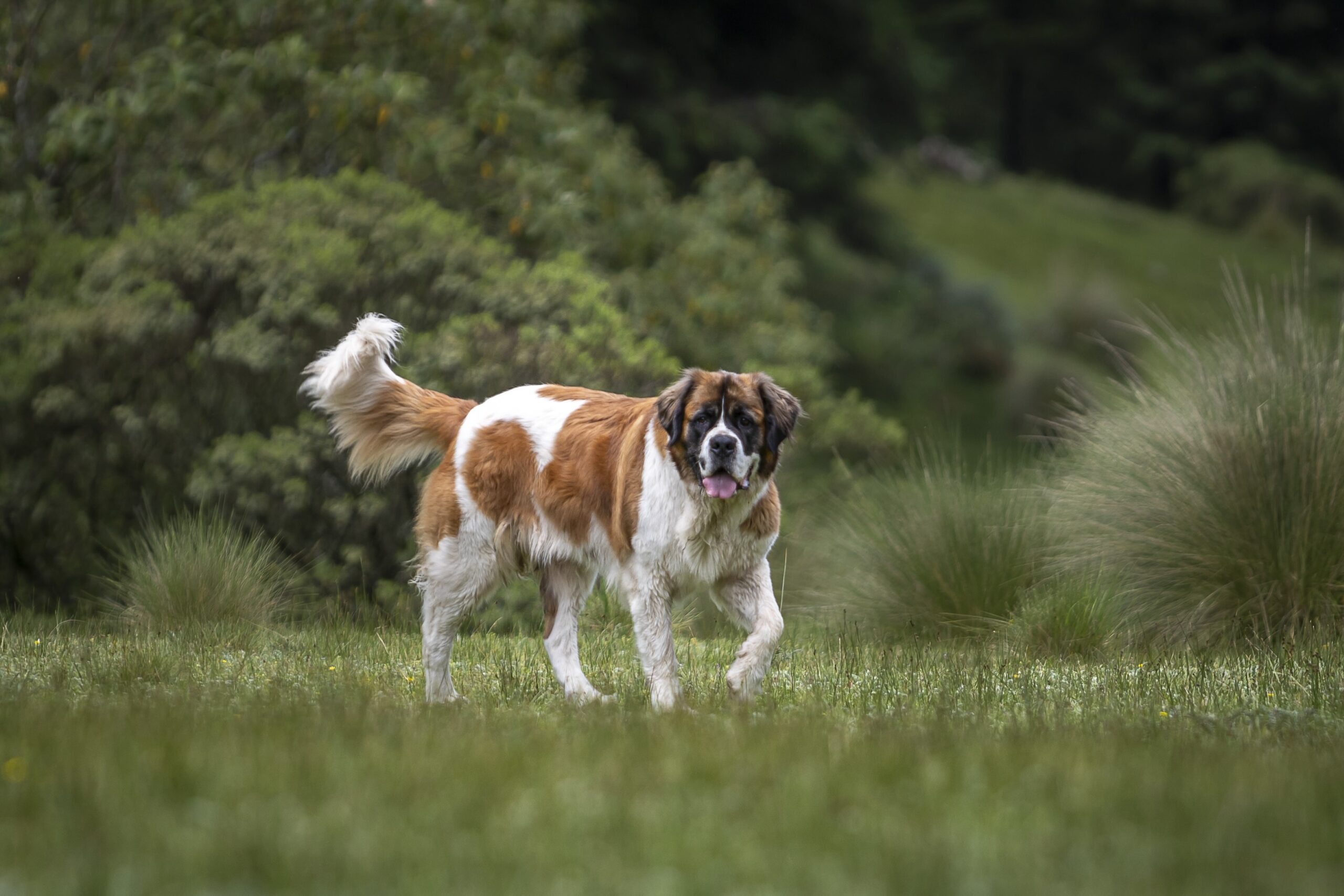
Saint Bernards have a mellow demeanor that can make them a wonderful addition to the family. They have a reputation for being especially gentle around children that know how to properly interact with dogs.
As people-orientated dogs, Saint Bernards can develop separation anxiety if they’re left alone for long periods of time.
How Much Exercise Does a Saint Bernard Need?
Saint Bernards aren’t as energetic as many other breeds, but they still need moderate exercise every day. Aim for about 30 minutes of exercise every day.
Behavior and Training Tips for Saint Bernards
A Saint Bernard puppy is energetic and playful. But as they grow older, they become calmer. Most Saint Bernards have a low prey drive and do well around other animals when socialized from a young age.
The breed isn’t known to bark a lot, but they do like to dig. This digging behavior is indicative of their past training as search and rescue dogs. To protect your property, make sure to supervise your Saint Bernard whenever they’re outside.
Are Saint Bernards Easy To Train?
Saint Bernards have a good temperament, but because of their size they can be difficult to handle. Training and socialization from an early age is crucial when caring for a Saint Bernard.
This breed is very smart and learns quickly, so they do well in socialization classes, puppy training classes, and obedience training. Obedience classes teach a Saint Bernard to follow cues so you can train them to be calm around children, not to jump up on people, and not to counter-surf for food.
Saint Bernards are kind, loving, and have a strong desire to please their families, making them relatively easy to train with positive reinforcement. If a Saint Bernard is being considered as a search and rescue dog, special training is needed.
What Are Fun Activities for Saint Bernards?
-
Carting and drafting competitions
-
Watching over young children
-
Going on a hike
-
Camping or backpacking
Saint Bernard Health Issues

The life expectancy of a Saint Bernard dog is 8–10 years, which is the typical lifespan for a giant breed. They’re typically healthy dogs, but Saint Bernards are predisposed to certain medical conditions.
It’s important to work with a reputable breeder who only breeds Saint Bernard puppies that are healthy, PennHIP-certified (have undergone a hip evaluation), and represent the breed’s standards.
Bloat and Gastric Dilatation-Volvulus
Large dogs with deep chests, such as Saint Bernards, are prone to bloat, which means their stomach fills up with gas and can suddenly make their abdomen look distended.
Bloat can develop into gastric dilatation-volvulus (GDV) when the stomach twists and cuts off blood to internal organs. This is a painful and life-threatening condition that must be treated right away.
Take your Saint Bernard to the vet right away if they show any signs of GDV after eating, including:
-
Pacing
-
Retching without producing vomit
To minimize the risk of bloat and GDV in your Saint Bernard, talk to your vet about performing a gastropexy procedure. This is when the stomach is tacked to the abdominal wall to prevent it from flipping, and it’s often done at the same time as a dog’s spay or neuter surgery.
Hip Dysplasia
Hip dysplasia is an inherited orthopedic condition where the head of the femur (thigh bone) does not fit snugly into the hip joint. As a result, the femur rubs against the hip socket and, over time, causes pain, inflammation, and arthritis within the joint.
Hip dysplasia can develop in one or both hip joints. Saint Bernard puppies can have congenital hip dysplasia (although this is rare); other dogs develop it in their senior years.
PennHIP is a screening method performed on puppies as young as 16 weeks old. Specialized pelvic X-rays are taken to detect which dogs will likely develop hip dysplasia during their lifetime. Identifying these dogs through a PennHIP evaluation allows for early treatment.
Treatment of hip dysplasia varies depending on the severity. In some cases, it is managed with joint supplements, medications, weight control, and reduced activity levels. In other cases, a dog may need surgery to correct this condition.
Osteosarcoma
Saint Bernard dogs are predisposed to osteosarcoma, an aggressive bone cancer. It can develop quickly, usually in the femur (thigh bone) or humerus (upper arm bone), but it can be found in other bones as well.
Symptoms of osteosarcoma include lameness, bone pain, and firm swelling at the location of the tumor. X-rays are the best diagnostic tool for cancerous bone lesions, but a needle aspirate or bone biopsy is needed for a definitive diagnosis.
If a dog is diagnosed with osteosarcoma, further screening tests are recommended to determine if the cancer has spread to other areas of the body. Treatment options include pain medications, stereotactic radiation or surgery (often limb amputation), or chemotherapy, depending on the location of the tumor and whether the cancer has spread.
Lymphoma
Saint Bernards are also predisposed to another type of cancer called lymphoma or lymphosarcoma, which originates in the lymph nodes and typically spreads to other organs. Treatment usually involves chemotherapy.
Cervical Vertebral Instability (Wobbler Syndrome)
Cervical vertebral instability, or wobbler syndrome, is a neurological disease that results from developmental abnormalities in a dog’s neck or spine.
Saint Bernards with wobbler syndrome tend to have neck pain, a lack of coordination, weakness in all four legs, and they may drag their feet. These symptoms can develop suddenly in young dogs, but more often wobbler syndrome is a slow, progressive disease.
Wobbler syndrome is diagnosed with an exam, neck X-ray, MRI, or CT scan. Mild cases are treated with medication to minimize pain and inflammation in the neck. Severe cases require both medication and surgery.
Limited exercise and the use of a harness instead of a collar are also important to reduce neck pain. Most Saint Bernards with this condition improve with treatment—if their symptoms are not severe and if they are diagnosed and treated early.
Entropion
Entropion is an eyelid abnormality that causes the eyelid to roll inward toward the eye. When this happens, the eyelid’s fur and eyelashes can rub against the cornea (the surface of the eye).
This is a painful condition that can lead to corneal ulcers. Surgery is needed to correct entropion; it involves removing excess skin on the eyelid so it no longer rolls inward.
What To Feed a Saint Bernard

Saint Bernards should be fed a high-quality large- or giant-breed dog food. The food should be formulated for their life stage (puppy, adult, or senior).
Your veterinarian can give you guidance on choosing the best food for your Saint Bernard. Whatever you feed your pup, it needs to meet the nutritional guidelines set by the Association of American Feed Control Officials (AAFCO).
How To Feed a Saint Bernard
Saint Bernard puppies should be fed a large- or giant-breed puppy formula until they are 18–24 months old. Then they need to slowly transition to an adult food.
To minimize risk of bloat or GDV, the following recommendations can help at mealtime:
-
Feed your dog two or three smaller meals a day, instead of one large meal
-
Put the food bowl on the floor rather than elevate it
-
If there are multiple dogs in the house, feed them separately to minimize stress
-
Avoid exercise one hour before and one hour after a meal
-
Do not add water to the dry food, especially if the food contains citric acid
-
Do not overfeed your Saint Bernard
-
Use a slow-feeder bowl if your Saint Bernard eats quickly
How Much Should You Feed a Saint Bernard?
Follow the feeding guidelines on your dog food packaging and consult your veterinarian to determine the proper portion size for your Saint Bernard. The right amount to feed your dog is based on their ideal body weight and life stage.
Measure out the food for each meal to ensure you’re not overfeeding your dog.
Nutritional Tips for Saint Bernards
Healthy dogs eating an AAFCO-compliant food will receive all needed nutrients.
But because full-grown Saint Bernards weigh well over 100 pounds, your veterinarian may recommend giving your dog a joint supplement and an omega-3 fatty acid supplement to support the joints by minimizing inflammation.
Saint Bernard Grooming Guide

A Saint Bernard dog can have medium-length fur or a shorter coat. Both coat types are thick and the breed sheds moderately throughout the year, with heavier shedding periods in the spring and fall, according to the Saint Bernard Club of America.
The grooming routine for a Saint Bernard is the same for both long- and short-haired dogs. They both require frequent coat brushing, occasional bathing, and regular nail trimming.
Skin Care
Saint Bernards do not require much skin care and only need an occasional bath to keep them clean. Ask your veterinarian how often you should bathe your dog and get advise on which dog-friendly shampoo to use.
One Saint Bernard characteristic is their big head, which produces a lot of drool. Make sure you keep the area around their mouth clean.
Coat Care
A Saint Bernard’s coat can be medium-length or short. A short coat is easier to care for, as it’s less likely to get matted or tangled. However, both medium-coated and short-coated Saint Bernards should be brushed once or twice weekly.
During a Saint Bernard’s heavy shedding periods, you’ll need to brush them every day. A metal comb and slicker brush are the best grooming tools to use on a Saint Bernard’s coat.
Eye Care
Like many other dogs, Saint Bernards can develop normal tear staining. Use a warm washcloth or dog-safe eye wipe as needed to remove buildup around their eyes.
Stay alert for any changes in your dog’s eyes or vision, as this can be indicative of an issue like entropion. Talk to your vet if you notice anything concerning, such as redness, squinting, or if your dog is pawing at their face.
Ear Care
Saint Bernards have large ear canals, floppy ears, and love to swim—all characteristics that can make them prone to ear infections.
Cleaning their ears with a veterinarian-recommended ear cleaner every two to three weeks (and after all baths and swim sessions) will help prevent ear infections.
Considerations for Pet Parents
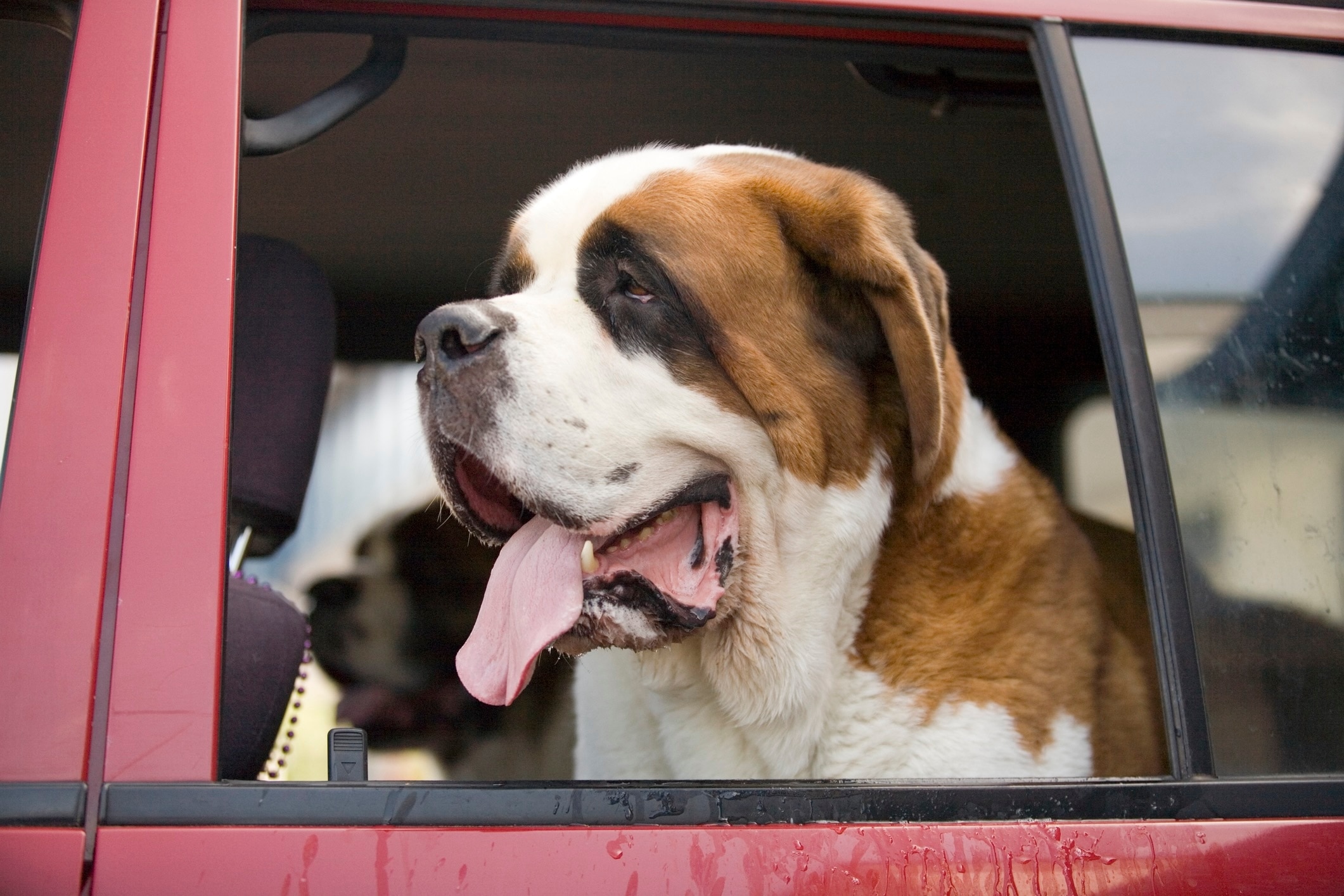
Saint Bernards are one of the most affectionate and friendly dog breeds. The perfect home for a Saint Bernard is a family of homebodies that have young children.
This breed enjoys being around their family as much as possible. They can have separation anxiety and engage in destructive behavior like digging when left alone for a long time. Consequently, people who work away from home for most of the day would not be the best pet parents for a Saint Bernard.
Proper training at an early age is extremely important. All Saint Bernard puppies should take socialization classes, puppy training classes, and obedience classes so that they are well behaved around people and other dogs.
Saint Bernard FAQs
Are Saint Bernards good with kids?
Yes, Saint Bernards are calm dogs known as gentle giants, and they’re famously good with kids.
Are Saint Bernards smart dogs?
Yes, Saint Bernards are very intelligent and learn quickly in training. They aim to please their families and learn well with praise and dog treats.
Are Saint Bernards expensive?
The typical Saint Bernard price ranges from $1,000–$2,500. A dog from a champion line would be on the higher end of this price range. You can also find Saint Bernards at rescues and shelters.
What is the lifespan of a Saint Bernard dog?
The typical Saint Bernard lifespan is 8–10 years.
Are Saint Bernards good apartment dogs?
Due to a Saint Bernard’s size, they need lots of space to move around. This breed isn’t the best fit for apartment-living, but they can live happily in an apartment that’s large enough for them to lounge in if they get regular exercise every day.
References
Bell JS. Risk Factors for Canine Bloat. In: Conference Proceedings from Tufts’ Canine and Feline Breeding and Genetics Conference; 2003.
Brooks W. Veterinary Partner Information. Bloat - The Mother of all Emergencies. 2021.


