Leptospirosis in Dogs


EyeEm Mobile GmbH/iStock/Getty Images Plus via Getty Images
Leptospirosis in dogs is an illness that can be passed from animal to human and is often spread through wildlife and contaminated water.
But how can you keep your dog safe?
Let’s look at everything pet parents need to know about leptospirosis in dogs—from common symptoms to prevention.
Key Takeaways
- Leptospirosis is a serious zoonotic disease that affects dogs and humans, caused by the Leptospira bacteria and spread primarily through contaminated water.
- Symptoms vary widely, from mild to severe, and can affect the kidneys, liver, and other organs, making early veterinary attention critical.
- Diagnosis involves PCR and MAT testing, with supportive care, antibiotics, and hospitalization often required.
- Leptospirosis vaccination is now considered a core vaccine for dogs and plays a vital role in prevention, along with minimizing contact with wildlife and stagnant water.
Summary
Leptospirosis in dogs is a disease caused by bacteria called Leptospira. This bacterium is spiral-shaped and belongs to a class of bacteria called spirochetes.
While there are over 250 strains of Leptospira worldwide, there are four common strains that are responsible for most cases of leptospirosis in dogs commonly seen in North America.
These include:
-
Leptospira canicola
-
Leptospira icterohaemorrhagiae
-
Leptospira pomona
-
Leptospira grippotyphosa
When a dog becomes infected with Leptospira, the bacteria travels through their bloodstream, causing widespread inflammation. The bacteria eventually settle in the kidneys and the liver, causing inflammation, pain, and even organ failure. From the kidneys, the bacteria are emptied into the environment through the urine.
Common carriers of leptospirosis include wildlife such as:
-
Raccoons
-
Skunks
-
Opossums
-
Rats
-
Farm animals, such as cows and pigs
Take extra precautions when traveling or living in rural areas to avoid letting your dog drink from stagnant water.
Leptospirosis is considered a zoonotic disease, meaning it can be transmitted from animals to humans. It’s the most common zoonotic infection in the world, causing Weil’s Syndrome in humans.
Fortunately, veterinarians have a highly effective vaccine for dogs to prevent leptospirosis.
While the vaccine was originally recommended for dogs at higher risk that lived on acreage or went hunting, its status has been updated as a core vaccine. Core vaccines are shots that are recommended by veterinarians for all dogs to keep them safe.
Leptospirosis in dogs is considered a medical emergency. If you suspect your dog may be infected, contact your veterinarian right away and avoid contact with your dog’s bodily fluids—especially their urine.
Symptoms
Symptoms of leptospirosis in dogs can vary from mild to severe, and some pups may recover spontaneously.
Once infected, dogs typically begin to develop symptoms within a week. Common symptoms include:
-
Decreased appetite and eventual weight loss
-
Blood in the urine, stool, or nose
-
Muscle pain, stiffness, and reluctance to move
-
Sudden miscarriage (in pregnant dogs)
Causes
Leptospirosis in dogs is caused by a bacterium. Its spread by urine from infected wildlife.
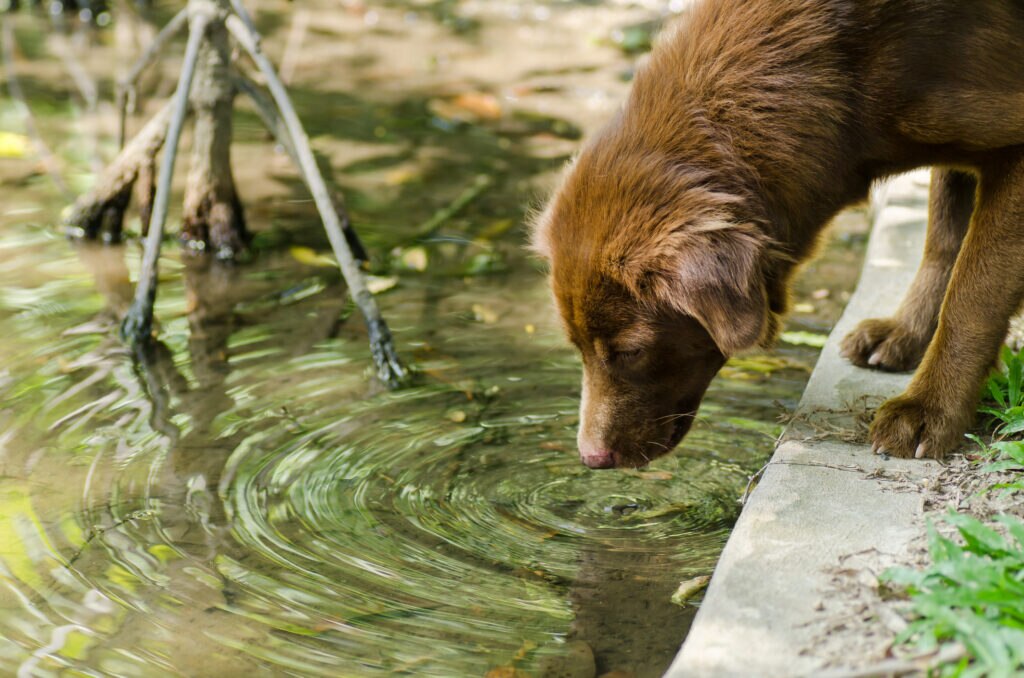
When your dog drinks from a puddle or other source of still water contaminated by infected urine, they’re at a high risk of contracting leptospirosis.
While drinking from contaminated water sources is the most common way dogs get leptospirosis, they can also get the disease from soil or animal bedding contaminated with urine.
This disease is found throughout the United States and other countries, particularly in warm and wet climates. The bacteria can survive for weeks to months and easily spread through water systems such as lakes, ponds, and streams, as well as in urine-contaminated soil.
Dogs who are young, unvaccinated, or have a compromised immune system are at higher risk, but the infection can affect dogs of any age, breed, and gender.
Diagnosis
Veterinarians suspect leptospirosis in dogs through observation of symptoms with supportive blood work and urinalysis results. X-rays may also be recommended, especially for dogs who are having respiratory problems.
The confirmed diagnosis of leptospirosis requires PCR testing (a test designed to find leptospirosis genetic material in a sample) of blood, urine, or both to detect the bacterial DNA.
MAT testing (a microscopic agglutination test) to measure a dog’s antibody level (or titer) against the disease, is another way to diagnose leptospirosis.
The MAT test is typically repeated after several weeks to help determine the specific strain causing the infection. There is also an in-house test that serves as a useful screening tool but should be verified with either the PCR or MAT if it yields a positive result.
Tell your vet about any recent travel history, exposure to other dogs or wildlife, rural areas, or bodies of water. This information can help raise suspicion for leptospirosis and alert the medical team to the possibility of an infectious zoonotic disease.
Treatment
To treat leptospirosis in dogs, pups will initially need to be stabilized and treated at the veterinary hospital.
Supportive care measures, such as pain medications, antiemetics (to prevent vomiting), appetite stimulants, and liver supplements such as Denamarin or SAMe, may be recommended.
Fluid therapy, often supplemented with electrolytes, is necessary for treatment. IV fluids are important not only to combat dehydration but also to restore fluids lost due to vomiting and diarrhea. It also improves blood flow through a dog’s damaged kidneys.
At the hospital, antibiotics like penicillin G or ampicillin will often be given as an injectable.
Once symptoms are managed and the dog can eat on their own, they will be put on doxycycline, the preferred oral treatment, usually given twice a day for a few weeks.
It takes about a week of antibiotic therapy before your dog stops shedding bacteria in their urine. During this time, limit interactions with your dog to a minimum and take the necessary disinfection and protective measures to prevent transmission of leptospirosis.
Wear gloves (like these FifthPulse Vinyl Exam Gloves) when wiping down your dog's kennel, especially if you’re cleaning urine.
Use one part bleach to 10 parts water and wipe down using disposable paper towels before following up with a pet-safe surface cleaner (like this one from Nature’s Miracle).
Leash walk your dog somewhere away from where other animals go to avoid spreading to other pets. Wash your hands after handling your dog.
In the hospital, your dog may have a urinary catheter inserted to reduce the exposure risk for the veterinary team.
Renal replacement therapy, also known as dialysis, is another option that can certainly improve the prognosis, especially for dogs not producing sufficient urine despite appropriate therapy. In some cases, only a few sessions of dialysis for dogs may be needed. This is rarely done in veterinary medicine and typically performed only at specialty hospitals. Most veterinarians will instead focus on IV fluid therapy to flush your dog’s kidneys.
While dialysis may not always be readily available and can at times be expensive, it’s an excellent therapeutic option for dogs with leptospirosis that can be discussed with your vet.
In certain cases, humane euthanasia may be recommended. These include dogs with severe kidney or liver failure, widespread hemorrhaging and an inability to clot, respiratory issues, or cases where treatment has failed to show improvement in leptospirosis symptoms.
Recovery and Management
Fortunately, the prognosis for recovery from leptospirosis in dogs is typically good. However, in some cases, despite appropriate therapy, some dogs may continue to experience the lasting effects of leptospirosis, including kidney and liver issues.
Depending on your dog’s response to therapy, they will likely be discharged after several days. Follow-up appointments will be scheduled in the following days and weeks to recheck your dog’s blood work and ensure their kidneys (and other organs) are functioning well.
Long-term medications and a specific diet may be necessary, along with ongoing follow-up appointments to monitor the progression of the disease.
If your dog has long term liver or kidney impairment, the supplements Denamarin or azodyl may be recommended.
Prescription diets made to reduce the workload of the affected organ may also be recommended.
Hills K/D, Royal Canin Renal Support and Purina NF are all examples of veterinary kidney diets designed with low protein to reduce the kidney’s workload.
Hills L/D and Royal Canin Hepatic are examples of diets fortified for the liver.
Until you are instructed otherwise, make sure your dog urinates in an area that can be easily cleaned and disinfected, away from any water sources.
When caring for your dog at home while they are contagious, be sure to wear appropriate personal protective equipment (PPE).
PPE includes face protection (goggles and mask), disposable gloves, and a disposable gown. Wear the PPE during interactions with your pup and especially when disinfecting urine-soaked areas or bathing hair that becomes soaked in urine.
Make sure to properly clean and disinfect all bedding materials.
Leptospirosis is vulnerable to most household disinfectants and bleach. This disease has a limited survival rate in the environment and is susceptible to UV irradiation and desiccation (the removal of moisture), meaning that it will die when it’s dry and sunlight hits the bacteria over several days. It will survive longer in warm, wet areas.
It’s important to note that dogs can become reinfected with leptospirosis in the future, so similar precautions should be taken even after recovery. Avoid letting your dog drink from puddles, lakes and ponds and interacting with wildlife.
Prevention
Preventing leptospirosis in dogs can be challenging due to the numerous bacterial strains involved.
However, there are a few ways to keep your dog safe from leptospirosis, including:
-
Have them vaccinated. The leptospirosis vaccine for dogs, given in two injections three to four weeks apart and then annually, targets several of the main strains of leptospirosis.
-
The vaccine is highly effective and creates a strong antibody response in dogs. For this reason, it has been upgraded to a core vaccine recommended for all dogs by the American Animal Hospital Association (AAHA). Many vaccine manufacturers, like Zoetis and Merck, will even back their product with warranties when you can demonstrate proof that your dog was vaccinated by a veterinarian following the recommended protocol. If your dog still contracts leptospirosis, they will cover associated costs of diagnostics and treatment up to a certain amount.
-
The vaccines contain various strains, some more than others, so be sure to discuss the most suitable vaccine with your veterinarian.
-
Keep in mind that while this vaccine significantly reduces the risk of your dog contracting the disease, it can’t completely prevent it. Additionally, vaccines can’t guarantee 100% immunity but can often lessen the severity if infection occurs.
-
-
Limiting access to standing water. Avoid letting your dog drink from puddles, slow moving creeks, lakes and ponds.
-
Prevent your pet from having contact with wildlife. Use a leash while walking in or near the woods. Avoid letting your pet run during dusk hours when some wildlife is more active.
-
Use pest control when necessary and prevent access to garbage. This can help minimize raccoon and rodent traffic through your yard which serve as common hosts for Leptospira.
-
Frequently washing your hands and practicing good hygiene.
Leptospirosis in Dogs FAQs
What are the stages of leptospirosis in dogs?
The four stages of leptospirosis are incubation, acute, immune, and chronic.
In the incubation phase the bacteria has entered the body and is replicating. There are no clinical signs currently. This can take a few days to two weeks.
In the acute phase, affected dogs may start to act sick. They may run a fever and be a little lethargic.
In the immune phase, the dog’s body is responding to the infection. For some dogs, they may even clear the bacteria during this phase. Affected dogs may start to show more symptoms like vomiting, diarrhea, generalized pain, uveitis, and bruising.
If the bacteria aren’t cleared or treated, some dogs may go into a chronic phase. In this phase they can end up with long-term damage to the kidneys and/or liver.
What are the chances of a dog surviving leptospirosis?
Leptospirosis carries a good prognosis with treatment, especially with early intervention. If your dog contracts leptospirosis and is taken to the vet right away, their chances of survival are very good.
How likely is a dog to get leptospirosis?
Leptospirosis is becoming increasingly prevalent across the country. If your dog is vaccinated, they have very low risk of getting leptospirosis. If they are unvaccinated, they carry a much higher risk.
Can you treat leptospirosis in dogs at home?
No. Leptospirosis is caused by a bacterium. Because of this, antibiotics are the best way to treat leptospirosis, and these are prescribed by a veterinarian.


