Golden Retriever




iStock/Fly View Productions
Golden Retrievers are one of the most popular dog breeds in the U.S. for good reason—they are intelligent, loyal, easy to train, and very affectionate. “Goldens,” as they’re often called, make wonderful family dogs because they are great with young children and other pets when socialized from puppyhood.
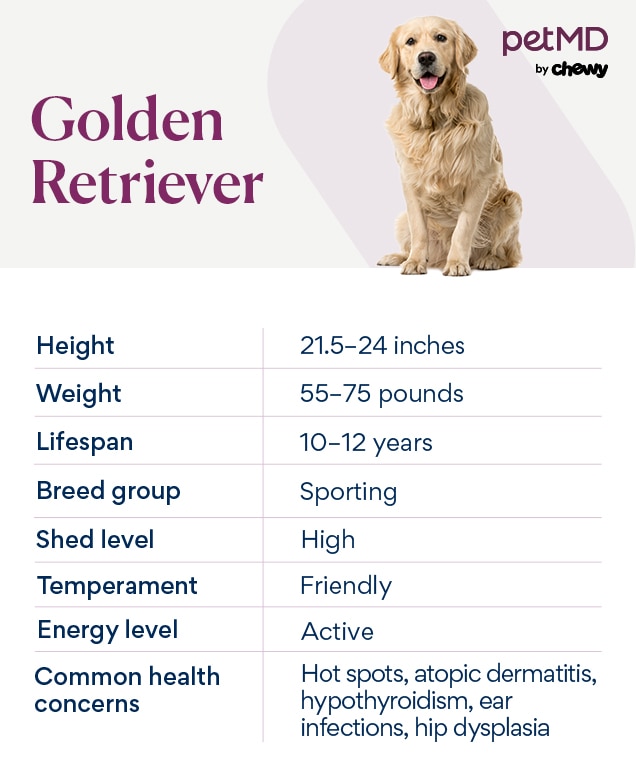
Golden Retrievers are medium-sized sporting dogs that weigh 55–75 pounds. Their height can range from 21–24 inches tall. They have a broad head, short ears, deep chest, and muscular build.
Caring for a Golden Retriever
Golden Retrievers are known for their thick, water-repellent, lustrous golden coats. But their golden fur can range in color, so you can find white Golden Retrievers to red Golden Retrievers.
No matter the color, Golden Retrievers have a double coat. This means that they have a thick undercoat of short hair covered by a layer of longer hair.
Due to this double coat, Golden Retrievers shed a lot. They also tend to develop matted hair behind their ears and on their hind limbs. So, Golden Retrievers require a lot of grooming—either at home or by a professional groomer—to keep their coat healthy.
Goldens have a moderate amount of energy, even in their senior years. They enjoy activities such as running, going on long walks, retrieving, and swimming.
Golden Retriever Health Issues

The average Golden Retriever lifespan is 10–12 years, and they’re typically healthy dogs. However, due to poor breeding, some Golden Retrievers may develop a handful of health issues.
You can gain more insight into your Golden’s health by screening them for over 230 genetic health risks with a dog DNA test.
Make sure to do your research when looking to adopt a Golden Retriever or find a reputable Golden Retriever breeder so medical issues are less likely in your puppy.
Hot Spots
Hot spots on dogs are localized areas of skin that are inflamed and infected, most often with bacteria and/or yeast. Hot spots develop more often in dogs that excessively scratch, chew, and lick—behaviors associated with underlying allergies.
In allergic dogs, the healthy skin barrier is compromised, so as the normal microbes on the skin multiply abnormally, the skin becomes inflamed and infected. A hot spot usually develops quickly and can lead to hair loss, redness, and moist raw skin that may ooze, crust, or develop thick scabs.
If you notice any signs of hot spots in your Golden, take them to a veterinarian. Hot spots typically resolve quickly with medication to treat the infection and, most importantly, with management of the underlying cause.
Atopic Dermatitis (Atopy)
Atopic dermatitis (atopy) is an inflammatory and itchy skin and ear condition Golden Retrievers are predisposed to. It’s triggered by environmental allergens, such pollen, grass, dust mites, dander, and mold.
Symptoms usually develop between 2–6 years of age, so regular veterinary visits are important to monitor your dog’s skin health.
Golden Retrievers with atopy are often scratching, chewing, or licking themselves. This can lead to hair loss, thickened skin, ear infections, or a rash on your dog.
Hypothyroidism
Hypothyroidism is an endocrine disorder that happens when the thyroid gland loses its ability to produce thyroid hormones, leading to symptoms such as:
-
Unexplained weight gain
-
Decreased energy level
-
Recurring ear and skin infections
-
Thinning fur
-
Dry, scaly skin
Golden Retrievers are predisposed to hypothyroidism and typically develop symptoms when they are middle-aged. This condition can be managed with lifelong medication.
Find a CarePlus insurance plan to match your pet's needs
Learn about CarePlus, insurance plans with exclusive Chewy benefits

.png?w=384&q=75)
Hip Dysplasia
Hip dysplasia is an inherited condition where the hip joint is deformed, due to the ball (head of the thighbone) and socket (in the pelvis) not properly aligning. This can occur in one or both hip joints, causing pain and arthritis.
Symptoms include:
-
Slowness to rise from a lying position
-
“Bunny-hopping” gait when running
-
Reluctance to run, jump, or go up or down stairs
-
Holding the affected leg out to the side when sitting up
Reputable Golden Retriever breeders make sure their dogs are screened for this genetic condition, so it’s best to purchase a Golden Retriever puppy from a breeder that has had their dogs certified with a PennHIP evaluation.
Hip dysplasia can be managed with weight management, diet changes, exercise, joint supplements, and certain medications. But in serious cases, surgery may be needed.
Elbow Dysplasia
Elbow dysplasia encompasses several different inherited orthopedic conditions that ultimately lead to degenerative joint disease (DJD) within the elbow. X-rays or CT scans are used to diagnose elbow dysplasia, and the condition is treated with a joint injection performed by specialist (Synovetin OA®), surgery, joint supplements, and/or anti-inflammatory and pain medications.
Eye Conditions
Golden Retrievers are prone to certain eye conditions, including:
-
Pigmentary uveitis: An inherited eye condition where brown or black cysts develop on the eye. They are usually benign and develop when a Golden is at least 5 years old. Treatment usually includes eye or oral medications. Over time, pigmentary uveitis can cause cataracts and glaucoma.
-
Progressive retinal atrophy (PRA): A disease where the eye’s retina slowly degenerates, leading to blindness in dogs. There is no cure for PRA, but blind Golden Retrievers can still live long, happy lives with proper care.
Cancers
Goldens can develop a few types of canine cancer as well. Some common cancers include:
-
Lymphoma/Lymphosarcoma: A type of cancer that originates in the lymph nodes and typically spreads to other organs. Lymph nodes that commonly enlarge with lymphoma are on the neck, behind the knee, and inside the thigh. There is a relatively high prevalence of this condition within the Golden Retriever breed.
-
Hemangiosarcoma (HSA): An aggressive form of cancer that most often originates in the spleen, liver, or heart in Golden Retrievers. This type of cancer forms a blood-filled tumor that can rupture at any time and cause a dog to bleed internally. A ruptured tumor can be life-threatening if not treated immediately.
Heart Problems
Subaortic valvular stenosis (SAS) is a genetic heart condition that Golden Retriever puppies inherit from their parents. Responsible breeding is key to ensuring prevention of this condition.
SAS occurs when fibrous tissue slowly forms in the heart and causes an obstruction of blood flow. Over time, this condition causes the heart to stop functioning properly, resulting in heart damage.
Golden Retriever puppies and dogs with SAS often have a heart murmur that can be heard by your veterinarian during a routine physical exam. Dogs with mild to moderate SAS may not show any symptoms. However, Goldens with severe SAS are lethargic, tired after short periods of exercise, may collapse, and can die suddenly.
What To Feed a Golden Retriever

Golden Retriever puppies should be fed a large-breed, high-quality puppy formula until they are 12–18 months old, depending on your veterinarian’s recommendation. Once they reach maturity, they will need to be transitioned from puppy food to a large-breed, high-quality adult diet.
Choosing an AAFCO (Association of American Feed Control Officials)-compliant food is a great place to start, and your veterinarian can help you narrow down your options to find the best food for your Golden Retriever.
Some brands make breed-specific dog food for Golden Retrievers. Ask your vet if this is a good option for your dog.
How To Feed a Golden Retriever
Full-grown Golden Retrievers do well with twice-daily feedings, in the morning and evening. Golden Retriever puppies need to eat more frequently—about three or four times each day on a consistent schedule.
Golden Retrievers love to eat, so a slow feeder bowl or an interactive food puzzle can be a great way to help them slow down their eating, prevent digestion issues, and have fun using their brain to get their food. If your dog eats too quickly, it may result in vomiting and other issues.
How Much To Feed a Golden Retriever
Golden Retriever puppies need to be fed large-breed puppy food when they are less than 1 year old so they receive the right balance of nutrients. Follow the feeding guidelines on the back of the bag of the large-breed puppy formula, based on their age and expected body weight.
It’s important to routinely check your Golden Retriever puppy’s weight and body condition with your veterinarian to make sure they’re not growing too much too fast, predisposing them to joint problems.
Once a Golden Retriever is 1 year old, transition them to a large-breed adult formula that has fewer calories to prevent unwanted weight gain. Your veterinarian is your best resource for determining how much to feed your dog to maintain a healthy weight.
Nutritional Tips for a Golden Retriever
Healthy Golden Retrievers eating an AAFCO-compliant diet receive a complete and balanced diet, making added vitamins and minerals unnecessary. But if your Golden has a certain medical condition, your vet may recommend dog-formulated supplements.
Your vet may recommend a joint supplement to help slow joint damage and inflammation. Omega-3 fatty acid (fish oil) supplements can help reduce inflammation in the joints and skin and make the coat more lustrous.
A probiotic can help provide healthy bacteria to the gastrointestinal tract in Goldens with digestive issues.
Talk to your vet before giving your pup any supplements.
Behavior and Training Tips for Golden Retrievers
Golden Retriever Personality and Temperament

Golden Retrievers generally have a sweet-natured temperament; they are often friendly dogs that get along with children, other pets, and even strangers. They enjoy being the center of attention and being petted. In fact, Goldens will often nudge you gently so that you continue to pet them.
Golden Retriever Behavior
Unsupervised Golden Retrievers tend to eat things they shouldn’t, especially when they are puppies. They may try to eat socks, shoes, furniture, or get into the trash. To keep your Golden Retriever safe and prevent digestive issues or gastrointestinal obstructions, keep a watchful eye on them—especially during puppyhood.
Cute Golden Retrievers have a lot of energy and require lots of physical exercise and mental stimulation to be happy and healthy. They are considered a quiet breed because they bark infrequently, and they’re not known for digging up yards.
That said, if your Golden is allowed to grow bored, they may turn to these and other undesirable behaviors to keep themselves entertained. Golden Retrievers are one of the smartest dog breeds and were originally bred to hunt, so they need to keep their brain busy to be happy.
Golden Retriever Training
It’s usually easy to train Golden Retrievers due to their kind temperament and their eagerness to please. Because of this, Goldens are great dogs for first-time pet parents.
Always use positive reinforcement methods while training your dog. Socializing your Golden Retriever puppy is also a very important part of training your dog to be comfortable, confident, and well-behaved in new situations.
Fun Activities for Golden Retrievers
-
Tracking
-
Long walks or runs
Golden Retriever Grooming Guide
Grooming a Golden Retriever is an important part of their care, as these dogs have thick coats and sensitive skin. Their eyes and ears can require special attention, too.
Skin Care
Regularly checking your Golden Retriever’s skin can help you detect hot spots or other issues that develop. If you notice an increase in scratching, chewing, or licking, talk to your veterinarian.
Because Goldens are prone to atopy (environmental allergies), regular baths with gentle, hypoallergenic shampoo can help reduce exposure to allergens and help keep their skin free from infection.
Coat Care
Golden Retrievers have a dense double coat, so they shed a lot. It’s important to brush your dog at least once or twice every week to reduce shedding and prevent matting, especially behind the ears and on the hind limbs.
Eye Care
Golden Retrievers sometimes have a mild amount of clear or brown tear staining. You can use a vet-approved tear stain remover to clean off any discharge that accumulates.
Ear Care
Golden Retrievers are prone to ear infections because of the skin and ear inflammation associated with underlying allergies and, less commonly, due to hypothyroidism.
To minimize the risk of ear infections in Golden Retrievers, it’s best to clean their ears with a product that contains a drying agent (like Epi-Otic® Advanced) every two to three weeks for maintenance, plus after swimming or bathing.
Ask your veterinarian how often your dog’s ears should be cleaned.
Considerations for Pet Parents
Golden Retrievers make great family dogs due to their friendly disposition. They can be energetic, so pet parents should establish a daily exercise routine with their Golden. It’s also important to train them early and keep a close eye to make sure they don’t eat something they shouldn’t.
However, Golden Retrievers do have predispositions for certain illnesses. This means that regular vet visits, preventative care, and additional vet costs will be common while caring for a Golden Retriever. Consider purchasing pet insurance to offset some of the cost of veterinary care.
Goldens also have a thick, long coat that is prone to matting. Consistent grooming and brushing are necessary to keep the coat healthy and manage their shedding.
But for a dedicated pet parent—even one who has never cared for a dog before—a Golden Retriever can make a terrific pet.
Golden Retriever FAQs
Do Golden Retrievers shed?
Yes, Golden Retrievers have a thick double coat that sheds year-round.
What is the Golden Retriever life expectancy?
The average Golden Retriever lifespan is 10–12 years.
Is a Golden Retriever a good family dog?
Yes. Golden Retrievers make excellent family dogs due to their wonderful temperament. They are friendly with children and other pets. They do not mind when company comes to visit.
Are Golden Retrievers smart dogs?
Yes. Goldens are very intelligent, which makes them easy to train as puppies. They can also be trained to be therapy dogs, guide dogs, or search-and-rescue dogs.
How much do Golden Retrievers cost?
The typical Golden Retriever price is $1,000–$3,500 if purchased from a reputable breeder. You can also find Golden Retrievers for adoption or rescue.
What are the three types of Golden Retrievers?
There are British/English, Canadian, and American Golden Retrievers. The differences between these types are minimal and have to do with their physical characteristics, like the color of their coat.
-
The British or English cream Golden Retriever typically has a thick blond coat with a stocky built, short muzzle, and blocky forehead.
-
The Canadian Golden Retriever has a taller, leaner figure with a thinner and darker coat that tends to have a reddish hue.
-
The American Golden Retriever is usually lanky and has a feathered fur coat that is truly golden in color.
But if you ever think you see a black Golden Retriever, you’re probably looking at a Flat-Coated Retriever.
Is there a difference in the size of male and female Golden Retrievers?
Yes. According to the American Kennel Club (AKC), males weigh 65–75 pounds and females weigh 55–65 pounds. Males are also taller than females by as much as 2.5 inches.
What’s the difference between a Golden Retriever vs. Labrador Retriever?
Golden Retrievers and Labrador Retrievers share a lot of similar characteristics, but they’re two completely separate breeds. While Goldens are always a shade of gold or yellow, Labs come in three colors: yellow, black, or brown. Golden Retrievers also have a thicker and longer coat than Labradors.
References
UC Davis. Golden retriever study suggests neutering affects dog health. 2013.
U.S. Food and Drug Association (FDA). FDA Investigation into Potential Link between Certain Diets and Canine Dilated Cardiomyopathy. 2019.
Veterinary Information Network (VIN). Iris Cysts – Canine. 2016.
Veterinary Ophthalmology. Golden retriever pigmentary uveitis: Challenges of diagnosis and treatment. 2020.