Dog Regurgitation: Why is My Dog Throwing Up Undigested Food?


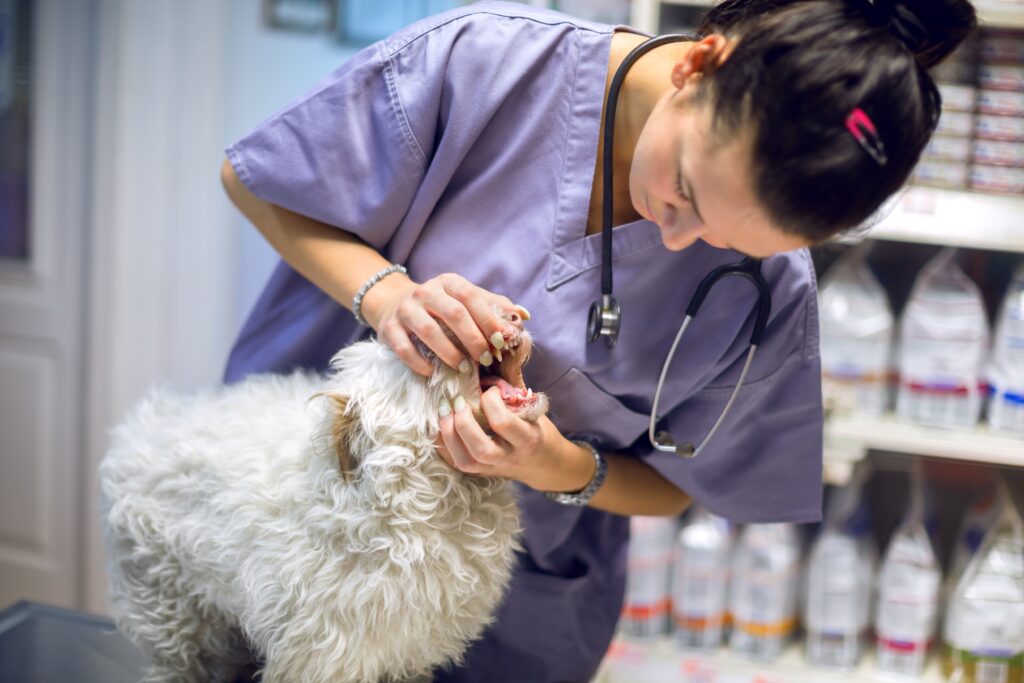
zoranm/E+ via Getty Images
Anyone living with a dog has dealt with dog vomit.
Our canine friends are built to vomit, probably because many of them will eat almost anything that they come across.
Vomiting essentially lets dogs expel potentially harmful substances when they’ve eaten something that could injure them or make them ill.
But dog regurgitation is very different from vomiting. Whatever the underlying cause, regurgitation is dangerous.
Regurgitation can also lead to aspiration pneumonia, which happens when food is inhaled into the lungs. Aspiration pneumonia can be potentially fatal, so if your dog is experiencing signs of it (regurgitating, coughing and lethargy are most common), contact your vet immediately.
It’s important to look at the difference between regurgitation and vomiting in dogs, why it’s important to know the difference, and why you should always take chronic regurgitation in your dog seriously.
Key Takeaways
- Regurgitation in dogs is different from vomiting and often occurs without warning or effort.
- Repeated regurgitation can be a sign of serious conditions like megaesophagus or an esophageal blockage.
- If your dog is consistently regurgitating undigested food, they should be seen by your vet as soon as possible.
- Treatment for regurgitation in dogs depends on the underlying cause.
What Is Dog Regurgitation?
Making the determination of regurgitation or vomiting is very important because their causes and treatments are very different. Here’s what each looks like.
Dog Vomiting vs. Dog Regurgitation
Dog vomit comes either from the stomach or the first part of the small intestine, and getting it up takes some work.
Just before a dog vomits, you can see (and hear) them heaving and retching as their abdominal muscles contract and relax. They often feel nauseated before they vomit, so they may also drool and lick their lips, two classic signs of nausea in dogs.
When dogs regurgitate, food comes up from the esophagus, and it doesn’t have to travel far or past any sphincters.
Therefore, regurgitation often seems to happen out of the blue and without any effort. Dogs may simply lower their heads and open their mouths, and suddenly their last meal is on the floor.
Bile vs. Undigested Food
You can look at what your dog has brought up for clues. If you see bile—a yellow-tinged fluid—you’re most likely dealing with vomit, since bile is secreted into the small intestine.
Regurgitation can produce bile when there is bile reflux into the esophagus, but it’s often accompanied by food or other fluid.
A lack of bile isn’t very helpful, though, since that can be true with both vomiting and regurgitation.
When dogs regurgitate, what comes out often looks a lot like what just went in: food (maybe chewed) mixed with a little saliva or mucus.
Sometimes, regurgitated material even maintains the tube-like shape it had in the esophagus.
Causes of Dog Regurgitation
Sometimes a dog will regurgitate or vomit simply because they’ve wolfed down a big meal too quickly.
If your dog seems to otherwise feel fine, don’t panic. Just keep an eye on things and make an appointment with your veterinarian if it happens more than once.
On the other hand, repeated regurgitation is a symptom of some very serious health problems. We can divide them into two major categories: things that block the esophagus and things that affect esophageal function.
Esophagus Blockage
-
Foreign bodies. If a dog eats something that becomes stuck in their esophagus, it can block the passage of food and water, leading to regurgitation. This is a medical emergency. If something is stuck in their throat take them to a vet immediately.
-
Tumors. Benign or malignant tumors within or just outside the esophagus can narrow the passage through which food and water pass and cause regurgitation.
-
Stricture. Diseases or injuries can lead to scarring and stricture (abnormal narrowing). Dogs are sometimes born with esophageal strictures, which may not become evident until they start eating solid food. Other times it can be the result of trauma, scar tissue, or certain medications.
-
Vascular ring anomaly. Puppies can be born with abnormal blood vessels that create a tight ring around the esophagus, which makes it difficult for food to pass. This Is called a persistent right aortic arch.
-
Hiatal hernias. Abdominal contents can move through an opening in the diaphragm and press on the esophagus. This may occur after trauma or as a congenital (birth) defect.
-
Esophageal worms. In southern parts of the U.S. and the Caribbean, Spirocerca lupi worms can be carried by beetles and other hosts. If a dog eats an infected host, they can become infected due to the worms creating nodules in the esophagus, causing regurgitation.
Esophageal Function
-
Megaesophagus. The esophagus is normally a muscular tube that pushes food into the stomach. With megaesophagus, it becomes dilated and weak. Food just sits in the esophagus until it is regurgitated. Megaesophagus can be present at birth or develop later in life. It has many causes, including:
-
Myasthenia gravis. This abnormality in the transmission of nerve signals to muscles can lead to muscular weakness. Other diseases affecting nerves and muscles can look similar to myasthenia gravis.
-
Addison’s disease. The hormonal changes associated with Addison’s disease (also called hypoadrenocorticism) can affect esophageal muscles and lead to megaesophagus.
-
Esophagitis. Chronic or severe inflammation of the esophagus can damage esophageal muscles. This can be seen with gastroesophageal reflux disease (GERD) or anything else that irritates the esophagus.
-
Exposure to toxins. Lead, organophosphates, botulinum, and other toxins can lead to megaesophagus in dogs.
-
Hypothyroidism. Low thyroid hormone levels are thought to be associated with megaesophagus in some dogs, although a definitive connection hasn’t been established.
-
Idiopathic megaesophagus. Often, an underlying cause can’t be identified, and a dog will be diagnosed with idiopathic megaesophagus.
-
-
Esophageal dysmotility disorder. Sometimes the structure of a dog’s esophagus looks normal (unlike with megaesophagus), but its musculature still doesn’t work as it should to move food along. This may occur after esophageal inflammation or injury, but a cause may not be evident. Some puppies are born with esophageal dysmotility disorders.
Any dog can develop regurgitation, but some underlying health problems that can lead to it are more common in certain breeds:
-
Wire Fox Terriers and Miniature Schnauzers are genetically predisposed to megaesophagus.
-
Megaesophagus is also frequently diagnosed in German Shepherds, Shar-Peis, and mixed breed dogs.
-
Brachycephalic dogs (those with flat faces, like Pugs and Bulldogs) are at increased risk for several types of esophageal disease, which can lead to regurgitation.
How Veterinarians Diagnose Dog Regurgitation
Veterinarians will start diagnosing the cause of regurgitation by asking questions related to your dog's health history and by performing a full physical examination. This will help them confirm that a dog is indeed regurgitating, rather than vomiting, and identify any clues to potential causes.
Next, the veterinarian will probably take X-rays of the dog’s chest and neck. The X-rays may identify a megaesophagus, hiatal hernia, foreign body, tumor, or aspiration pneumonia.
Veterinarians can also use an endoscope to examine the inside of your dog’s esophagus, which can help diagnose esophagitis or esophageal tumors.
Laboratory testing may be needed to get a feel for your dog’s overall health and identify underlying conditions. Special tests may include:
-
Acetylcholine receptor antibody testing for myasthenia gravis
-
An ACTH stimulation test for Addison’s disease
-
Measuring lead levels in the blood
-
Measuring thyroid hormone levels
Health Tools
Get quick answers with our vet-created Symptom Checker
Treatment for Dog Regurgitation
Whenever possible, treatment for dog regurgitation is focused on the underlying problem. For example:
-
Esophageal foreign bodies can sometimes be removed using an endoscope.
-
Surgery can correct vascular ring anomalies, remove tumors, hiatal hernias, or correct strictures.
-
Myasthenia gravis, Addison’s disease, GERD, and hypothyroidism can all be managed with medications.
When a dog has idiopathic megaesophagus or an esophageal motility disorder, or when the underlying problem can’t be fully resolved, supportive and symptomatic care are also necessary. Options include:
-
Vertical feedings with the use of a Bailey chair. Dogs should remain upright for at least 15 minutes after eating so the food can get into the stomach. Water should also be given in the Bailey chair. Water can be given in a normal but shallow bowl as the dog remains upright.
-
Change the consistency of their food. Feed a high-quality, nutrient-dense food to reduce the overall amount. A food diet such as Royal Canin Veterinary Diet Gastrointestinal Dog Food or adding a bone broth powder to help bulk the food up are two options to consider.
-
Feed small, frequent meals to avoid overloading the esophagus.
-
For severe cases, a veterinarian can place a feeding tube directly into the dog’s stomach so that food, water, and medicine can be given while bypassing the esophagus.
-
Medications to reduce regurgitation:
-
Omeprazole or famotidine can help to decrease stomach acid.
- Metoclopramide or Cisapride can help to move food in a forward direction and empty the stomach into the intestines.
-
Sucralfate can help protect the lining of the esophagus from damage due to stomach acid.
-
New studies have shown that the use of liquid sildenafil can relax the muscle of the lower esophagus, potentially allowing food to pass into the stomach more effectively.
- If aspiration pneumonia develops, antibiotics and other treatments will be needed.
-
Use a bolster dog bed to help keep a dog’s head higher than their abdomen while they sleep.
Prevention of Regurgitation in Dogs
What if you’ve ruled out all the scary stuff and you’re just left with a chow hound who is regurgitating (or vomiting) because they eat too fast?
Thankfully, that’s a relatively easy fix. First, feed smaller, more frequent meals. For example, if you currently feed your dog twice a day, switch to three times a day with an appropriate reduction in meal size.
Slow feeder bowls can also help your dog to not eat as quickly during mealtime.
As always, reach out to your vet if you continue to have issues with regurgitation in your dog.
Dog Regurgitation FAQs
What do I do if my dog is regurgitating food but acting normally?
If your dog has regurgitated more than once but they are feeling well otherwise, they should still see their veterinarian for a checkup. It’s always best to catch and treat any medical conditions as soon as possible, so getting them to the vet before they are sick is always best.
What is the difference between reflux and regurgitation in dogs?
Reflux is the process of stomach acid moving into the esophagus. Regurgitation is a passive process of expelling food or any other substance they’ve ingested from the esophagus outside of the body. Acid reflux can contribute to regurgitation.
What is the most common cause of regurgitation in dogs?
Megaesophagus is the most common cause of regurgitation in dogs. It can be caused by many different medical conditions, so it’s important to look for an underlying cause to help limit the regurgitation.
How do you treat a dog with regurgitation at home?
Depending on the underlying cause of your dog’s regurgitation, many different treatments can be done at home. Your vet may prescribe medication, a special diet, a new way to feed your pup, or even surgery to treat their regurgitation.


