Weimaraner



Istock/Aleksandr Zotov
The Weimaraner is a friendly, fearless, and obedient dog. As a member of the sporting group, this breed requires a lot of physical activity and mental stimulation.
The Weimaraner dog breed emerged in the 19th century, according to the Weimaraner Club of America (WCA), when German nobles crossbred different breeds to create a dog with “exceptional tracking ability, speed, courage, and durability.”
The Weimaraner arrived in the U.S. in the late 1920s and gained popularity as pets and hunting dogs. Notably, President Eisenhower and actress Grace Kelly were both Weimaraner pet parents.
Male Weimaraner dogs stand 25–27 inches tall at the shoulder and weigh 70–90 pounds. Females are a bit smaller, at 23–25 inches and 55–75 pounds.
Caring for a Weimaraner
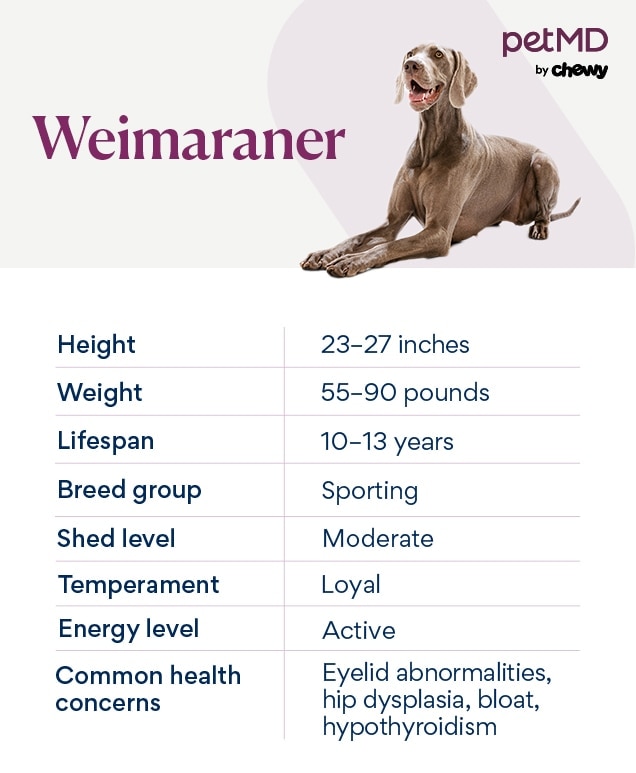
The Weimaraner’s coat is short, sleek, and smooth. The dogs don’t require a lot of grooming, but their fur sheds a moderate amount.
A properly bred Weimaraner is solid colored, either blue-gray or silver-gray, with a small white spot on the chest in some dogs. Their face is framed with long, naturally floppy, velvety ears and amber or blue-gray eyes.
With their long legs and long, gray-tipped snout, they can easily reach your kitchen countertops to sneak a quick treat. Keep an eye on them to prevent counter-surfing.
The Weimaraner is loving and highly trainable, making them an excellent family dog. Weimaraners are a high-energy breed, and they need a lot of interaction with people as well as regular exercise.
If properly socialized, they get along well with other dogs. But smaller pets such as cats and small mammals might not make good housemates for Weimaraners, as these dogs are bred to hunt and might see smaller animals as something to chase.
Weimaraner Health Issues

As with most large-breed dogs, the lifespan of Weimaraner dogs is 10–13 years, but some have lived as long as 15 years. They are susceptible to a variety of medical conditions, including:
Entropion
Entropion is the most common eyelid abnormality in dogs. It causes a dog’s eyelid to turn or roll inward, so the eyelashes rub against the surface of the eye (cornea), causing chronic irritation and secondary conjunctivitis (bacterial infection).
Symptoms of entropion include:
-
Eye discharge (mucus, pus, and brown or black staining)
-
Excessive eye watering (epiphora)
-
Squinting or holding the eye closed (signs of eye pain)
Surgery is the only way to correct entropion, and eye medications are administered as part of the recovery process.
Hip Dysplasia
Hip dysplasia in dogs is a degenerative joint disease that affects the hind limbs. Bone and joint problems are a common cause of pain in large- and giant-breed dogs, including the Weimaraner.
Symptoms of hip dysplasia in Weimaraners include:
-
Limping
-
Decreased range of motion
-
Arthritis, especially later in life
Treatment for all degenerative joint diseases and dysplasia includes:
-
Weight loss
-
Reduced activity
Testing, such as PennHIP, can predict your dog’s risk of having hip dysplasia during their lifetime.
Bloat or Gastric-Dilatation Volvulus
Deep-chested and large-dog breeds such as the Weimaraner are prone to this sudden and life-threatening stomach condition. It occurs suddenly when the stomach enlarges with gas (bloat) and then twists on itself (gastric-dilatation volvulus, GDV).
If you notice your dog’s stomach area enlarge quickly, or they are whining with or without touching their belly, stretching with front legs down and back legs up, are reluctant to walk, and are not eating, take them to the vet immediately.
Bloat may sometimes be treated with aggressive medical intervention, but GDV requires emergency corrective surgery to save the dog’s life.
To limit the risk of GDV, do not feed your Weimaraner dog immediately before or after exercise; allow one to two hours.
Another way to prevent GDV is a gastropexy procedure, a surgery that’s usually performed at the same time the dog is spayed or neutered. A gastropexy permanently attaches the stomach to the inside body wall, preventing it from twisting on itself.
Hypothyroidism
Hypothyroidism is a common endocrine disease where the dog’s body functions, including metabolism, slow down due to a lack of thyroid hormones in the blood.
Clinical signs of hypothyroidism in Weimaraners include:
-
Weight gain
-
Heat-seeking behavior
-
Chronic skin infections and ear infections
-
Dry, brittle hair and thin coat
-
Increased skin pigment (thicker, darker skin)
-
Inability to grow hair back after being shaved or clipped
Hypothyroidism is diagnosed with a simple blood test and is treated with daily oral medication to increase the amount of thyroid hormones in your Weimaraner’s blood.
What To Feed a Weimaraner

As a sporting dog, the Weimaraner requires a high-quality, age-appropriate (puppy, adult, or senior) diet to meet their nutritional needs.
Dog food labeled for large-breed dogs is recommended for a Weimaraner, as it has added nutrients that may help support joint health, such as omega-3 fatty acids from fish oil or glucosamine from meat and poultry ingredients. Weimaraner puppies can benefit from a large-breed puppy food.
Feed your dog an Association of American Feed Control Officials (AAFCO)-compliant diet, which ensures that the dog food ingredients meet established standards. Basic vitamins and mineral supplements are not needed if your dog’s food is AAFCO-approved.
How To Feed a Weimaraner
Though Weimaraners are susceptible to bloat and GDV, pet parents can take certain precautions to reduce the risk of this life-threatening condition during mealtimes:
-
Do not allow your dog to exercise strenuously one to two hours before or after eating.
-
Feed your Weimaraner using slow feeder bowls or puzzle feeders to slow down their food intake.
-
Give your Weimaraner multiple meals throughout the day instead of one large meal.
-
Avoid using raised food bowls, which may increase the risk of bloat and GDV.
How Much Should You Feed a Weimaraner?
In general, Weimaraner puppies should be fed three to four times a day, and adult dogs should be fed twice a day.
The amount you feed depends on the specific food your Weimaraner eats. You can ask your veterinarian, follow the package instructions, or contact the dog food manufacturer to find out what amount is appropriate.
Nutritional Tips for a Weimaraner
Dogs fed a well-balanced, AAFCO-compliant diet do not need vitamin and mineral supplements to maintain a healthy lifestyle. The following dog supplements, however, may help improve your Weimaraner’s joint and gut health.
-
Joint supplements: Glucosamine, chondroitin, and methylsulfonylmethane (MSM) supplements, such as Dasuquin with MSM, are great for your dog’s joints. MSM has all-natural, anti-inflammatory properties, as do omega-3 fatty acids (high-quality fish oil) when given at appropriate doses. Reducing inflammation helps control pain associated with osteoarthritis, a common problem in Weimaraners.
-
Probiotics: Probiotics help promote your dog’s gut health. Some probiotics, such as Purina Pro Plan Calming Care, have added ingredients that help ease anxiety; Zesty Paws has fiber.
Never give your dog a supplement without speaking to your vet first.
Behavior and Training Tips for a Weimaraner
Weimaraner Personality and Temperament

Weimaraners are active dogs and require a lot of physical activity—at least two hours every day. They are also highly intelligent dogs and need to be occupied with activities to prevent destructive behavior such as chewing and digging. They need a large, fenced-in yard where they can play without wandering off.
Weimaraners are ideal for pet parents who want a large, active dog for hunting, hiking, and other outdoor activities.
Weimaraner Behavior
The Weimaraner temperament makes them good family dogs who are loyal, obedient, and inquisitive. When well socialized, they do great with people of all ages but should be supervised around babies and toddlers. (This breed’s large body can accidentally knock down a child when playing or running toward them for a treat.)
Weimaraners are active dogs and require a lot of physical activity—at least two hours every day.
As friendly dogs, Weimaraners can develop separation anxiety. And if they grow bored or lonely, they may bark excessively or try to escape.
Weimaraner’s are incredibly smart and know how to use their intelligence to get what they want. They’ve been known to open doors, unlatch gates, and turn on faucets. Pet parents must supervise their dog and ensure they have appropriate mental stimulation so they stay out of trouble.
Weimaraner Training
Because Weimaraners are smart they can learn both good and bad behavior quickly. To curb bad behavior, your Weimaraner puppy should be properly socialized and trained as soon as you bring them home. Consistency and positive training methods such as praise, petting, and treats are important.
Some Weimaraners are avid chewers, and they need to learn from an early age what is acceptable to chew on. Make sure you provide your dog with safe options for chewing to save your shoes and minimize accidental swallowing of foreign objects.
Fun Activities for a Weimaraner
-
Puzzle toys
-
Tug-of-war
-
Hiking
-
Hunting
Weimaraner Grooming Guide

A Weimaraner’s blue-silver coat doesn’t need professional grooming to look its best, but regular upkeep is important to reduce shedding and keep your pup healthy.
Skin Care
Bathing your dog once a month is sufficient to keep their coat and skin healthy and hydrated. If your Weimaraner likes to play in mud and roll in dirt, they need to be bathed more often. A soap-free, aloe-, or oatmeal-based shampoo is best for routine bathing.
Coat Care
The Weimaraner has a beautiful soft, short, and flat coat that requires minimal grooming. Although they only shed moderately, brushing with a rubber curry comb once a week helps decrease shedding and keeps their coat shiny.
Eye Care
A Weimaraner’s eyes can be cleaned monthly with a soft cloth or cotton ball during their bath. If you notice any excessive tearing that leads to brown staining of the fur around the eyes, use a vet-recommended tear stain remover to help.
Ear Care
Having floppy ears means that moisture and debris can get trapped in your Weimaraner’s ear canal, causing irritation or ear infections. Use a vet-approved ear cleanser to clean your dog’s ears once a month.
Avoid using water and household items such as alcohol, hydrogen peroxide, vinegar, or essential oils. These will not efficiently clean the ear canal and may lead to infection or damage to the ear canal.
Considerations for Pet Parents

The Weimaraner is a beautiful, athletic, and large sporting dog. If they are properly trained and socialized at a young age, they will make great family dogs.
However, a Weimaraner’s temperament is influenced by their history as hunting dogs, and special considerations must be made before you bring a Weimaraner puppy home.
For one, Weimaraners love being outside and might not be the best dog for an apartment. A big, fenced yard and regular exercise with their pet parent will help them get their energy out. Their prey drive might make it difficult for Weimaraners to live in the same home as smaller animals, like cats or pocket pets.
Weimaraner FAQs
How long does a Weimaraner live?
The average Weimaraner lifespan is 10–13 years.
How much does a Weimaraner cost?
The typical Weimaraner dog price ranges from $500–$3,000. There are also Weimaraner rescue organizations where you can find dogs in need of a home for a lower price.
Is a Weimaraner a good family dog?
Yes. Well-trained and socialized Weimaraners are devoted, obedient, and loyal to family members and can do well with children. Weimaraners thrive with an active family, as they are high-energy dogs.
Are Weimaraners smart dogs?
Yes, Weimaraners are incredibly smart and therefore need mental stimulation to be happy and stay out of trouble.
Do Weimaraner dogs bark a lot?
Yes, Weimaraner dogs are known to be vocal thanks to their hunting origin. Making sure your dog is exercised and mentally stimulated can help reduce excessive barking.