Cat Ear Infection: Symptoms, Causes, and Treatment


frantic00/iStock/Getty Images Plus via Getty Images
Is your cat shaking their head or scratching at their ears?
If so, they may have ear mites or they may have an ear infection, as these are common ear infection symptoms.
Mites aren’t the only thing that can set up shop in a cat’s ear. They can also get yeast, bacteria and even allergies that lead to problems.
Cat ear infection treatment is tailored to the underlying problem.
Let’s explore ear infections in more detail.
Key Takeaways
- Cat ear infections are often caused by underlying conditions such as allergies, ear mites, or abnormal ear anatomy, and can lead to secondary bacterial or yeast infections.
- Common symptoms include head shaking, scratching, ear discharge, pain, and balance issues; diagnosis typically involves ear exams and microscopic evaluation of debris.
- Treatment depends on the cause and may include antiparasitics, antibiotics, antifungals, anti-inflammatories, and regular ear cleaning, with early intervention improving recovery and reducing recurrence.
What Are Cat Ear Infections?
A cat ear infection (Otitis externa) is inflammation, or swelling, of a feline’s outer ear canal.
This inflammation may be acute (recent) or chronic (long-lasting). Cat ear infections are common and can have several causes.
Most cat ear infections are not medical emergencies and can be addressed during normal office hours.
However, some serious ear infections can spread to the inner ear leading to balance issues, vomiting, and lethargy. If your cat is experiencing these symptoms, get them to a vet right away.
Cat Ear Anatomy
The cat’s ear is divided into three main sections:
-
The outer ear
-
The middle ear
-
The inner ear
The eardrum separates the outer ear canal from the middle and inner ear, which houses very sensitive structures involved in hearing and balance.
Chronic and severe outer ear infections can eventually become more serious infections of the middle or inner ear.
The outer ear includes the pinna, or the cartilaginous triangle part of the ear that is covered by skin, and the external ear canal.
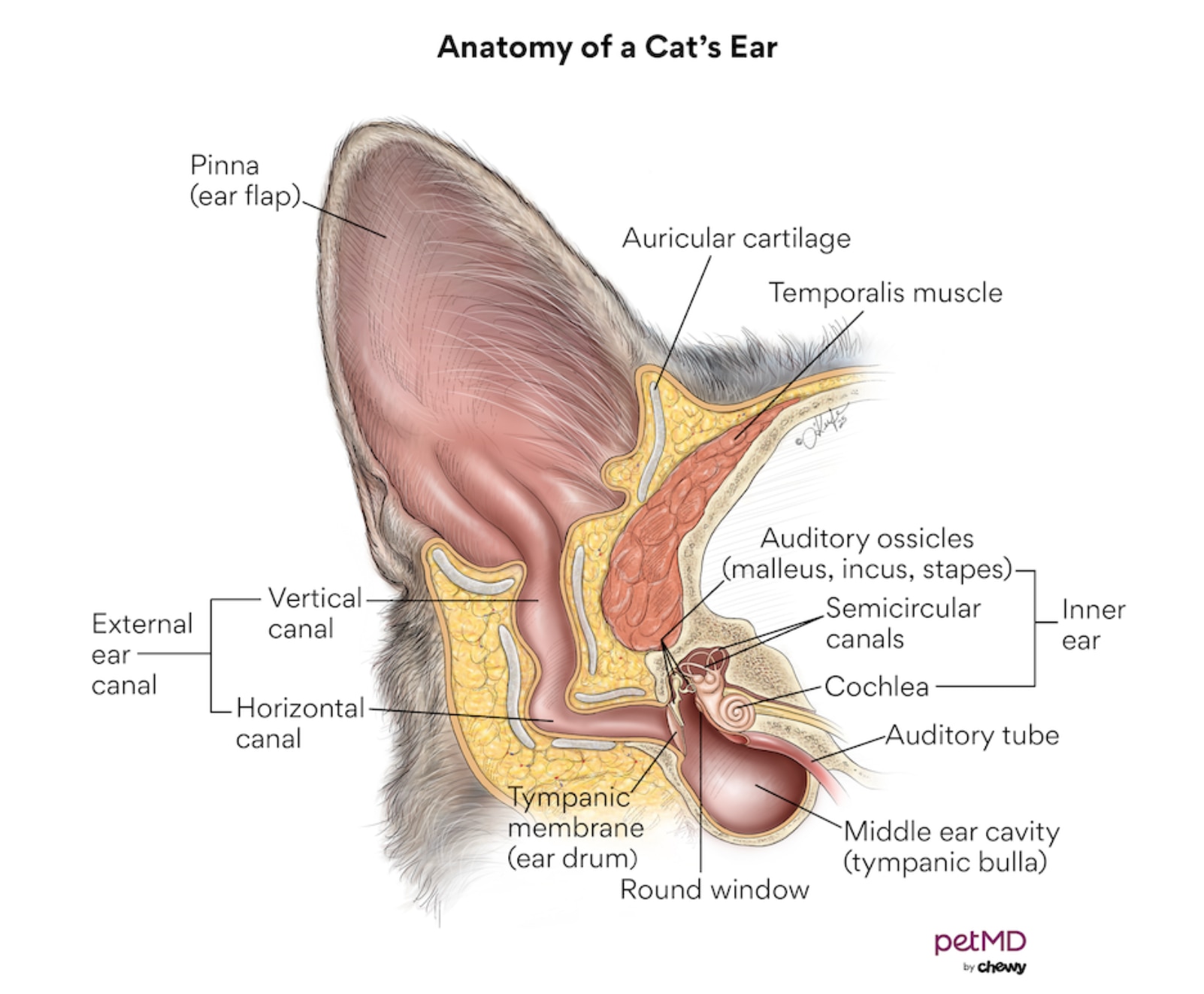
To download this medical illustration, click here.
The pinna is shaped like a funnel to help sound waves get into the ear, down the ear canal, and into the parts of the ear that process sounds.
Cats have very sensitive hearing, partly because of a larger canal as compared to humans. A deeper canal allows better processing of sound. However, a deeper ear canal may get more dirt and wax, contributing to infection and irritation.
The ear canal is lined by skin and has varying degrees of hair. The deep part of the ear canal is a dark, often moist environment that can be a breeding ground for yeast and bacteria.
Health Tools
Get quick answers with our vet-created Symptom Checker
Cat Ear Infection Symptoms
Cat ear infection symptoms can include:
-
Scratching the ears
-
Ear discharge and odor
-
Swollen, red, and possibly ulcerated (having sores) pinna
-
Ear pain
How Do Cats Get Ear Infections?
Cat ear infections have several causes, including:
-
Predisposing factors, such as abnormal ear shape (like in Scottish Folds), too much wax production, lots of ear hair, or abnormally small ear canals
-
Ear mites, which are more common in kittens and cats that are allowed outside. Mites can spread between cats and dogs.
-
Allergies. Cats may have an allergic reaction to food, the environment, or both. Cats typically have signs of skin disease with allergies and—because the ear canal is lined with skin—the ears can also be affected.
-
Bacteria and yeast are typically secondary and opportunistic infections. This means the primary problem is not the yeast or bacteria, but these pathogens take advantage of the weak and damaged ear canal to replicate, thereby causing additional disease.
Healthy ear canals can fight off and defend against bacterial and yeast overgrowth, but that ability is lost when it becomes diseased. The secondary infections are some of the most common types of ear infections.
Other causes of ear inflammation, and things likely to create secondary infections include:
-
Foreign bodies (grass awns or hair)
-
Polyps
-
Endocrine disorders (hypothyroidism, Cushing’s disease)
-
Sebaceous gland disorders
-
Aggressive or improper ear cleaning
Inappropriate treatments or medications not intended for the ear, such as hydrogen peroxide or alcohol can cause inflammation.
Even some medications designed for use in the ear may cause problems if not prescribed by a vet, so it’s always important to check with your vet before using any medication on your cat.
How Veterinarians Diagnose Cat Ear Infections
To diagnose cat ear infections, vets will perform an ear exam and assess any symptoms. The ear canal and eardrum are checked for signs of inflammation, debris, masses, or other abnormalities.
More tests may be needed to confirm the presence of bacterial, fungal, or parasitic infections.
These include:
-
Cytology. A swab is inserted into the affected ear to collect cells, debris, and discharge. These cells are then examined under a microscope for the presence of mites, bacteria, yeast, or inflammatory abnormal cells.
-
Culture of the affected ears. This involves inserting a sterile swab into the affected ear to obtain a sample of bacteria. These bacteria are then grown in a laboratory setting and tested against other different strains of bacteria to see which type your pet is most sensitive to.
-
Imaging and other tests, like CT scans. These may be necessary for chronic cat ear infections or cases that don’t respond to treatment.
Cat Ear Infection Treatment
Cat ear infection treatment is aimed at the underlying cause of the infection, as well as treating any secondary infections.
Cold laser therapy is often used, along with medications to help treat pain and decrease inflammation.
-
Ear mites. Topical antiparasitic medications, like Revolution, are often used to treat ear mites. Some topical antiparasitic drugs may also be placed directly into the ear canal as well.
-
Allergies. There are many ways to treat allergies, but the first step is to figure out if it is an environmental allergy or a food allergy. Diet trials may be used as well as specialized testing to find potential allergens.
-
Bacterial and yeast infections. Most often, medications containing an antibiotic, an antifungal, and an anti-inflammatory all in one are put into the affected ear canal. Some are intended to stay in the ear canal for one to two weeks. Others may need to be administered daily, or twice daily by pet parents, like Tresaderm.
Ear cleaning is an important part of treating cat ear infections. Debris left in the ear canal can continue the infection and make treatment more difficult.
For PetMD's complete cat ear cleaning guide for pet parents, click here. For the Spanish version of our guide, click here.
For appropriate and accurate treatment, make sure to talk to your veterinarian about the correct way to give medication and clean your cat’s ears. Many veterinarians recommend Virbac Epi-Otic for cleaning, but always check with your vet before starting any medications or supplements.
In more severe cases, oral anti-inflammatory drugs (steroids or NSAIDS) like prednisolone or Onsior may be needed to decrease inflammation and treat pain.
Oral antibiotics and antifungals (like Veraflox or itraconazole) may also be needed in severe, chronic, or recurrent cases of otitis.
Surgery may be needed for tumors, foreign bodies, or polyps in the ear canal.
Cat Ear Infection Home Remedy
Veterinarians don’t recommend treating ear infections at home.
While there are many over-the-counter products that claim to treat ear issues, many products are toxic to the ear and may result in pain, hearing loss, ulcerations (breaks in the skin), and even neurologic signs.
It’s always recommended to have your veterinarian diagnose and treat any ear issues.
Recovery and Management of Cat Ear Infections
Cat ear infections usually get better after a few days of treatment.
All medications should be used for the full treatment length (usually seven to 14 days) and a recheck exam with cytology should be scheduled.
Common causes of treatment failure include treatment that’s not long enough and inadequate therapy.
It’s important to learn how to clean and medicate your cat’s ears to ensure the product reaches the deep part of the ear canal.
Some cats may have recurring ear infections, especially if they have abnormal ear canal anatomy or chronic predisposing issues, like allergies. Other issues, such as foreign material or ear mites, are more readily cured and don’t reoccur.
Cats with ear infections have a good prognosis. Early intervention, fully completing any medications, and treating underlying factors are the keys to success.
Cat Ear Infection FAQs
Will a cat ear infection go away on its own?
Very mild ear infections may resolve with cleaning, but the majority require treatment with a prescription medication.
How does a cat act when they have an ear infection?
Cats will often shake their head a lot and scratch at their ear when they have an ear infection.
How do I tell if my cat has ear mites or an ear infection?
Cat ears should be clean and free of debris. If there is any dark debris or redness in your cat’s ears, they likely have an ear infection.


