Dog Vomiting: Causes, Treatment, and When To Worry


Nevena1987/E+ via Getty Images
What Is Vomiting in Dogs?
Dog vomiting (emesis) occurs when a dog actively expels contents from the stomach.
The material expelled may include:
- Partially digested food
- Liquid
- Yellow bile
- Mucus
- Blood
The appearance of vomit can vary depending on the underlying cause.
In severe cases, dogs may vomit material from the intestines rather than the stomach. This can include fecal matter, which may indicate coprophagia (eating feces) or a serious condition such as an intestinal blockage.
Vomiting that includes fecal material or unusual substances should be evaluated by a veterinarian immediately.
Key Takeaways
- Causes of dog vomiting can range from mild digestive upset to serious illness.
- The color, contents, and frequency of vomiting can provide clues about the underlying issue.
- Mild cases may be managed at home with a bland diet and monitoring.
- Persistent or severe vomiting requires veterinary care.
Types of Vomit in Dogs
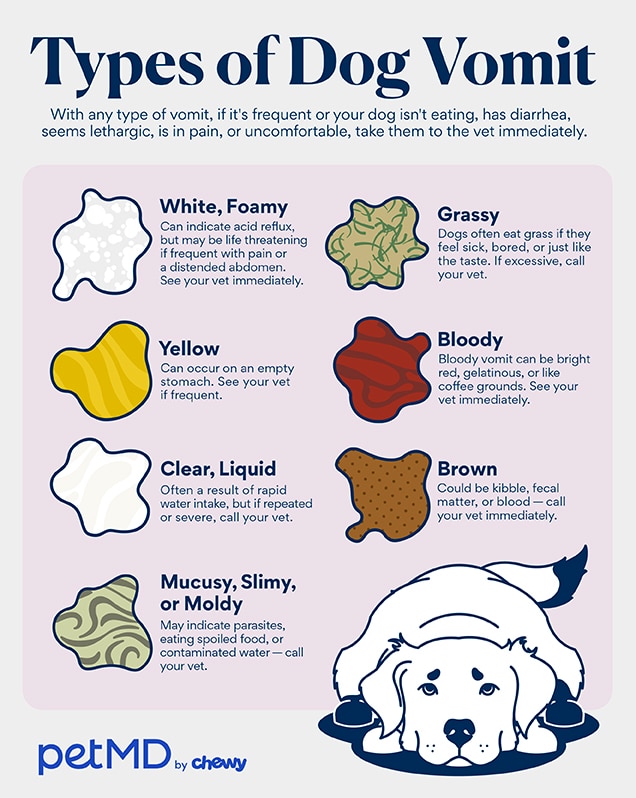
The appearance of your dog’s vomit can provide important clues about the underlying cause and how serious the issue may be.
Yellow Vomit
Yellow vomit can be caused by an empty stomach or bile irritation. It can occur if your pup hasn't eaten for a long time, after repeated episodes of vomiting, or due to acid reflux (GERD).
If yellow vomit occurs infrequently and the dog is otherwise healthy, this doesn’t typically require a veterinary visit.
White, Foamy Vomit
White, foamy vomit in dogs may be related to acid reflux but can also signal a serious condition.
Mild, occasional episodes may not require a vet visit. However, if foamy vomit is repeatedly expelled with no other contents, or if the dog has a distended abdomen or appears to be in pain, this could also be an indication of life-threatening bloat or gastric-dilatation-volvulus (GDV).
Seek veterinary care immediately if these signs are present.
Clear, Liquid Vomit
Rapid intake of water with overexpansion of the stomach can lead to expulsion of clear, slimy fluid. If vomiting occurs as an isolated episode, veterinary attention is normally not needed. However, repeated or severe episodes should be evaluated by a veterinarian.
Mucusy or Slimy Vomit
Vomiting of mucus or slime may indicate irritation or ingestion of harmful material. It can result from parasites or ingestion of spoiled food, trash, or contaminated water (such as lakes or puddles with visible surface algae). In this case, veterinary evaluation is recommended.
Bloody Vomit
A dog vomiting blood is always considered a medical emergency.
Bloody vomit in dogs indicates bleeding in the digestive tract. It may appear bright red, gelatinous, or like coffee grounds, depending on the location of the bleeding.
If you see blood in your dog’s vomit, seek veterinary care immediately. If possible, bring a sample for evaluation.
Brown Vomit
Brown vomit may be digested kibble, fecal matter, or digested blood from lower in the digestive tract, which may look like coffee grounds. If your pup is experiencing this type of vomit, take them to a veterinarian immediately.
Grassy Vomit
Grassy vomit can be normal in some cases but may signal an issue if it happens frequently.
Dogs may eat grass due to nausea, boredom, or dietary needs. However, if you see your dog eating excessive amounts of grass—accompanied by foamy or bile-stained vomit—veterinary evaluation is recommended.
Symptoms of Vomiting in Dogs
Dogs often show warning signs before vomiting.
Common signs that your dog may be about to vomit include:
- Lip-licking
- Drooling
- Hunched body posture
- Abdominal contractions
- Retching (dry heaving)
These behaviors can help you recognize that your dog is feeling nauseous.
My Dog Is Vomiting. What Should I Do?
If your dog is vomiting, the next steps depend on how often it’s happening and whether other symptoms are present.
A single episode of vomiting is not always an emergency and can often be managed at home.
At-Home Care for Mild Vomiting
You can try managing mild vomiting at home by:
- Withholding food for a few hours
- Offering a bland diet (such as boiled chicken and rice)
- Adding a probiotic supplement (e.g., FortiFlora®)
Once vomiting stops, reintroduce food slowly:
- Start with small portions of bland food
- Monitor for any recurrence of vomiting
- Provide fresh water in small amounts
- Offer ice cubes in a shallow dish if your dog is drinking too quickly
After your dog can eat and drink without vomiting for at least 24 hours, gradually transition back to their regular diet over 24–48 hours.
When To Call the Vet
Seek veterinary care immediately if:
- Vomiting continues or worsens
- Vomit contains blood
- Your dog may have eaten something toxic
- Your dog may have swallowed a foreign object
- Signs of bloat (GDV) are present (abdominal swelling, restlessness, pain)
Causes of Vomiting in Dogs
Dog vomiting can be caused by a wide range of conditions, from mild digestive upset to serious underlying disease.
Common causes include:
- Allergies
- Poisons or toxins
- Bloat (gastric dilatation-volvulus, GDV)
Vomiting can occur in dogs of any age or breed. However, certain dogs may be at higher risk, including:
- Young, unvaccinated puppies exposed to infectious diseases
- Senior or immunocompromised dogs
How Veterinarians Diagnose Vomiting in Dogs
Veterinarians diagnose dog vomiting by combining a physical exam, medical history, and diagnostic testing to identify the underlying cause.
Providing detailed information about your dog’s symptoms—such as diet changes or possible ingestion of foreign objects or toxins—can help guide the diagnostic process.
Initial Evaluation
Your veterinarian will begin with:
- A physical examination
- A complete medical history, including possible exposure to toxins or inappropriate objects
Diagnostic Testing
Depending on your dog’s symptoms, your veterinarian may recommend:
- Fecal exam to check for parasites
- Parvovirus (parvo) test, especially in puppies
- Blood work to evaluate organ function and detect infection
- Urinalysis to assess kidney function and hydration
Imaging and Advanced Testing
In more complex or severe cases, additional testing may include:
- X-rays to look for foreign objects or blockages
- Ultrasound to evaluate internal organs
- Endoscopy to examine the digestive tract and identify abnormalities
Treatment of Vomiting in Dogs
Treatment of dog vomiting depends on the underlying cause and may include medications, supportive care, and dietary support.
Medications
Veterinarians may prescribe medications to control nausea and protect the digestive tract, including:
- Anti-nausea medications:
- Metoclopramide (if no intestinal blockage is present)
- Cerenia®
- Ondansetron or dolasetron
- Gastroprotectants (to protect the stomach lining):
Supportive Care
- Fluid therapy: Helps treat or prevent dehydration
- Antacids: May be used if acid reflux is suspected
Supplements and Natural Support
- Probiotics: Help restore healthy gut bacteria
- Ginger (fresh or powdered): A natural option that may help reduce nausea
Dietary Management
A bland diet can help soothe the digestive system and allow the stomach to recover.
Common bland diet options include:
- Boiled chicken and rice
- Scrambled eggs
- Lean ground beef
- Plain yogurt
- Plain canned pumpkin (puree, not pie filling)
These foods are typically easy to digest and can be offered in small, frequent portions as your dog recovers.
Additional Support Options
Acupressure or aromatherapy bands may provide relief for some dogs in mild cases. They should only be used under supervision, especially if your dog is unable to keep food or water down.
If vomiting persists or your dog cannot tolerate food or fluids, seek veterinary care promptly.
Recovery and Management of Vomiting in Dogs
Recovery from dog vomiting depends on the underlying cause and how quickly treatment is started.
In most cases, dogs should be gradually transitioned back to their normal diet once vomiting has resolved. This is typically done over several days by mixing increasing amounts of regular food with a bland diet.
To support recovery:
- Feed small, frequent meals
- Gradually reintroduce normal food
- Monitor for any return of vomiting
Adding probiotics may also help support digestive health and improve stool quality during recovery.
If vomiting returns or new symptoms develop, contact your veterinarian for further evaluation.
Prevention of Vomiting in Dogs
While dog vomiting cannot always be prevented, you can reduce your dog’s risk by following good dietary and safety practices.
- Avoid abrupt changes in your dog’s food or treats
- Do not feed spoiled or rancid food
- Avoid giving unhealthy human foods, which can cause vomiting, diarrhea, or pancreatitis
- Do not allow your dog to play with easily destroyed toys that could be swallowed
- Clean up fecal matter in your yard to reduce exposure to parasites
- Keep toxic substances out of reach, including:
- Medications
- Household cleaners
- Pesticides
- Automotive products
- Essential oil diffusers
- Plants and flower arrangements
- Consider probiotic supplements to help support digestive health, especially during times of stress
- Store all medications securely and out of reach
If your dog accidentally ingests medication or receives a double dose, call the Pet Poison Helpline at 855-764-7661 and your regular veterinarian (or an after-hours emergency veterinary clinic) immediately.
Dog Vomiting FAQs
When should I worry about my dog vomiting?
You should be concerned if your dog’s vomiting is frequent, severe, or accompanied by other symptoms.
Seek veterinary care immediately if your dog has blood in vomit, lethargy, abdominal pain, repeated vomiting, or signs of bloat (GDV).
What can I give my dog for vomiting at home?
For mild cases, you can try a short fast followed by a bland diet such as boiled chicken and rice.
Offer small amounts of water or ice cubes and monitor closely. If vomiting continues or worsens, contact your veterinarian.
Why is my dog throwing up but acting normal?
Occasional vomiting in an otherwise normal dog can be due to minor stomach upset.
However, if it happens repeatedly or becomes more frequent, it may indicate an underlying issue that requires veterinary evaluation.


