8 Types of Ticks on Dogs: What They Look Like and How To Prevent Them


urbazon/E+ via Getty Images
It’s not unusual to find a tick on your dog, especially if they’re a fan of the outdoors and woodsy areas.
But it’s important to be aware of the types of ticks and how to prevent them to keep your dog safe.
Here are the most common types of ticks on dogs and the symptoms that signal it’s time to head to the vet as soon as possible.
Key Takeaways
- There are eight common types of ticks that affect dogs in the U.S., and each one can carry different diseases depending on where you live.
- Ticks are found in every U.S. state and thrive in grassy, wooded, and humid areas, so even everyday outdoor time can put your dog at risk.
- Some ticks carry serious diseases like Lyme disease and Rocky Mountain spotted fever, but early detection makes a big difference.
- Symptoms of tick-borne illness don’t always appear right away—they can show up days or even weeks after a bite.
- Year-round tick prevention, daily tick checks, and quick removal are the best ways to keep your dog protected.
What Are Ticks?
Ticks are eight-legged external parasites that bite people or animals and feed on their blood.
Ticks prefer to live in warm, humid environments and are found in every U.S. state. They carry a variety of serious diseases by harboring certain types of bacteria in their bodies.
Not all ticks carry diseases, but some ticks carry more than one.
After feeding for a certain length of time, an infected tick releases bacteria through its saliva into a dog, causing the dog to acquire a tick-borne disease.
Diseases transmitted by a tick bite include:
Eight Types of Ticks on Dogs
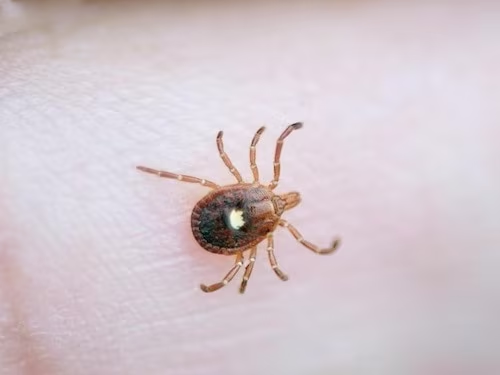
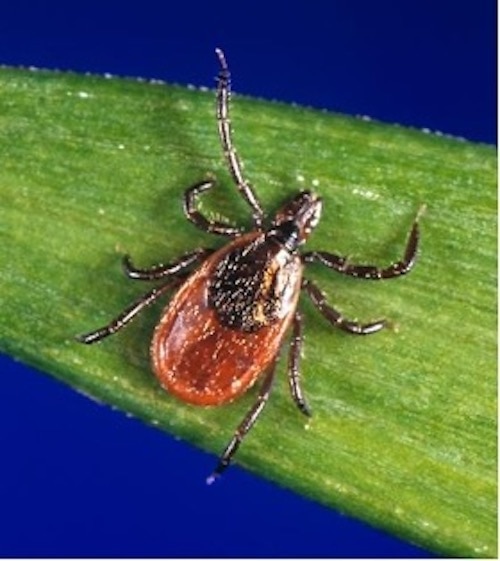
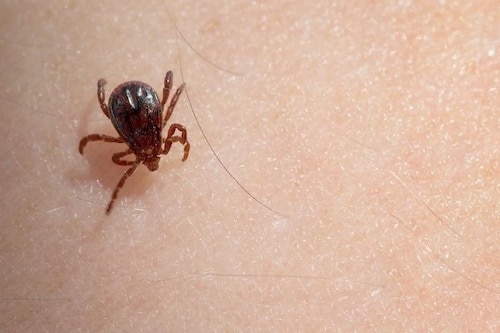
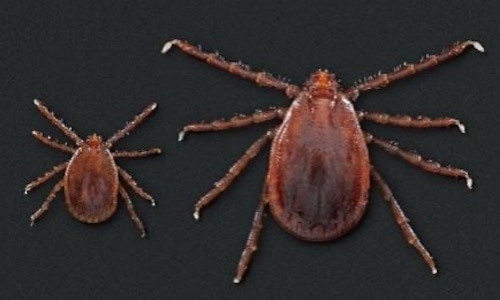
You may also be wondering, “What does a tick look like?” These pictures can help you identify a tick on your dog.
While many species of ticks exist, these are the most common types of ticks on dogs.
Lone star tick (Amblyomma americanum)
-
Location: Eastern and Southeastern United States
-
Diseases transmitted: Ehrlichiosis, rickettsiosis, tularemia
Eastern black-legged or deer tick (Ixodes scapularis)
-
Location: Eastern United States, Midwestern United States
-
Diseases transmitted: Lyme disease, anaplasmosis, ehrlichiosis, babesiosis
Brown dog tick (Rhipicephalus sanguineus)
-
Location: Throughout the United States, except for Alaska
-
Diseases transmitted: Babesiosis, ehrlichiosis, anaplasmosis, Rocky Mountain spotted fever, hepatozoonosis
Asian longhorned tick (Haemaphysalis longicornis)
-
Location: Connecticut, Delaware, Kentucky, New Jersey, New York, North Carolina, Ohio, Rhode Island, Tennessee, Virginia, and West Virginia. Scientists expect they may be in other states as well.
-
Diseases transmitted: Rocky Mountain spotted fever. More research is being done to determine what other diseases these recently discovered ticks may transmit to dogs.
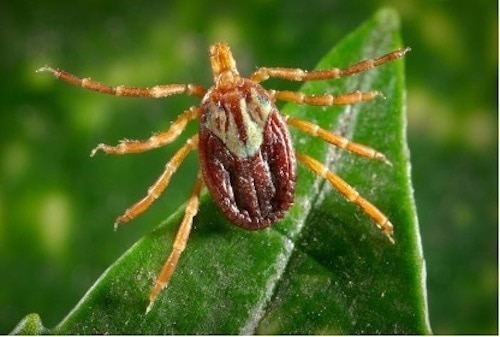
Gulf Coast tick (Amblyomma maculatum)
-
Location: Coastal states along the Gulf of Mexico and the Atlantic Coast as far north as Maryland.
-
Diseases transmitted: Tick paralysis, American canine hepatozoonosis, rickettsiosis
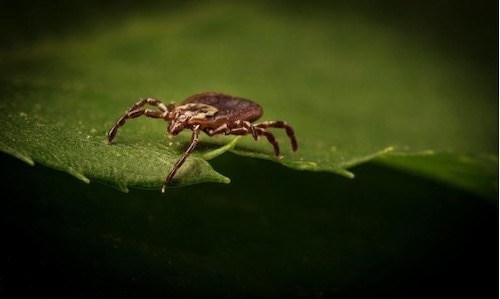
American dog tick (Dermacentor variabilis)
-
Location: California and east of the Rocky Mountains
-
Diseases transmitted: Ehrlichiosis, Rocky Mountain spotted fever, tularemia
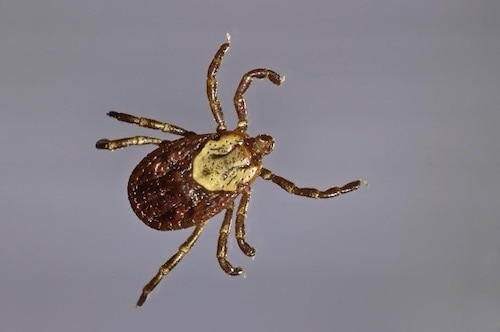
Rocky Mountain wood tick (Dermacentor andersoni)
-
Location: Rocky Mountain states
-
Diseases transmitted: Rocky Mountain spotted fever, tularemia
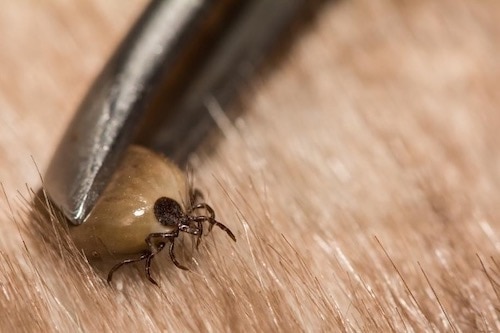
Western black-legged or deer tick (Ixodes pacificus)
-
Location: Pacific coast states, Arizona, Nevada, and Utah
-
Diseases transmitted: Lyme disease, anaplasmosis
Symptoms of Ticks on Dogs
Ticks release a substance in their saliva that makes their bite painless, so dogs usually do not feel a tick bite and therefore show no symptoms.
However, if a tick gets in an ear or between their toes, your dog might show tick bite symptoms such as:
-
Licking or chewing their paw
If a tick transmits ehrlichiosis, babesiosis or anaplasmosis, these tick-borne diseases can cause bleeding disorders. A dog with either of these diseases may start to have:
-
Small reddish to purplish lesions on the skin or gums, called petechiae, which can be best seen in areas that have little to no fur, such as the belly, ear flaps, gums, and armpits
-
Dark-colored urine
-
Pale gums
-
Yellow discoloration of the eyes or skin
Symptoms of tickborne diseases in dogs include:
-
Joint pain or swelling
-
Weakness
-
Bruising
Symptoms of tick diseases may not develop for days or weeks after the tick bite, depending upon the type of disease that is transmitted.
For example, with tick paralysis, symptoms usually do not show until after the tick has been feeding for at least five days.
This includes neurological symptoms, such as:
-
Paralysis in all four legs
-
Inability to blink
-
Loss of jaw tone
-
Change in bark tone
These neurological symptoms can progress quickly, so it’s important to see a veterinarian as soon as possible. Your vet can remove the tick and symptoms will usually resolve within two to three days.
However, recovery may take longer, depending how long the tick was feeding.
What Is the Life Cycle of a Tick?
Ticks mature through four life stages:
-
Egg
-
Larva
-
Nymph
-
Adult
It can take up to two years for their life cycle to be complete, as they require a new host during each stage of development. Female ticks generally live for two years, while male ticks die after they mate.
Ticks in the larval or nymph phases are very tiny and hard to see on a dog’s body. The larval stage has six legs and is equivalent in size to a grain of sand; a nymph has eight legs and is the size of a poppy seed or freckle.
Adult ticks are larger but vary in size and appearance based on the species of tick. They can be the size of an apple seed, but female ticks that are engorged (filled with blood from feeding) are easier to find because they can be the size of a small grape.
Tick Prevention for Dogs
Dogs need flea and tick prevention year-round. Your veterinarian can prescribe the best treatment for your dog.
There are a few options for tick prevention. Your vet might recommend flea and tick prevention on its own in the form of a pill or chewable.
They might also recommend a topical solution.
Your vet may otherwise prescribe an option that also has heartworm prevention so you have all important precautions in one pill or chewable.
Most importantly, check your pet daily for ticks, especially if you spend a lot of time outdoors.
Washing and drying your clothing after outdoor activities such as hiking and camping can also reduce the risk of ticks surviving in your home.
Dog and Tick Bite FAQs
Should I be worried about a tick bite on my dog?
Yes, but usually everything will be OK. It’s important to remove the entire tick and be alert for unusual symptoms. However, most tick bites will not make your dog sick if properly treated. The best way to prevent them in the first place is to keep your dog on monthly medication.
What do I do if my dog has a tick bite?
If you notice a tick on your dog, call a veterinarian for guidance. While you can remove a tick at home, it is essential to not leave the head attached to the skin. A vet visit can also allow for identification of the tick and screening for tick-borne diseases.
Deer tick vs. dog tick: What’s the difference?
Deer ticks are small and have black or red bodies, while dog ticks are brown with some white parts. Deer ticks spread Lyme disease, while dog ticks spread Rocky Mountain Spotted Fever.
How long does a tick have to be attached for Lyme disease in dogs?
Usually a tick has to be attached for more than 24 hours to cause Lyme disease in a dog.


