Why Is My Dog Coughing? Signs, Causes, and Treatment



Tatsiana Volkava/ iStock/Getty Images Plus via Getty Images
Your pup is acting a bit off and is coughing. As a pet parent, you may be wondering—why is my dog coughing?
Dog coughing is typically nothing to worry about. However, when a dog’s coughing becomes a constant or recurrent problem, it can be a sign of an underlying illness. Knowing some of the most common causes of coughing in dogs can help you determine when you need to worry.
Coughing in dogs has many possible causes. Let’s look at several reasons.
Key Takeaways
- Coughing in dogs can be caused by a variety of issues, including infections, allergies, foreign bodies, or heart disease.
- Persistent coughing or accompanying symptoms like lethargy, nasal discharge, or difficulty breathing warrant immediate veterinary attention.
- Treatment depends on the underlying cause, ranging from antibiotics and dewormers to oxygen therapy and surgery.
- Home remedies like steam therapy can help with mild cases, but pet parents should consult a veterinarian before trying any treatments at home.
Why Is My Dog Coughing?
There are several reasons why a dog would have a cough.
Dog Cough Due to Infections
Viruses, bacteria, fungi, and parasites are all types of infections that can cause dogs to cough.
These can infect a dog’s upper respiratory tract, lung tissue (pneumonia), airways (bronchitis), or a combination (bronchopneumonia).
-
Kennel cough is the most common infectious cause of coughing. It can be caused by several types of viruses and bacteria working alone or in combination.
-
Canine influenza virus is becoming increasingly prevalent in the U.S. and leads to symptoms like coughing, fever, and nasal discharge.
-
Lungworms are parasites that cause infection in the pulmonary artery and right heart ventricle in dogs.
-
They are not as common as heartworms, but they may cause your dog to cough.
-
Dogs can get infected by eating prey infected with the worm. They migrate out of the intestines, into the bloodstream, and into the lungs.
-
This can cause coughing and other symptoms.
Dog Cough Due to Chronic Bronchitis
When a dog is coughing due to chronic inflammation of the airways and no other cause can be identified, chronic bronchitis is the most likely diagnosis.
Dogs with chronic bronchitis tend to have a dry, hacking cough that worsens with exercise or excitement and over time.
Dog Cough Due to Allergies
Allergies are immune system hypersensitivities to substances in the environment called allergens. When exposed to these substances, the immune system becomes sensitive and can overreact to future interaction with them.
Coughing due to allergies is secondary to inflammation in the airways and lungs.
Dog Cough Due to Reverse Sneezing
While technically a reverse sneeze is not a cough, many pet parents mistake the sound with their dog coughing.
Reverse sneezes tend to happen in clusters when something irritates the back of a dog’s nasal passages.
Just like normal sneezes, occasional reverse sneezes are nothing to worry about. If they become severe or frequent, or you see nasal discharge or a change in the symmetry of your dog’s face (bulging eyes or sinuses), contact your vet.
Dog Cough Due to Heart Disease
Many types of heart disease can make dogs cough, including mitral valve endocardiosis (degeneration), dilated cardiomyopathy, and congestive heart failure.
Dog Cough Due to Collapsing Trachea
Small dogs are more at risk for a weakening of the cartilage rings that partially encircle the trachea.
This causes the trachea to collapse on itself when the dog breathes in.
This leads to tracheal irritation and a chronic cough that is often described as sounding like a goose honk.
Dog Cough Due to Pulmonary Hypertension
Pulmonary hypertension refers to high blood pressure in the lungs that reduces blood flow and oxygen delivery to the lungs. Pulmonary hypertension or high blood pressure within the pulmonary arteries makes it harder for your dog to get enough oxygen.
Pulmonary hypertension can be caused by chronic lung disease, heartworm disease, or conditions that cause the body to create blood clots within the pulmonary arteries (pulmonary thromboembolisms).
Dog Cough Due to Heartworm Disease
Heartworms can cause dogs to cough. They are transmitted when a mosquito bites an infected dog, picks up the larval form of the parasite, and then bites another dog and passes the larvae on to them.
The larvae migrate to the heart and lungs of the newly infected dog, where they mature into spaghetti-like adults. Their presence causes inflammation that can lead to coughing and potentially fatal heart and lung damage.
Dog Cough Due to Foreign Objects Stuck in the Throat/Airways
Dogs will sometimes inhale foreign material or objects that then get stuck in their airways.
The body’s natural response is to try to cough it out. If this is unsuccessful, the material must be removed by a veterinarian using an endoscope or through surgery.
Dog Cough Due to Foxtails
Some types of grass produce bristles or clusters with sharp “blades” that can penetrate a dog’s skin. These are commonly called grass awns or foxtails.
The blade can then migrate into the lungs or chest cavity and lead to dog coughing. In more serious cases, this can develop into pneumonia, lung abscesses, pneumothorax, pyothorax, or a combination of these conditions.
Dog Cough Due to Laryngeal Paralysis
Dogs with laryngeal paralysis cannot fully open the passageway into their windpipe (larynx) due to weakness of the nerves that control the surrounding muscles. This leads to coughing as well as noisy breathing and shortness of breath.
Dog Cough Due to Cancer
Coughing can be one of the first symptoms that pet parents notice when a dog has cancer of the lungs, other parts of the respiratory tract, heart, or surrounding tissues. Treatment may include surgery, chemotherapy, radiation, or palliative care.
Dog Cough Due to Rat Poison Ingestion
A class of rat poisons called anticoagulants work by preventing blood from clotting, which results in bleeding. Ingesting this type of rat poison can cause a dog to bleed into their chest cavity, which can lead to coughing.
A dog that has ingested rat poison must be taken to an emergency clinic immediately to prevent life-threatening bleeding.
Never use rat poison around dogs. Invest in a humane method of rodent control, like a no-kill trap, and practice trap and release.
Dog Cough Due to Esophagitis
Esophagitis is a condition where the esophagus becomes inflamed—similar to gastro-esophageal-reflux disorder (or GERD) in humans. Acidic stomach fluid moves from the stomach and up the esophagus, irritating the lining.
This can be caused by gastrointestinal upset, certain foods, prolonged anesthesia, and some medications, particularly doxycycline.
Dog Cough Due to Tumors in the Larynx and Trachea
The larynx is a flexible tube-like structure at the top of the trachea (airway tube). It is made of semi-flexible cartilage and helps produce sound/vocalization as air passes through it. The trachea is composed of cartilage rings and allows oxygen to enter the lungs and carbon dioxide to exit the mouth.
Tumors or masses that growth in the larynx or trachea are rare, but they can impede the ability to breathe, swallow, eat, and drink.
Dog Cough Due to Aspiration Pneumonia
Aspiration pneumonia is inflammation or infection in the lungs that’s usually caused by inhaling food, water, regurgitated matter, or vomit.
This leads to bacterial growth in the lungs, which causes inflammation, trouble breathing, dog coughing, and decreased oxygen levels.
Dog Cough Due to Inhaling Indoor Irritants
Household sprays and airborne irritants can cause your dog to cough.
Not every dog exposed to these irritants will cough, but a dog with an underlying respiratory condition like bronchitis or one that’s more sensitive to a particular trigger may be more susceptible.
Dog Cough Due to Lung Lobe Torsion
A dog’s lung can rotate and twist, a condition called lung lobe torsion.
The lung turns over on itself, blocking the airway. Lung lobe torsion is more common in dogs with fluid in the chest, heart disease, or another condition.
Health Tools
Get quick answers with our vet-created Symptom Checker
What To Do If Your Dog Is Coughing
If your dog is coughing frequently or has any of the following signs, seek immediate veterinary care:
-
Nasal discharge, especially if it’s green or yellow
-
Eye discharge, especially if it’s green or yellow
-
Protrusion of one or both eyes
-
Change in facial symmetry (face looks strange or different)
-
A whistling sound when breathing
-
Change in bark
-
Exercise intolerance
Never give your dog over-the-counter cough syrups or medication meant for humans. Only give your dog medication that has been approved by your vet prior to use.
If your pet is coughing and not showing any of the above clinical signs, it might be reasonable to monitor them for a day or two at home.
However, if the coughing does not resolve, worsens, or your pet starts to show any of the symptoms listed above, it’s time for a vet visit.
Depending on the diagnosis for your dog’s cough, follow all instructions from your veterinarian for medications and be sure to complete all courses of antibiotics.
Diagnosing Coughing in Dogs
To diagnose the cause of your dog’s cough, your veterinarian will ask questions about your dog’s health history, travel, and preventive care, and when the dog coughing symptoms started.
Your vet will also perform a complete physical exam.
Sometimes a tentative diagnosis can be reached at this point, but a definitive diagnosis often requires diagnostic testing.
Depending on your dog’s symptoms, some combination of the following tests may be necessary:
-
Advanced testing may be done to screen for various respiratory infections (bacteria, viruses, fungus)
-
Echocardiography (ultrasound of the heart)
-
Measurement of blood pressure
-
Electrocardiogram (ECG)
-
Examination of fluid samples taken from the airways
-
Upper gastrointestinal endoscopy to assess the esophagus and stomach lining
-
Bronchoscopy to assess the trachea and major airways (bronchi) that go to the lungs
Based on the diagnosis of your dog’s cough, your vet will determine a treatment plan to treat the underlying cause that is triggering the cough.
Dog Coughing Treatment
Treatment for dog coughing will be based on the underlying cause.
Some possible treatments may include:
-
Antibiotics such as Clavamox for bacterial infections
-
Dewormers such as Panacur for parasitic infections
-
Steroids such as prednisone for inflammatory issues
-
Bronchodilators, including albuterol, for inflammatory issues
-
Cardiac medications such as pimobendan for heart disease
-
Endoscopy or surgery for foreign bodies or masses
In addition to the cause-specific treatments, supportive care may be recommended for the cough, including:
-
Cough suppressants such as Creative Science Cough Tablets for Dogs
-
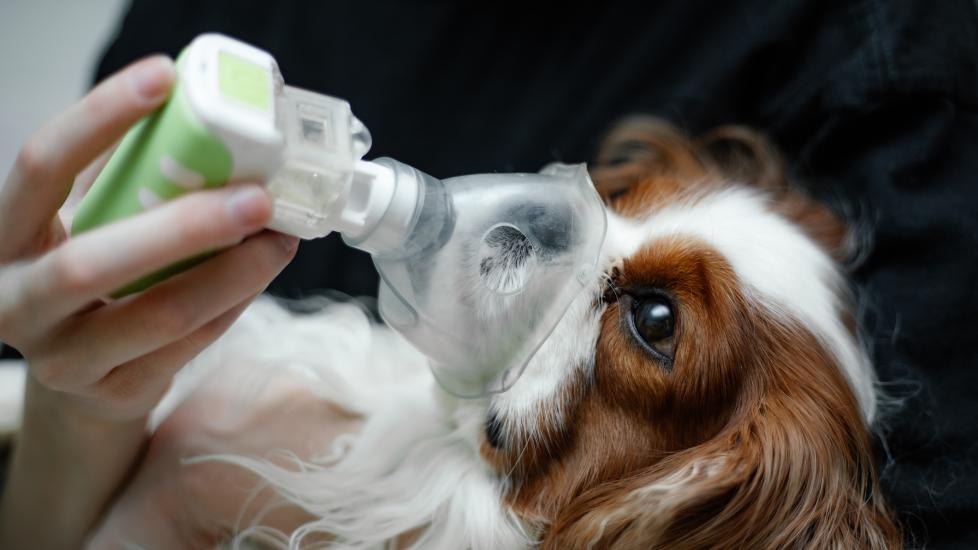
Humidifiers or nebulizers
-
Oral or IV fluids such as VetClassics Pet-A-Lyte Electrolyte Solution
-
Immune-boosting supplements such as Nutramax Imuquin Immune Support Powder Supplement for Dogs
-
Oxygen therapy
Many cases of mild to moderate coughing can be treated with outpatient care, but some may require hospitalization.
It’s important to determine the underlying reason for a cough before trying a home remedy. Some causes of cough are veterinary emergencies, and delaying care could be life-threatening.
Always consult with your veterinarian about your pet’s symptoms and cough before trying a home remedy.
Home Remedies for Coughing in Dogs
If your pet is otherwise happy and healthy with no risk factors or other symptoms, your vet may recommend a few things you can try at home to make them more comfortable.
For example, if your pet has been coughing, they may have dried out their airways. If this is the case, your dog can benefit from steam therapy.
This involves placing your pup in the bathroom while you take a hot shower so that the steam can help moisten their airways.
Never place your pet in the hot water or actual shower—just in the bathroom with you. A humidifier can also be useful.
Make sure your pup has enough to drink and eat. You can add ice to their water to encourage them to drink. An immune-boosting supplement can be helpful.
However, if your pet is experiencing respiratory distress or seems generally distressed, take your pet to an emergency vet immediately.
Dog Coughing FAQs
Why is my dog coughing?
Dogs may cough for a number of reasons, including inhaled foreign material or airborne irritants. In addition, the presence of allergies, inflammation, infections, parasites, or cancers may also affect the trachea, lungs, or heart to cause coughing in dogs.
What can I give my dog for a cough?
For mild dry coughing, allow the dog to breathe humidified air found in a steamy bathroom for 10–15 minutes to moisten airways. Encourage drinking filtered or iced water to maintain hydration. Otherwise, a physical examination by a veterinarian is needed with possible diagnostic testing to determine a diagnosis for specific treatment recommendations.
Can dogs have cough drops?
No, dogs cannot have cough drops, since ingestion could cause digestive upset or an intestinal obstruction. They could also contain xylitol, which is toxic to dogs.