The Complete Guide to Flea and Tick Prevention and Treatment for Dogs




iStock/Capuski
Preventative care is a key part of keeping your dog healthy and happy—and one of the best ways you can prevent potential health issues is to use monthly flea and tick preventatives.
Here’s what to know about fleas, ticks, and how to protect our dogs.
For PetMD's complete guide to flea and tick season for dogs, click here. For the Spanish version, click here.
Why Is Flea and Tick Prevention Important for Dogs?
Fleas and ticks are ectoparasites, meaning they are pests that live on the outside of their host. For fleas and ticks to survive, they must bite their host and then feed on the blood.
These bites can directly impact your dog’s health. The saliva from a flea bite can cause severe allergies, dermatitis, anemia, itching, and infection. Tick bites can cause infection, abscesses, paralysis, and even death.
These nasty parasites can also harbor and spread a variety of diseases to dogs, including:
Some of these diseases can even spread to people, which is why it’s critical to keep fleas and ticks off your dog and out of your home.
When Do Dogs Need Flea and Tick Prevention?
Flea and ticks are hardy and can thrive in many geographical areas. Because fleas and ticks carry diseases that can harm your dog and also spread to people, it’s important to start flea and tick prevention for your dog when they’re 8 weeks old and keep them on prevention year-round throughout your dog’s life.
Choosing a Flea and Tick Combination Medicine for Dogs
There are a variety of products to help keep your dog free of parasites. These products can be in the form of pesticides, repellents, or growth inhibitors. Each tackles pests at different life stages to prevent infestations.
Some products are only effective against one parasite (typically fleas). Combination flea and tick preventatives for dogs contain multiple ingredients to battle different types of pests. These prevention options may also provide additional protection against heartworms, skin and ear mites, and intestinal parasites.
Credelio Quattro provides the broadest parasite protection of its kind, covering six types of parasites: fleas, ticks, heartworms, roundworms, hookworms, and tapeworms.
Before deciding on a flea and tick medication, always check with your veterinarian and make sure it’s a good fit for your dog. Review the product label and consult with your veterinarian to make sure:
-
The product is the correct species for your pet (dog versus cat)
-
The product is within the correct weight range for your pet
-
The product protects against the appropriate parasites
-
Whether the product should be given with food
-
How often you should administer the product
-
How long before the product starts working
-
How soon you can bathe your pet after application
-
Whether the product has any safety-related concerns
-
You know what to do in the case of an adverse reaction
Here are some other factors to consider:
1. Application Method
Flea and tick preventatives commonly come in two forms:
-
Oral: chewable tablet that your dog ingests
-
Topical: liquid that’s applied between the should blades or down the back of your dog
Topical flea and tick preventatives are a great option for pets that are picky eaters or have sensitive stomachs. However, if you have small children or other animals, you need to be careful that they don’t touch or lick the product before it has time to dry. Topical treatments are also not a great option for dogs that like to swim a lot or dogs that need frequent baths, as water can affect the product’s efficacy.
For PetMD's guide to topical flea/tick preventives, click here. For the Spanish version, click here.
Oral treatments can be an easy and convenient option for dog parents because they can be given like a treat. If you use oral treatments, it’s best to monitor your dog to make sure they have eaten the entire tablet and do not throw it up before it can be absorbed into their system.
2. Geography
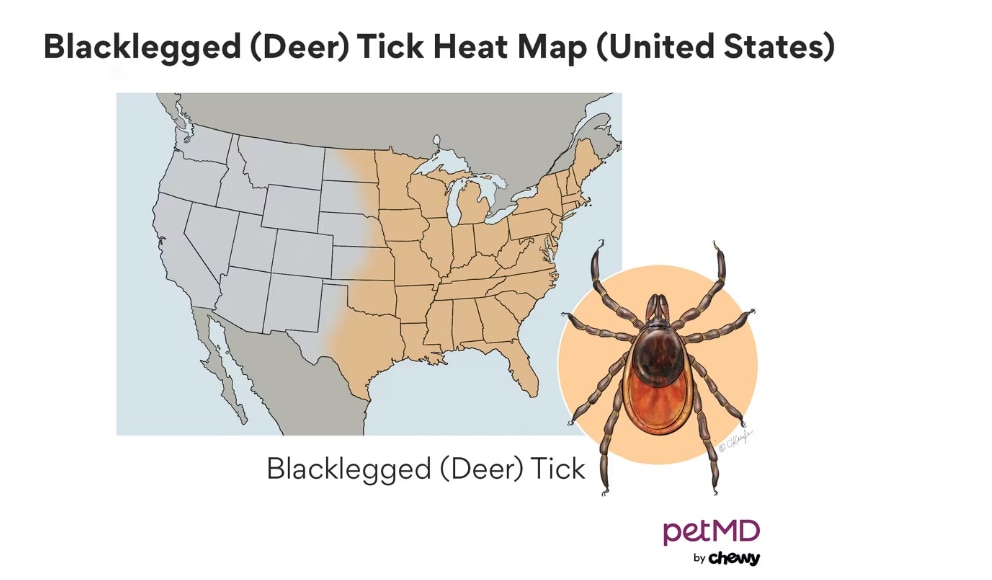
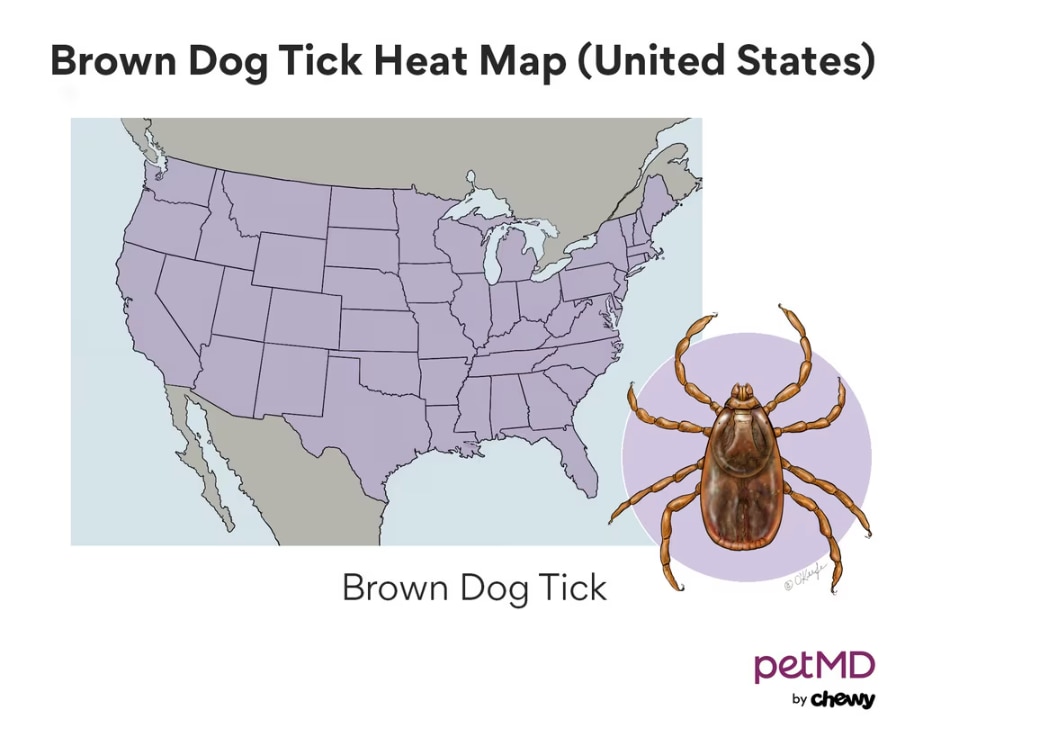
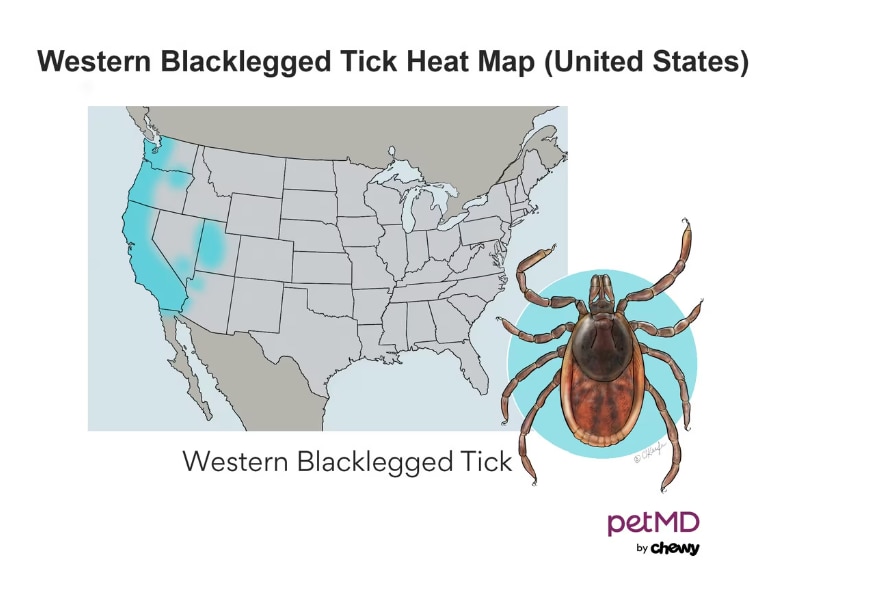
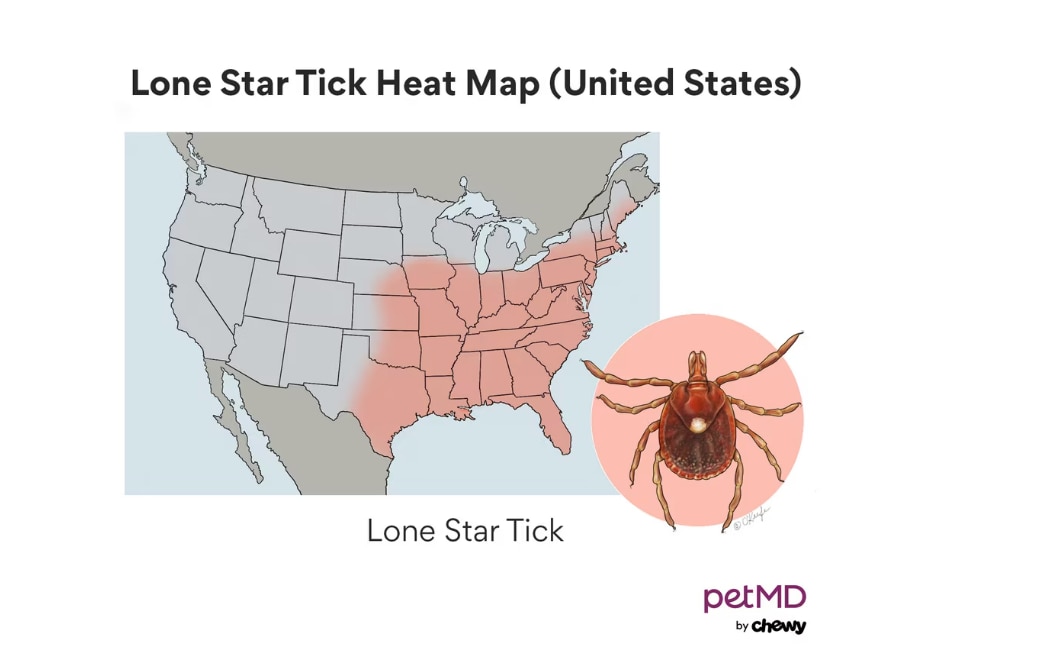
Different geographic locations have different local parasite populations, including fleas and ticks.
The Companion Animal Parasite Council is a helpful resource to identify the parasites in your area so you can make sure whichever flea and tick product you choose keeps your dog fully protected.
3. Access to the Outdoors
Consider the types of outdoor areas where your dog spends time. Dog parks, hiking trails, wooded areas, parks, bushes, and backyards can all be homes to fleas and ticks. If your dog spends a lot of time in wooded areas or spaces where other animals and dogs spend a lot of time, their risk of exposure to parasites is higher.
Even if your dog doesn’t spend a lot of time outside, fleas can easily come in through window screens, on other pets that go outside, or even on a person’s pants and shoes. Veterinarians recommend flea and tick prevention regardless of how much time a dog spends outdoors.
4. MDR-1 Gene
Some breeds (such as Collies, Australian Shepherds, and Shetland Sheepdogs) have a gene mutation called MDR-1 that makes it harder for them to break down certain types of medications.
Many veterinarians recommend testing dogs for the MDR-1 gene, especially affected breeds. That said, many manufacturers of parasite preventatives have tested their products for safety on dogs with the MDR1 mutation and found they had no adverse effects.
5. Lifestyle
While no breed is more at risk of acquiring fleas or ticks than others, some dogs may be at higher risk due to their personality and breed characteristics. Working, herding, and hunting dogs may spend most of their day in the field, while other dogs are content to stay at home, only venturing outside occasionally.
6. Life Stage
If your dog is still a puppy or is a small dog breed, you will need to consult your veterinarian to find an appropriate product for their weight or age. Most flea and tick preventatives have a minimum age of 8 weeks, but always check the package insert for confirmation.
Some products, like Revolution Topical Solution for Kittens and Puppies, are formulated specifically for young puppies and can be used as early as 6 weeks of age.
7. Medical Conditions
Some classes of preventatives, called isoxazolines, should be used with extreme caution in dogs with a history of seizures or neurologic disease, as these medications may make it easier for those particular dogs to have a breakthrough seizure.
No preventative should be used without thorough discussion with your veterinarian if:
-
Your dog has previously had an allergic reaction to the medication
-
Your dog is sick and/or underweight
-
Your dog is pregnant, nursing, or will be used for breeding in the future
Over-the-Counter vs. Prescription Flea and Tick Medicine
Some flea and tick preventatives require a prescription, while others are available over the counter.
Over-the-Counter Flea and Tick Products
Over-the-counter (OTC) flea and tick preventatives do not require a relationship with or prescription from a veterinarian. They are typically available for purchase online and in many retail pet stores.
If you decide to use an OTC flea and tick preventative, always check in with your veterinarian to make sure it is a safe option for your pet.
Prescription Flea and Tick Products
Prescription flea and tick preventatives require a prescription from your veterinarian, and they typically cost a little more than OTC options. Most veterinarians recommend prescription products, as they are typically more effective and safer for your dog.
Popular Dog Flea and Tick Prevention Products
Advantage
Advantage II is a topical monthly product containing the active ingredients imidacloprid and pyriproxyfen. This combination of drugs is fast-acting and kills all forms of fleas, including eggs, larva, and adults, within hours, as well as chewing lice. However, this product has no tick prevention. This product should only be used in dogs and puppies over 7 weeks and who weigh more than 3 pounds.
Advantage Multi is a topical monthly product containing the active ingredients imidacloprid and moxidectin. This combination of drugs treats fleas, sarcoptic mange, intestinal parasites hookworms, roundworms, and whipworms, as well as preventing heartworm disease.
Advantage Multi is fast-acting, killing fleas within hours, but other parasites may take up to 24 hours. This product does not provide tick prevention. Advantage® Multi should only be used in dogs and puppies over 7 weeks and that weigh more than 3 pounds.
Bravecto
Bravecto is a chewable tablet or topical solution containing the active ingredient fluralaner, which is in the isoxazoline drug class. Bravecto is fast-acting, starting to kill fleas within two hours and ticks within 12 hours.
Bravecto has also proven effective against demodectic, sarcoptic mange, and ear mites. As a drug in the isoxazoline class, all Bravecto products should be used with caution in dogs with a history of seizures, epilepsy, or neurologic disorders.
Comfortis
Comfortis is a chewable tablet containing the active ingredient spinosad. This product only treats fleas. Comfortis is fast-acting agent, killing fleas within 30 minutes of dosing. Dogs and puppies must be 14 weeks or older and weigh over 5 pounds. Comfortis is typically administered every month.
Credelio
Credelio is a chewable tablet containing the active ingredient lotilaner, which is in the isoxazoline drug class. Credelio treats fleas and ticks. It is fast-acting and begins killing fleas within four hours of administration. This product should only be used in dogs and puppies over 8 weeks and that weigh more than 4.4 pounds. Credelio is administered every month.
As a drug in the isoxazoline class, all Credelio products should be used with caution in dogs with a history of seizures, epilepsy, or neurologic disorders.
Credelio Quattro
Similar to Credelio, Credelio Quattro is a chewable tablet containing the active ingredient lotilaner to treat fleas and ticks, but it also includes three other active ingredients: moxidectin (for protection against heartworms, hookworms, and roundworms), praziquantel (for protection against two species of tapeworms), and pyrantel (for protection against hookworms and roundworms).
Administered monthly, Credelio Quattro is available for dogs and puppies 8 weeks of age and older who weigh at least 3.3 pounds or greater.
Frontline
Frontline Gold is a topical monthly product containing the active ingredients fipronil, (s)-methoprene, and pyriproxyfen. This combination of drugs kills fleas, ticks, and chewing lice. Frontline Gold is fast-acting, killing fleas and ticks within hours. This product should only be used in dogs and puppies over 8 weeks and that weigh more than 5 pounds.
Frontline Plus is a topical monthly product containing the active ingredients fipronil and (s)-methoprene. This combination of drugs kills fleas, ticks, and chewing lice. Frontline Gold is fast-acting but may take longer than Frontline Gold. This product should only be used in dogs and puppies over 8 weeks and weighing more than 5 pounds.
Frontline Shield is a topical monthly product containing the active ingredients fipronil, permethrin, and pyriproxyfen. This combination of drugs kills all fleas, ticks, chewing lice, and stable flies. It also repels mosquitos, stable flies, and ticks.
Frontline Shield is fast-acting; it begins killing fleas in five minutes and ticks within one hour. This product should only be used in dogs and puppies over 9 weeks and weighing more than 5 pounds. It is typically applied every month. This product is highly toxic to cats, so avoidance or extreme caution should be used in households with cats.
K9 Advantix
K9 Advantix II is a topical monthly product containing the active ingredients imidacloprid, permethrin, and pyriproxyfen. This combination of drugs repels and kills fleas, ticks, mosquitos, and chewing lice, while also repelling biting flies.
K9 Advantix II is fast-acting and begins to kill parasites within hours. This product should only be used in dogs and puppies over 7 weeks old and weighing more than 4 pounds. This product is also highly toxic to cats, so avoidance or extreme caution or should be used in households with cats.
Nexgard
Nexgard is a chewable tablet containing the active ingredient afoxolaner, which is in the isoxazoline drug class. Nexgard is effective against fleas, deer ticks, American dog ticks, brown ticks, and Lone Star ticks. It’s also effective for extra-label treatment of sarcoptic and demodectic mange. Nexgard starts to kill fleas within four hours and ticks within 48 hours.
The monthly product should only be used in dogs and puppies over 8 weeks old and that weigh more than 4 pounds. As a drug in the isoxazoline class, all Nexgard products should be used with caution in dogs with a history of seizures, epilepsy, or neurologic disorders.
Onguard Plus
Onguard Plus is a topical monthly product containing the active ingredients fipronil and (s)-methoprene. This combination of drugs kills all fleas, ticks, sarcoptic mange, and chewing lice. This product should only be used in dogs and puppies over 8 weeks old and weighing more than 5 pounds.
Seresto
Seresto is a collar containing the active ingredients imidacloprid and flumethrin. This combination of drugs kills and repels fleas and ticks for eight months. Fleas are killed within 24 hours of application and ticks are killed 48 hours after. If a dog is bathed or swims frequently (more than once per month), the efficacy of the collar may decrease and may need to be replaced as often as every five months. The product should only be used in dogs and puppies over 7 weeks of age.
Simparica Trio
Simparica Trio is a chewable tablet containing the active ingredients sarolaner, moxidectin, and pyrantel. Sarolaner is in the isoxazoline drug class. Simparica Trio treats fleas, ticks, roundworms, and hookworms, while also preventing heartworm disease. It is also used extra-label to treat demodectic mange, sarcoptic mange, and ear mites.
Simparica Trio begins killing fleas and ticks within 12 hours. This product should only be used in dogs and puppies over 8 weeks old and that weigh more than 2.8 pounds. As a drug in the isoxazoline class, all Simparica products should be used with caution in dogs with a history of seizures, epilepsy, or neurologic disorders.
Trifexis
Trifexis is a chewable tablet containing the active ingredients spinosad and milbemycin oxime. Trifexis is effective against fleas, hookworms, roundworms, and whipworms, while also preventing heartworm disease.
It’s a fast-acting drug that begins to kill fleas within 30 minutes. This product does not provide protection from ticks. Dogs and puppies must be 8 weeks or older and weigh over 5 pounds.
Vectra 3D
Vectra 3D is a topical monthly product containing the active ingredients dinitefuran, permethrin, and pyriproxyfen. This combination of drugs repels and kills fleas, ticks, mosquitos, chewing lice, sand and biting flies, and some mites.
Vectra begins killing parasites within hours. This product should only be used in dogs and puppies over 8 weeks old and weighing more than 5 pounds. It is typically applied every month. This product is also highly toxic to cats, so avoidance or extreme caution or should be used in households with cats.
References
-
American Veterinary Medical Association. Safe use of flea and tick preventative products.
-
Clinician’s Brief. Isoxazolines.
-
U.S. Food & Drug Administration. Safe Use of Flea and Tick Products in Pets.